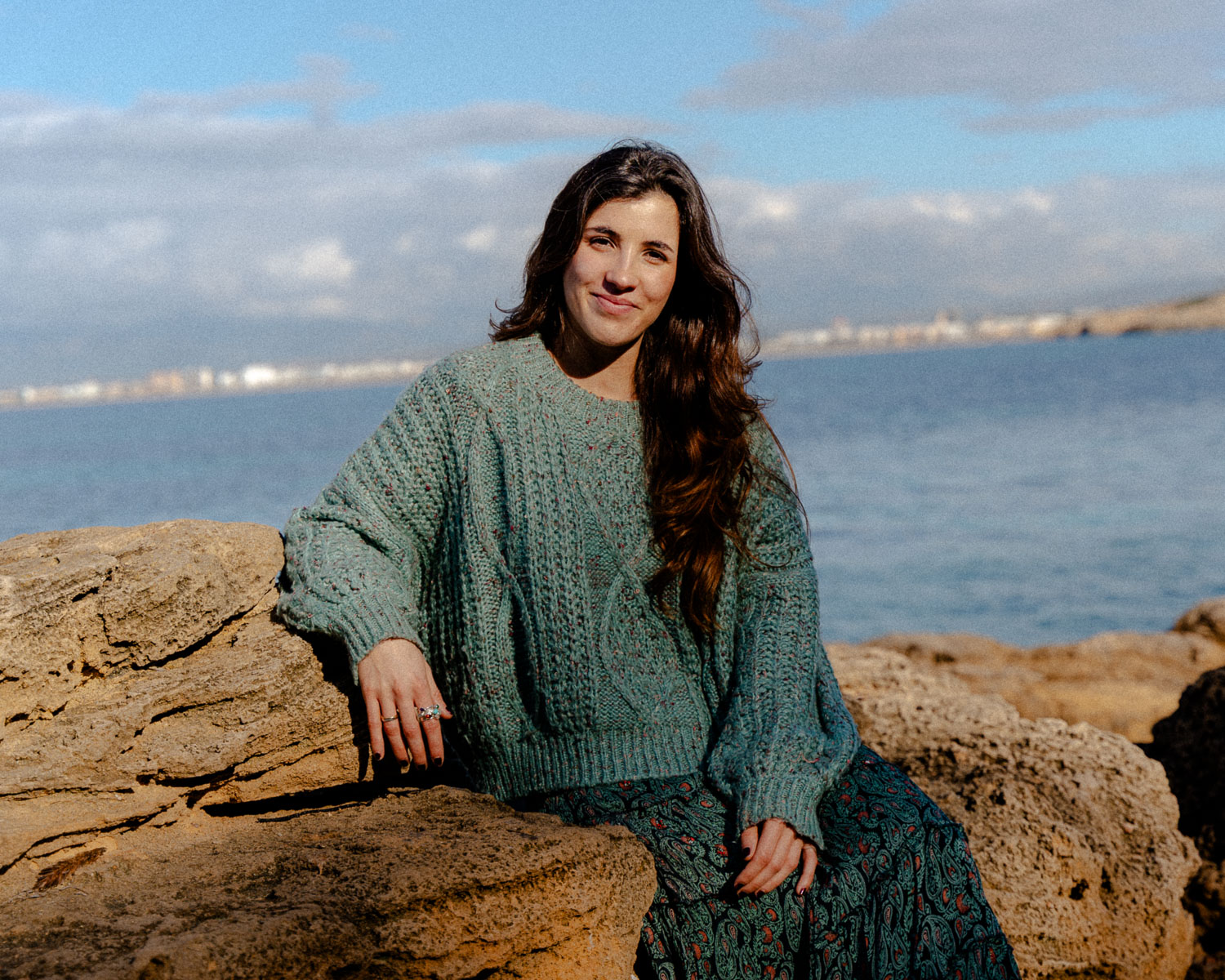
Llubí is a small village in the Pla de Mallorca that transmits the serenity of the Mediterranean character. Araceli Iranzo arrived here in search of new horizons in tune with the vital process she was living. "I am from Zaragoza, but I used to live in Madrid and I had an advertising agency there", she introduces herself. "Together with my partner, we decided to change our lives radically. We understood that what we were doing was not consistent with our way of thinking".
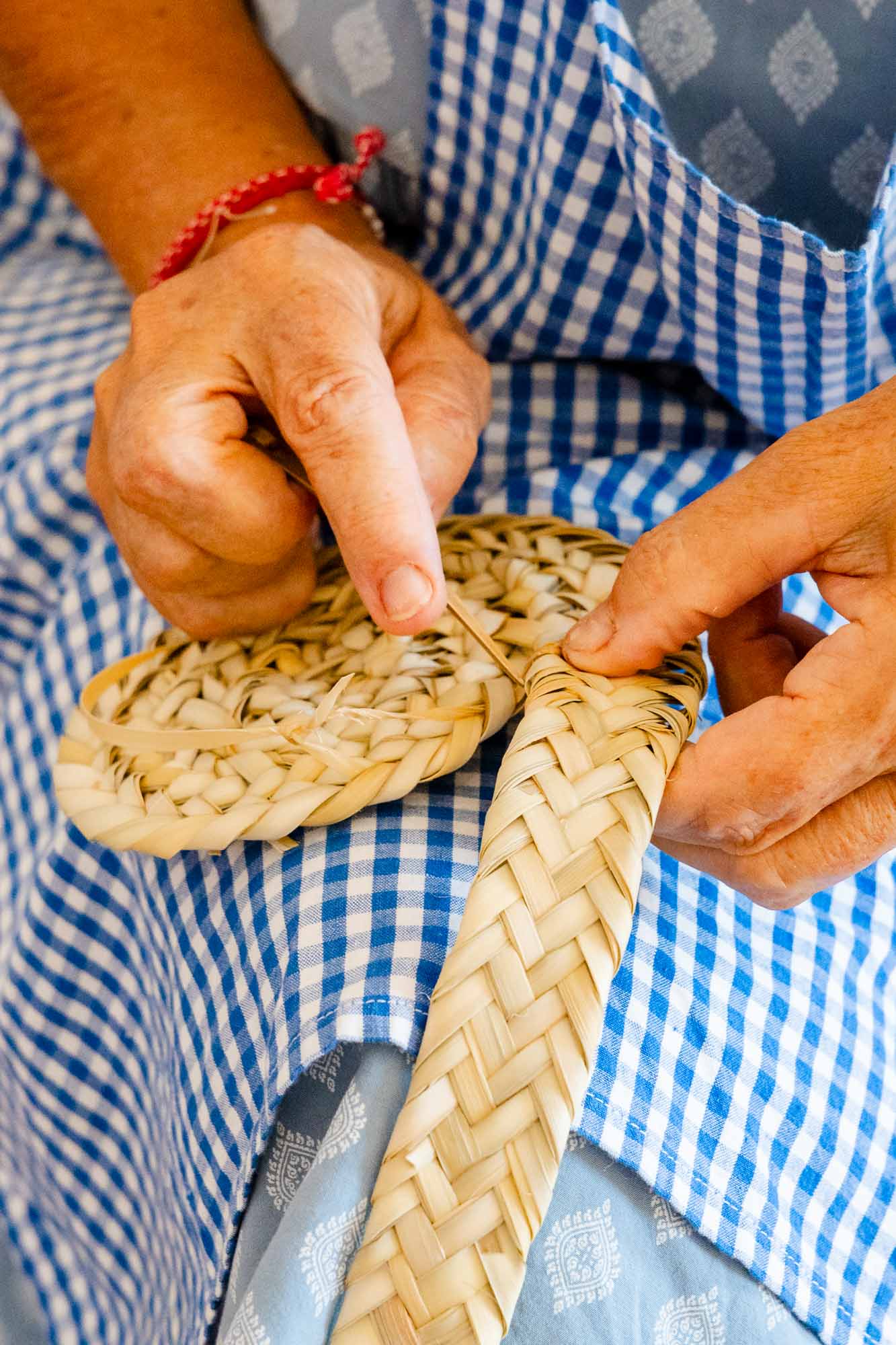
They both knew the largest of the Balearic Islands because they used to spend their summers here, but even so, the first year they dedicated themselves "to getting to know Mallorca in a different way". In this exploration, Araceli arrived in Capdepera and there she got to know the handicraft of the llata, a whole art with which they create, above all, baskets and hats with braided palmetto on the island. When she discovered what this process consisted of, she knew: "this is it". And so she started her own brand of baskets, Antic Mallorca.
Her teachers were the madones de la llata, a group of women who learned this art from their mothers -and these from their grandmothers-, and who have kept it alive, generously sharing their experience and knowledge, until today. Braiding in a circle and looking each other in the eyes, Araceli learned that "it is possible to work in another way. In community and in trust. And I came from the opposite".
Immersed in a transformative process, after launching Antic Mallorca and having her two children, in 2018 Araceli founded the Escola de l'Art de Ses Madones de la Llata. She had learned from them to teach and so she did. With the aim of "giving value to the work of these women", she started the courses that were soon filled with people.The feedback? It could not have been better: "Coming here is what I need", "this is the best day of the week", "since I come here I am in a better mood"... are some of the sensations that her students transmitted to her and that today she remembers with emotion.
"The online school allows us to reach a wider audience and show that there are other ways of life, more sustainable ones".
However, the school went one step further: "I knew many other artisans and we thought, why not inspire more people with artisans and teachers? Thanks to this wise reflection, in 2021 the project we are visiting today, La Escuela Artesana, was born. A place where we pay tribute to contemporary craftsmanship, recover the value of what is made by hand (and with care), and share values such as sustainability and inclusiveness. A space where you learn and, most importantly, enjoy learning because here, says Araceli, "we create sustainable products, but also craftsmanship connects us in a digital world that separates us from what we are".
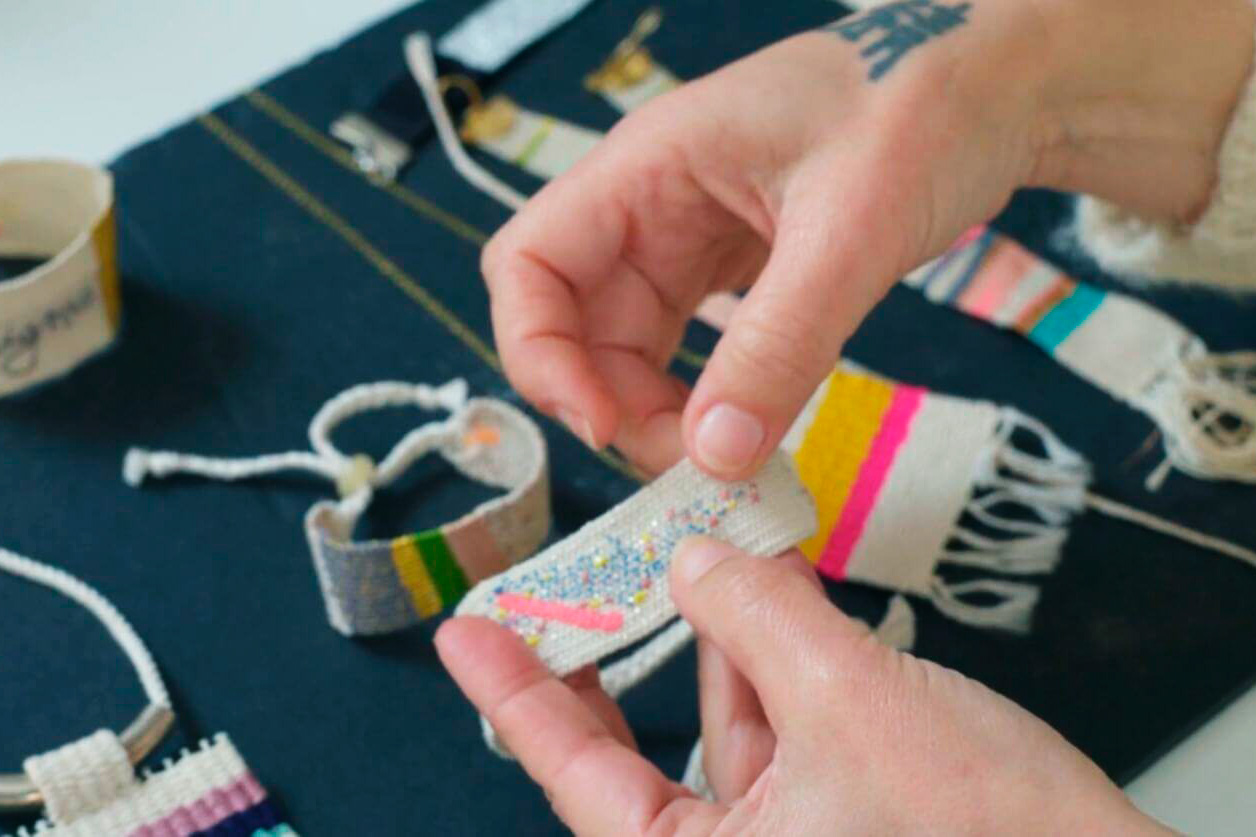
Since Antonella and Araceli launched the first courses - of llata and loom - the school has not stopped growing, in person and online. The traditional crafts and local materials are the protagonists: stringing, embroidery, metalwork, cabinetmaking, textile jewelry... Everything that has traditionally been cultivated with time and respect has a place here for a heterogeneous public that seeks from "improving" their skills to "relaxing or even changing their lives.” Araceli insists on this change, probably because she has experienced it firsthand: "the online part allows us to reach more people and show that there are other ways of life, more sustainable ones".
From all over Mallorca, Menorca, Ibiza and even England or Germany; musicians, architects, designers and creatives are part of the regular students at La Escuela Artesana, "but also people who work in other fields and who are interested. Officials also come!", smiles this entrepreneur who cannot help but spread her enthusiasm for a way of doing -and living- that has not always been valued as much as it is now. "It's a very good time for craftsmanship. It has been mistreated for a long time. Now there is an upturn because it fits with the principles that are being pursued, such as sustainability, and, in addition, there are more associations and entities that promote it. For me, handicrafts are now the new luxury”.
In this revaluation of what is done by hand, time and experience are fundamental, but there is another indisputable role: that of women. Before starting Antic Mallorca, Araceli says, "I had always been in very masculine environments and when I came here, in this environment, everything was about sharing and generosity". That is why, at the beginning, she planned to create a space dedicated to women at risk of exclusion, a "healthy environment in which, through crafts, they could strengthen their self-esteem". Although the idea did not come to fruition due to bureaucratic issues, each month the School offers a scholarship to women in vulnerable situations, in collaboration with Fundació Deixalles and the IRES foundation.
"We don't just teach techniques, we teach values".
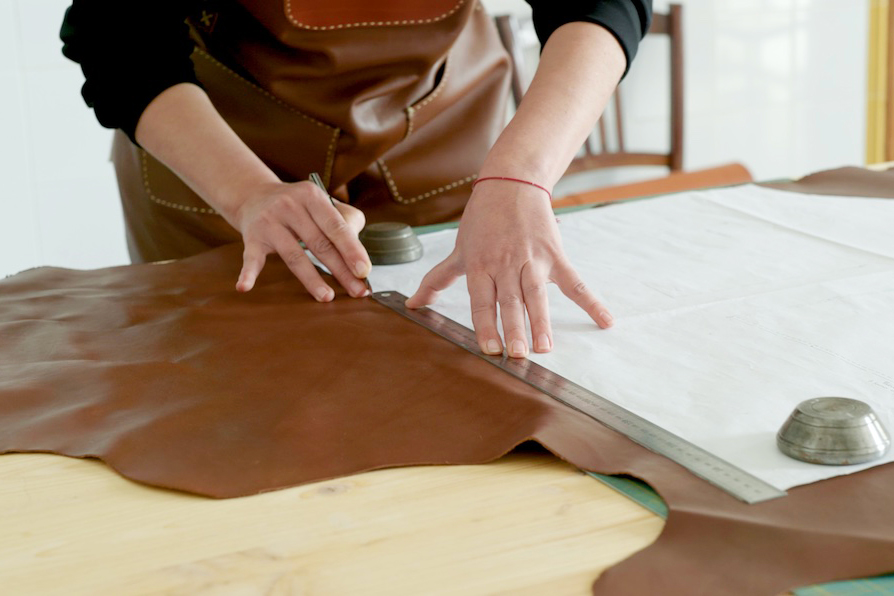
Looking to the future, Araceli and Antonella have proposed to continue expanding the catalog of courses, both face-to-face and online. In fact, they have recently launched a leather goods course and a metal course, and are working on more ideas that, for the moment, cannot be revealed. Another objective of the project, he says, is "to evolve towards more continuous training for students who want to go deeper. It is a responsibility that they can continue learning" and, for that, they need to "take longer paths".
To ensure that this new golden age of craftsmanship does not remain a fad, Araceli believes it is essential to know how to communicate how much each handcrafted object costs in terms of effort and time. And her courses, of course, "help people understand the value" of each handmade object in a world from which "we come from applauding low quality, the use and throw away".
In fact, the School's commitment goes far beyond technical learning. "We don't just teach techniques, we teach values", says Araceli, who also highlights the bonds that are woven between creative people who share their time and talent in the workshops: "projects between students have emerged from here, such as the one between Llanatura and an architect, for example, when they started talking about how wool could work as an insulator".
Here lie some of the most significant keys to this project -and the greatest reward for its promoters-: its ability to unite people, to value tradition and to inspire "new ways of living". If "the path is made by walking," as Machado wrote, we are happy to know that here there is a long way to go and still a long way to go. Let's make it not a fad.