Although Toni Gelabert Morro’s father ran a shoe workshop in a village where artisanal shoemaking had shaped the local economy and identity for decades, Toni admits that he felt little interest in the trade during his childhood and teenage years. In fact, when his father took early retirement due to an eye condition, he sold off much of the machinery because there was no one from the next generation to take over. Yet, as fate would have it, a pandemic and plenty of free time to try new things changed the course of the story.
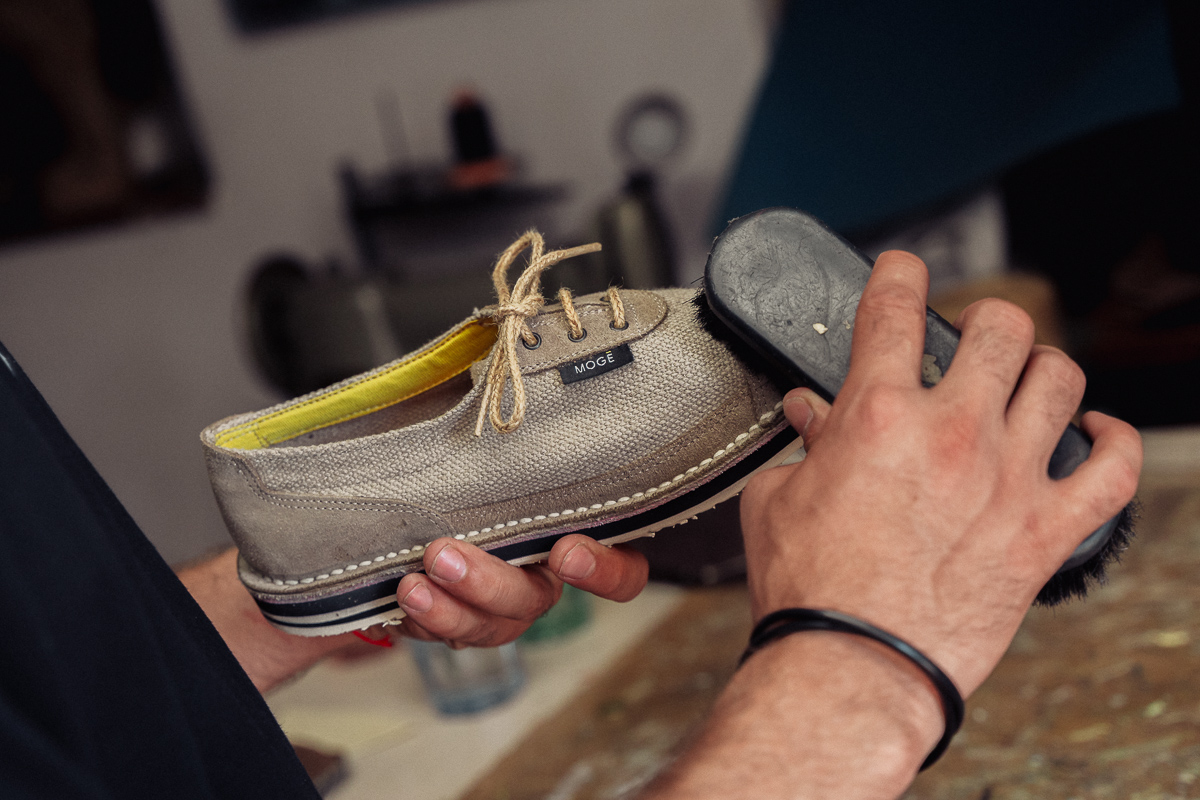
“When we went into lockdown, I made a pair of shoes with whatever I found in the workshop because I didn’t like seeing that, wherever I went, everyone was wearing the same thing. I wanted to make something different, so I went for some colourful, cheerful patateres. That’s how the hobby began.” The hobby, in fact, quickly turned into a job. Gelabert traded the knives of the butcher’s shop where he worked for the apron of a factory in Inca, where he gained experience and knowledge of the craft. Later, he embarked on the adventure of creating his own brand: Moge.
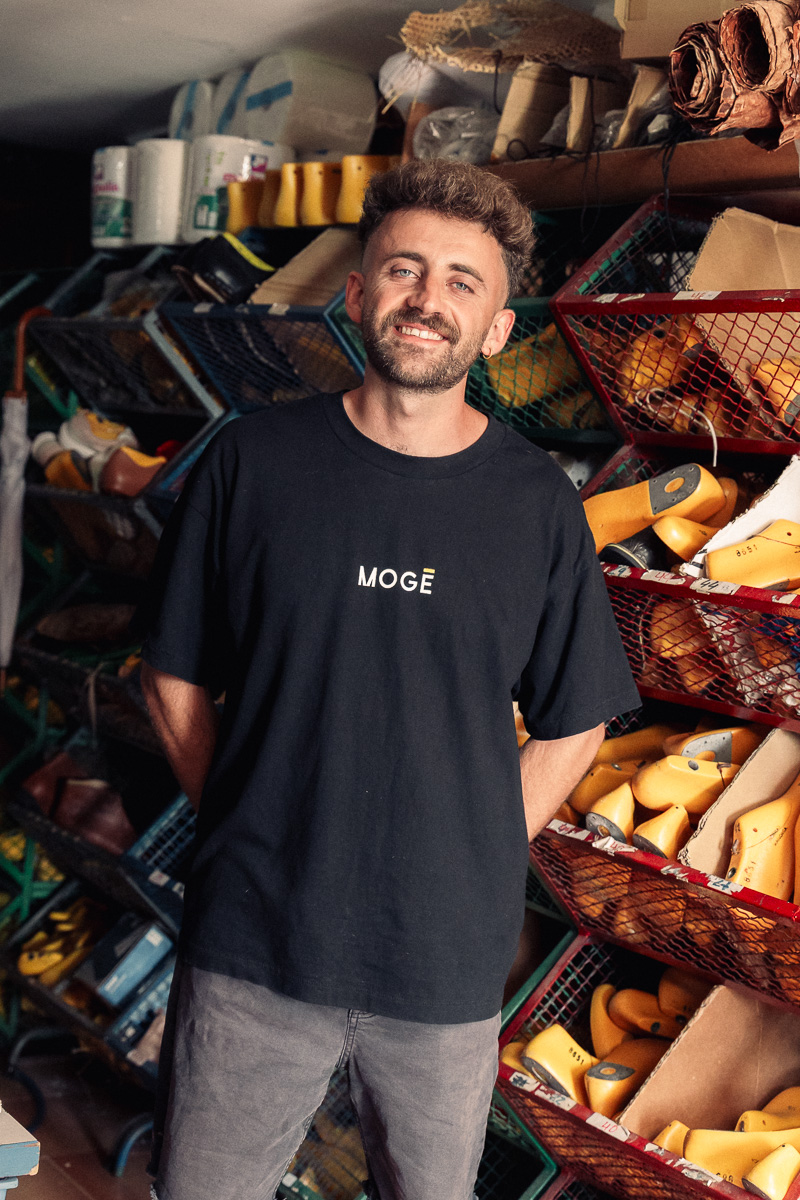
The first syllable of each of his surnames (Gelabert Morro, reversed in order) provides the name for a project that brings traditional footwear back to life and updates it—rather than reinventing it—through creativity. “What attracted me was the design,” Toni explains, “although I enjoy the whole process.” And the process begins with the search for inspiration. “I like spending a day alone in the mountains and jotting down ideas, although sometimes they come to me in the middle of the night and keep me awake,” he says with a laugh, surrounded by leather scraps and yellow lasts.
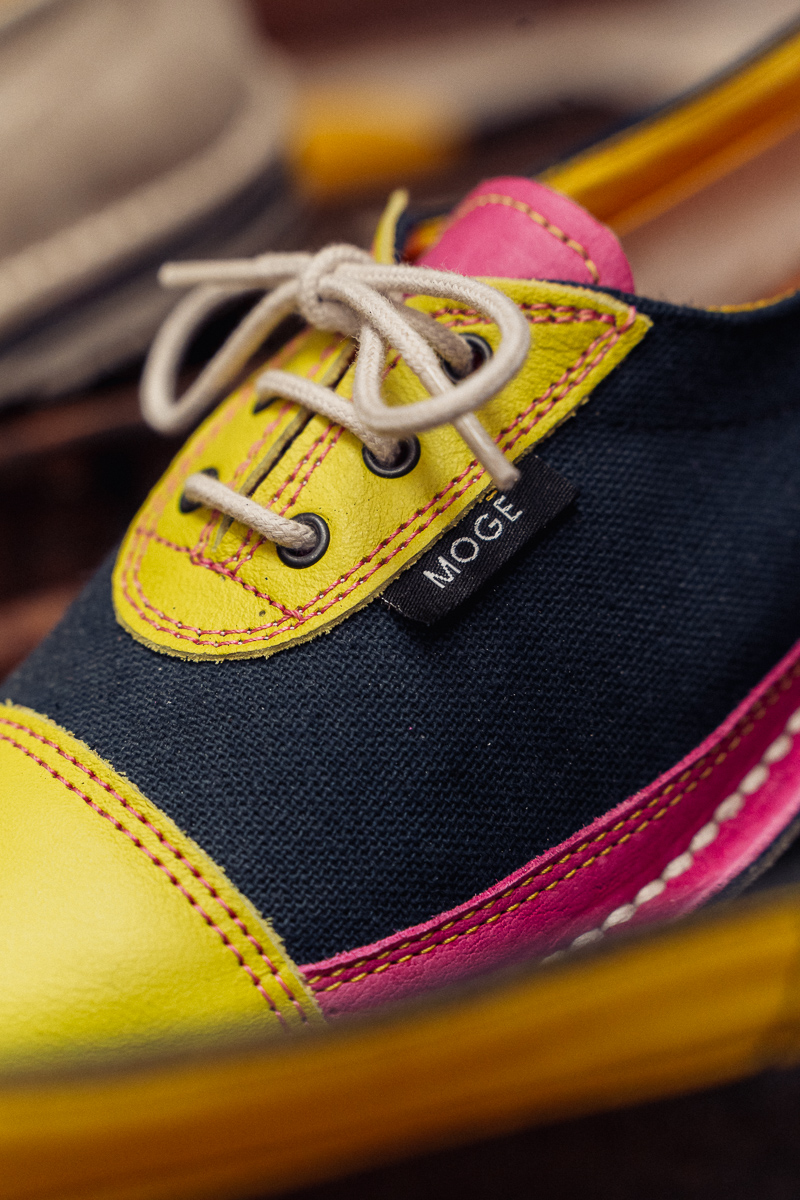
Serra, in fact, is the name of his first drop: a collection of five designs that pay tribute to the Tramuntana landscape, translating its colours and textures through combinations of leather. He makes the rest of his designs to order. “I love it when people come to the workshop —with an appointment, of course— because they can choose the colour, the leather, the thread and the sole, and have a unique pair of shoes that nobody else has.”
“I like spending a day alone in the mountains and jotting down ideas, although sometimes they come to me in the middle of the night and keep me awake”
Porqueres and patateres, as well as Menorcan avarques, are his signature designs. These are styles traditionally worn in rural settings and for agricultural work, but which were gradually disappearing with the decline of farming and the relocation of industry. Toni’s aim is to bring them back with creativity, boldness and a modern touch—and the idea seems to have appealed to a remarkably diverse audience. “Farmers, office workers or stone wall builders. Most of them are from Mallorca, but we’ve also sent shoes to Italy, Denmark, Germany... They’re people who value craftsmanship, service and quality,” he says when asked about his customers.
”I prefer to live in the present”
All kinds of people make their way to the workshop: some arrive with very clear ideas, while others want guidance; there are also those who are open to being surprised—despite the responsibility that entails, Toni admits—and women, increasingly more women, who are breaking with the association of porqueres with a traditionally masculine image. “Porqueres are really for both men and women, but they used to be made in brown, blue and black. Once you start mixing colours, the market gets bigger. There’s an evolution, and I really like that.”
Now that Moge’s foundations are firmly established in the small workshop at the top of the slope on Carrer Lluna, Toni remembers the hardships of those early days, but feels more confident in the present and looks to the future with optimism. “There are only four people left in Mallorca making classic shoes, and I’m the youngest of them, so I can imagine Moge establishing itself as a brand. But who knows, maybe I’ll end up in Brazil… I don’t know. I prefer to live in the present,” concludes the man who, with both feet firmly on the ground, has earned the right to dream.