Though it feels like a summer Thursday, it is still late May, and the streets of Inca are alive with regulars attending the weekly market, their paths crossing with the curious gazes of visitors. Locals and visitors alike weave through the market, filling their baskets with seasonal produce while exchanging stories with farmers beneath the shade of the stalls. Then the bells of Santa Maria la Major strike noon, and we step inside Celler Tonet.
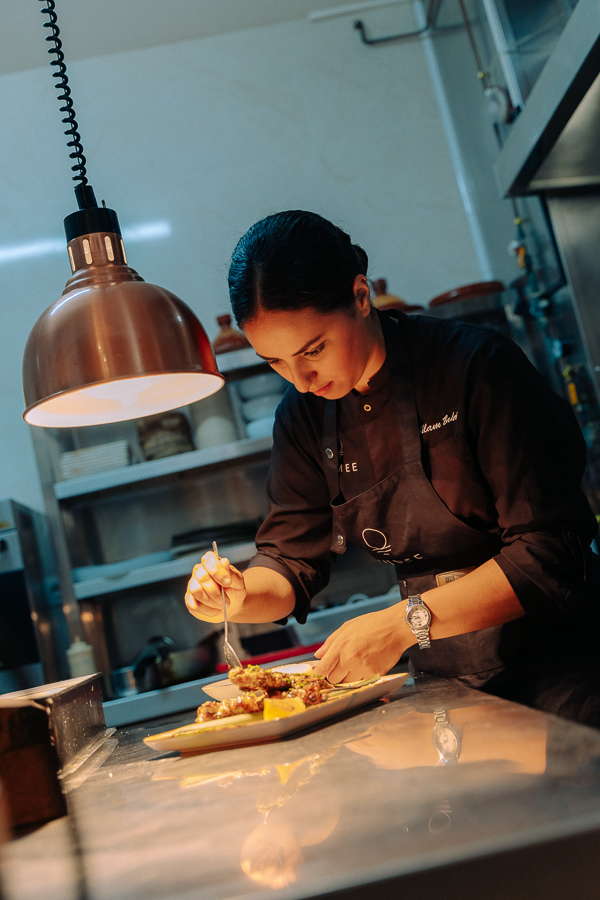
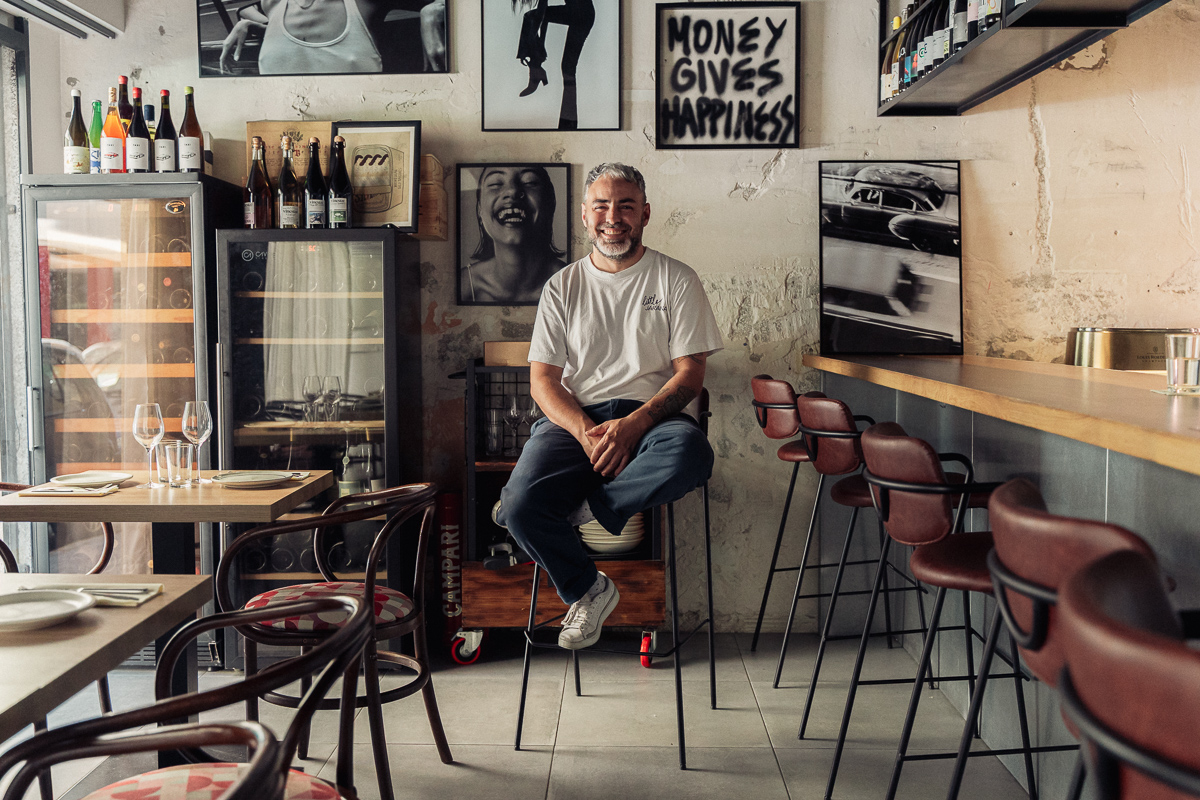
Amid the final preparations in the dining room and the bustle of the kitchen, we sit down with Maria Solivellas, the chef behind this new project, which, as she admits, came about almost by chance. “When we read in the newspaper that Can Marron was closing, it saddened us because it meant losing part of our identity. Before we knew it, we had become involved in this adventure, which is a source of enormous pride for us. Things have been happening within these walls since the seventeenth century. We’re incredibly happy,” she says, fully aware that owning a celler is, after all, “the dream of many Mallorcan chefs.”
Stepping into the legacy of one of Inca’s most iconic cellers inevitably comes with its challenges. For Solivellas, who has spent the past twenty-five years working with Mallorca’s culinary heritage while championing the recovery of local varieties, the task was to answer—or at least confront—a far from trivial question: what should a twenty-first-century celler look like?
“Cellers connected Mallorcans with abundance. They took dishes that were traditionally enjoyed just once a year and made them part of an everyday menu. Now that abundance has become the norm, we feel the need to eat more healthfully, with fresher dishes and more vegetables. That’s what we’re trying to do: explain our relationship with food,” reflects the chef, who has translated these ideas into a menu featuring Cas Sereno sobrasada with pickles and Menorcan rock mussels; greixera d’ous; meatballs with cuttlefish; and vegetable sopes, among other dishes that tell the story of the island’s culinary tradition.
“It’s a Mediterranean gesture that transforms the act of gathering around a table into a source of pleasure.”
In fact, the menu emerged from a process of introspection. Solivellas drew up a list of the dishes most commonly associated with a celler and, alongside it, another of the dishes she felt best represented local culture. One by one, she crossed some out and selected others until she arrived at a collection of recipes that may not be the most typical for this kind of restaurant, but are unmistakably island dishes—deeply rooted in place. Added to this was a simple premise: they should encourage sharing, because “it’s a Mediterranean gesture that transforms the act of gathering around a table into a source of pleasure.”
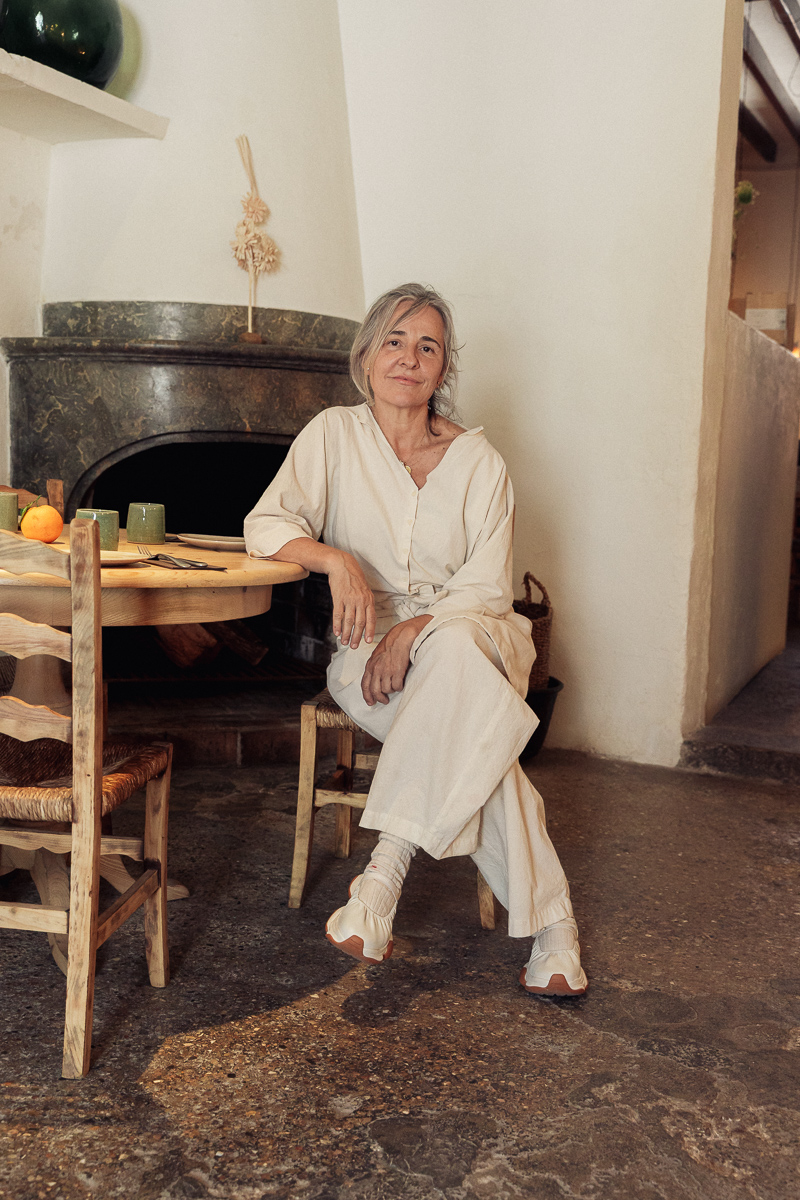
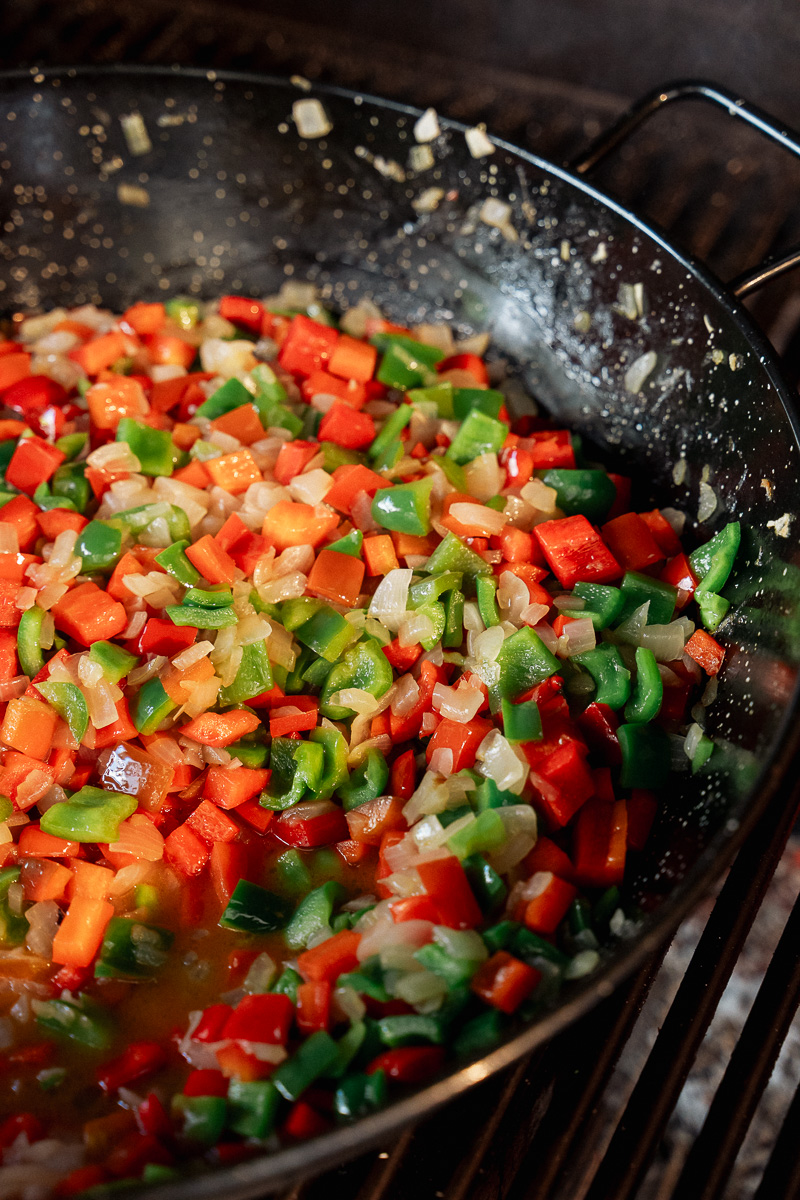
“It has been an exercise in peeling back the layers to reveal what truly matters”
This pursuit of origins and celebration of simplicity—and, as María emphasizes, “of things with soul”—extends far beyond what appears on the plate. It can be felt throughout the entire Celler Tonet experience: in the visual identity created by Maggie Adrover (Màrmola Mans); in the tables and chairs inherited from Can Marron and carefully restored; in the ceramic tableware designed by Joan Català Roig and Pere Coll; in the cotton uniforms crafted by Cortana; and in the revival of wine on tap, which was in fact the original reason cellers existed. “It has been an exercise in peeling back the layers to reveal what truly matters,” María says.
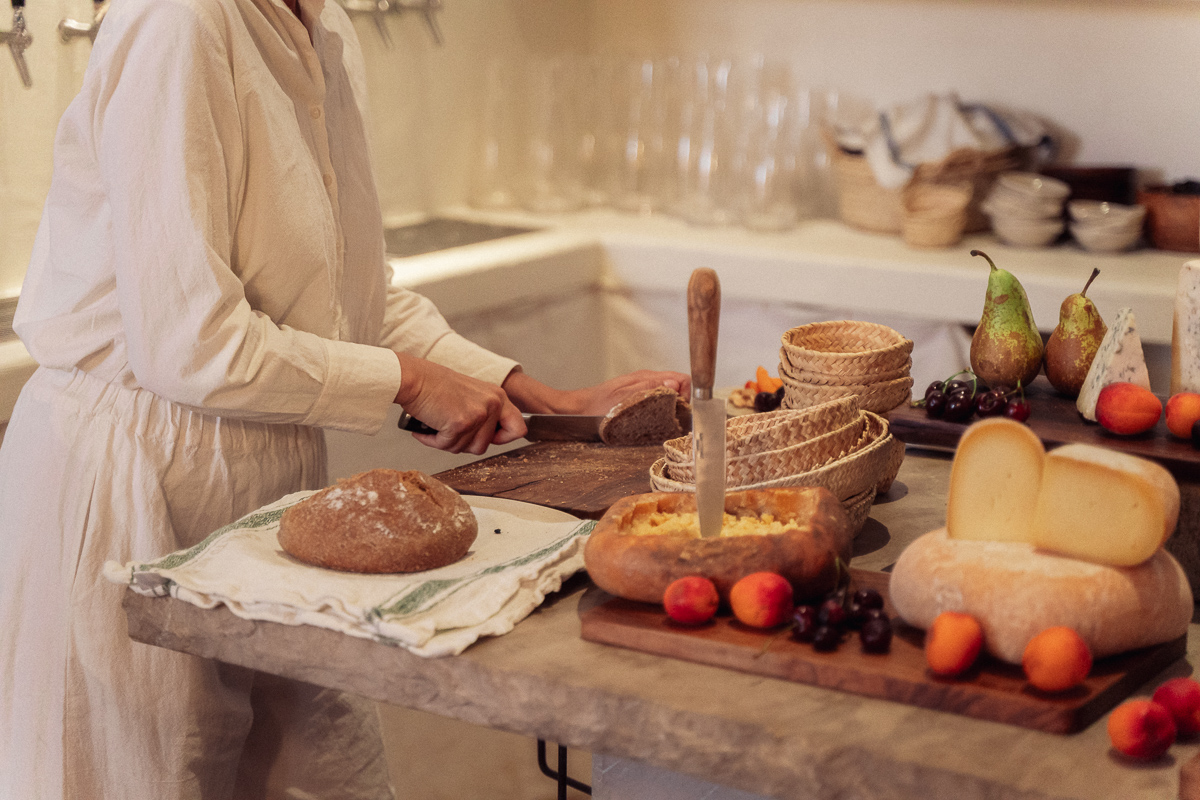
A selection of small local wineries, including Ca sa Padrina, Jaume de Puntiró, and Can Vidalet, once again fill pitchers and glasses, paired with organic artisan cheeses from Son Jover, Son Garrova, and Sa Cabreta. Almost like a pagan altar, the table at the center of the restaurant serves both as a statement and a tribute to a primary sector that, as the chef reminds us, “has suffered greatly.” “It’s true that, thanks to a certain type of tourism and a growing number of conscious consumers, it is beginning to regain ground. But the reality is that it remains in a very difficult position. I regret sounding negative, but I believe we need to be more responsible, more aware, and more committed.”
With a thoughtful, critical, and deeply coherent vision, the Solivellas sisters hope to “continue what we have been doing at Ca na Toneta”—which has temporarily reduced its opening hours—in service of local culture, history, and identity. It is a manifesto that confronts reality and its challenges—the rising cost of ingredients, adapting to customers’ purchasing power, and building strong teams—with a perspective that is both realistic and deeply passionate. And if any doubt remained, María dispels it as the first guests begin to arrive: “I believe that, in a few years, projects like this—created with care and conviction—will be a luxury. The situation is complex, but we’re romantics.”