Although today the service sector, led by tourism, reigns supreme in the Mallorcan economy, the fact is that from the 19th century until the 2000s, the manufacturing industry enjoyed a splendorous period. Textile and leather factories and numerous shoe companies were spread throughout the island, many of which achieved worldwide recognition. However, since then, the local productive fabric has been unraveling.
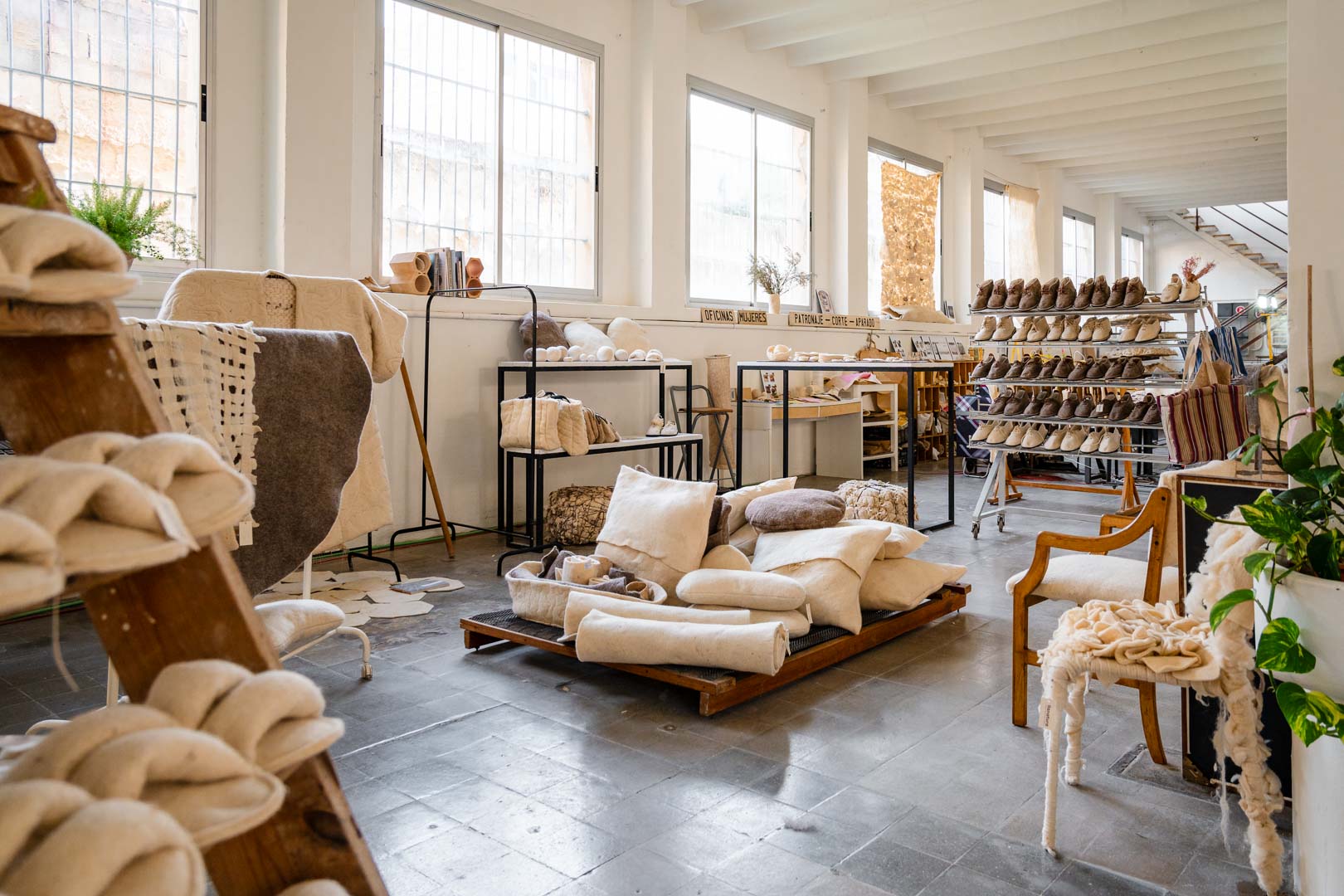
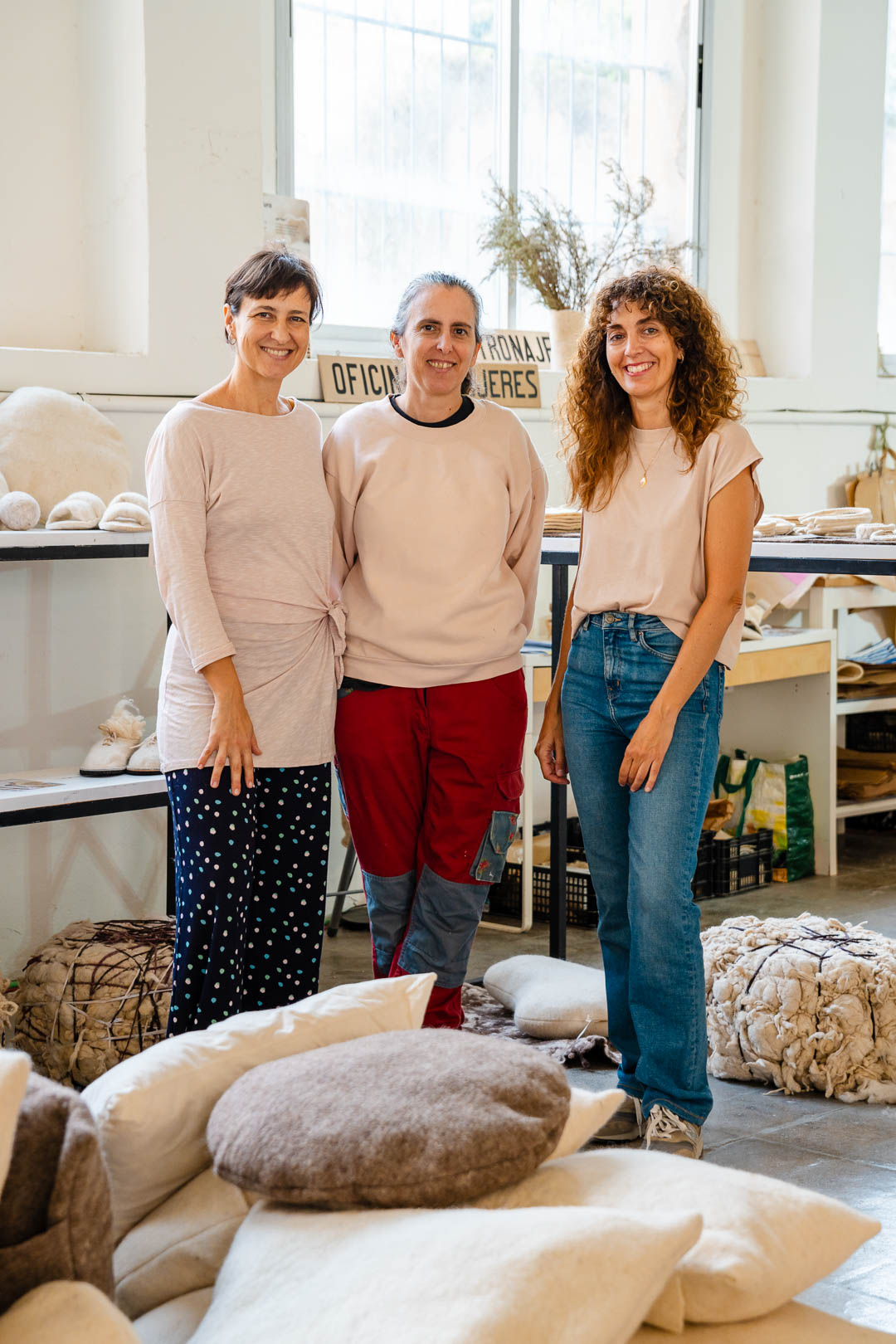
Today, projects such as Llanatura, look back with the aim of recovering the value of a quality industry, respectful with the environment and focused on circularity. In their workshop in Inca, located in an old factory and just a few meters -how symbolic- from the Museu del Calçat i la Indústria, Gemma and Eugenia lead an initiative that awakens consciences.
"I don't know whether to define it as innovative or crazy," says Gemma, an environmentalist by training, as she shows us around the space where they work. "During the pandemic, we wondered how we could be throwing away something like wool and the idea of creating a factory to provide the material came up, but we redirected it because, as it was unknown, people didn't know what possibilities it actually had”.
This material to which she refers is the felt that Llanatura creates from sheared wool that, until now, was being discarded. "We were born with the purpose of renewing the wonderful natural material that is wool. If we wanted to invent it, we couldn't because it is extremely complex, but even so, we are throwing it away to use synthetic fibers. A nonsense that they are trying to reverse with a clear and firm purpose: "that of wanting to change things".
With this will in mind, the project has been taking shape and now, in addition to producing the raw material - felt - by hand, they also promote textile craftsmanship, since they design and produce products, and collaborate with artisans and artists to do the same in their workshop. A symbiosis of circular craftsmanship that is born, Gemma reflects, "from common sense and critical thinking. We have not invented anything, we have pointed out a problem."
"We are concerned about the environmental issue of water and dyeing requires a lot of it. That's why the range of colors is 100% natural".
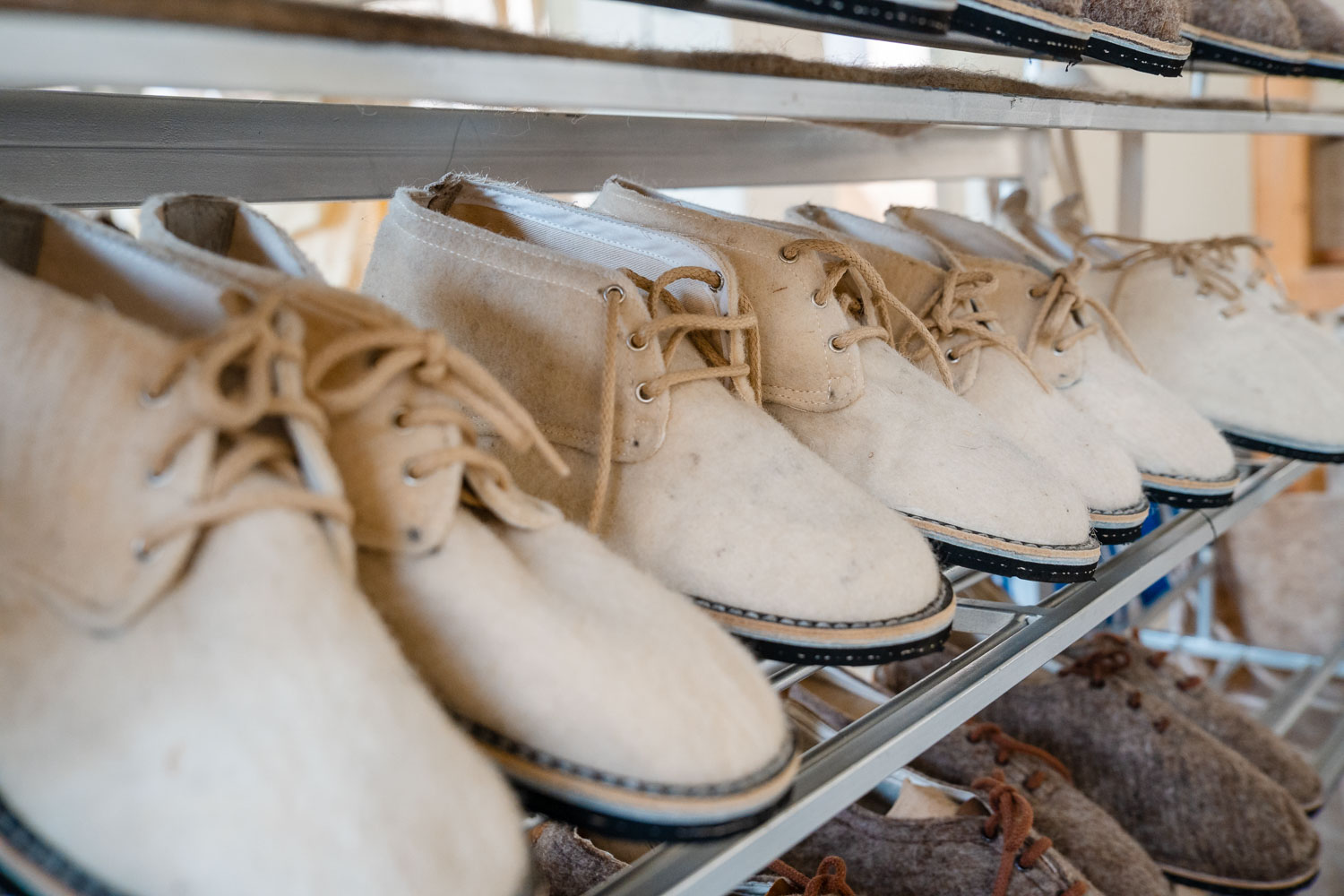
The final result of their work, the product, are insoles, shoes, bottle racks, headbands, rugs... sustainable and made in Mallorca, but to get to this point, they go through a long process that Eugenia -wool artisan since 2013- explains. "First the dirty wool is selected when it arrives from the shearing and is passed through a machine -which I bought in Binissalem- that breaks the fibers, shreds it and prepares it for washing. Once clean, the wool is dried in the workshop and then put back into the same machine to remove the lint again".
The wool then goes through a second machine that creates the felt. At this point, the color is decided - white, red, black or with a brownish tone that is achieved by mixing the wools, since no dyes are used here."We are concerned about the environmental issue of water, and dyeing requires a lot of it. That is why the range of colors is 100% natural," explains Eugenia. Finally, the felt goes through a third machine - the only one of its kind in Spain, we are told - that allows us to draw and print shapes and illustrations. Once the raw material is ready, it is time to sell it or to design and manufacture a final product.
Carmen, Gemma, Eugenia, Andrea and Elisabeth are vocational training students from the Fundació Es Garrover who are also participating in the whole process. "The idea is that people who are out of the labor circle are reincorporated. They receive notions of commerce and social skills as well as work experience, here, in the workshop."Their collaboration is close: "When we thought of this project, we had no money to carry it out. After knocking on several doors, Es Garrover became interested and now we are working together," adds Eugenia.
"Stone, salt, wool... are scarce natural resources that allow you to promote what is local. Here, on the island, I asked myself: "If our natural resources are only a few, why don't we take as much advantage of them as possible?"
That afternoon when the two met in the middle of confinement and through a screen, thanks to a common person who introduced them, seems now far away. But even today, when they speak, they have the ability to spread their enthusiasm for what they do to anyone. An enthusiasm, however, that breathes an air of reality and awareness because the journey to get here has not been easy: "Institutional support was very difficult, there are no instruments because there is a lack of critical thinking. Perhaps because it is an island, there is a certain degree of protection," Gemma points out. However, the obstacles were not an impediment to moving forward: "Stone, salt, wool... are scarce natural resources that allow you to promote what is local. On the island, I asked myself: "If we have only a few resources, why don't we take advantage of them as much as we can?
So, here everything is used in a one hundred percent local, sustainable and circular wheel: since Almacén Canyelles, which collects the wool that is sheared from the Tramuntana to the Llevant, delivers it to them, this natural resource passes through the hands of local workers and when its useful life ends, as it is biodegradable, it is thrown into the earth to nourish it. Then, the circle is closed and the waste turns out to be zero.
When asked about the future, Gemma and Eugenia tell us that they aspire to consolidate the brand through events and to open it up to the architecture and furniture sector, exploiting all the possibilities of their felt, which can be used to create everything from soundproof panels to furniture -in fact, when we interviewed them, they were preparing the sustainable furniture exhibition Re Pensar Disseny, Re Pensar Processos, in collaboration with Amarar, Paumes i brins and Teixits Vicens-.
A promising future, by all accounts, because their journey is full of small victories: "to have survived is already a milestone," smiles Eugenia, "but I would highlight the social part of the project, that the people who work here do so with welfare, support and understanding, and of course the environmental side, the awareness that wool is a resource to create a product one hundred percent made in Mallorca, from raw materials to clothing, as a potter does with clay or the madonnas de sa llata with palm heart".
Gemma, Eugenia and their team are weaving the story of Llanatura, slowly but surely, and with a high dose of conscience. They create the raw materials, collaborate with designers and artisans on the island, and design their own microplastic-free, skin-friendly products. Buying them (in stores like Son Moragues, Dos Alquimistas or A punt d'extinció, in the workshop itself or on their website) is a way to contribute to their initiative. Sitting down to reflect on what we are doing with the resources around us and acting accordingly, too.