An architect by training and a ceramist by vocation, Roberto Paparcone remembers caricaturing friends and family from a very young age. He acknowledges that he found a means of expression on paper that accompanied him throughout his university studies and remains very present still today, long before he started sitting at the potter's wheel.
His career in ceramics began by chance. "I was given a month-long course in Barcelona as a gift, and after that course I never stopped. It captivated me, and as a designer I discovered that I could create my designs directly with my hands." Since then, he has trained with leading figures such as Misako Homma, Marc Vidal, Joan Pere Català Roig, and Ana Felipe, and has taught himself a great deal, because if one thing is clear to him, it is that in the world of craftsmanship, training implies responsibility. "You can start by improvising, but then you have to learn the techniques to control them."
"Mallorca has given me a home and the opportunity to connect with people who I feel are seeking the same things as me".
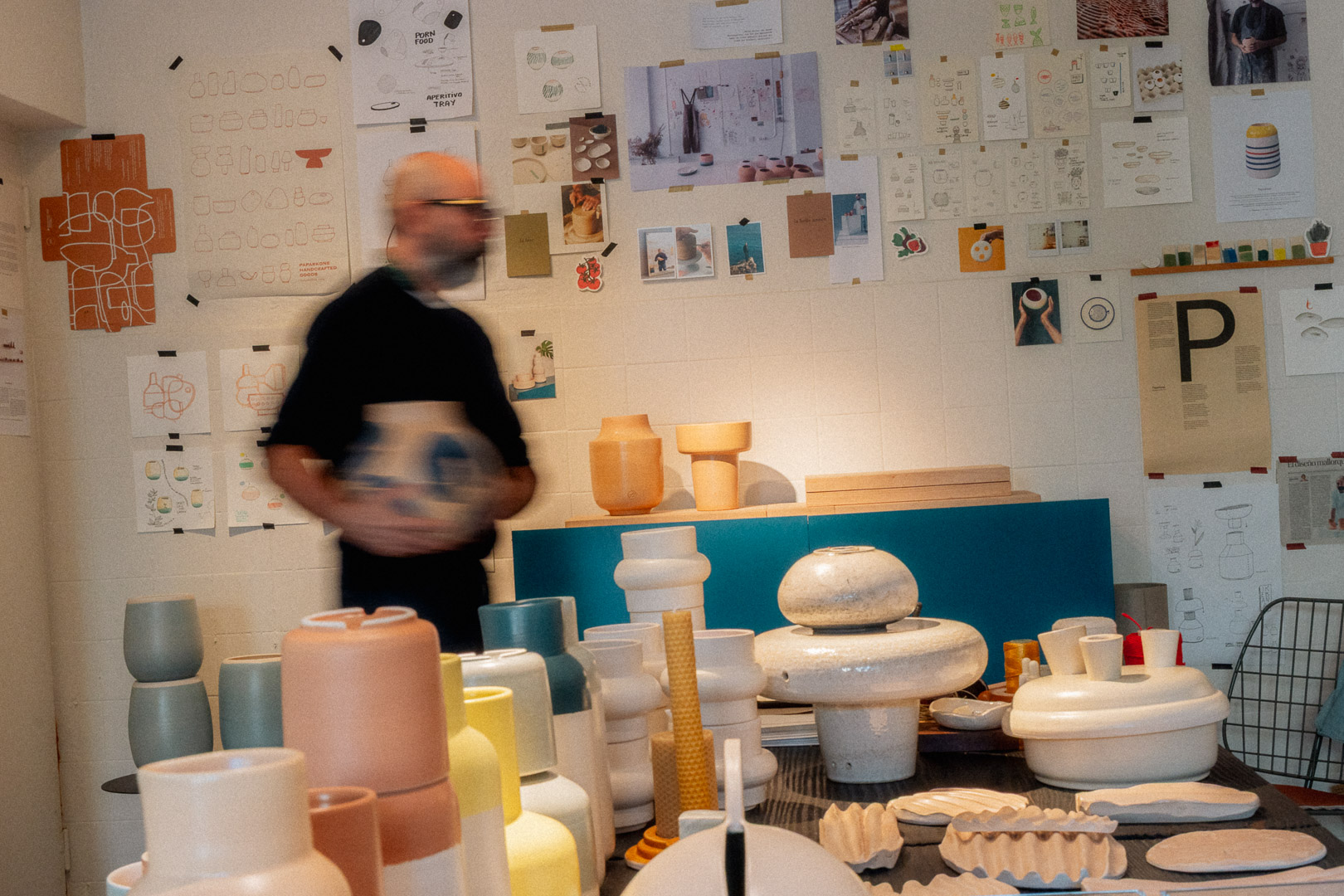
And so he arrived in Mallorca. That was ten years ago, although he admits that when he looks back, it feels like much longer, because it was on this side of the Mediterranean where he created his brand—Paparkone—which now has a showroom in the alleyway of Sant Feliu, an exception in the city that harks back to the Palma of yesteryear, and a studio just a ten-minute walk away. "Mallorca has given me a home and the opportunity to connect with both local people and those who were not born here, but with whom I feel we are seeking the same thing: to contribute to a more sustainable and ethical world."
With architectural influence and a creative eye, Paparcone creates collections that are born from a concept, incubated in the sketch, and take shape in ceramics, sometimes alone, sometimes with brands he feels a connection with. "I enjoy solitude from a creative point of view because it requires silence and introspection, but the collaborative moment allows different disciplines to come together and is always a mutual learning experience."
CA NA TONETA, Biznaga Atelier, and Adalt Brewing are some of the projects on the island he has generated synergies with, convinced that "collaboration multiplies rather than adds." With the Palma brewery, for example, the proposal arose from admiration. "I like their product and the collaborations with designers to decorate their cans, so I suggested making a ceramic label." Based on the packaging study, he created a numbered series of mugs that, like a canvas, tell the story of HERR FISCHMANN, a narrative that emerged from the conversation between the two teams.
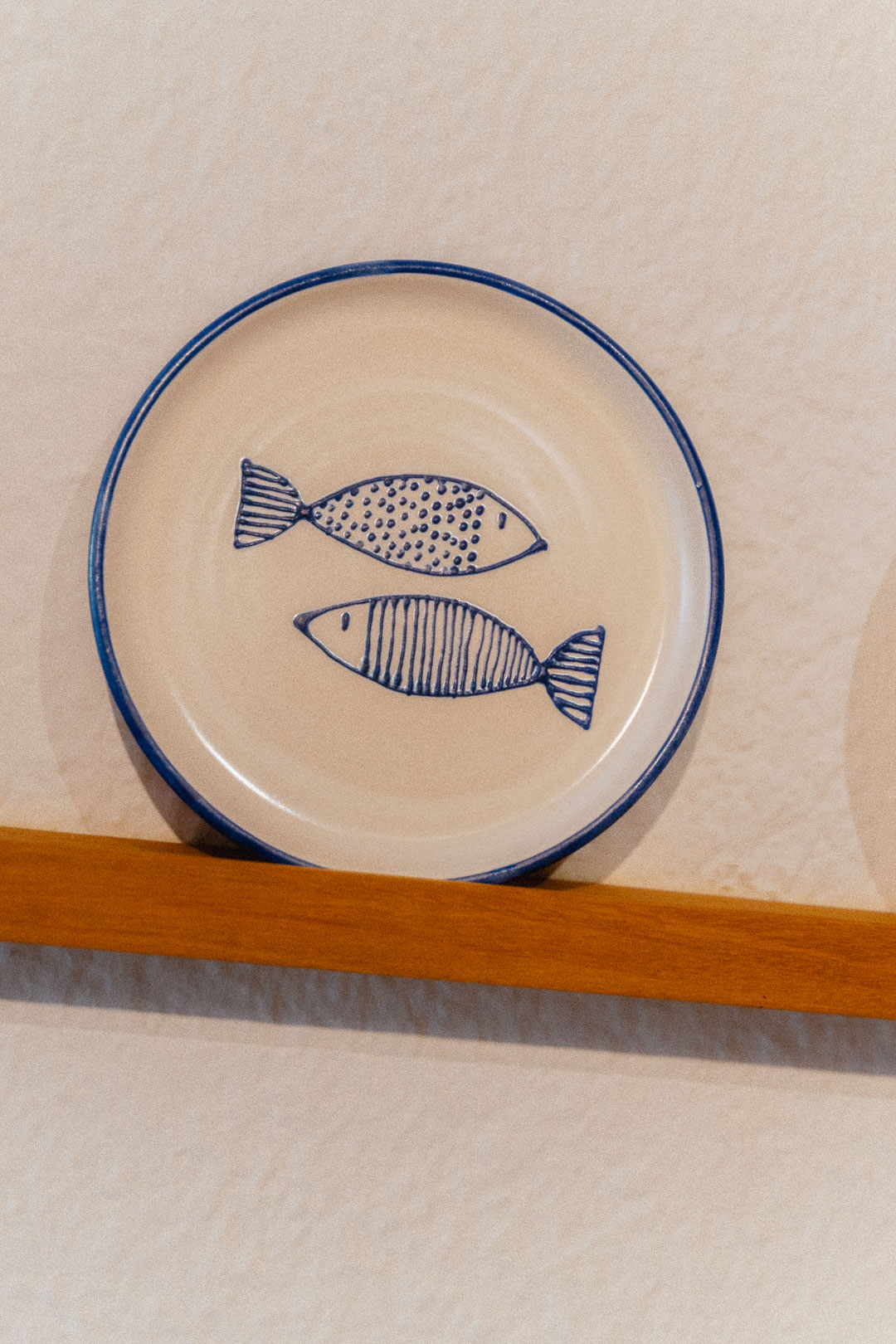
His solo pieces also tell stories, many with messages that challenge us. Design your souvenir and Antonia la Dimoni question how we travel and relate to our destination. "They are souvenirs that you don't just stick on the fridge, but that make you live the experience once again" because "it's important that people leave with information about the heritage of the place they visit."
"It is important to give credit to those who came before us and passed on their knowledge. That is where the political value of raising the status of craft heritage lies."
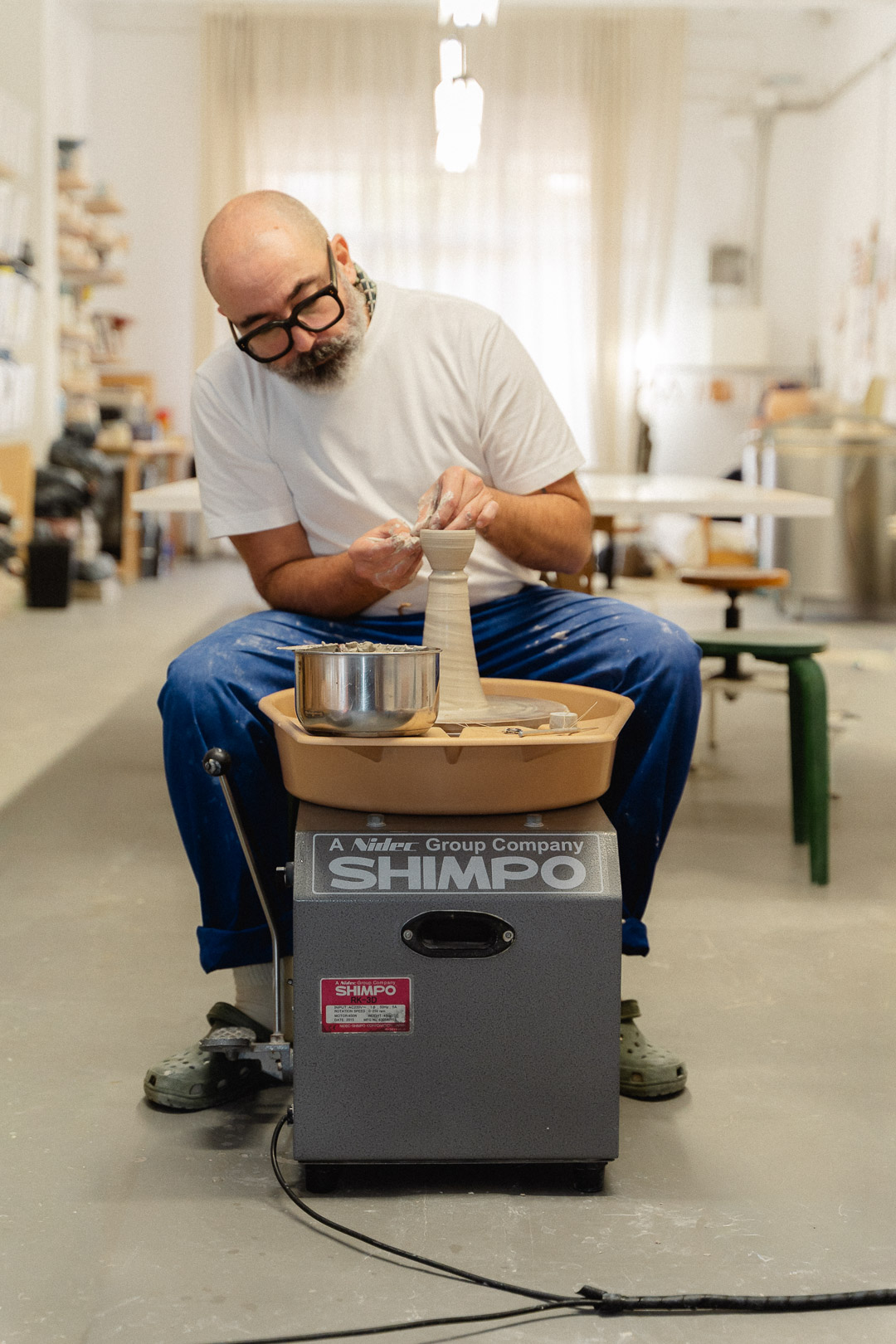
Creativity and technique come together in the studio, a space where Roberto also offers workshops. The idea germinated in Armenia, where he taught as a guest lecturer, and he decided to develop it here after thinking long and hard about what he wanted to offer. "For me, teaching is a great responsibility, and I always approach it from a design perspective because I believe that is what is often lacking in the field of craftsmanship: design behind technique."
Whether intensive or monthly, he is clear that his studio is not a school or a recreational space, but rather an "opening the doors of your studio so that people can make it their own once a week, without cell phones or distractions," now that ceramics is booming.
"I don't think it will go out of fashion. We must treat it with respect, learn from those who came before us and contribute, and design has a role to play here in keeping it alive," he reflects, while emphasizing the need to open up the conversation and engage with those involved, both those who are creating now and those who paved the way in the past.
"It is important to give credit to those who came before us and passed on their knowledge. That is where the political value of raising the status of craft heritage lies." He says this, once again, with respect and a thoughtful tone, having just won the Consell de Mallorca Craft Award in the Innovation and Design category. "This recognition serves as an example to new generations that this work can be contemporary," he says.