Caimari is a mountain village with less than a thousand inhabitants, a town of rural aesthetics that rises right in the foothills of the mountains. Its streets are flanked by houses of Majorcan appearance and character. Houses with stone fronts and shutters painted in a green color that matches the olive trees that dot the landscape. Its streets are ascending, and in spite of its slope they invite us to go up to be impacted by the air of the mountains. We are at the foot of the Serra de Tramuntana, which welcomes us in what could already be considered its lobby. An example of Mediterranean hospitality provided by nature itself. That kind of welcome is also practiced in a fonda like Ca na Toneta, which for twenty-six years has been providing food and warmth to those who wish to sit in their chairs. We head down Carrer de s'Horitzó and find its entrance, which could not be more homely.
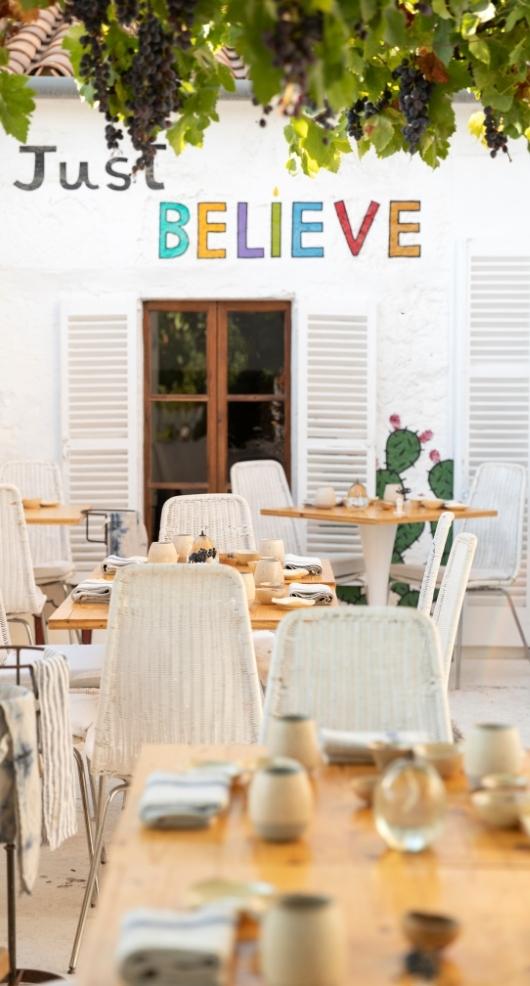
A few seconds pass before Maria Solivellas opens the door of the establishment she runs with her sister Teresa. It is six o'clock in the evening. There is a slight hustle and bustle. Staff coming and going. The tables are being set for tonight's service and Maria leads us to the house next door, so her team can work in peace. We cross the threshold. We notice the walls of a house that has accumulated years and charm. It is the restaurant's store, whose walls are crammed with bottles of wine and pieces of pottery. We cross a corridor and come out onto a terrace. Under the flowers of a bougainvillea, we sit down at a table. "In Mediterranean houses everything always happens around a table". This is how Maria starts her speech when asked about the essence of Ca na Toneta. "We have invented a way of being in the hospitality industry, which consists of asking what you would do if you received someone in your home. How would you give the best you have to share it". Hospitality is the main ingredient of her gastronomy, a project with more than five years behind her that is no longer understood as a business, but as a way of life.
"I came back to Mallorca after ten years and I took on the insularity as a challenge".
Maria's story brings together an element that we have encountered on several visits: starting over. After a period in Madrid dedicated to music production, she looked back at the family restaurant that her mother and Teresa had built. Then it dawned on her that her job had an expiration date. She wanted to make sense of her routine. Without any training and from a self-taught drive, she began an introspective search for herself through the kitchen. "I returned to Mallorca after ten years and took on the insularity as a challenge. The limits proposed by the island were attractive to me. It seemed to me a good starting point to start working. I asked myself: what would happen if I only make use of what I have around me?".
Austerity was her best ally to experiment in a field in which she had no experience. She immediately understood that in order to learn she had to put herself in the kitchen, an activity that she seasoned with marathon reading days. "I spent the day cooking and reading. Recipes, novels or anthropology. Anything related to food".
The gastronomic universe is extremely expansive, hence the confines of Mallorca were for Maria the handhold to hold on to. What she may not have expected was that those limits would become so interesting. Today they are the cornerstone of her cuisine. In that initiation phase, she adopted a view that made her an interpreter of the landscape. She put a magnifying lens on everything around her to notice its nuances. "I used to walk around the island, talk to farmers, look for products and seeds. I also started cooking at the same time that I set up my own organic garden. That helped me understand the connection between my new job and the land. Maria Solivellas was looking for a meaning to her days, and gastronomy gave it to her. A knowledge of enormous dimensions that affects health, territory and identity. She fell in love with cooking instantly.
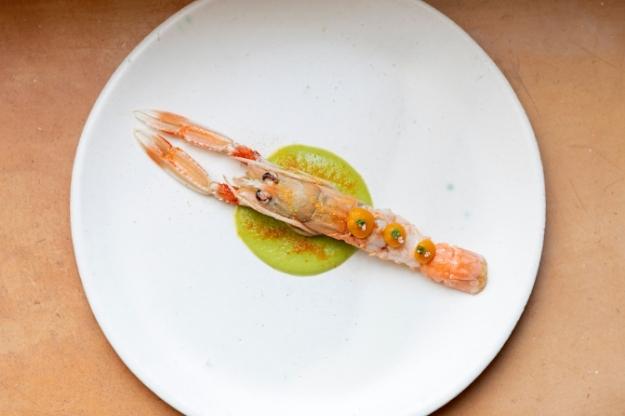
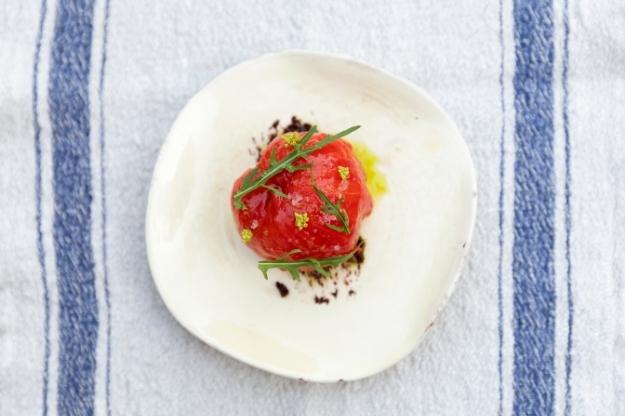
"The transforming power that a restaurant can have on society is very important".
It is true that when she decided to join the team, the restaurant had been open for three years. It was her mother and sister who, with no previous experience in the profession but with a deep-rooted culture of taste, transformed her aunt Toneta's house into a restaurant. It all happened after reading Laura Esquivel's Como agua para chocolate (Like Water for Chocolate). Books again as a driving force. "Twenty-six years ago it was risky for an inexperienced family to open a restaurant in Caimari. And on top of that, I started studying traditional Mallorcan recipes when fusion cuisine was emerging. We were Martians". Nevertheless, the project was well received from the moment it opened, and took on a new form when her mother hung up her apron so that Maria could take over the reins.
The bells of the village church toll. Their peal bounces against the mountain tops while Maria tells us about her discoveries. She owes her wisdom not only to books, but to everything she has absorbed from traveling around the island. Through her curiosity, she discovered the way our ancestors lived, how they related to the environment. There she embraced environmentalism and circular economy, two of the main condiments with which she seasoned her dishes. A heritage of the rural environment from which we come, and that with the passage of time is being lost. "At Ca na Toneta we try to explain who we are, where we are going and where we come from. The transforming power that a restaurant can have in society is very important".
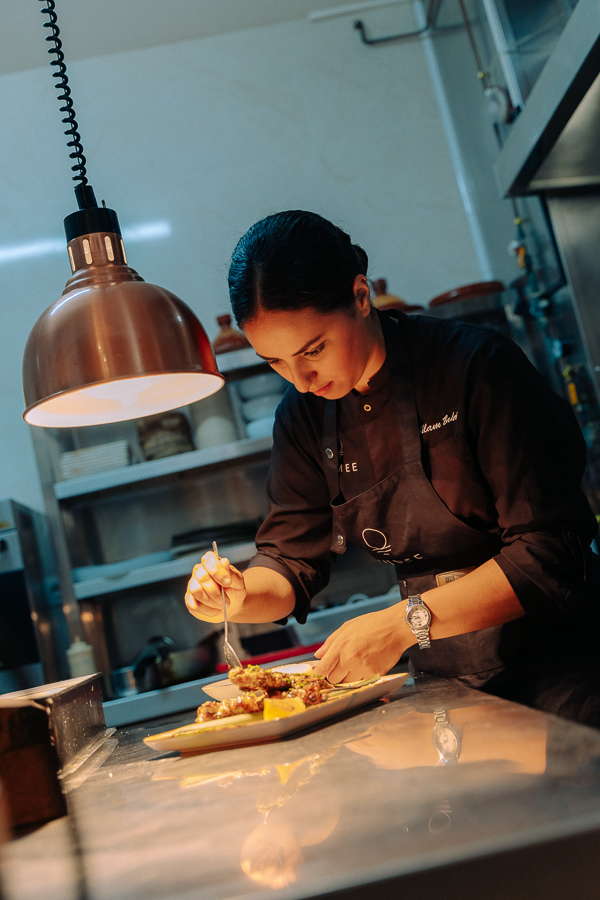
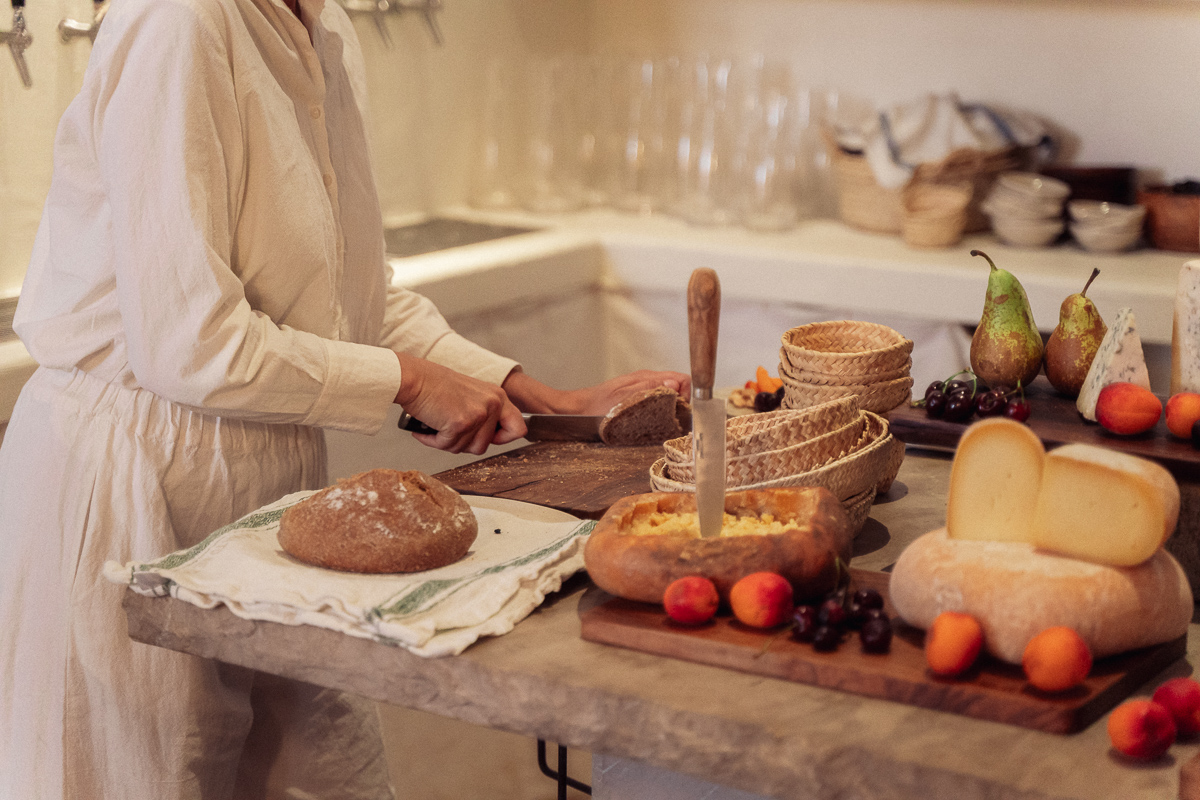
Maria bids us farewell in her workplace, which is none other than the kitchen where she works as a chef. Each night's dinner is strictly seasonal: the product offered by local producers, key figures in society for her; the one provided by the restaurant's organic garden, a guide that allows them to experiment with local varieties. In Ca na Toneta the intention is that the diners feel, under the bower of its terrace or in its whitewashed stone dining room, this reinterpretation of Mallorcan cuisine. "It is necessary to vindicate identity in such a globalized world. It is necessary to preserve it and to make it evolve."