Val Castellet and her partner, Juan Diego, came to Mallorca because a friend told them wonderful things about this place. They didn't know the island or what kind of life they would lead here, but they were young and planned an "old-fashioned upbringing, and here, at that time, it was possible. They told us that we would love the island so we took a plane".
Until then they had lived in Buenos Aires. Val worked in silkscreen printing, which at that time, she says, "was not at all ecological" and caused "an internal dichotomy". When, around 2009, she began to study and research, and came into contact with the wickerwork of Córdoba, in her country, she abandoned this discipline. Juan Diego made furniture and I made luminaries woven with disused wool and thread'. He began to weave, to learn the artisanal techniques of basketry and to introduce himself to the construction of weavings and objects. All manual, all handmade. This is how Re Hecho came about.
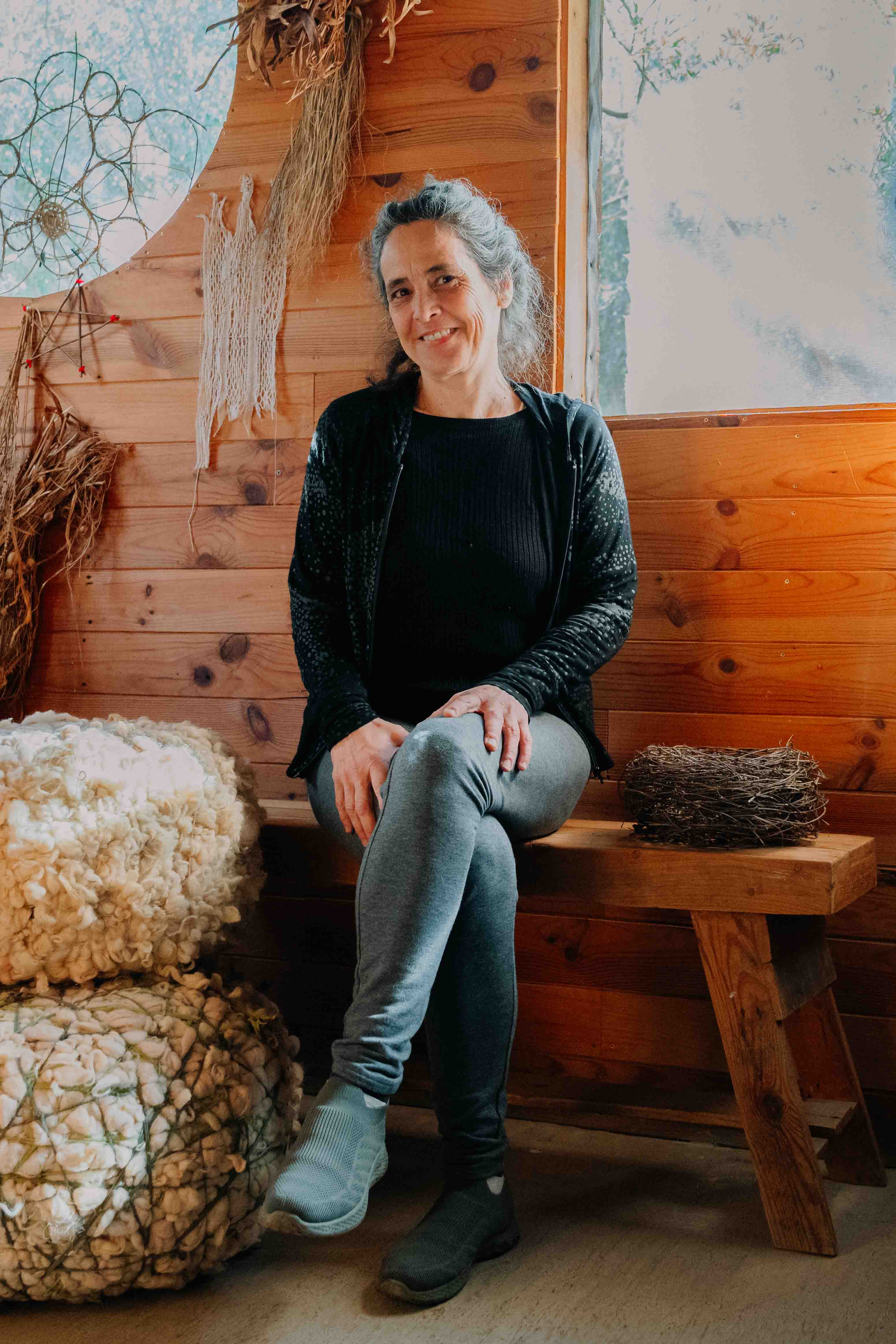
She tells us about it in their home in Llubí, a beautiful and modest wooden house in the Pla de Mallorca, which they built from scratch themselves -as they had also done before in Argentina-. A few chickens swarming in a barnyard and handcrafted furniture make up an austere decor that says a lot about their way of understanding life.
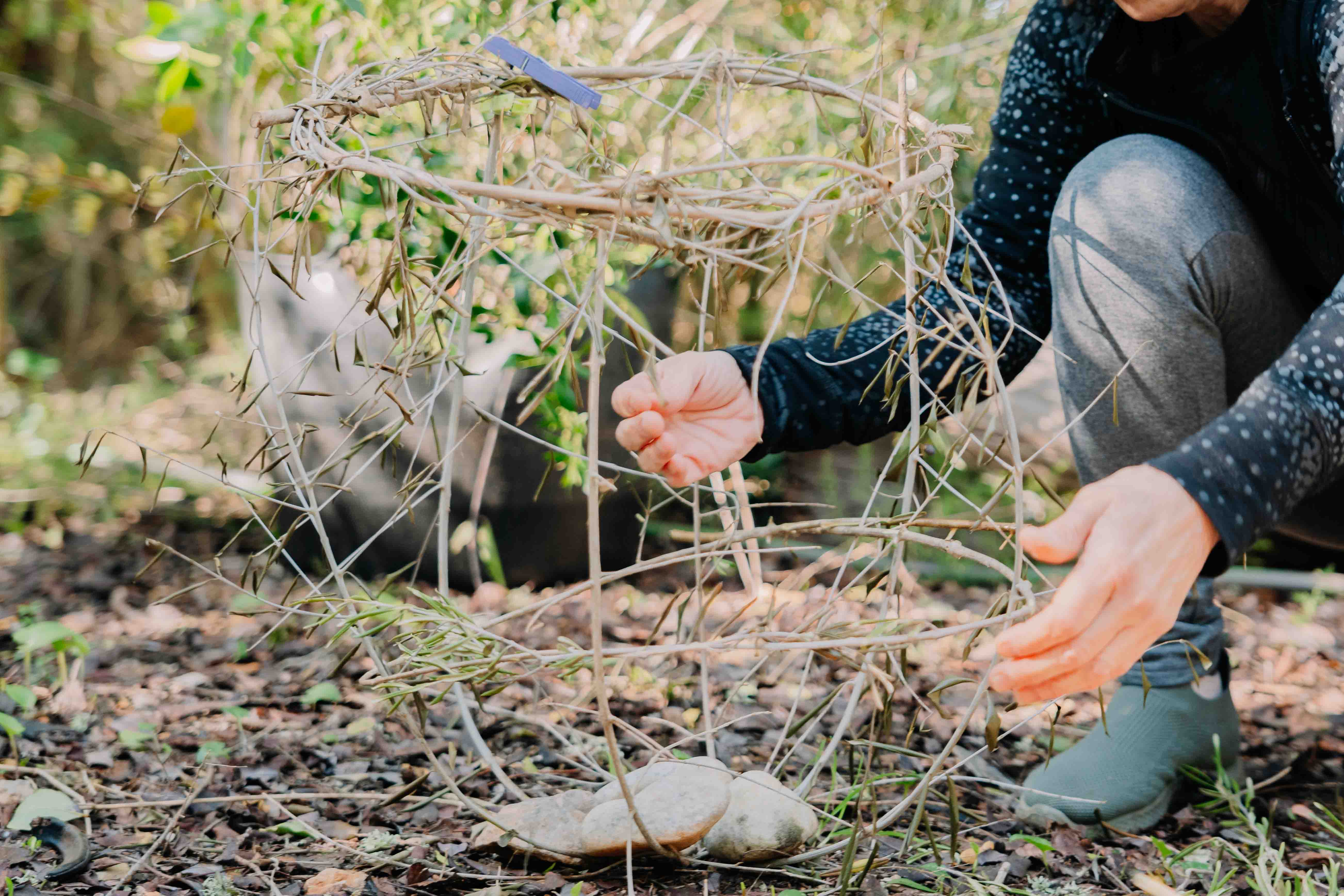
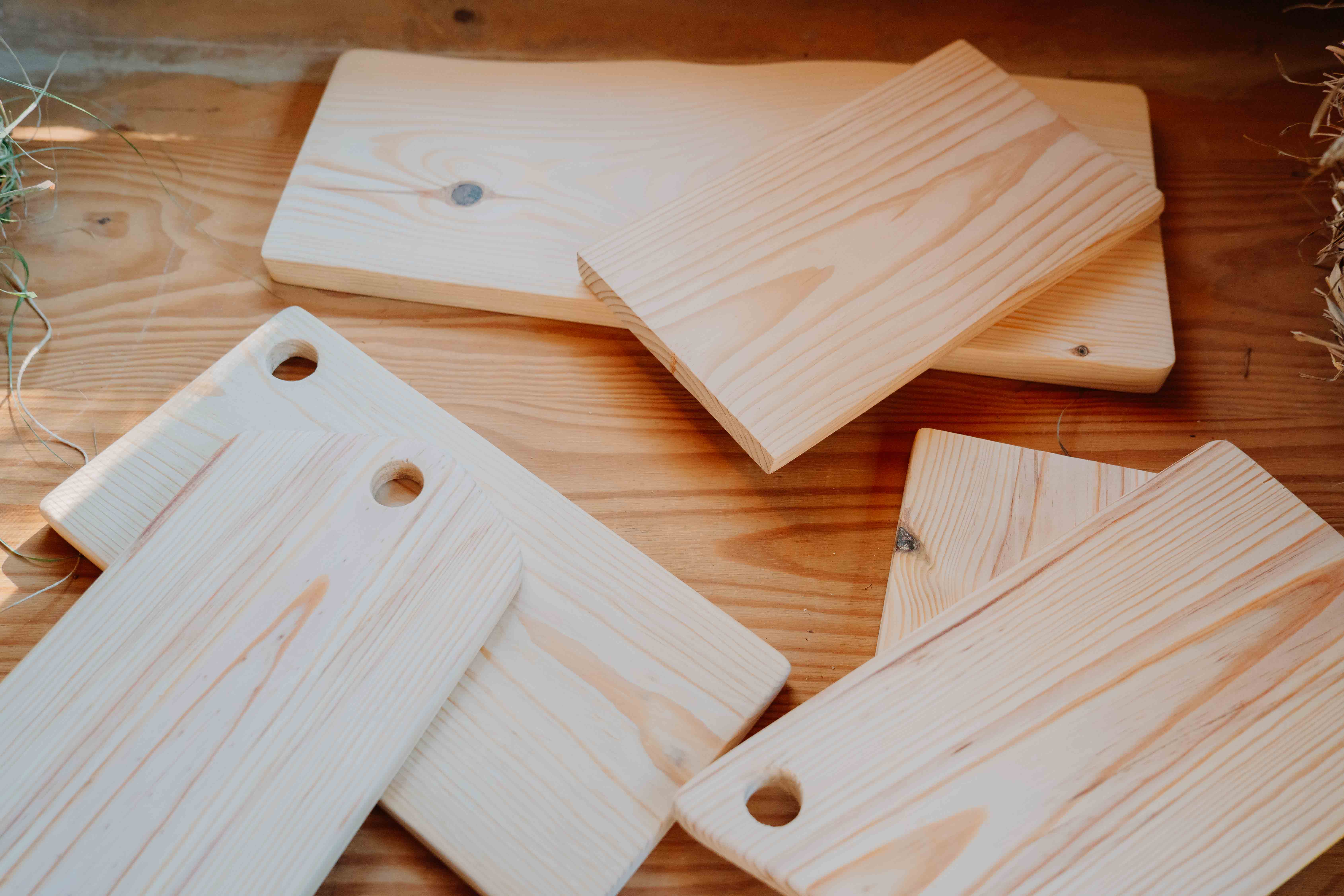
Re Hecho is a platform that gives a second life to pallet wood and discarded furniture, and creates decorative objects for the home, while participating in interior design and architecture projects that focus on sustainability. In addition, Val, as a textile artist and lover of contemporary basketry, investigates the island's plants, those that grow freely and often go unnoticed, and analyzes their textile qualities.
"Perhaps certain crops are no longer representative or as easy or sustainable in the framework in which we live now. It seems to us that everything that is tradition is sustainable, and it may or may not coincide".
It is a creative exercise, but also a conscientious review of what we consider, today, sustainability because, although the llata and palm heart have stood the test of time and are being recovered by artisan hands on the island, Val recalls that "Mallorca was self-sufficient until the boom of tourism in the 50's. There were many plants that were used for basketry, for weaving, to create furniture... but that with the use of plastic were then left aside".
Now, she studies if some of these plants were in fact used at some point or if they can be used in the coming future. From a perspective open to reflection, Val, as she recognizes, is interested in talking about 'what is not talked about'. That is why, at a time when as a society we are once again focusing on how we live and how we consume, she invites us to review concepts such as recycling, reuse, sustainability and even asks what and why we consider to be trash and what is not.
At the end of the day, he believes, "it is good to go back to what was done in the past, but we must also see if it is viable. Maybe certain crops are no longer representative or as easy or sustainable in the framework in which we live now. It seems to us that everything that is tradition is sustainable, and it may or may not coincide".
She has recently created a pouf with washed wool and reused untreated mattress wool. She proudly shows it to us because it was an idea that had been on her mind for a long time.It is beautiful and raw because Val is interested in materials that convey that rawness, given directly by nature. With them he creates a multitude of objects: baskets, wooden boards, chairs, tables, lamps. An endless number of possibilities that invite us to 'reconcile with the environment'.
Her love for the environment has been with her since she was 16 years old, when she was "moved by ecology". Since then, she has always been interested in it. "I studied half a degree in psychology and half a degree in biology, and I didn't finish them, but they helped me to shape my vision". A vision that he tries to transmit with his products, which he always sells directly to the customer, but also in workshops that he gives in his workshop in Llubí and in collaboration with other projects with which he feels in tune, such as Open Studio 79 or Escuela Artesana.
«I do not deny all tourism, I know that we all live directly or indirectly from it, but it could be another tourism, which there is, people who have another look».
A way of being in contact with nature' in which the playful character reigns and she teaches basketry and weaving techniques. She also offers them as part of retreats because, as she acknowledges, Re Hecho is more successful with foreign audiences than with locals. "I think it's a question of vision and that it's hard to get it out of people's heads that what's good is what's new. It's a difficult mentality to combat," he reflects aloud.
Val and Juan Diego have been in Mallorca for more than 20 years. Here they have made their home, first in Bunyola and then in Llubí, and their way of life, and they observe from a critical perspective the double face of the island.On the one hand, the daily life, the one of the countryside, the one they profess. On the other, the one that feeds "an appalling massiveness. I do not deny all tourism, I know that we all live directly or indirectly from it, but it could be another tourism, which there is, people who have another look," he says.
Re Hecho does its bit to ensure that the friendlier side is gaining ground over the other side that contributes to overcrowding. It does so on a small farm, investigating the multiple possibilities of the natural fibers of wild plants that Val collects to turn them into contemporary objects that not only make the spaces we inhabit more respectful, but also invite us to rethink the frenetic and consumerist utopia in which we live. It challenges us to reflect and to pay attention to what surrounds us and, so often, goes unnoticed to our eyes.