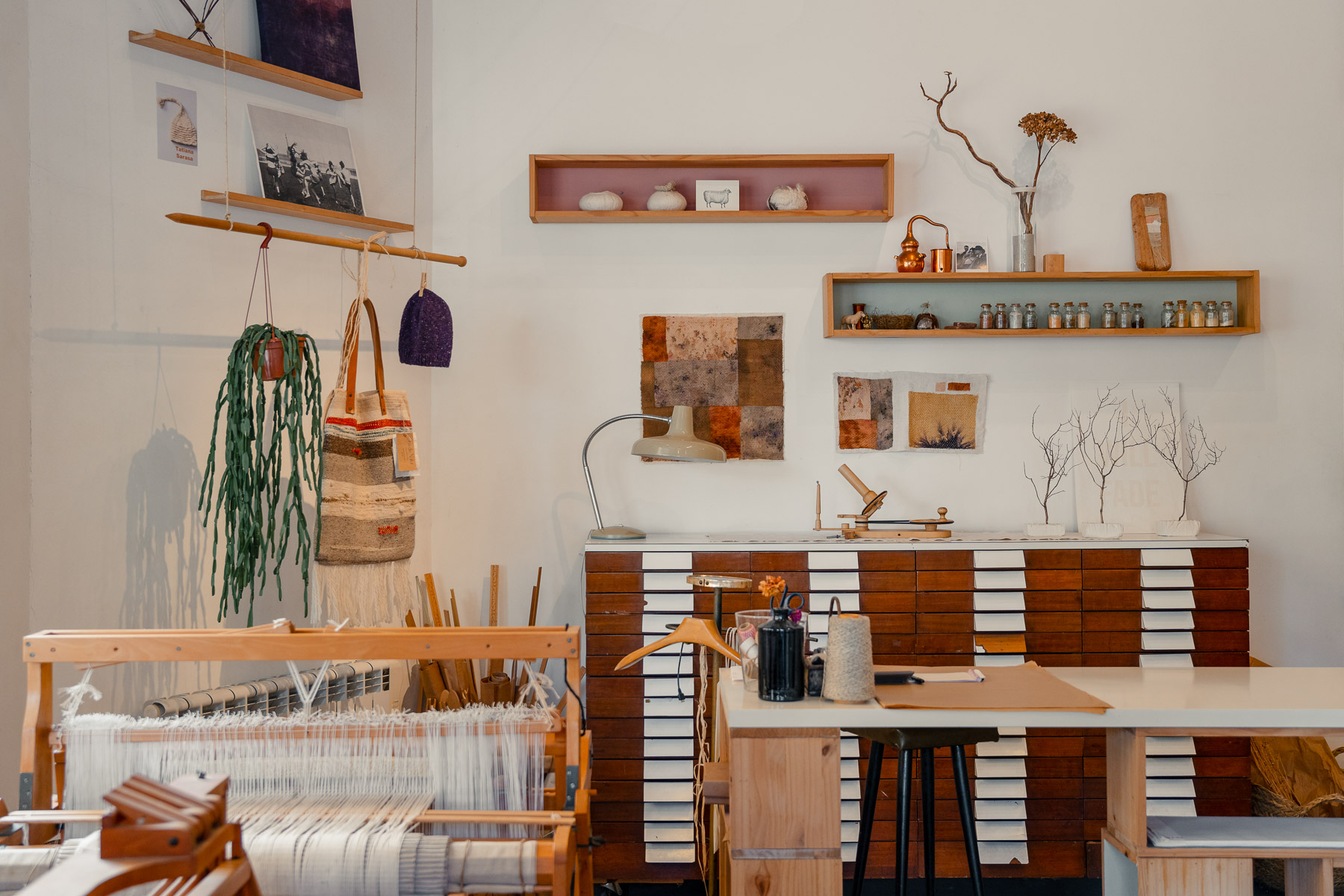
High ceilings, wooden beams and huge windows through which lots of natural light penetrates shelter Open Studio 79. An elegant space that has been transforming as any project born from creativity also does. In its beginnings, in 2014, it was the studio -open and diaphanous- of Tatiana Sarasa, where the artist could create, exposed to the public, her installation pieces made of natural fibers and paper, and explore photography. Later, it became an epicenter from which to share values and reflect on how we consume clothes and show that, yes, a more sustainable way of producing and wearing clothes is possible.
Tatiana studied Fine Arts in Barcelona, so creativity has always been with her. "I started offering courses to encourage the creative part with natural materials, dye, with other creators related to art and creativity... and it became Open Studio 79", an artistic and conceptual project that aims to inspire people and offer, as a store, "products that maybe are difficult to find".
This organic evolution responds to a concern. The one that the artist feels around the textile world. I noticed that, just as there was an ecological discourse around food, it was not so in textiles' so here, now, she creates garments, accessories and objects from the materials that nature gives her.
Nature is the backbone of Open Studio 79. In the end, "we are part of it, we are nature. Giving it that prominence and defending it is fundamental. I have never conceived this project as a production project, a business to make money'. He is right. It is much more: it is a space where creativity and respect for the environment dictate the guidelines.
"We are not used to the fact that a product created in harsh conditions for the workers costs us very little, but which, in addition, has a sustainable cost".
Craftsmanship is another fundamental pillar, as Tatiana, in addition to creating her own pieces, also collaborates with artisans whose pieces she exhibits and sells in her space, such as those of distiller Joan Canaves or those of the Valldemossa SONMO estate. As a concept store -which can be visited making an appointment- the shop distances itself from the usual store in form and content to offer creations that are far from 'industrial products, which are so toxic'.
In her space in Sant Magí, Tatiana reflects on the process of artisanal creation, the one that develops consciously, piece by piece, at the rhythm of the creator. Rethinking what we consume, then, becomes the focus of our conversation."The price is higher because I believe in having fewer things, but that they are pieces that have soul, that you enjoy with them. A sweater or a ceramic bowl should bring something. We are badly accustomed to the fact that a product created in harsh conditions for the workers costs us very little, but which, in addition, has a sustainable cost."
This plea goes far beyond words. It makes complete sense through her actions. To dye, Tatiana always uses natural bases: acorns, flowers and even skins - avocado, onion or pomegranate - that only adhere to fibers that are also natural, such as merino wool, Majorcan wool, organic cotton or linen (how wise, nature). "Nature gives us many things and we are not very aware of since synthetic dyes were invented in 1845," claims Tatiana.
Although she is clear that, today, it is impossible to dye all clothes with natural dyes, she believes and defends, strongly, that the transition is not only possible, but necessary to reduce the use of synthetic fibers and dyes that are ‘toxic for us and for the environment'.
This way of thinking, which fortunately is back in fashion today, is not always easy to convey, especially when you have a space that flees from the conventional. "It's always difficult when you offer something different.This is not a regular haberdashery or clothing store. At first it was not easy, but over the years, through the workshops, I tried to create dynamics that gave the opportunity to enter the space and enjoy. It has been fluctuating, like life itself."
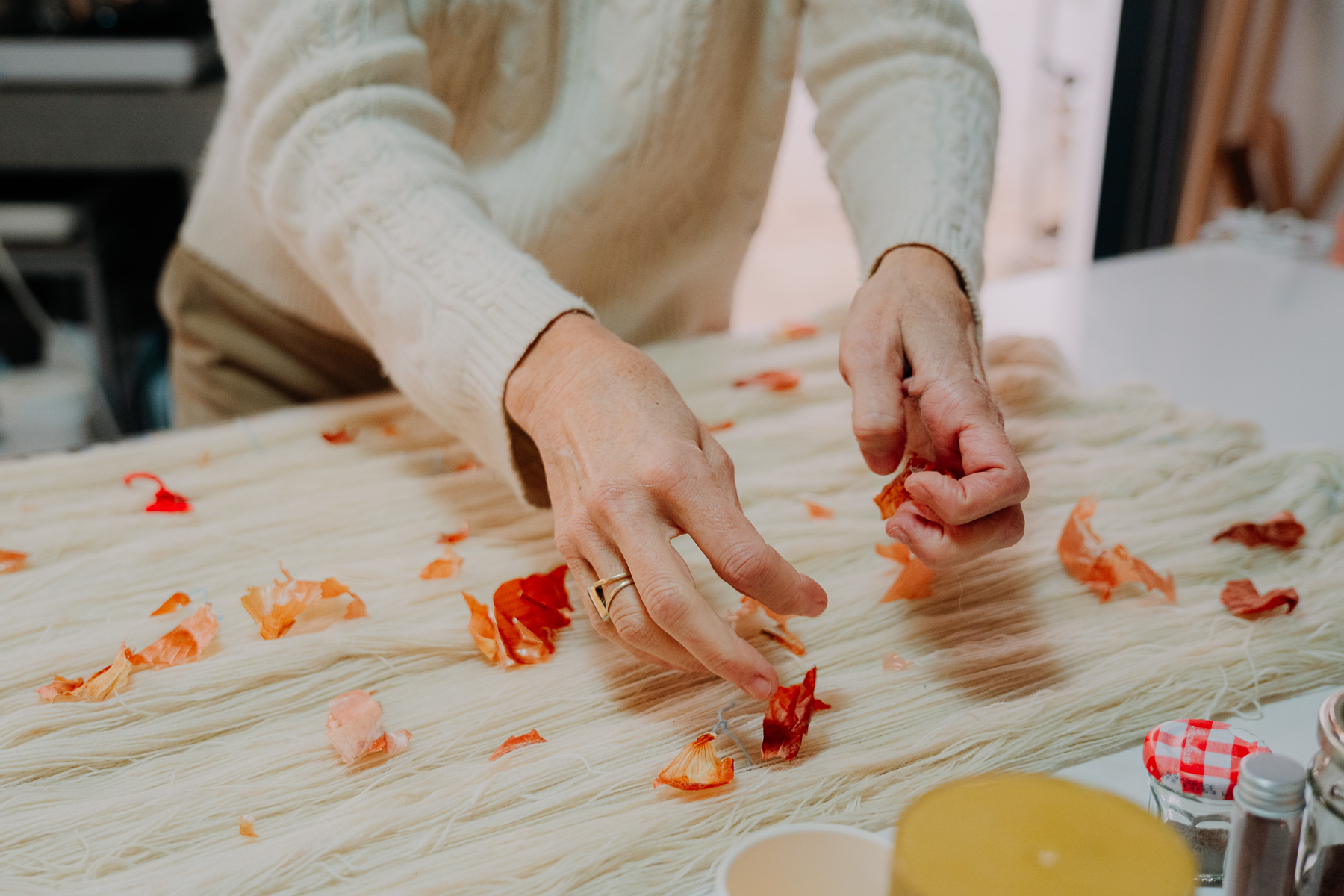
"I take pride in doing things with intention.I believe a lot in sharing because I have learned a lot from the people who have shared with me."
Tatiana's vision has attracted people who, like her, have a sensitivity for natural fabrics and craftsmanship and art. A clientele that comes to the studio ex profeso from all over the island and beyond. "People come from Berlin, Amsterdam and San Francisco, who know the project through the web or Instagram and come to buy the skeins of wool."
As Open Studio doesn't understand corsets, in addition to the natural dyed fibers, here Tatiana also sells her pieces - shawls, cardigans and loom-woven pieces - which will also soon be available in her online store, now under reconstruction. "I take pride in doing things with intention. I believe a lot in sharing because I have learned a lot from people who have shared with me and I also want to keep sharing with others so that people can learn processes".
As she shows us the back room of the shop, a sort of workshop and alchemist's laboratory, Tatiana projects her future, always linked to natural evolution and, of course, to her values. Some time ago she learned to grow flax as it was done in Mallorca - plant the seed, see how it grows, understand how the plant is, harvest at the right time and take out the fiber to spin it - and in her head hovers the idea of starting up, again and in the long term, this cycle to give light to a story that is not known".
At the same time that this path is taking shape, Tatiana will continue to focus on Open Studio 79. "I would love to have more people come to the studio, offer some digital courses and continue working on my artistic career. In the space, I would like to share beautiful things. In this world there are ugly things and thus beauty is very important. Craftsmanship is part of our identity as a culture and as a tradition."