Let's imagine an American used to covering the long distances of his country, someone made to the multiculturalism of its people and the variety of its geography. A character who is driven by curiosity and decides to get on a plane, cross the pond and land for the first time in Mallorca. As soon as he lands, he notices the idiosyncrasy of the island: the customs of its population, the smell of its recipes, the melody of its songs. After tuning his ear to decode the local dialect, this North American manages to memorize some phrases that the locals, from time to time, pronounce with a very particular cadence. One summer afternoon when he is with his islander friends, with the heat pressing down and sweat beading on his forehead, he stands up and asks them: anam a fer un capfico? That was the experience of the members of M de Mallorca, a textile brand that works with sustainable materials whose prints capture the Mallorcan imaginary. That question was the catapult that led them to try their luck.
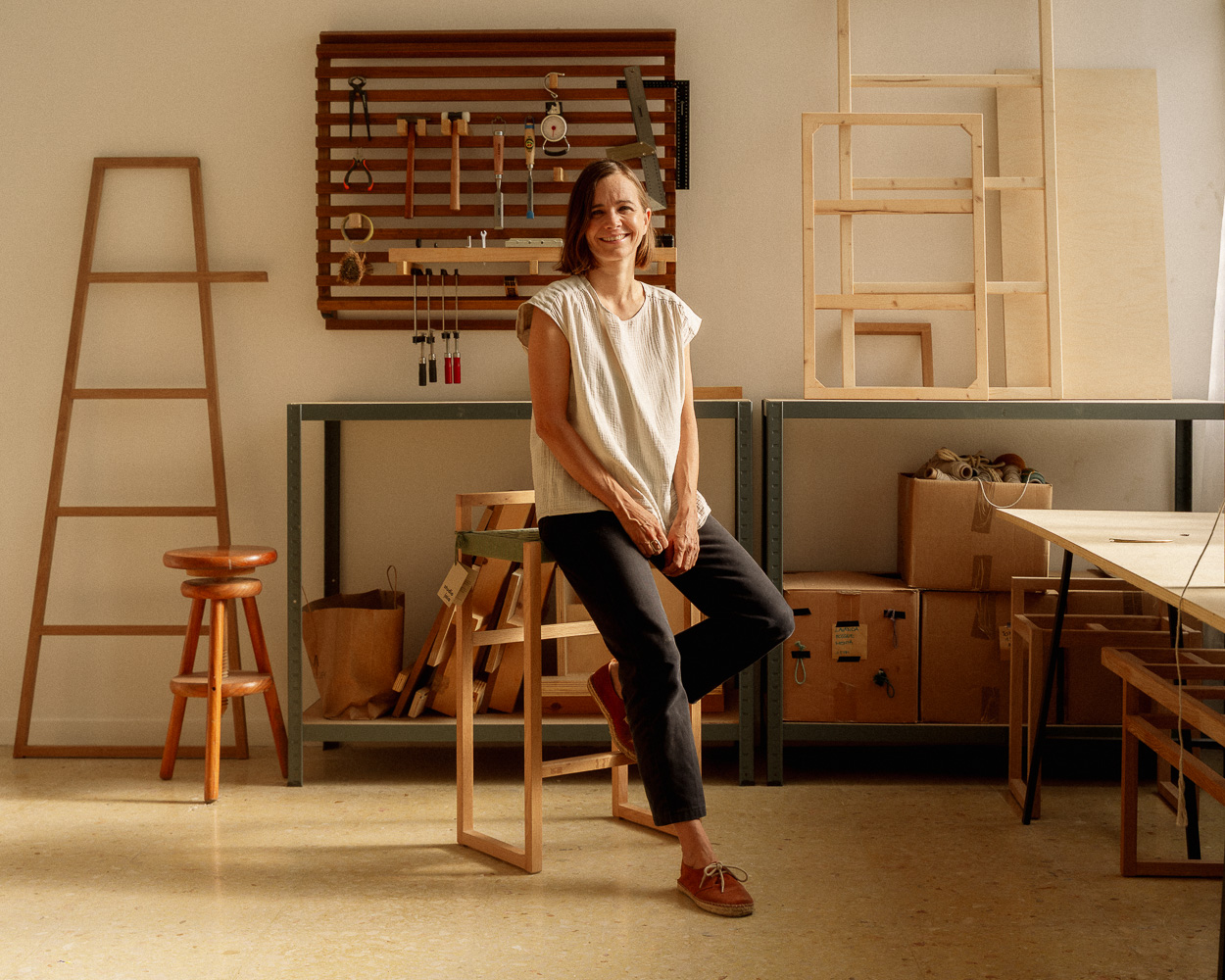
When they tell us about it, we find ourselves in their studio, located on Julián Álvarez street, in Palma. Sònia Santandreu, Gabriel Palmer and Xisco Durán, three talents in graphic design and illustration who combine their professions with an uncomplicated love for Mallorca, open the door for us. When Gabriel recalls that moment with his American friend, his face lights up. "He dropped an identity pill that concentrates the most intimate part of us. He said it with a very strong American accent. That's when we got a spark to try to bring that culture closer to others in a playful way". The learning vehicle they chose to transmit this culture to mainlanders and tourists is fashion, clothing that they screen-print based on illustrations and messages that reflect the typical in an atypical way. The popular heritage of Mallorca condensed in a clothing firm. Although they, in a brilliantly accurate way, prefer to call it emotionary.
It is Sònia who explains the origin of this neologism. "It is an emotional dictionary that gathers what surrounds us and defines us". Her explanation touches us deeply. A visual tour through the products of M de Mallorca confirms the value of her words. Texts and designs that appeal to childhood games, to popular greetings, to expressions that only those who have grown up within the limits of an island with its own character know. His goal is to extend that knowledge to those who want it. Xisco, however, tells us how even the locals who see themselves recognized in his weavings react. "Now that we have been to fairs, we have seen many Mallorcans who smile when they see our stand. They are concepts that we have been using all our lives, captured graphically with a certain grace". As we see it, they have put the magnifying glass on the small to give it an ingenious and sympathetic form, to then show it.
"The future is sustainable or it won't be".
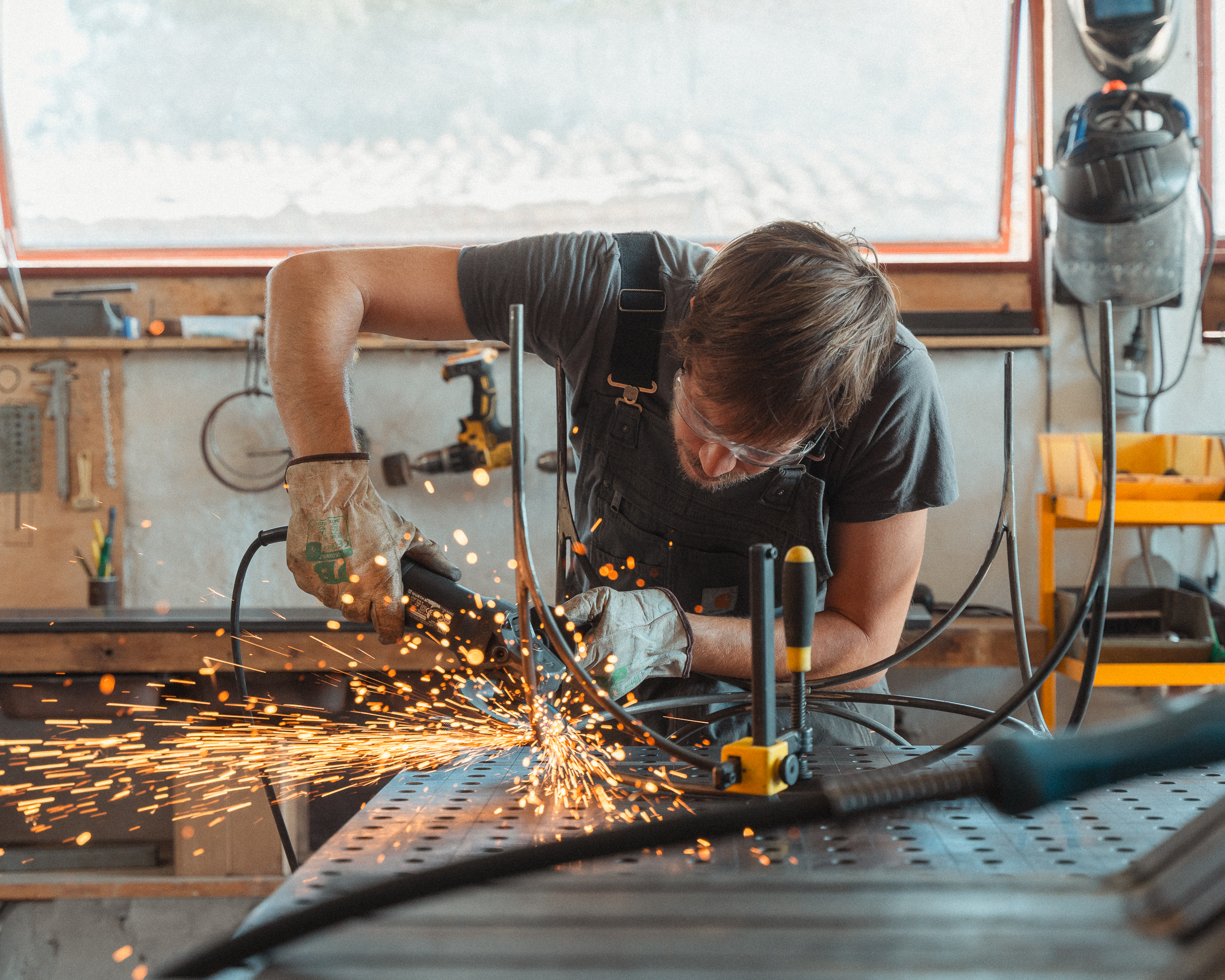
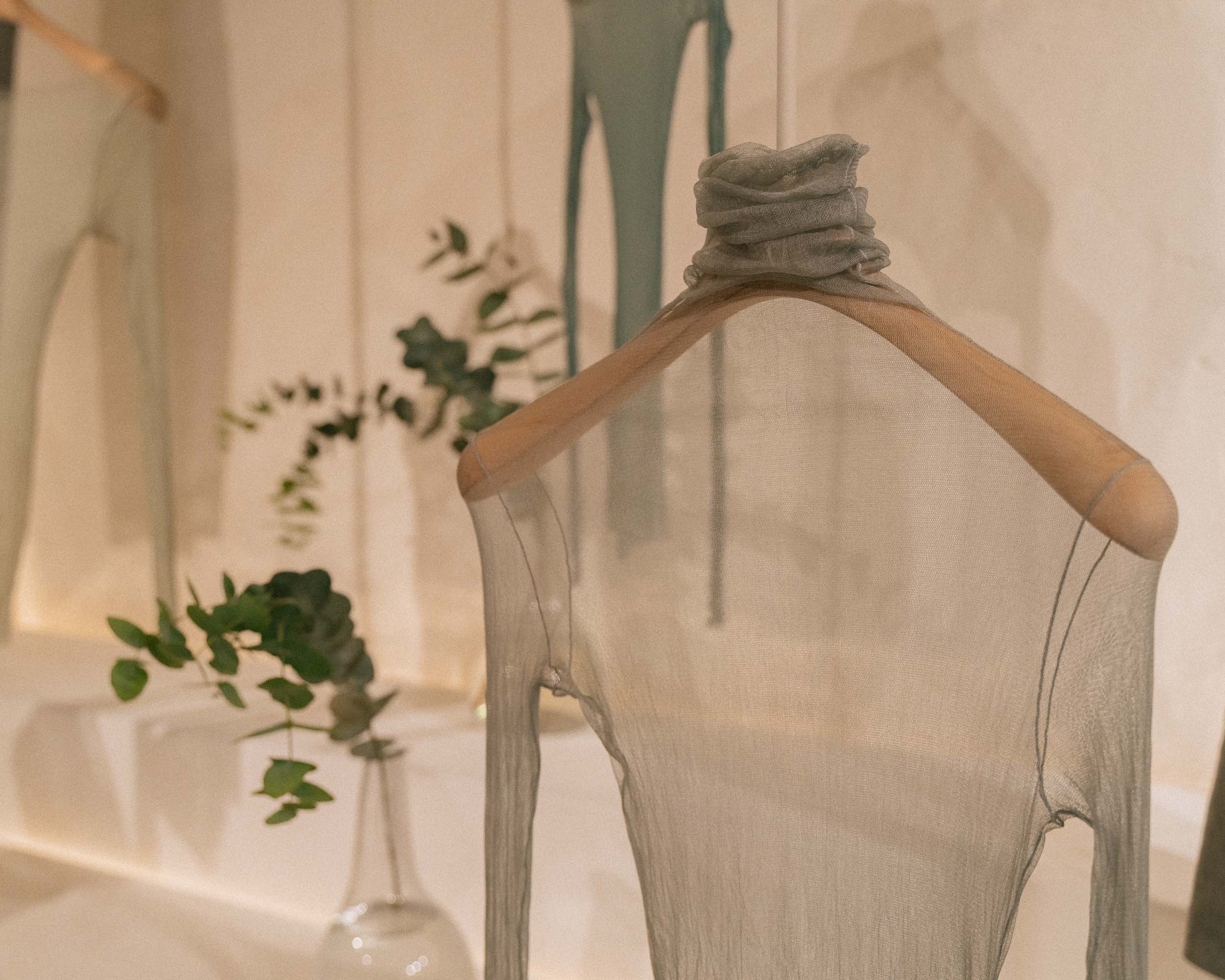
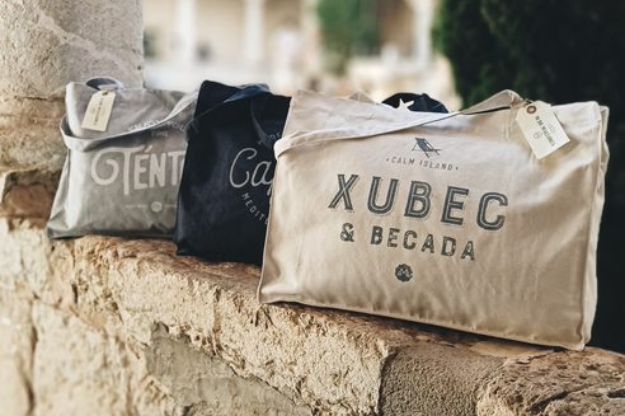
The typology of their creations is divided, for the moment, in three different formats: T-shirts, sweatshirts and tote bags, all of them handmade, piece by piece. The paradigm they used to design their garments is based on slow design, a movement that carries an ecological force that, although slow, advances inexorably because "the future is sustainable or it won't be," says Sònia. "Until now we had been dedicated to selling services. Therefore, our work has never turned us into polluting entities. When we then consider manufacturing a product that is considered a consumer good, as it is, we decided to do it well". Doing it well can have many meanings, but at M de Mallorca it means using organic cotton and also working with water-based inks. On the other hand, they make their creations on demand. The latter means that large productions, those that generate more waste due to the generation of surpluses, are not an option.
The creation of M de Mallorca began to take shape in 2014, when Gabriel and Xisco took a silkscreen printing workshop that, seen today in retrospect, had a crucial importance in understanding the moment they are going through now. After that course, the printing bug began to bite them. The techniques they learned were intended to make some T-shirts for their own use. But one thing led to another. They were so encouraged by those first tinkers that they ended up buying a machine that was parked for several years; the lack of time and their high volume of work as designers relegated that acquisition while waiting for the ideal project. Gabriel explains that "some things came together, such as the fact that we love graphic design, living on the island and the culture here". A veneration for Mallorca that makes them proclaim themselves as Sa Roqueta lovers. A passion that at the time was somewhat repressed, but due to the hiatus caused by the pandemic, it found an outlet. This is how Sònia tells it: "the confinement gave us space to resume activities that had been left half done".
"If we hadn't sold any t-shirts in the first four markets, we wouldn't even be talking about it".
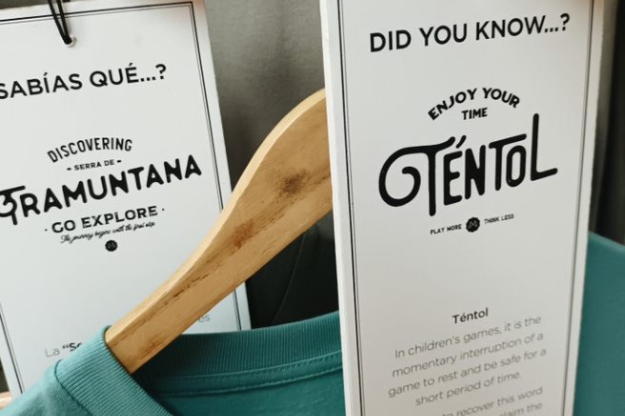
Téntol, Uep, Dimoni Cucarell and some other concepts that so much move the islanders are the ones that appear in the garments of M de Mallorca. To get their products you just have to go to their online store, but you can also buy them in Estiu Concept Store, Biokalma, S'Arboçar Ecotenda, Just Sant Elm and Típic, located in different coordinates of the island. If someone had told them a few months ago that so many locals would contact them to market their products, they might not have believed it. Gabriel recalls the lack of knowledge with which they went to their first market, in Valldemossa: "We went there with very few T-shirts and without knowing who would be interested in what we were doing. In the end, everyone came: locals, people with second homes and foreigners". The age range of their audience, on the other hand, is very wide, ranging from twenty-five to sixty-five years old.
They describe themselves as a baby being born, newcomers with a precious road ahead of them paved with a very specific material: trial and error. According to Xisco, "if we hadn't sold any t-shirts in the first four markets, we wouldn't even be talking about it. Fortunately, people liked it and that is what gives you energy and strength to continue afterwards". The progress of M de Mallorca is given by the needs that become satisfied along the way. In that first market in Valldemossa, the foreigners who approached his stall did so with a questioning look. When they asked about the meaning of their designs, the members of the recently-born brand answered with a brief that they had prepared for themselves. Today, this explanation hangs on the donkeys they take to the fairs and can also be downloaded thanks to the QR code on each packaging. Detail-oriented to the core, empathetic to say the least. The answer to all these explanations, of course, can't be other than a smile.