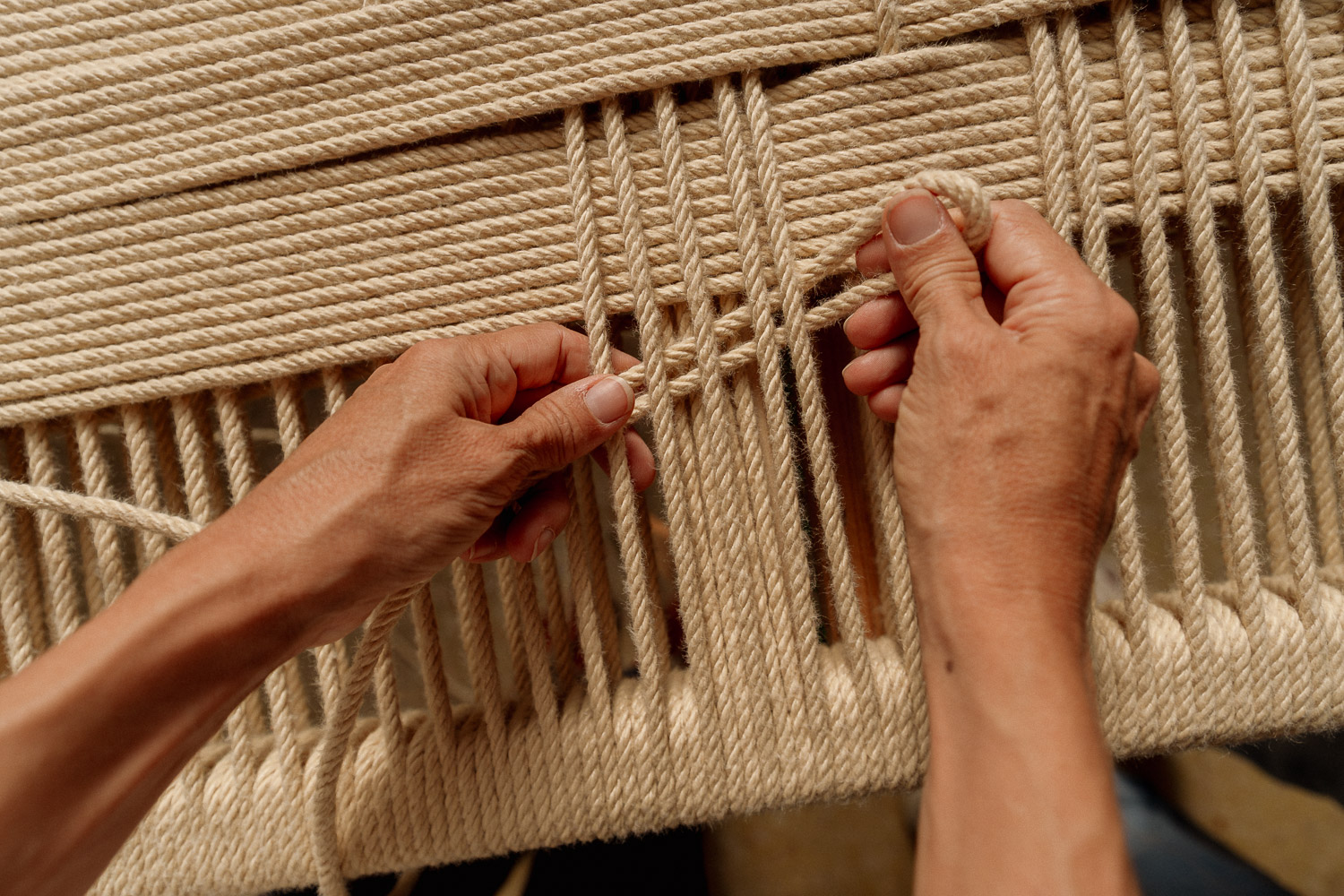
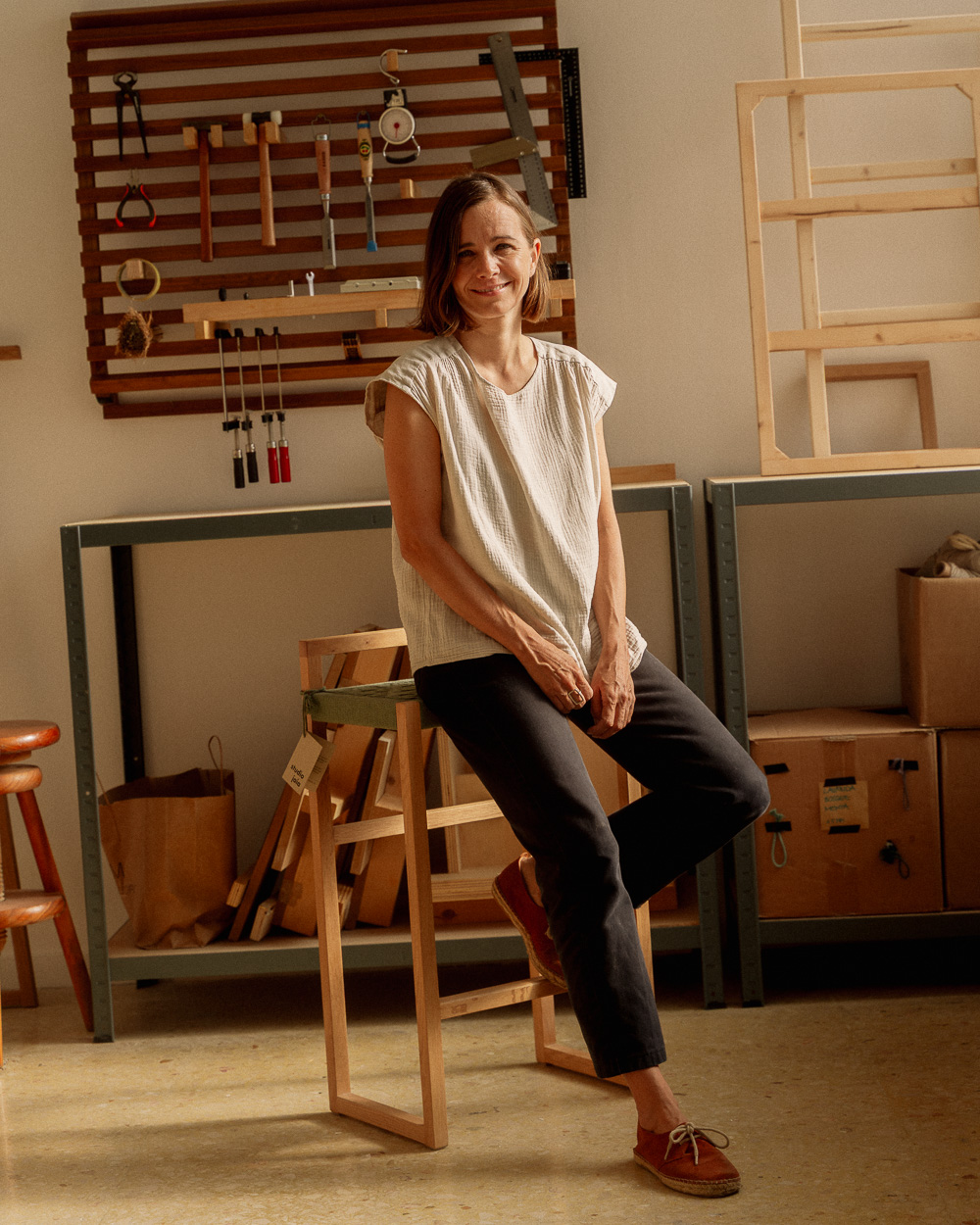
Anna Lena Kortman works methodically in her half workshop, half showroom space. She has recently moved here, near Plaça de les Columnes, after leaving her previous space in Palma's old town. It was a central and cozy place that became too small for the founder of Studio Jaia. In millimetric order, the strings and wooden structures of her pieces coexist with inspiring moodboards that decorate the walls of the new studio.
Estudio Jaia is a design and craft project and a very personal project indeed. An intention to contribute to local craftsmanship and keep it alive, and also a tribute to the craftswomen,' begins Kortman, who began researching and learning the craft of cordage shortly after settling on the island, motivated by 'a fascination with timeless patterns and geometries'.
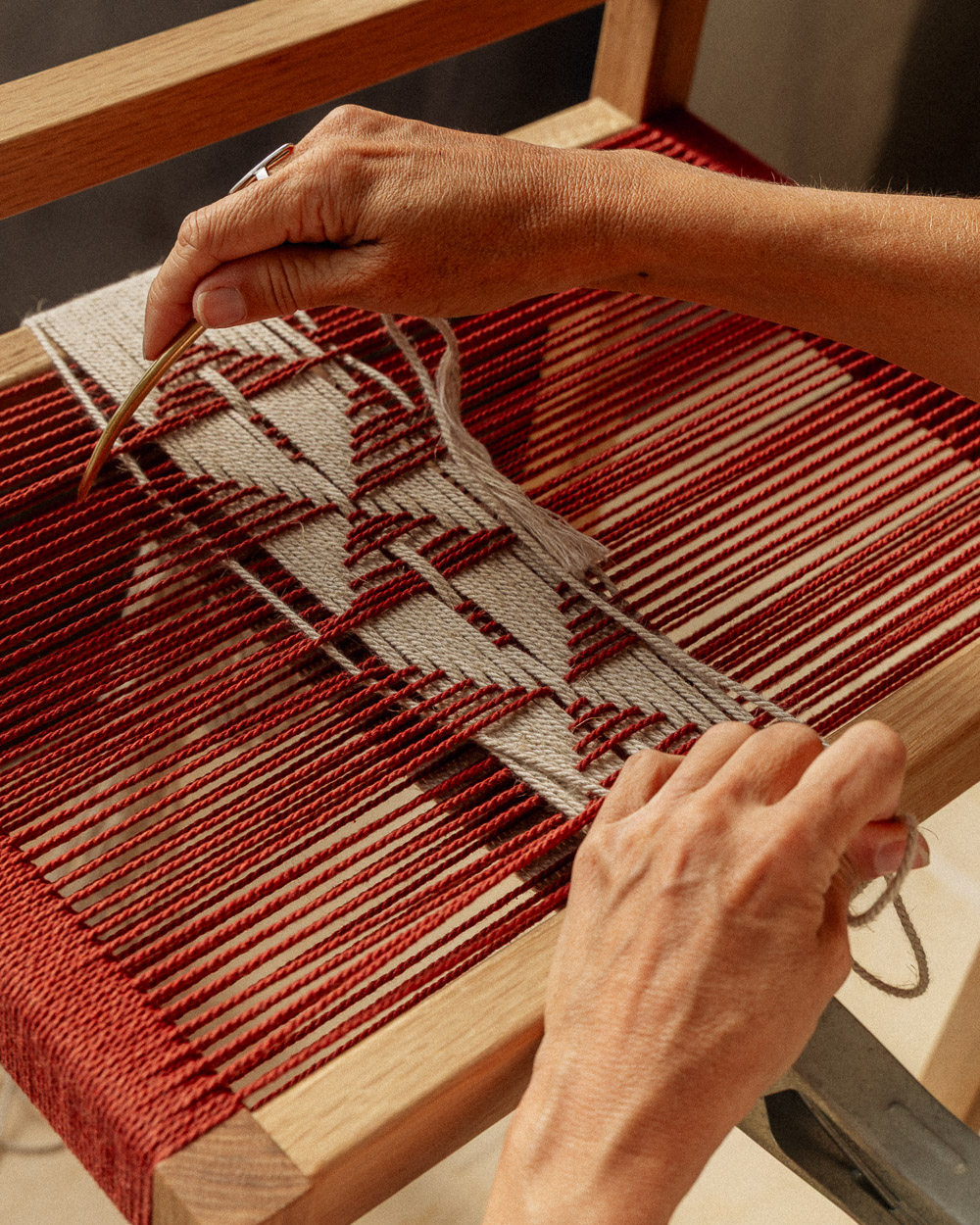
Linen and recycled cotton rope are the basis of her project, along with the wood - ash, oak and walnut - for the structures, which are produced by a local carpenter. Her vision is that every phase and all the materials used in the process do come from as close as possible, although she admits that in cordage it has been difficult 'because I am not interested in synthetic fibers, so I have to import them from mainland Spain'.
'It all started as a hobby but, little by little, it was an organic process of learning and making it more and more professional'.
Trained in interior architecture, tired of long working days in front of a computer in Los Angeles and Berlin, Kortman felt it was time to work with her hands around 2017. 'I loved my job, but I had to give it a try,' she assures in a leisurely voice. 'It all started as a hobby but, little by little, it was an organic process of learning and making it more and more professional.'
At first, she worked with geometric patterns, but soon she began to draw, to see what was happening, inspired by everything that surrounded her and by the forms of nature. With that which feeds her senses, she continues to draw sketches by hand and then assesses what is possible and what is not possible to be captured through rope.
'For craftsmanship to survive there are two possible ways: to continue with the usual, which seems perfect to me, or to bring one's vision, which in my case is a minimalist structure'.
The result of this creative process is Puput, her collection of stools and benches -temporary, Mediterranean and minimalist aesthetics- that recovers the Mallorcan cordage craft historically practiced by women artisans -jaia, old woman in Catalan, is a tribute to them-. Many Mallorcans have an emotional relationship with the pieces, because they are linked to many memories'.
With pieces of many different sizes and a clothes hanger, the collection investigates and proposes different geometries and colors, 'strong or soft, but with a natural tone', but Anna Lena also creates custom-made patterns for other brands - installations, stores, restaurants, hotels - in an exercise that blurs the boundaries between architecture, craftsmanship, design and art.
This look and the elegance of her designs have led her to create alliances with island brands such as the legendary shoe factory Lottusse, from Inca, for whom she has created patterns inspired by the traditional facades of Mallorcan architecture. Architectural forms that have been captured in a collection of limited edition shoes in a motivating project that has allowed her to 'work with a traditional company of the island, and see how a shoe is produced in their factory, which is so beautiful'.
One of the keys to Kortman's success, in addition to the quality of her work, is undoubtedly the balance she achieves, quite perfectly, between the traditional and the current. For craftsmanship to survive, there are two possible ways: to continue with the traditional, which I think is perfect, or to bring one's vision, which in my case it is a minimalist structure', she reflects, between half-stitched pieces and other finished, pristine, beautiful ones. And perhaps this is the question: to update craftsmanship with the utmost respect in order to contribute to its survival.