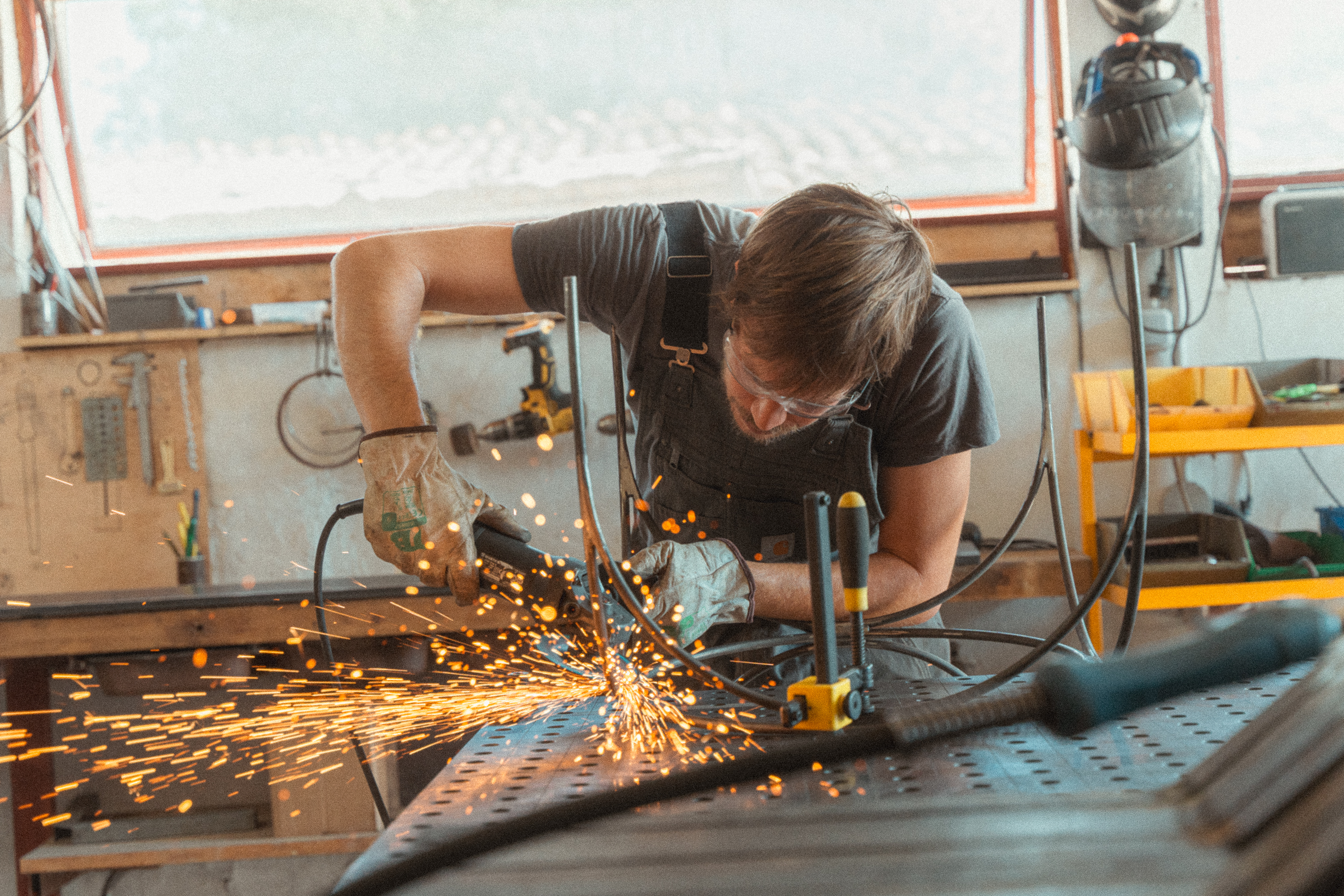
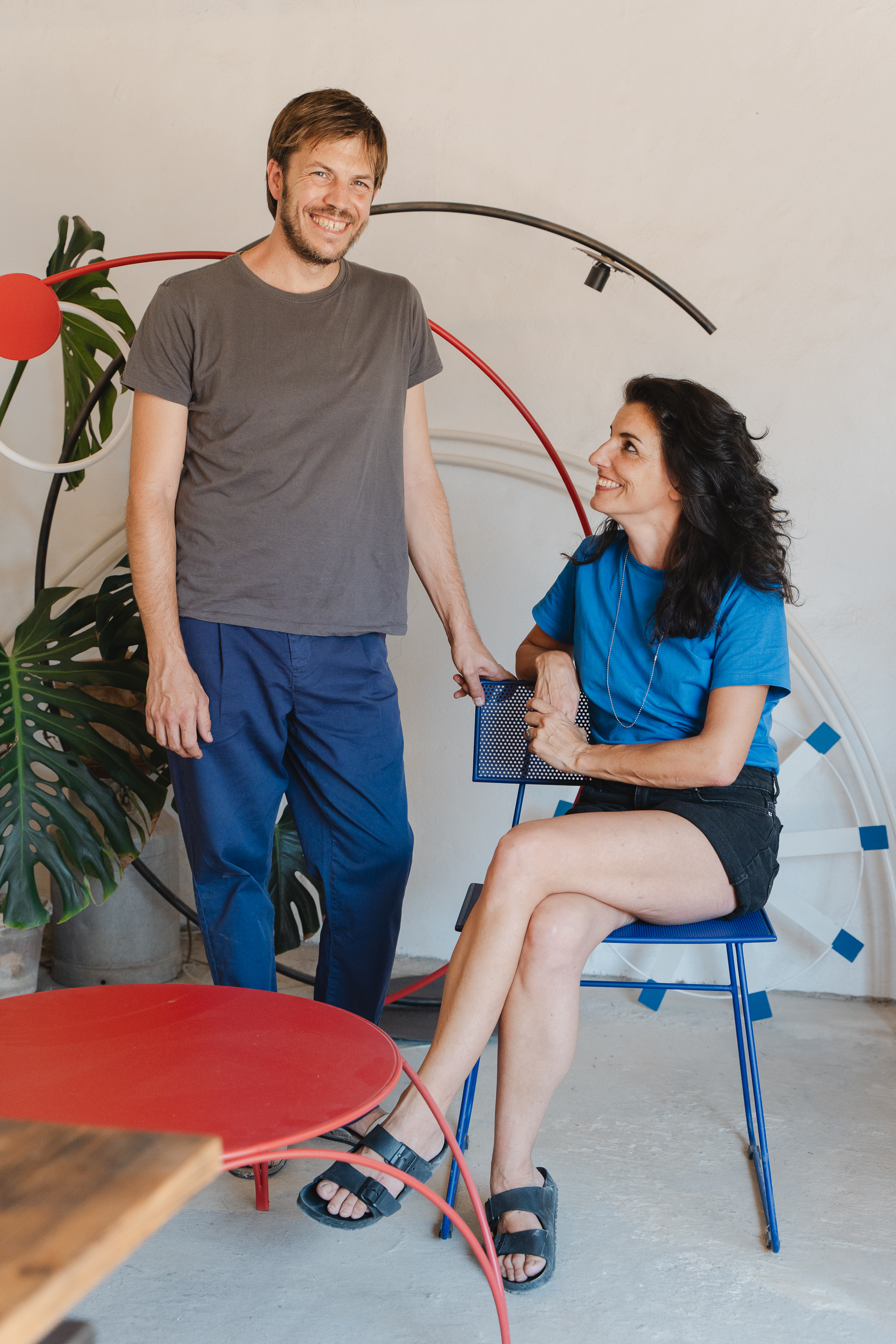
The stifling heat of a July afternoon seems to slow down the pace of work in the 2 monos workshop in the heart of Mallorca, but it doesn't stop it. Sketches, models, and prototypes coexist here with the machinery and materials that make their pieces tangible—unique, custom-made, timeless.
Surrounded by their own creations, Nicoletta and Alex, the duo who took the plunge in 2010 after two years of occasional collaborations, reflect on the concept that has shaped and given meaning to the project since its inception: the now ubiquitous slow design.
"I came from metal sculpture and Nicoletta from architecture, and we decided to create together by exploring the creative possibilities from a slow design perspective," a view that was still atypical in those years, which proposed "producing pieces that go against industrial logic, on a human scale and durable, that are not disposable," says Alex, to which Nicoletta adds: "and timeless, in the sense that they do not follow a fashion or trend, but are produced in small limited series, always by hand using traditional techniques."
Interested at the time in the slow food movement, they decided to transfer this philosophy to their work so that their customers could learn how the pieces that shape their homes are produced and according to what principles. They call it 'thinking with your hands', a process that encompasses the idea, from its inception to its production, from start to finish, in the workshop.
Their commitment was such that, based in an old mill in Campos, they had their own vegetable garden and tried to be as self-sufficient as possible. Now, they have been in Sencelles for just over three years, where they continue to revive traditional techniques, build their own tools, and collaborate with artisans. After all, they recognize, "slow design has been around for centuries."
'2 monos could not have been born anywhere else. Being in the countryside, in nature, next to the beach, was very inspiring for creativity'.
Fifteen years after starting out, they have managed to establish themselves in a sector that, in 2010, barely existed. "The stores had well-known brands, but the artisans sold their products at fairs," explains Alex, who praises initiatives that have promoted change, such as Made in Mallorca, which brought the work of creative islanders and those based on the island to the London Design Festival in 2018 with the aim of giving them visibility.
Those were different times, which they now remember with humor. "People didn't really understand what we were doing. The shops said no, the galleries said no, and the customers didn't understand us." So much so that they even looked for a farmhouse in Catalonia to settle down in, but when they found the mill near Ses Covetes, they felt they had found their place and that it was in Mallorca. "2 Monos couldn't have been born anywhere else. Being in the countryside, in nature, next to the beach, was very inspiring for creativity."
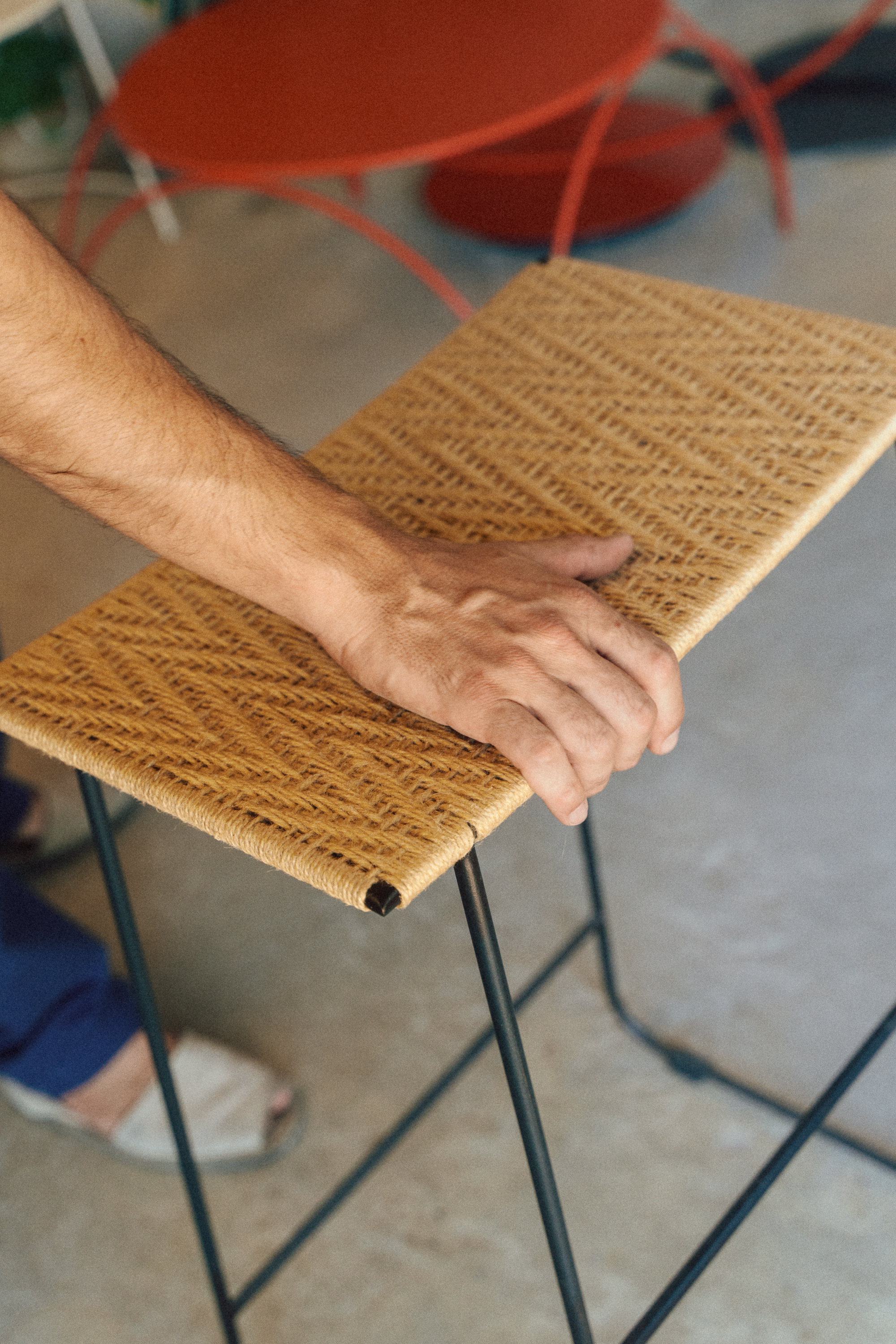
"The beauty of what we do is the materiality, being able to choose, to see, to touch... the emotional component."
Here, influenced by the primary colors of the Bauhaus—bathed, of course, in the tones offered by the island's landscape—they have defined their own style, which they describe as eclectic but true to their identity. A language that draws on Japanese philosophy, the masters of the Bauhaus, and wabi sabi, pursues the beauty of imperfection and extols the value of the mark left only by what is made by hand.
The works of 2 Monos speak in a poetic tone and question the distance that separates the artistic from the functional. 'Take your seat', their latest exhibition at the Pep Llabrés gallery, reflects this. 'It invited you to take a seat, to touch the chairs, to feel them, to play,' says Nicoletta, an unimaginable proposition in their early days. "In 2010, we entered a competition with an armchair and they told us it wasn't a work of art, so yes, we've seen a lot of change."
What has not changed is their commitment to sustainability, which guides them along the path of those who work to order. Whether developing comprehensive projects or designing or adapting pieces that will end up coexisting with others, the studio has no stock because everything is made to order and customizable. "Having a defined style, we try to adapt it to the client's requirements while maintaining our identity, which is why they call us," reflects Nicoletta.
With five members on the team and an increasingly extensive network of local collaborators, 2 monos has just reached a milestone: one of its most iconic chairs,Shibuia — which means austere or raw beauty — is now part of the Museu del Disseny in Barcelona, a success they savor with their feet on the ground as they look toward a future in which they only ask to be able to continue working on increasingly creative projects and reach further afield without losing sight of the fact that "the beauty of what we do is the materiality, being able to choose, to see, to touch... the emotional component." After all, this vision gives the studio its name: 2 Monos was born from this idea: taking a step back to move forward.