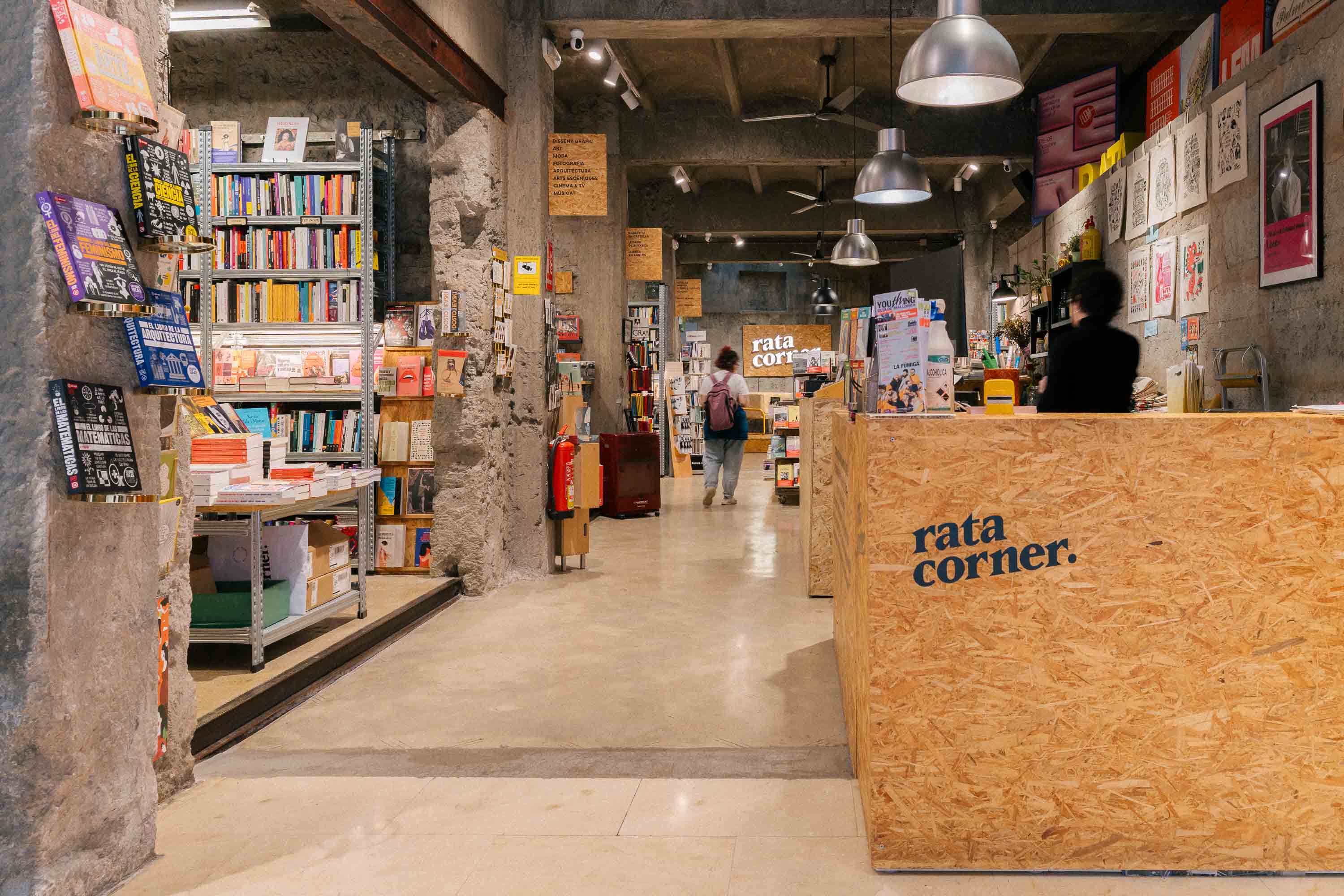
Rata Corner is a bookstore, but not a conventional one—if such traditional bookshops still exist. Amid successive economic crises, the rise of digital books, and the boom of online commerce, both culture as a sector and bookstores as its commercial spaces have had to reinvent themselves, embracing formats that transcend mere buying and selling.
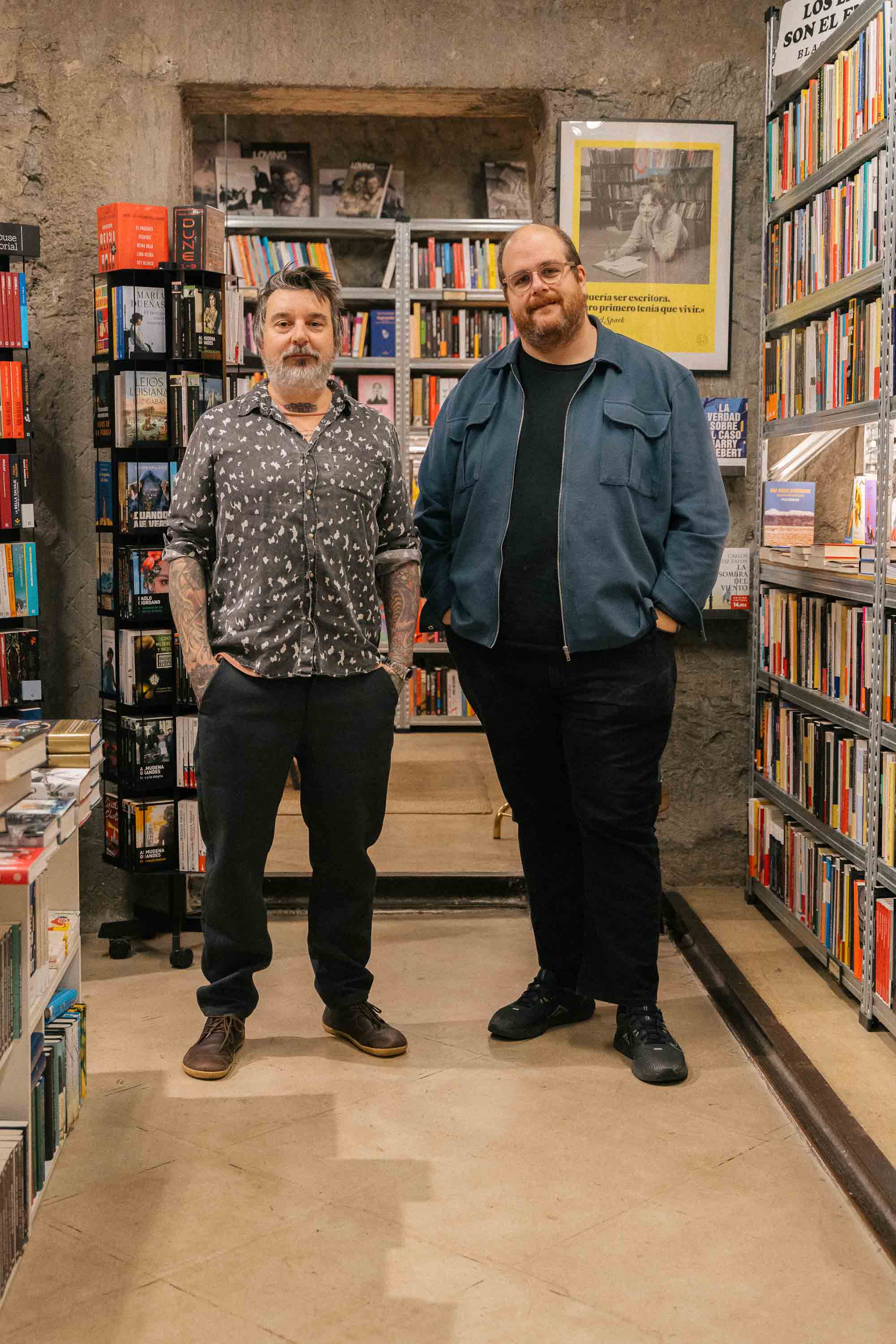
Edy and Miquel had a clear vision a decade ago when they began shaping Rata Corner—a professional project that was also personal, born to be "more than a bookstore." Miquel recalls: "We wanted it to be a 21st-century bookstore, a meeting point, a cultural center, a space for reflection."
And so they did: they immersed themselves in developing an idea that went beyond books, focusing on the city's cultural life through presentations, concerts, reading clubs, poetry recitals, and many other activities. In just two and a half years, it became evident that their charming venue on Hostals Street had become too small. They then moved to 34 Antoni Marquès Street, a much larger space that, in the early morning, remains calm as the two partners unpack boxes filled with new editorial releases, awaiting the day's first customers.
"I believe we're saturated with screens and seek human connection—to connect with others. For example, there's now a boom in reading clubs because people want to socialize, to look each other in the eyes."
However, both are clear that Rata's growth is far from accidental. It's a mix of "work, effort, and having an idea and pursuing it without setting limits," as Edy says, and the enthusiasm of an audience that has built a community around a manifestly open project aiming to bring people together through reading, reflection, and conversation, as Miquel emphasizes.
Still, it's curious that Rata—simply "Rata," as its loyal patrons call it—has become a haven for connection in an overwhelmingly digital world. Or perhaps this very factor has been key to its success, as Miquel reflects: "I believe we're saturated with screens and seek that humanization, to connect with others. For example, there's now a boom in reading clubs because people want to socialize, to look each other in the eyes. The experience of buying with a click doesn't compare to visiting a bookstore, talking to booksellers, getting advice, recommendations, discussing the last book you took home... I believe bookstores endure because they knew how to reinvent themselves and become more than shops—meeting points and resistance against the internet."
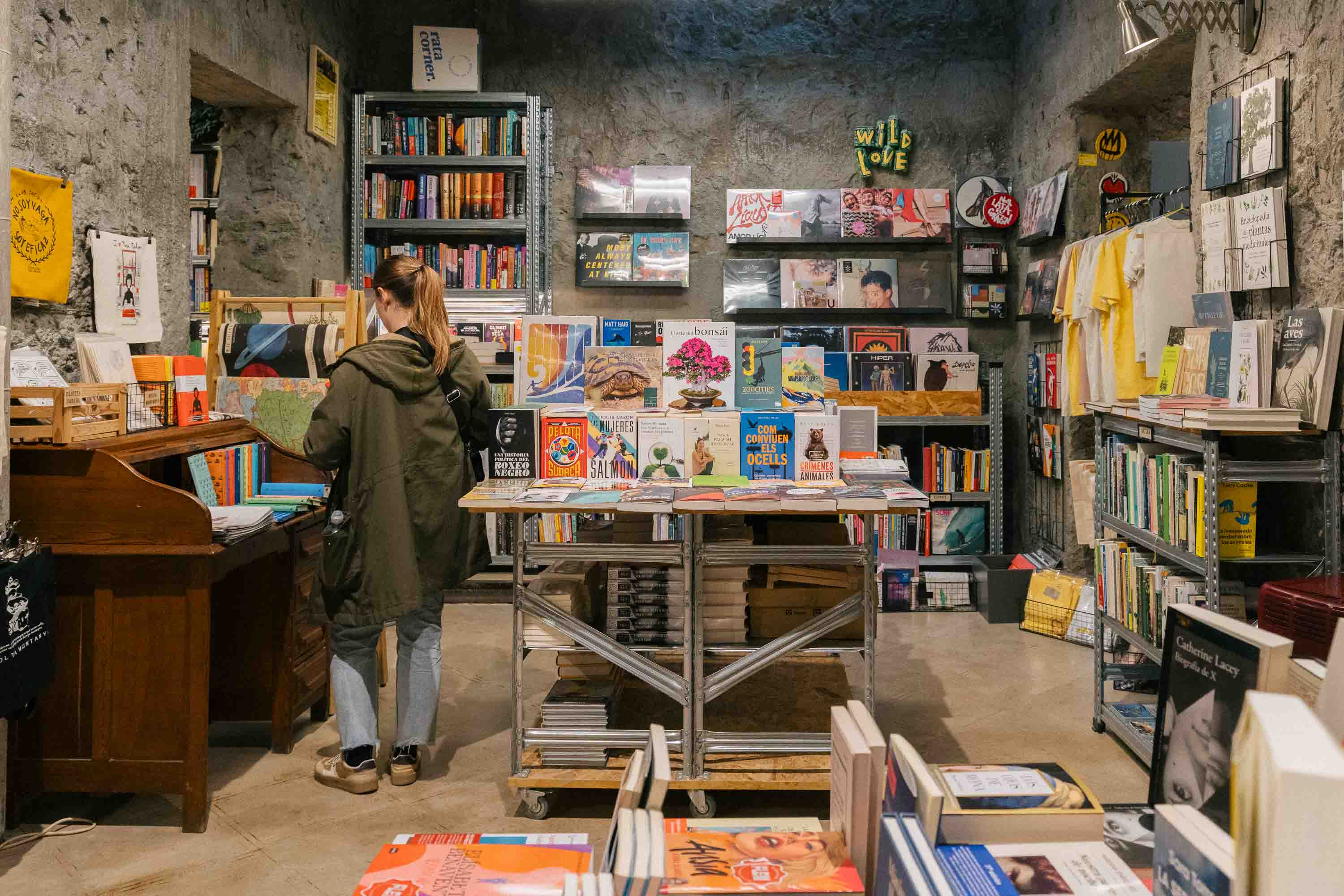
"Although it may seem like a young and groundbreaking concept, 70-year-old ladies are delighted to come, 30-year-old hipsters too, and families with children."
We have a desire to meet and read, regardless of our age, profession, or literary tastes. It's not a slogan or a dream. It's a fact that demonstrates the heterogeneity of Rata's audience—another of its successes. "Although it may seem like a young and groundbreaking concept, 70-year-old ladies are delighted to come, 30-year-old hipsters too, and families with children," says Miquel, who, without needing to state it explicitly, underscores the idea of culture by and for everyone. "We've always wanted to avoid being an elitist bookstore or one for super cultured people; that's why we try to make activities free and open to all audiences, ensuring everyone feels comfortable."
Not only have they achieved this, but they've gone one (and two, and three) steps further. With nine years of history just celebrated on April 8, a change of location was followed by the opening of Little Rata in 2021—a bookstore focused on children's and young adult literature. Through Rata Cultura, they've conceived and promoted two innovative projects that have already established themselves on the island's scene: FLEM (Festival de Literatura Expandida de Magaluf) and Tinta Il·lustre (Festival de l’Àlbum Il·lustrat i el Llibre Infantil).
The first was born to expand the boundaries of literature and break molds by bringing together writers, artists, and cultural agents in an unexpected place like Magaluf beach in Calvià. The success of the first edition was such that it gathered 3,000 people over three days—a significant number that pales compared to 2024, when over 10,000 attendees joined the event. Tinta Il·lustre, on the other hand, has annually brought together, since 2018 in Marratxí, children, teenagers, families, and illustration lovers in an event that demonstrates literature knows no constraints, let alone generational ones.
This broad, expansive, and open vision of literature—and culture—is palpable in Rata Corner's venue, which, besides showcasing countless titles you'd want to read and others you wish you had already read, features graphic works by local, national, and international artists, a selection of Japanese stationery products, and a very curious and eclectic vinyl offering. All within a space that sometimes hosts presentations and talks on its ephemeral stage and now offers a bar service where you can enjoy a beer or a La Molienda coffee with a sweet treat from Lluís Pérez Pastisser.
On the eve of Sant Jordi, Rata Corner's immediate future revolves around the year's most important literary celebration; the rest remains to be seen. "I don't know where we're headed, but we're not afraid of anything. Just as rats adapted after the dinosaurs' extinction, we hope to adapt to changes because everything changes very quickly and thrillingly."
Before we say goodbye and start browsing through so many tempting reads, we ask Rata's directors for a literary recommendation, with the sole condition that it be local. Miquel's response turns into a list of essential authors he seems to recite from memory but with enthusiasm: Antònia Vicens, Guillem Frontera, Sebastià Portell, Laura Gost, Sebastià Alzamora... "There's a lot of talent here," he affirms.
To reciprocate, we also offer our own recommendation: "Perfil lector," Rata Corner's podcast with Cati Moyá—a unique proposal that lets us explore the reading habits of writers who visit the bookstore to present their books through 10 randomly chosen questions. Manuel Vilas, Pol Guasch, Jaume Ripoll, Marta Sanz, and Bartomeu Seguí are among those who've sat in front of the microphone, and their responses—akin to confessions—are invaluable. Listen to it. It makes you want to read even more—and that's something we'll always be grateful for.