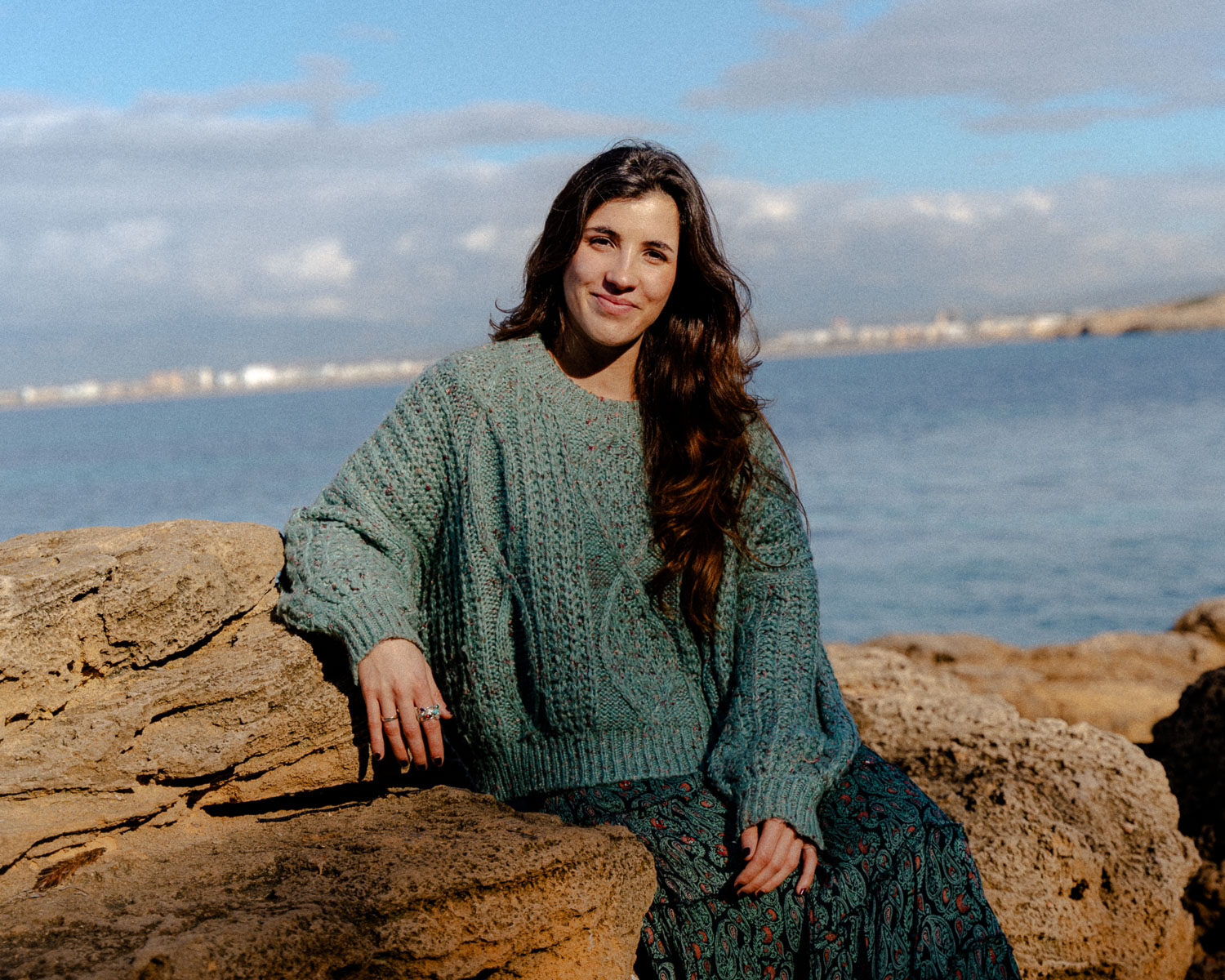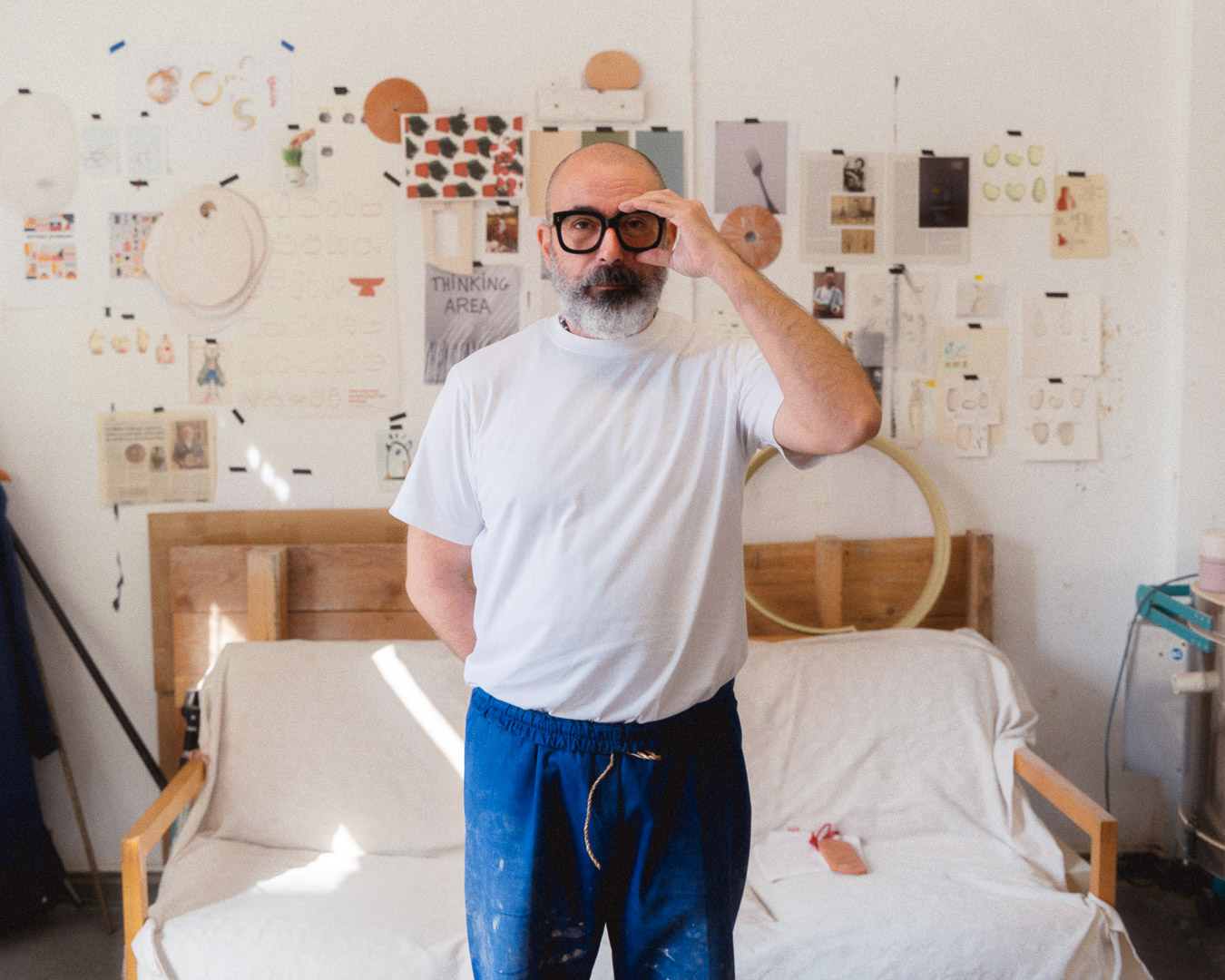
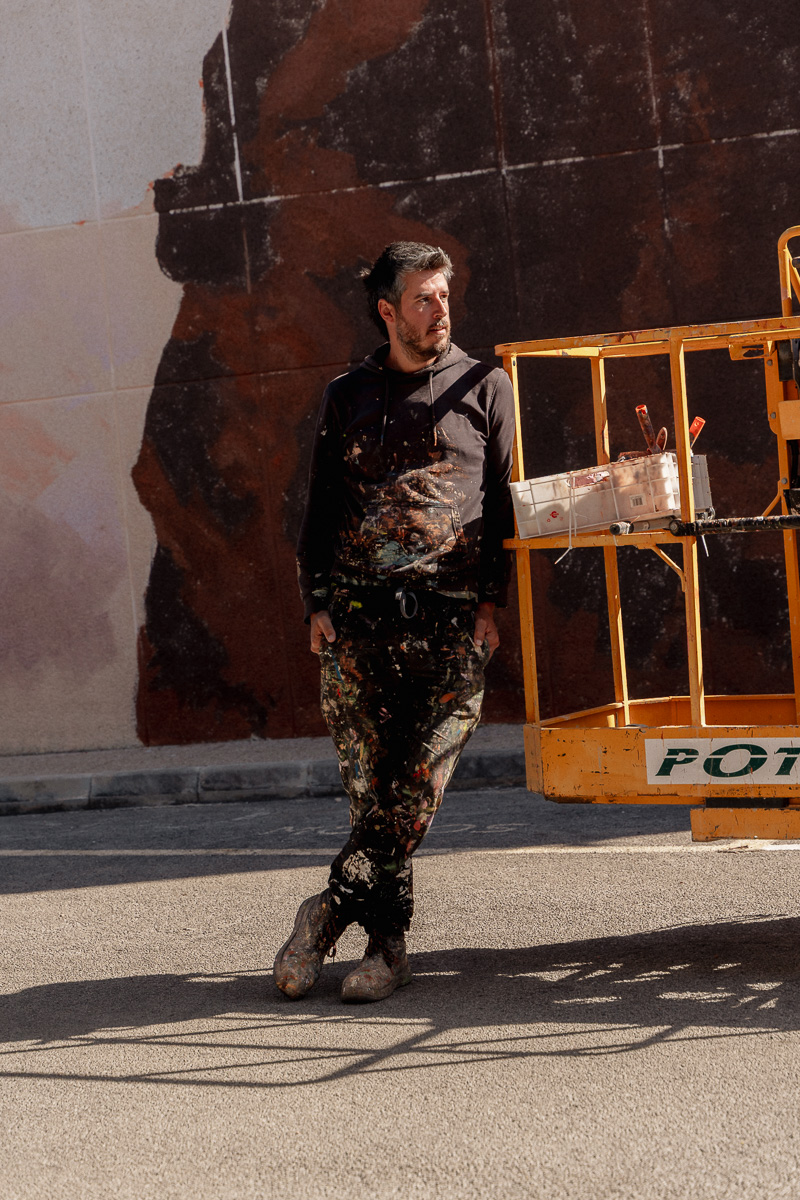
Joan Aguiló has liked to draw and paint since he was a child. Since he can remember, he says. In fact, as soon as he arrives -stained from top to bottom with paint- he tells us that, as a child, on weekends he would run to wake up his mother to start the day doing handicrafts. That creative spark also stayed with him during his teenage years, convinced that he would study art. He first studied Illustration at the Escola d'Arts i Oficis in Palma and then Fine Arts in Barcelona, although he finished his degree in Mexico, where he lived for two years.
When he returned to the island, he recalls, he spent hours and hours in his workshop in Sa Pobla and soon understood that the solitude of the studio was not made for him. "I didn't like to be alone for so long. Around that time, I met my partner and went to Berlin. There I signed up for an urban art free tour and saw for the first time how people organized themselves to paint and contribute to the community." The sense of local community, that collective feeling that brings us all together, has been on Aguiló's mind ever since. "I always thought that in Mallorca there wasn't this collective feeling that, for example, I found in Mexico," he says.
Motivated by the artistic worlds he had explored in the capital, when he returned to Mallorca, Joan left the workshop and took his art to the streets for the first time. "I had never painted in the street before and at first I didn't want to spend a lot of time there, so I would prepare a collage and when I went out, I would glue it together". On the first day he sinned as a novice and when he finished his intervention he realized that he hadn't thought about what name he would use to sign his first urban work. In the end, he decided not to use a pseudonym and, although many called him crazy, it has never been a problem for him, he assures. In fact, he says, during one intervention, a neighbor threatened to call the police and he asked her to wait to see the finished work and then decide what to do. He never heard from the neighbor again and the police never contacted him.
"I try to transfer intimacy to the public space".
If urban art is, in essence, ephemeral, Aguiló's early works were even more so, as he recalls that the paper he used was very short-lived. However, some of them have survived thanks to the people who have empathized with his art and made it their own. While sipping his hot Laccao, Joan says that "once I displayed a couple of old people hugging with a phrase of the Mallorcan writer Blai Bonet. It was a tribute to my partner's grandfather, who had passed away. It turns out that it is still there because the neighbors have glued it every time it has come off".
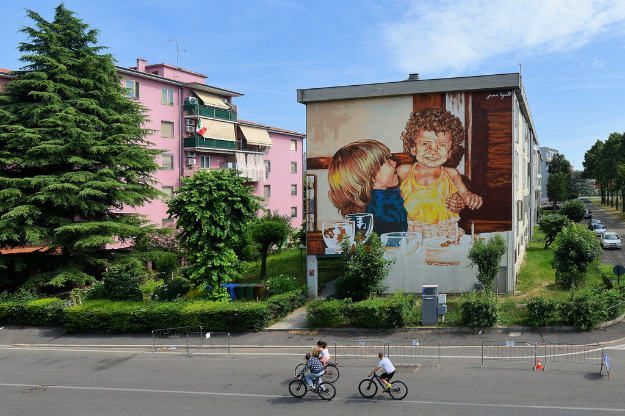
This fact confirms what we had suspected: it is impossible not to connect with Aguiló's sensitivity because his art is irremediably universal. His everyday scenes, that childlike curiosity that the children in his murals spread, the wisdom that the wrinkles of his old people give off, the imagery of childhood summers -his own, with his family at Can Picafort-... Small, intimate, everyday scenes that challenge us all and enliven, like a delicate awl, our memories.
The universality of Aguiló's art dialogues, paradoxically or not, with the insatiable search for identity. Joan himself defines it perfectly: "I try to transfer intimacy to the public space. I am interested in the moments of intimacy that define us as a community, but represented with a certain poetics that makes them universal".
"I have always strived to create an urban art and mural circuit".
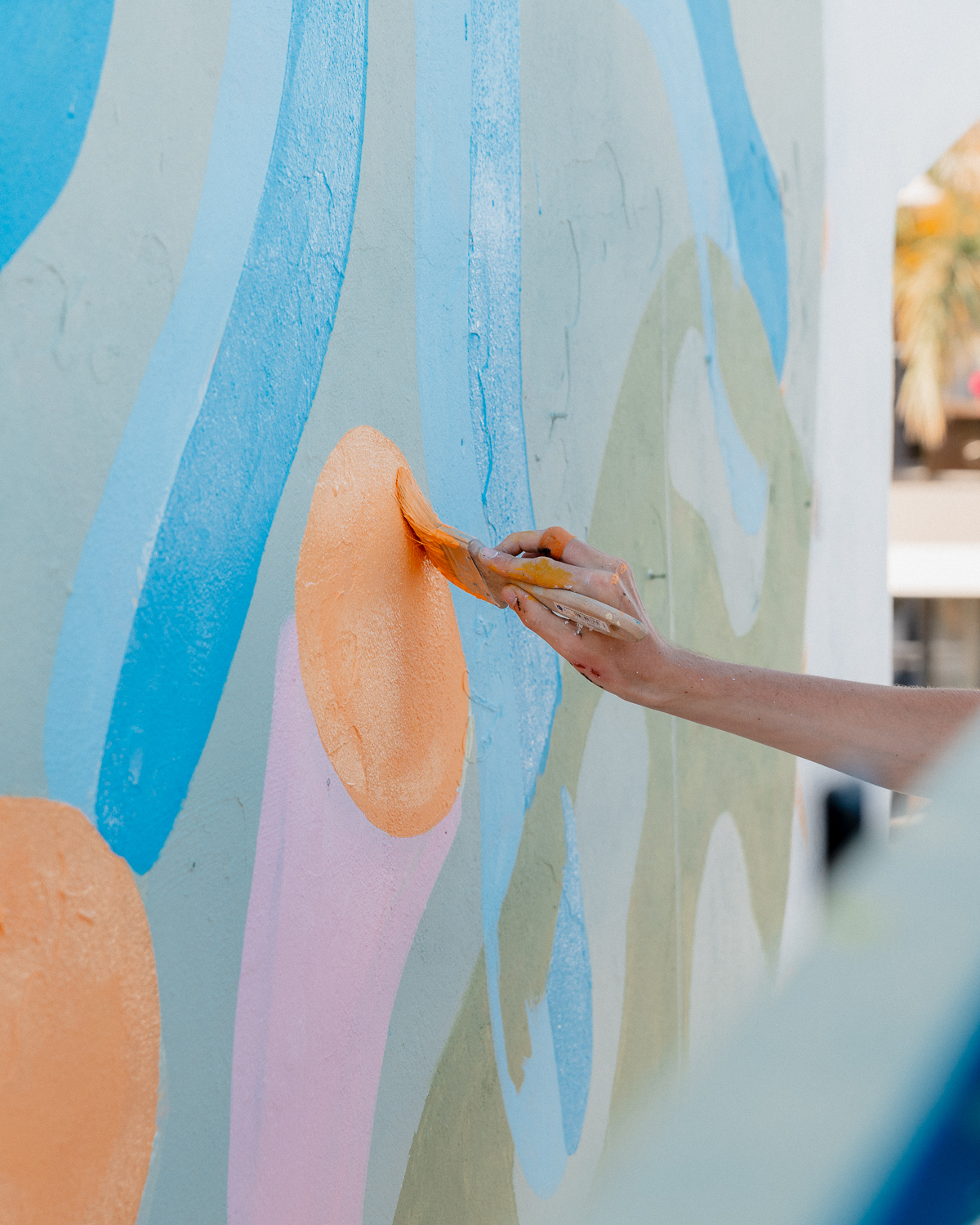
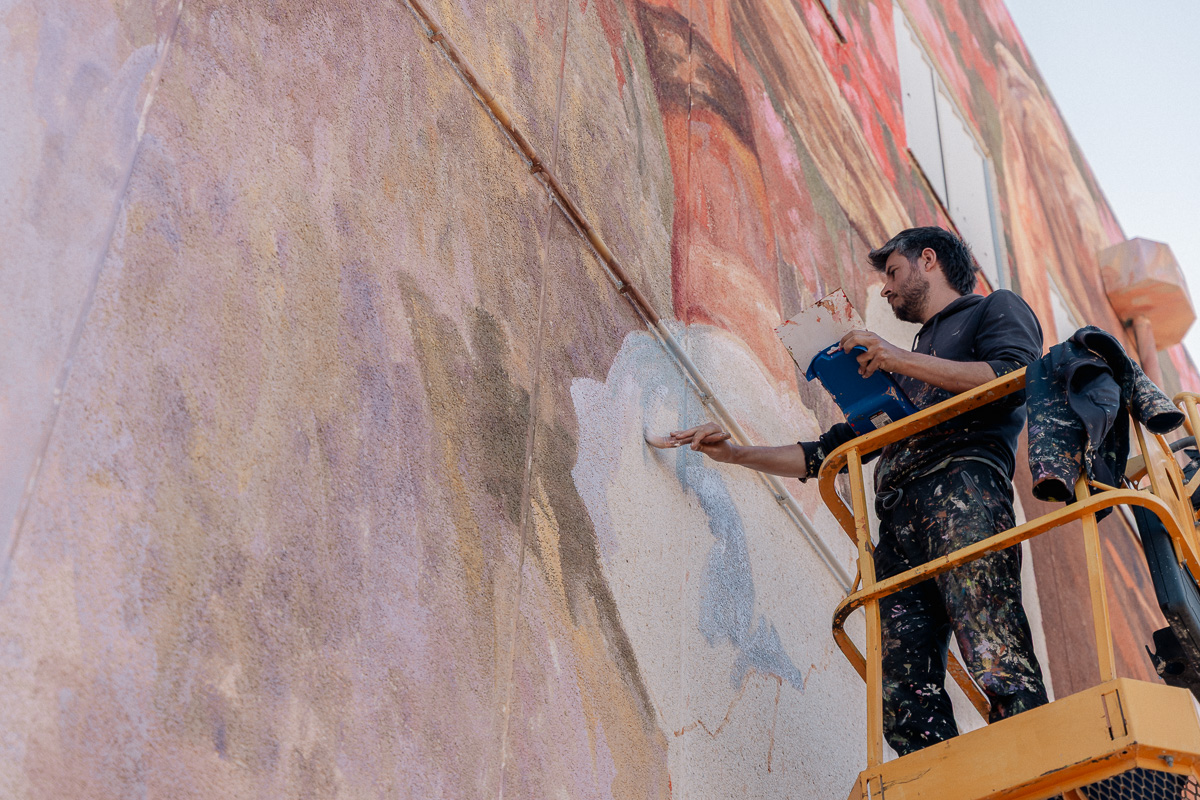
Over time, and as he lost his fear of going out into the street to create, Aguiló began to explore other methods. "I was looking for more pictorial forms and went from collage to stencils. Then I began to paint over them and, later, to go out during the day, and going out during the day is a bit of a turn-off," he says with a smile. Later, he would finally explore muralism, the canvas that has brought him unanimous notoriety and that he works for both private commissions and public institutions.
Among his professional milestones, he is especially proud -and not for less- of having promoted the Saladina Fest, the Can Picafort festival that in 2022 celebrated its fifth edition and promotes the intervention of large facades to transform them into works of public art. In addition, the event, which puts the mural at the center and features guest artists, concerts, theater and workshops, becomes a meeting point where culture, residents and the environment converge. "I have always strived to create an urban art and mural circuit, a professional circuit" states Aguiló. "I am very happy to have contributed to this world. A few years ago there were no muralists in Mallorca and I worked for many years to bring it forward".
If, as Aguiló himself states, when he started in the world of street art he wanted to talk about identity but didn't quite know how to do it, now, when reviewing his work, it seems more than evident that he has more than succeeded. Undoubtedly, the Mallorcan captures and captures like no one else the days of sun and beach that smell like freshly cut watermelon. The afternoons of reflection a la fresca (out in the fresh air) of our grandmothers. The tireless desire to play in the sand. Those short instants that we each live in our own way but that, at the end of the day, we share because they are quite similar to the pure essence of life.