 Gastronomy
Gastronomy
Read moreYumee. Where Cuisines Meet
Mark as favorite
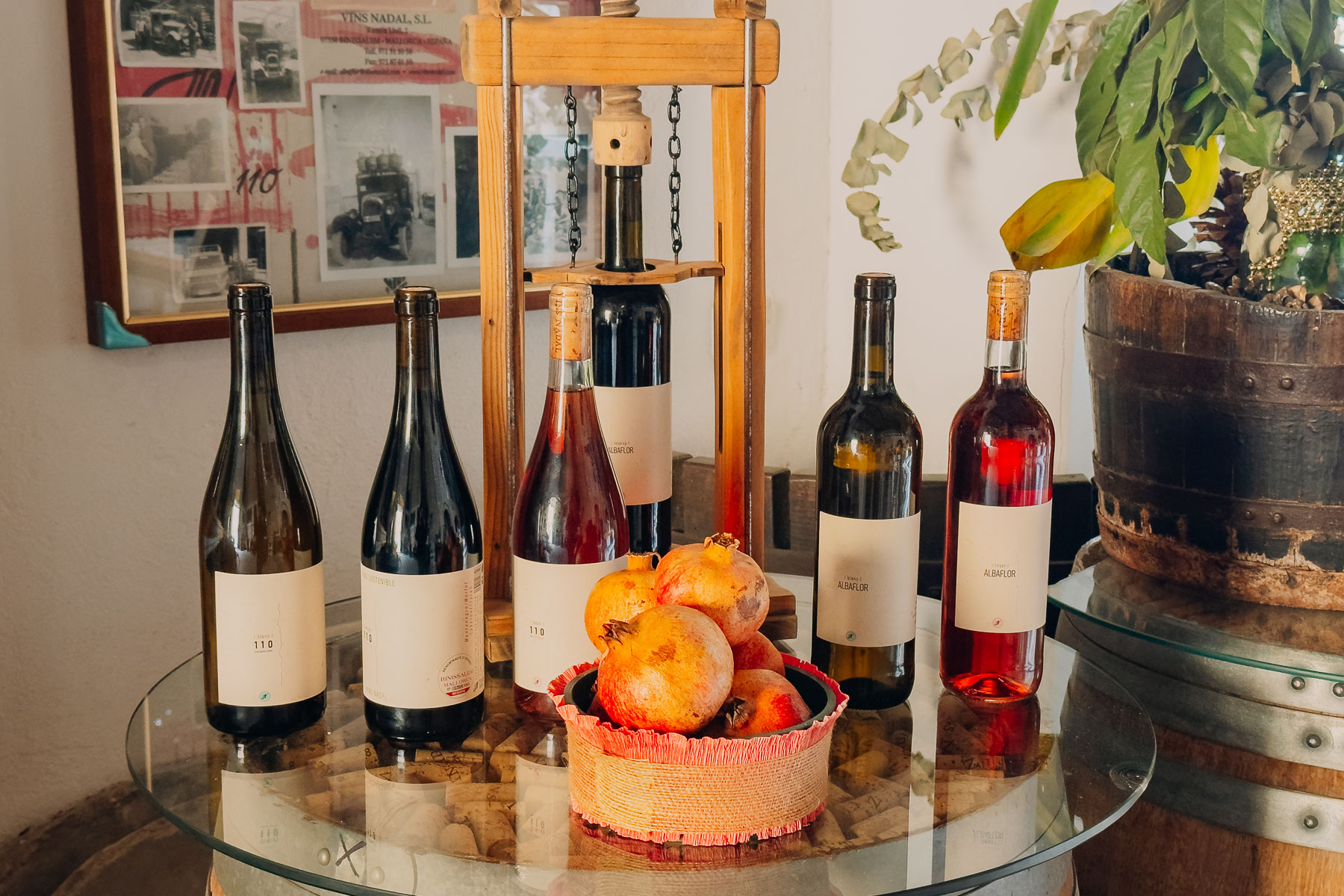
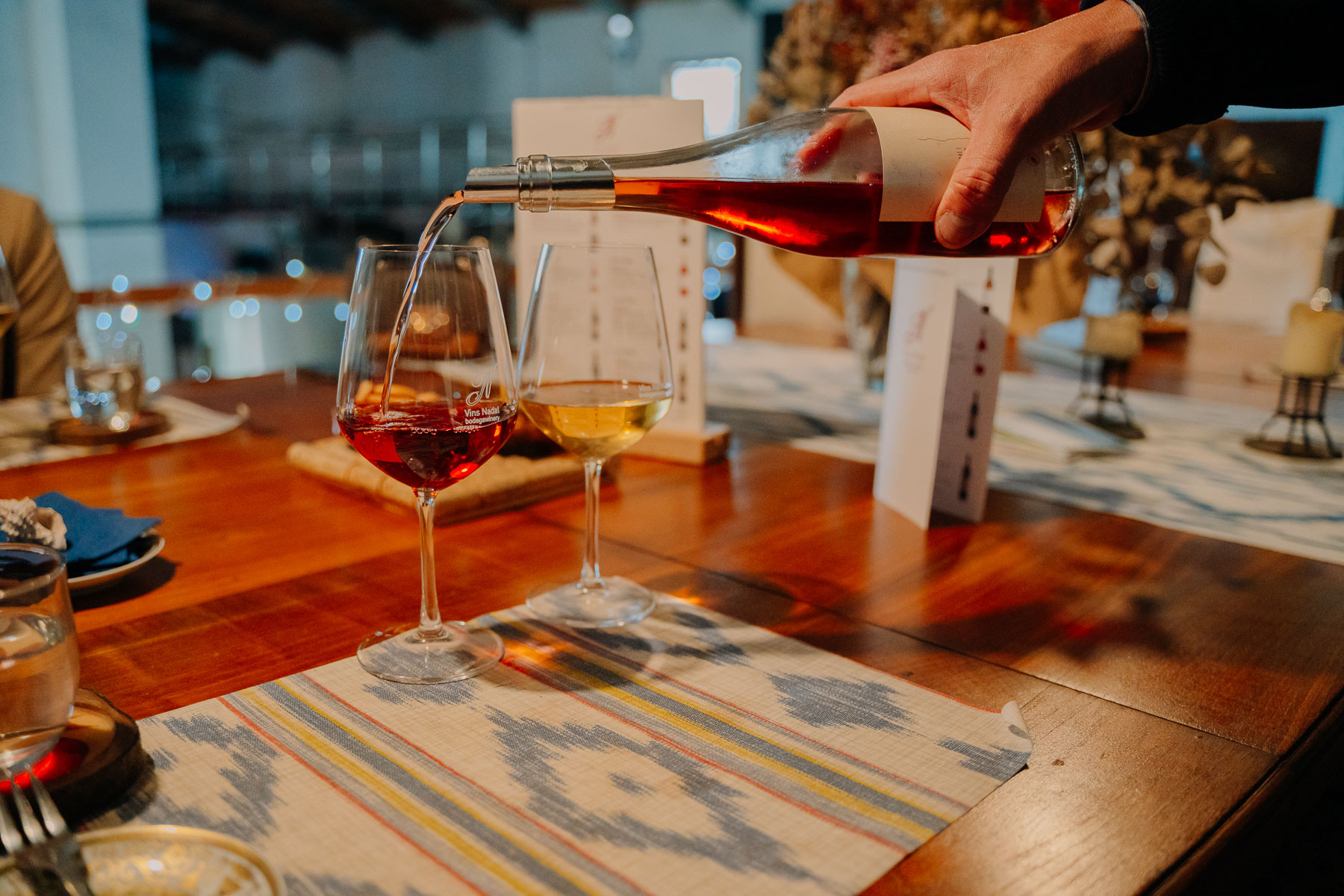
In Vins Nadal they offer different types of tastings and, as we have chosen the Pámpano visit, we find a large table presented with three different wines and a tasting of local products.


Author: Aina Coll
Photographer: Jaume Oliver
Three generations have run in almost a century a winery that began as a family house that produced wine for their own consumption. A few months ago we got to know its history thanks to Esperanza Nadal, who shared with us the noble and unchangeable path of Vins Nadal. Today we want to know a little bit more, through taste, about the wines produced in the center of Binissalem. A little wine tourism on our own island is never a bad idea.
After parking our car -right in front of the celler we find a parking lot with a charger for electric cars-, we enter the Nadal's house, where we can breathe the historical legacy of a lifelong winery. We are welcomed by Hernán, the sommelier of the company, who has been in Mallorca for just over a year. Hernán helps us get situated: Esperanza is in charge of the business, always with an eye on sustainability, and she is joined by Agustín in the vineyard, Juan, who divides his time between the vineyard and the warehouse, and himself, who works as a guide and salesman. In addition, Rafael, Esperanza's father, who, although he is retired, has not lost the beautiful habit of coming to the winery almost every day.
The experience we have chosen begins by opening the doors to the heart of Vins Nadal. One of its pillars is its own history; the other, the native grape varieties: mantonegro, giró and prensal blanc, Hernán tells us, which are not treated with fertilizers or pesticides because decisions are always made here to minimize the environmental footprint: their bottles have no capsule in order to avoid unnecessary waste, the bottles contain 20% less glass than a regular bottle, and they are now studying how to apply the Australian Keyline system so that the vines naturally absorb water from the subsoil, a way to fight against the lack of rain.
While Hernán tells us about the company's philosophy, we greet Esperanza's daughters, who are coming home from school -the family home is next to the winery and both are connected by a courtyard. It is hard not to feel at home here. After the greeting, we continue our tour of the winery, where Hernán shows us the old tanks that are currently used to store rainwater, which is then used to irrigate the vineyards.
As we walk around and discover the nooks and crannies of the cellar, our private guide tells us that in Vins Nadal the harvest is carried out manually in August and September in order to take great care of the product and generate less impact on the environment. At a time when many wineries are looking back -and we are pleased- we can affirm that the Nadal family has always had very clear principles which dictate their way of doing things.
The grapes come all the way here, whose liquid and skins are put directly into the stainless steel tanks. What is discarded is returned to the vineyard and poured into the soil. Natural fertilizer that also helps to lower the soil temperature. So we understand: nothing is thrown away here that can be reused. Everything is circular. Next, Hernán takes us to the bottling area and we receive the visit of Esperanza, who after greeting us tells us that the following week they will start with the filtration of white and rosé wines. Their idea is to have the first wines of the year by Easter.
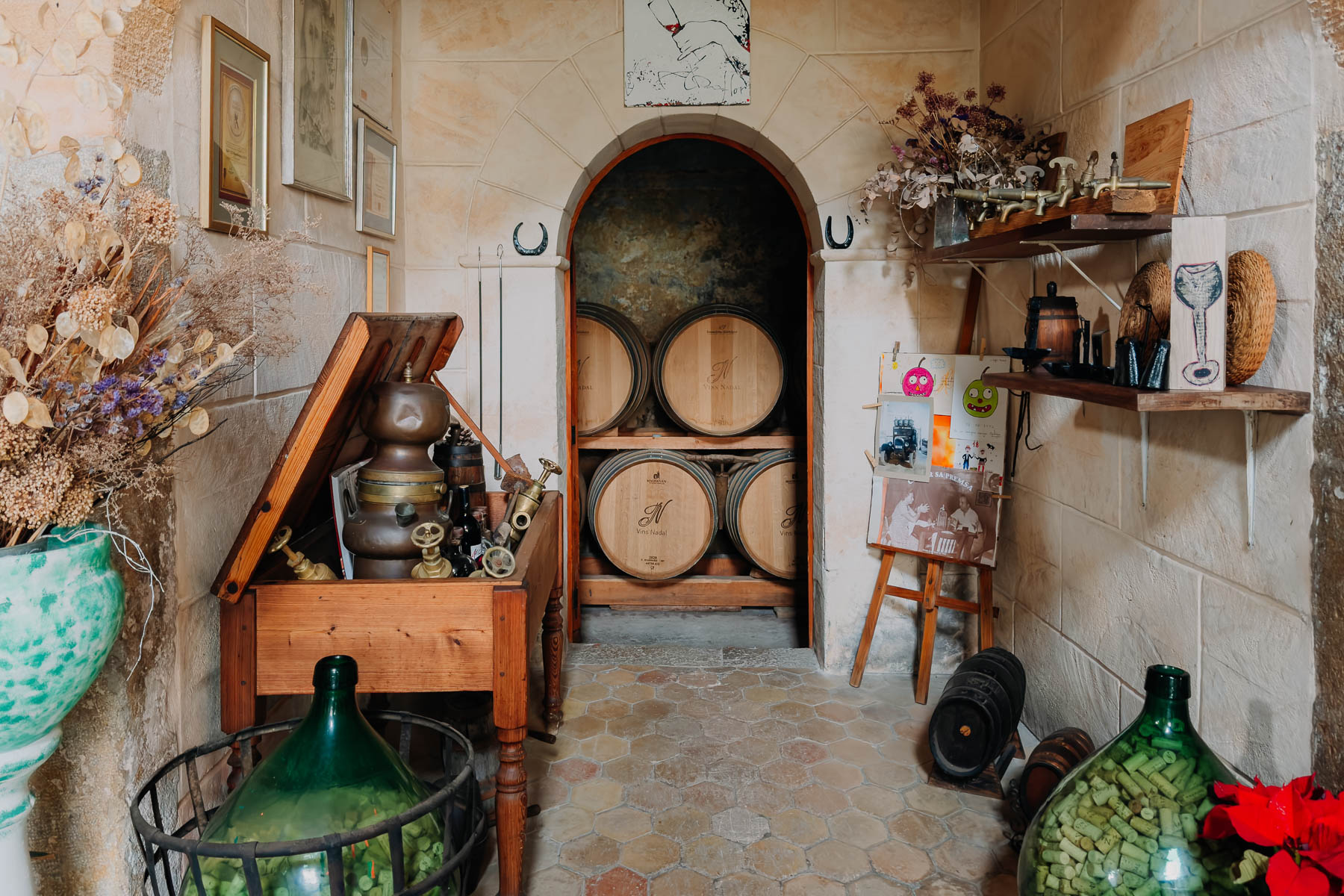
We continue our route and arrive at the cellar, the heart of the celler. A dark and fresh space impregnated with the smell of wood stained with wine. They use French and American oak barrels because, Hernán tells us, the American barrel gives the wine a sweet and smoky nuance while the French one provides a more elegant and traditional touch. As we leave the winery, we find the bottling machine -they bottle 80,000 wines in a year- and we discover that some wines have been maturing here since 2007.
After getting to know Vins Nadal and a history that began to be written in 1932 thanks to Miquel Nadal Fiol, it's time for the tasting. We go up to the attic of the main room, converted into a tasting room, which preserves the essence and aesthetics of a traditional Mallorcan celler.
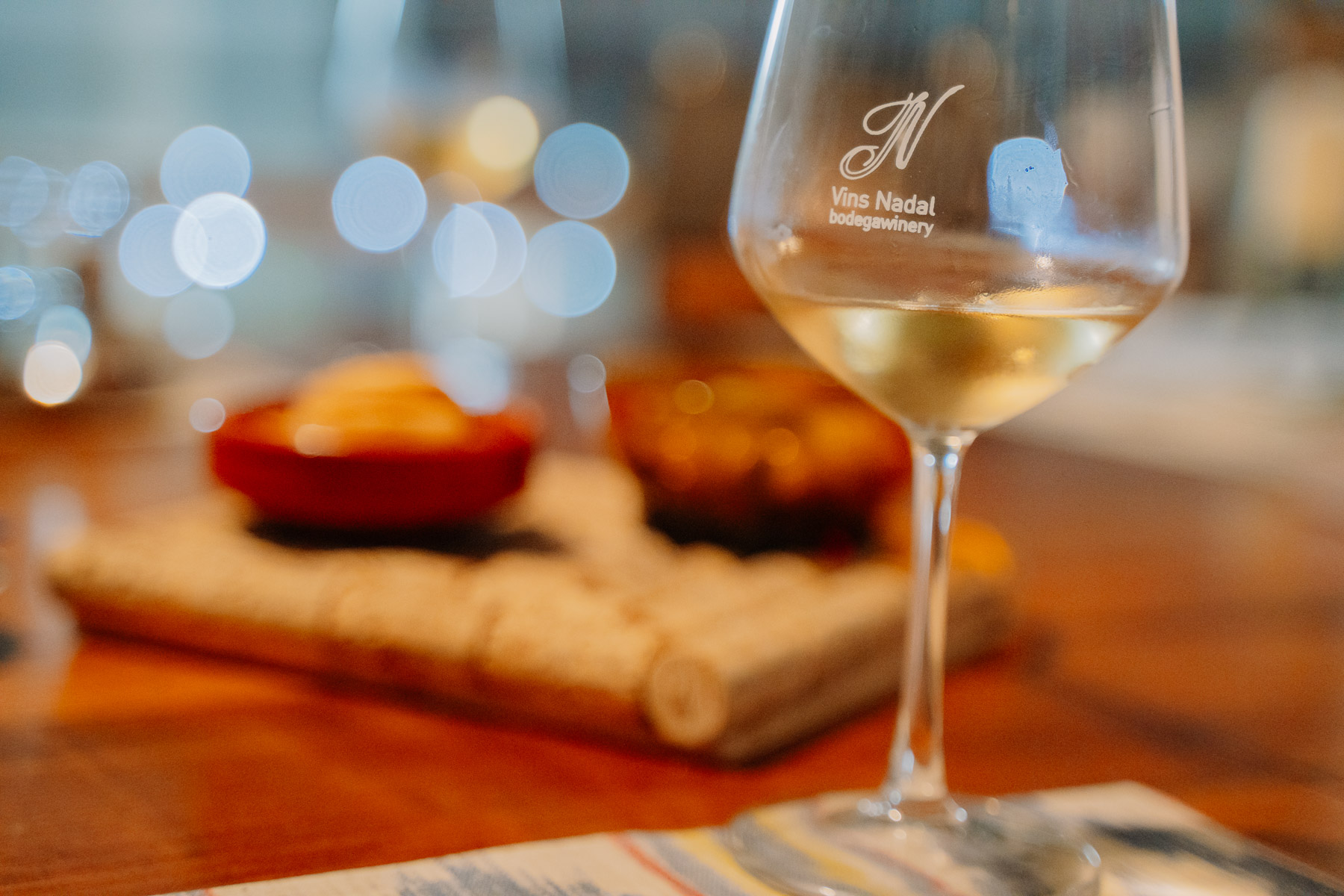
At Vins Nadal they offer different types of tastings and, as we have chosen the Pámpano visit, we find a large table presented with three different wines and a tasting of local products: Mallorcan cookies with semi-cured Menorcan cheese and sobrassada, homemade quince jelly -which Rafael himself makes- and olives. The picture looks really appealing.
We start with the white Albaflor 2022, made with Prensal, Giró Ros and Moscatel varieties, a wine that tastes fruity and slightly reminiscent of the aroma of jasmine. Then comes the rosé 110, which is made with Mantonegro and has a reddish color that surprises us with its vibrant intensity. Tasting it is like tasting fresh red fruit, although we notice a slight flavor reminiscent of orange.
We finish the tasting with an essential red wine from the celler: the Albaflor Crianza -based on Mantonegro, Cabernet, Sauvignon, Merlot and Syrah harvested in 2019- has spent 24 months in barrels -half French and half American-. It tastes of black fruit with spicy notes and a light touch of vanilla, and its body is much more present than in the previous two wines.
As we enjoyed each concoction, we chatted with Hernán about the world of wine, his future on the island and what day-to-day life is like in a winery that remains true to its principles and history. A very enriching experience from which we took away with us a good resulting taste.
Suggested options