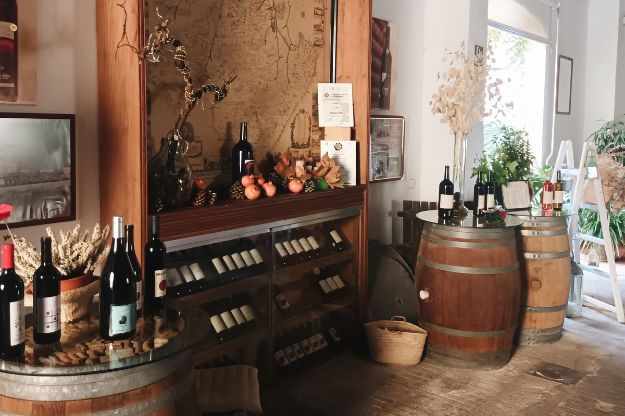
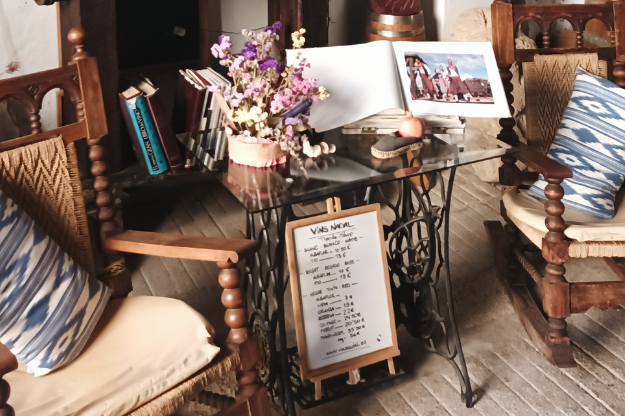
As soon as we enter the Vins Nadal winery, in the municipality of Binissalem, we understand that here the concepts of tradition and identity are not just randomly chosen clichés. In this winery one breathes history, specifically, the history of a family dedicated to wine that has managed to maintain its essence and values without renouncing innovation and an increasingly sustainable production model.
The person who explains the past and present of the winery is Esperanza Nadal, the representative of the fourth generation of Vins Nadal, who has been with the company since 2002. Her story exudes strength, determination and a lot of truth because, in this cellar, it is clear to us, authenticity is non-negotiable. However, despite being very aware of their day-to-day roots, as soon as the conversation begins, we take away a first lesson: tradition and transformation are not at odds because the changes here are executed without ever renouncing the idiosyncrasy of the winery.
The story of Vins Nadal begins in 1932 and much has happened since then. Miquel Nadal Fiol, Esperanza's great-grandfather, was the one who founded the cellar, and he did it in his own house because, in the old days, Nadal tells us, "the cellars were in the village, they were part of the daily life of the neighbors. The work, on the other hand, was done in the countryside and that is how we keep it today".
In the beginning, the Nadal's winery produced wine for their own consumption; later, they began to sell it in bulk -as was the tradition on the island- and then it was bottled and distributed around Mallorca. Nadal is not unaware that the tourist explosion of the 1970s played a very important role in this transformation: "The tourist boom changed the scenario. We stopped being self-sufficient, so we started importing wine from the mainland because the vineyards we had at that time in Felanitx and Manacor were not enough. Suddenly, there started to be more demand than supply."
"We have to go back to the agriculture of the past".
Back then, Esperanza remembers that the wine arrived by train, the family stored it in Palma and from there it was distributed. Those were different times, but the paradigm would change again in the 1990s with the establishment of the Binissalem-Mallorca Designation of Origin and the internal generational change at Vins Nadal. During that decade, Mallorcan wine in general increased spectacularly in both quality and production and, of course, consumption grew exponentially. It would be no different in the case of the Nadal family, whose wine, thanks to the commercial work of Rafael, Esperanza's father, reached all parts of the island.
With Esperanza's incorporation to the company, changes would come again. Although, as she confesses, as a child she was not very curious about the world of viticulture, in 2002 she joined the winery to take charge of production quality control. Trained at the Faculty of Agricultural Engineering at the Polytechnic University of Madrid and with a master's degree in enology, Esperanza Nadal traveled to learn about the different grape varieties and the different forms of wine production around the world. From here and there she would bring back ideas and reflections that now, as director of the brand, serve as inspiration to adapt the winery to a traditional, respectful and sustainable way of doing things, as she is clear: "we have to go back to the agriculture of the past".
Following the parameters of regenerative viticulture and with the aim of consuming less CO2, the vineyards of this Binissalem winery are cultivated once a year, the soil surface is not removed and no chemicals are used. In addition, the packaging has also been revised, which, as Esperanza tells us, is a very polluting factor, especially since the island stopped recovering used bottles in the 1990s. To minimize the impact, Vins Nadal has opted for lightweight glass bottles and has eliminated the typical capsules that cover the cork. Their commitment to sustainability is firm and the facts prove it: since 2018 they have been part of the Company and Climate Foundation and their wines are Zero Waste certified.
"The more local the market, the more sustainable you are"
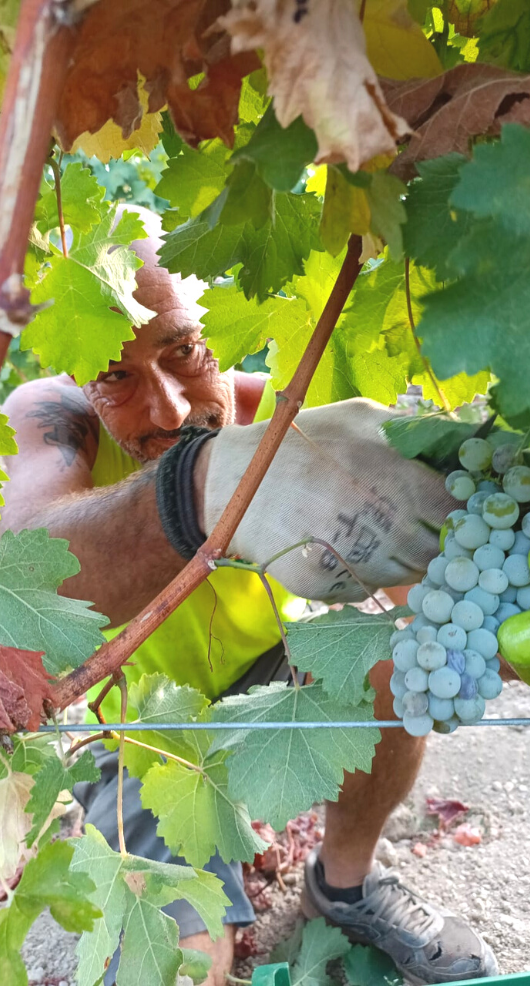
In addition to their production model and to continue, to this day, harvesting by hand -every year they have the help of young people from the village for this task-, the director of Vins Nadal also reflects on how the market influences the environmental impact and reminds us that "the more local the market, the more sustainable you are". For this reason, the island's restaurants, hotels and food sector are the main sales channels for its two brands: Albaflor, the brand with the largest production, and 110, which pays homage to the roots of the winery's vineyards with its name.
The market is therefore local, but the people who visit her cellar, on the other hand, are from all over the world. Sometimes, Esperanza admits with a smile, someone is surprised because when they come to visit the cellar they expect to tour the vineyards, a concept that Vins Nadal does not share because its value proposition is different: "we defend the Mallorcan identity. We offer visits to a Mallorcan winery in a Mallorcan house and tourists like that because they want to know the island, what is done here and how it is done".
Like all stories, Vins Nadal's story is nourished by its past, built in the present and projected into the future. And although the future, in the words of Esperanza Nadal, "is uncertain, because we are a grain of sand and we need to be many grains of sand", the commitment of this family winery is steadfast and, after all, it is not afraid of change: "we know that we will have to keep adapting to whatever comes, but it is clear to me that we must go down this path".