The legacy – business, cultural and artisan – has been passed down from generation to generation in the Vicens family until now, although the path has not always been smooth: "We have gone through complicated years in which we have had to work hard to preserve the company and the product. It's a big responsibility that a company like this doesn't disappear." The person who welcomes us and recapitulates more than 150 years of history is Tomeu Fuster, General Manager of the company and representative of the third generation of the family.
"My aunt and uncle, Martí and Antonia, were key to being able to move forward. Martí has been the reinventor of the fabric of llengües because the formulas had been lost and he recovered them. He also brought a lot of color," he continues, with a look full of pride. No wonder. This traditional textile technique is currently produced in only three factories (Teixits Bujosa, in Santa Maria; Teixits Riera, in Lloseta, and Teixits Vicens from Pollenca) and in order to survive they have all had to reinvent themselves many times and open up to new products without, of course, giving up their essence.
He tells it with the pause with which someone who has seen the market change many times faces the present. As Fuster reflects in the workshop, where the work does not stop, "we make products that never die, but that live on a roller coaster: they become fashionable and then the demand drops. You have to fight constantly."
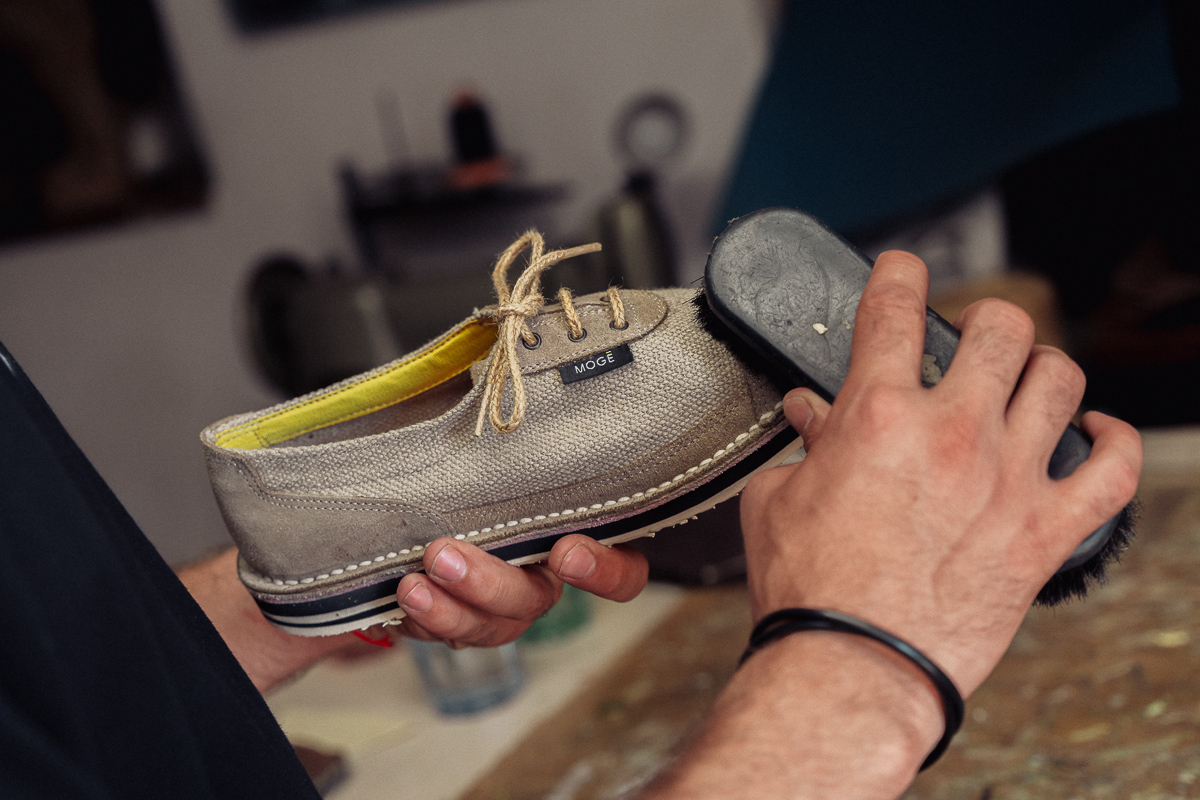
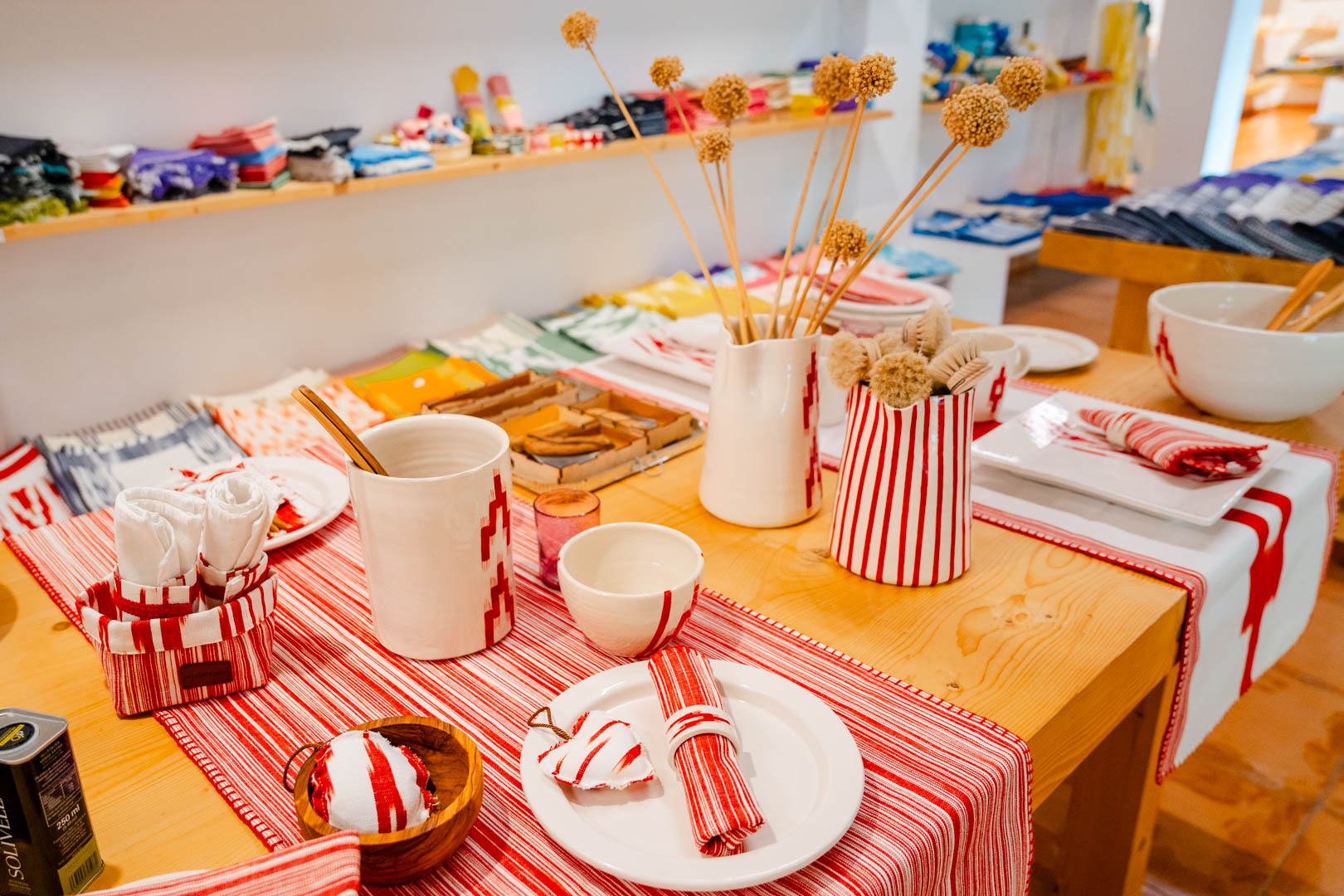
The 2008 crisis was a litmus test that served as a turning point for the Vicens. An opportunity to realize that they had to come up with something different if they wanted to move forward. Until then, in addition to producing fabrics, in the workshop they made upholstery, bed and table linen, and curtains, and from the crisis they decided to enter the world of fashion, creating with their fabrics esparto and platform shoes, and accessories, always with this unmistakable island stamp.
Evolution, in reality, corresponds to the change of priorities of a society that was being transformed. "We realized that young people were taking out mortgages and spending little on decoration or betting at large stores. By expanding our product range, we have expanded our consumer range."
"Before the pandemic, we were already noticing a change in mentality, a desire for authenticity and craftsmanship".
Embracing the times of the digital age and 'doing their homework', as Fuster says, instead of resisting them has also played in their favour. "In 2010 we started using social media, which is economical for a small company like ours. Before, we couldn't promote ourselves or fight against imitations, which have done us a lot of damage during this time."
Determined to continue moving forward, they opted for digital transformation and Teixits Vicens undertook, as a brand, an international strategic plan, created a new website and bet on its presence on social networks. Then, the pandemic hit, but they felt technologically prepared to be able to continue working and, through the web, they increased their sales by 50%.
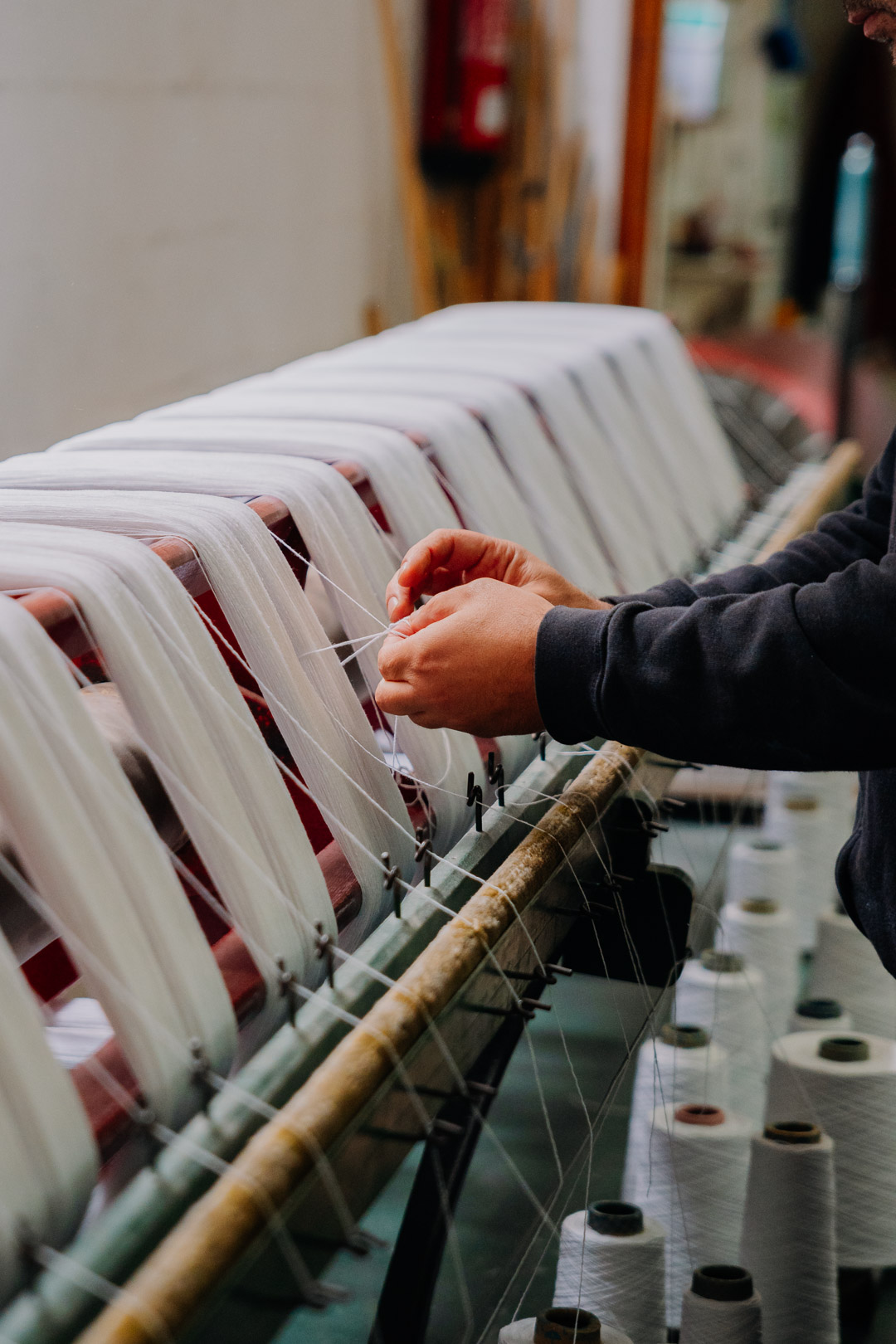
The pandemic caught them prepared, but it also accelerated "a lot of things that were to come. We were already noticing a change in mentality, a desire for authenticity and craftsmanship," says Fuster. Another twist for a company that continues to manufacture the basic part of its process manually, as it was done in the past, with white cotton that is dyed, in a color palette that has been growing, on two identical sides. Then, the drawing is composed in a laborious process and passed to the loom to give consistency to the fabric with linen. The same process since 1854.
"So the secret has been to go back to our beginnings to keep moving forward, which is what is needed: to go back in many ways".
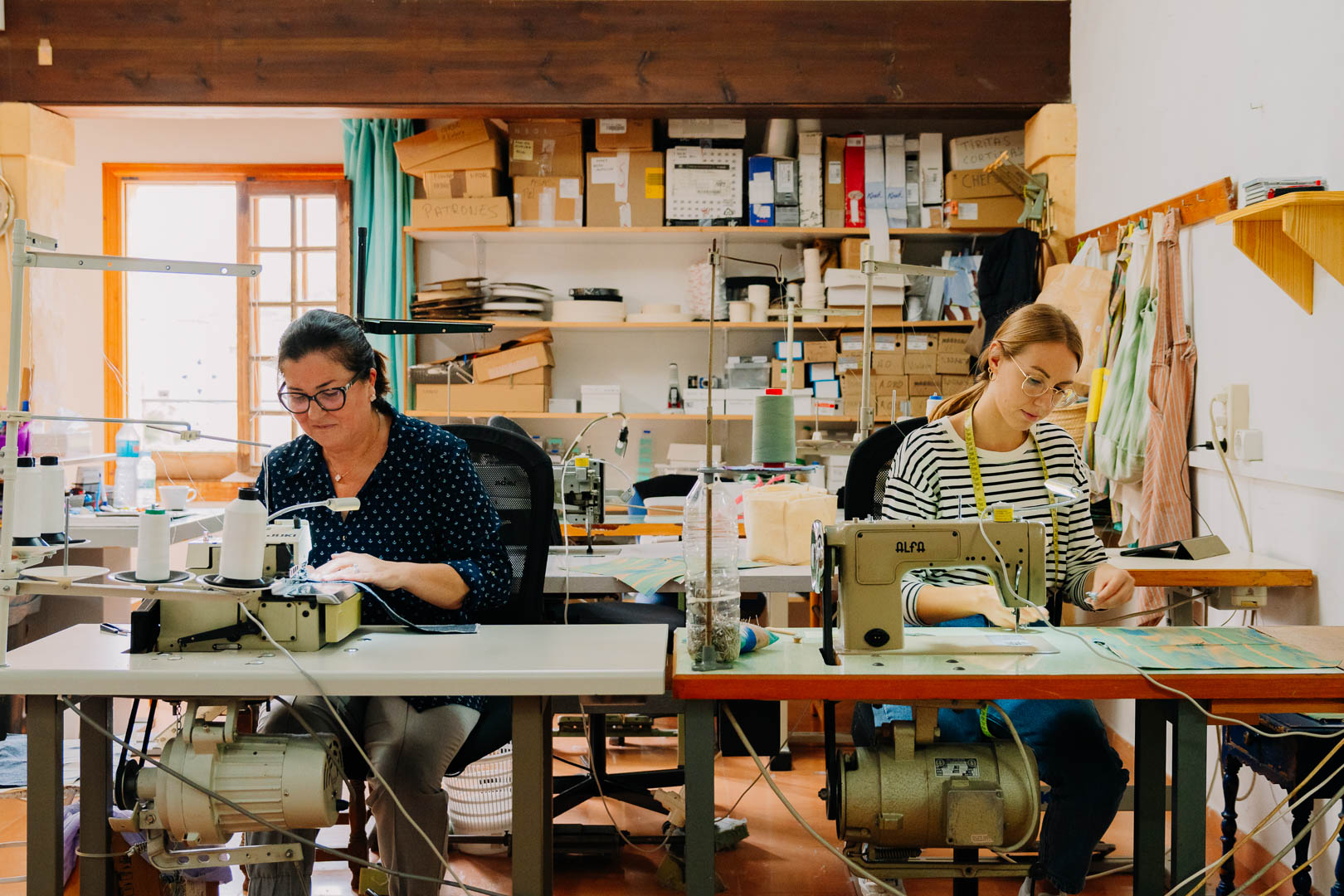
Walking through the factory, we discover the beauty of the fabrics, which are produced smooth, striped and with the traditional fills. In them, every thread counts. "This one," Fuster says as he points to the warper, "has 1,008." Once finished, five women working in the same factory transform them into products, but this is not new either.
Although Teixits Vicens opened up to fashion to expand the business, they found a photo from the 60s that showed them that, as Fuster says, "we hadn't invented anything. My uncles already did it." Indeed, in the photo there are clothes and bags. "So the secret has been to go back to our beginnings to keep moving forward, which is what is needed: to go back in many ways."
Many people fall in love with the fabrics of Teixits Vicens. That is why their clientele is very varied: the first market is local, the second German and the third French, although they also sell to England and more sporadically to Portugal and the Netherlands.
Although there is a long way to go, there are also challenges to be assumed, such as managing to dye fabrics with natural dyes and one that seems to resist common logic: that of dealing with imitations, which in recent years have not stopped growing. "Whenever something is fashionable, imitations appear that are unfair competition," reflects Fuster, who from Teixits Vicens has already allied with his colleagues from Santa Maria and Lloseta to reactivate the association they created in 2009 and fight for the protection of their historical work from a legal basis.
Open but rooted, entrepreneurship seems to be part of the DNA of the Vicens family, who look to the future with optimism and enthusiasm. "Our job now will be to think about what products and strategies we can make going forward."
One of those avenues to explore is to build bridges with other local artisans, in which they are already working. In fact, they have created a jewellery collection with Antic Mallorca by uniting two millenary handicrafts – the llata and the roba de llengües. A co-branding exercise that benefits both parties and pays homage to a culture, a tradition, that it is in our hands to maintain.