Trial field, recovery area and farm for experimentation, study and conservation, Son Mut Nou is the land where Monserrat Pons i Boscana cultivates his personal project with much love and commitment: a vast collection of fig trees that remind us of the importance of our natural heritage.
It is here, in the Marina de Llucmajor, where this pharmacist by profession spends a large part of his days because of a history that he describes as 'complex'. 'In my young years I always lived in the agricultural field, in the Marina. I studied pharmacy and botany became an important part of my training. I began to devote myself to the fig tree as a symbolic tree of our history because for me the fig tree is The Tree'.
A tree that tells our history as a community - as perhaps only the olive tree can do, too - but that over time has been diminishing its presence in the Balearic landscape. In the golden age of the last century, the figueres de porc were the most cultivated. Fig trees had the purpose of feeding pigs and there were very few cultivated for human consumption. They used to be the bread of the poor and the dessert of the rich'.
"The fig trees give me life. Inside this paradise, I do my work".
Faced with this critical situation, Monserrat, twenty-eight years ago, began to study the almost infinite varieties of fig trees that grow around the world and to plant them in Son Mut Nou until he drew a wild scenario of almost three thousand specimens, from here and there, but above all local, 'varieties in recession and at risk of disappearing' with the purpose of recovering them and because, as he says, 'fig trees give me life. Within this paradise, I do my work'.
In his youth, when he was studying pharmacy, the countryside was not alien to him. His family had cows and sheep, and sold their own milk, but it was not until his friend Colau Monserrat i Garau introduced him to this world that he decided to promote a project that would be difficult to be compared to any other. From then on, 'like a gear, I was looking for these jewels of our history, culture and heritage that the fig trees represent'.
From 1995 to date, he has traveled the planet in search of owners of different varieties, a research journey 'for the love of our people and our ancestors' that has increased the initial number of fig trees fivefold. And he doesn't do it alone. Although the team involved is small, a payés (local farmer) helps him in the maintenance, pruning and harvesting tasks, a young woman in the logistics chores and several family members and friends give him support in whatever he needs.
Over time, Monserrat has gathered on his farm 'unique fig trees, cuttings and offshoots of fig trees full of history'-from where the Holy Family was expelled, from the place where Che Guevara was shot and in the shade of the tree where Buddha was enlightened-and has managed to capture the interest of locals, schools and associations, but also of many travelers who come even from Nigeria, Bangladesh and Pakistan to learn more about this historic tree.
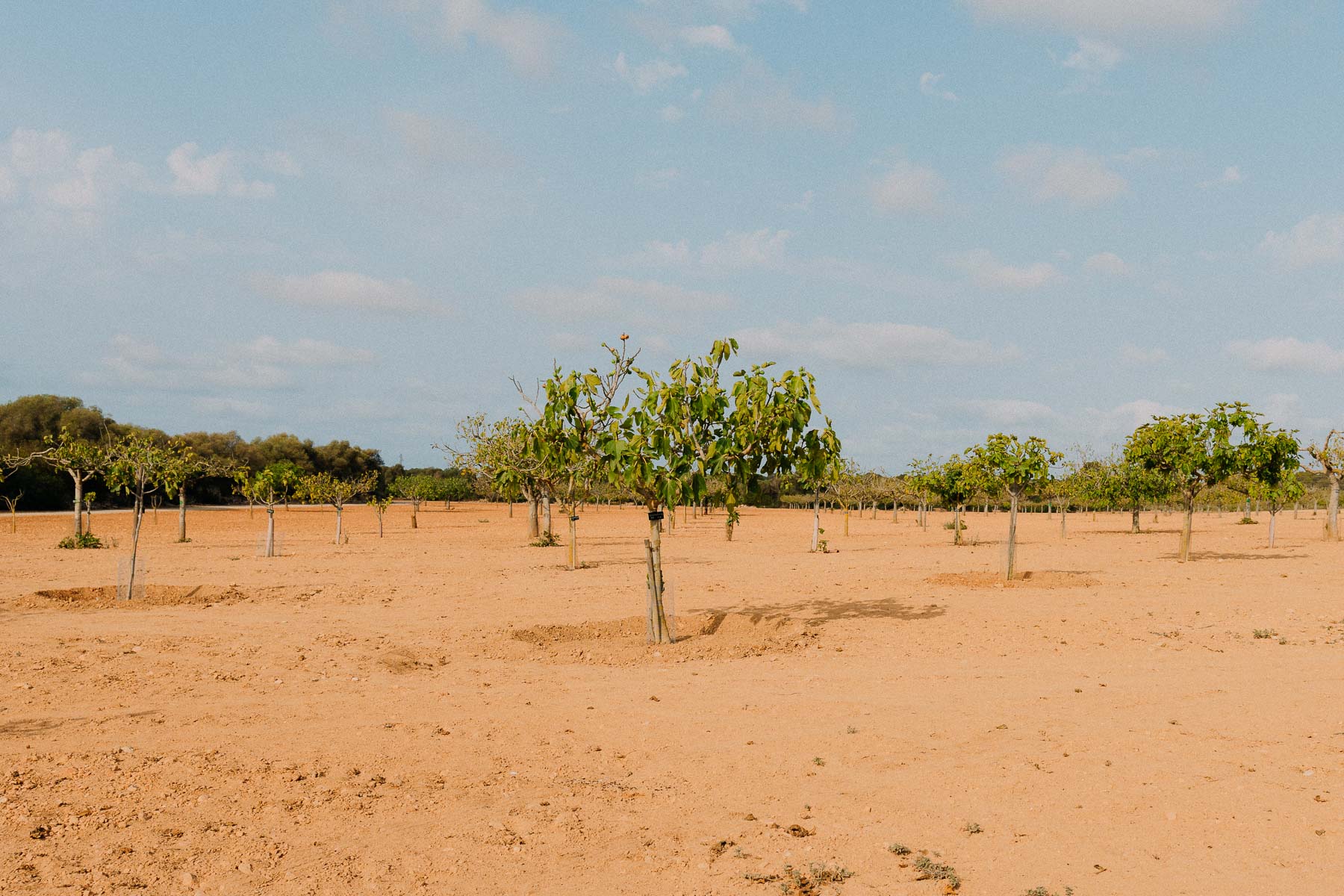
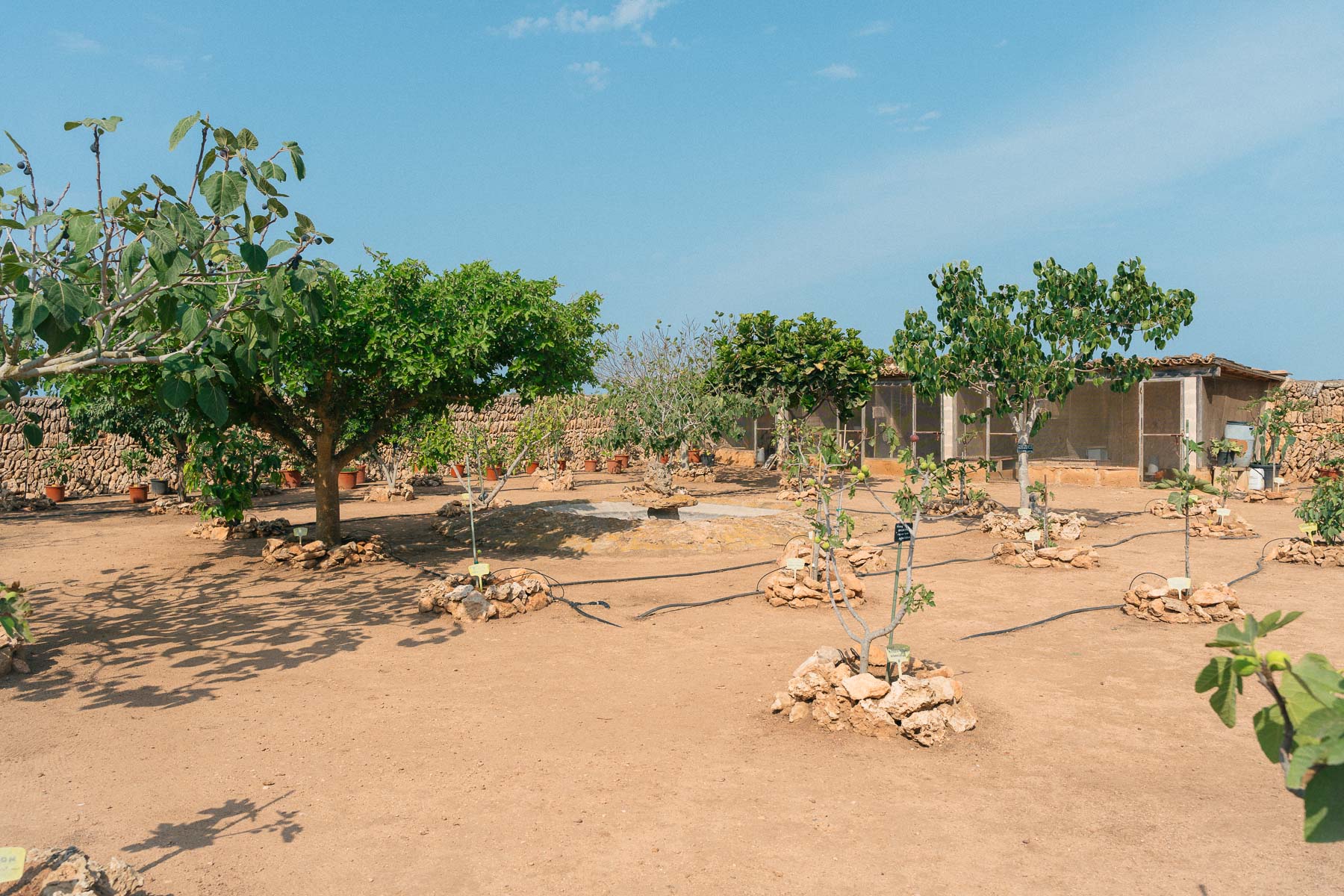
"The project focuses on the recovery, reproduction and conservation of local varieties".
Son Mut Nou houses, then, specimens from all over the planet - we can find islanders, Spaniards and from the different European, American, Asian, African and even a few from the Oceanic continents- but as Monserrat recognizes, 'the project focuses on the recovery, reproduction and conservation of local varieties' that 'are part of our agricultural heritage in recession'.
The story of Son Mut Nou, narrated by Monserrat, is fascinating and the passion he transmits is captivating, but his discourse is no less realistic, as he knows that he faces, on a daily basis, multiple challenges: tourism, globalization, extreme drought and the fact that there are fewer and fewer farmers. Everything leads to our agrarian culture disappearing by leaps and bounds, and especially climate change, if we do not do something about it in the short term'.
Despite this uncertainty, Monserrat's life - who has not lost his vocation for health and, although now temporarily away for health reasons, continues to maintain his pharmacy and his clientele - is spent among hundreds of specimens of this mythical tree - which served as literary shelter, he says, to essential poets such as Miguel Hernández, Rosalía de Castro or García Lorca.
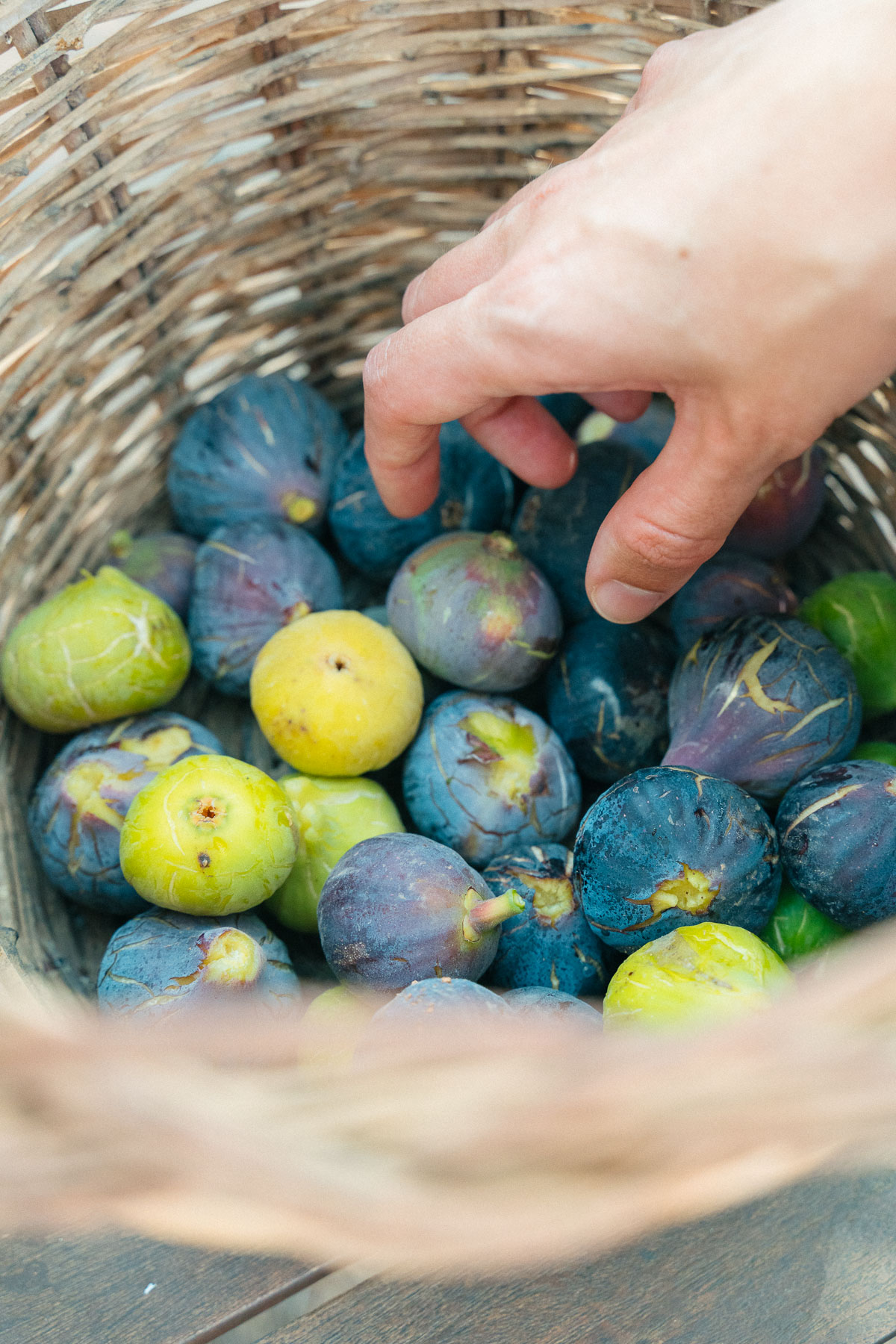
Son Mut Nou is not an isolated world. Its promoter opens its doors to the curious on guided tours and to consumers who taste the figs on site, fill their baskets and, with a donation, contribute to the maintenance of the farm, because 'aid is scarce'. However, consuming local produce, he recalls, is also a way of doing our bit. When I go to the market, I hate to see fruit from outside, when we actually have varieties here that are being lost.
The future of Monserrat's experimental field is uncertain. As he himself reflects, 'there is no plan for the future. You have to live day by day. One day at a time. My children are not going to devote themselves to this, so what will happen? I don't know. My desire is that it would transfer to be of public use, that these varieties would go to a public property and that the islanders could enjoy them'. Meanwhile, among the sweet and unmistakable aroma of fig trees that floods this plot of land in the Marina de Llucmajor, its owner shares his knowledge on his next guided tour, which he invites us to join.
The tour turns out to be an extension of our interview, in which we now remain silent, but very attentive. The emotion and deep respect used by Monserrat as he waters his project completely captures us. His phrases, full of truth and commitment, resonate beyond the field and give us a lesson hard to forget: our culture, our past and our heritage are also in the land, and an immeasurable and altruistic project like this one helps to keep them alive, but we all, as we feel, have the responsibility to contribute to this precious task. May we all do it with the same passion as Monserrat does.