 Gastronomy
Gastronomy
Read moreYumee. Where Cuisines Meet
Mark as favorite
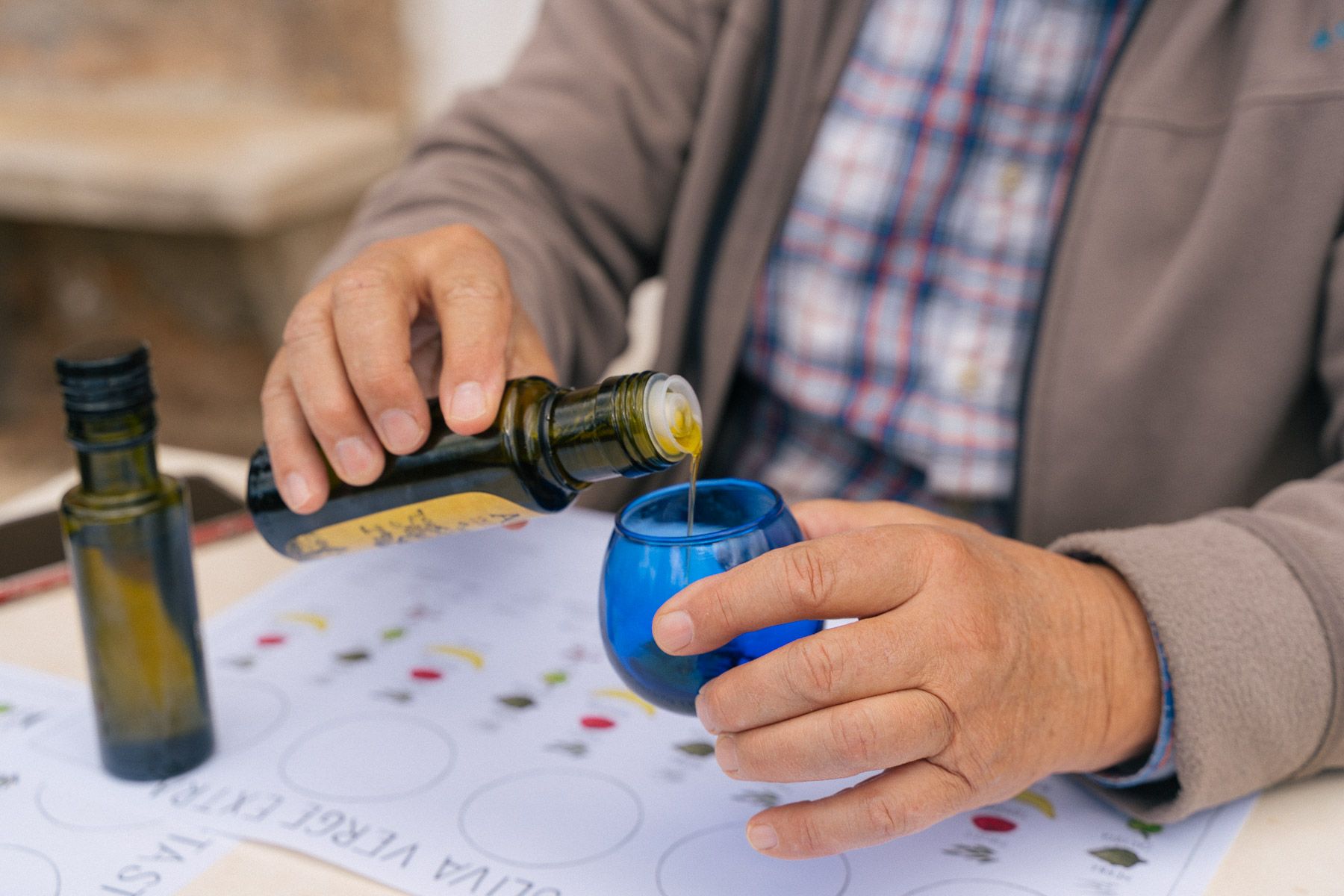
Joan pours a small amount and explains that the ideal thing to do is to heat the glasses by hand so that they are at about thirty degrees, although he, foresighted, has left them in the sun to bring them up to temperature.


Author: Aina Coll
Photographer: Jaume Oliver
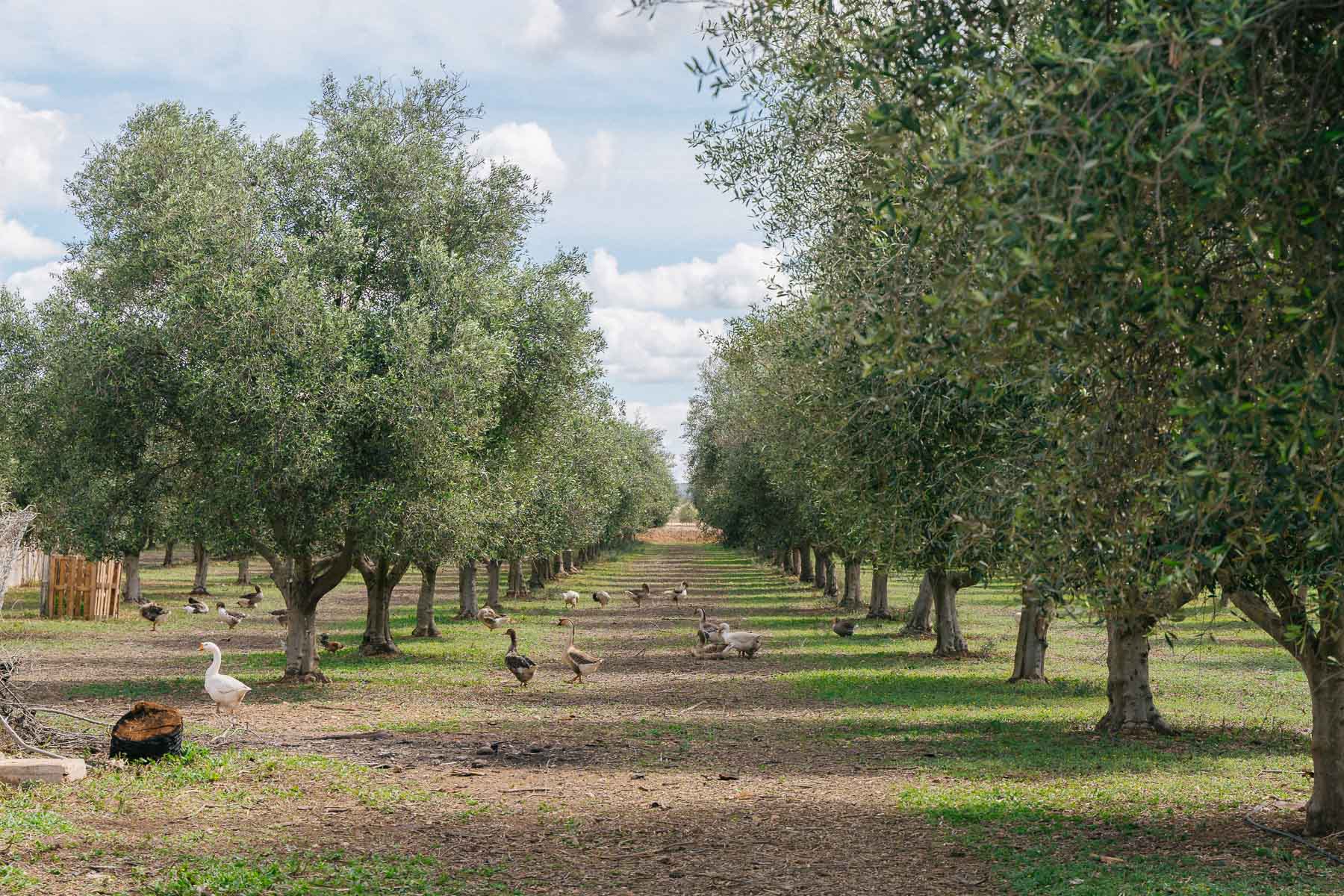
A few months ago we visited the olive grove of the Mayol brothers to learn how they produce their oil, Oli Verderol. Today, we return to the olive grove to soak up the culture of liquid gold and taste the oil that, with respect and love for the land, they produce. An authentic journey through an essential chapter in the history of the Mediterranean that has been written for centuries and that Joan tells us about.
When we arrive at the estate, we are greeted, cheerfully and playfully, by some of their dogs. Before the commotion that is formed, Joan, who is manually labeling some bottles, comes out to meet us and invites us to walk through nature while we chat. We can't think of a better way to welcome spring.
The Phoenicians were the ones who spread oil around our Sea, Joan begins to explain. "Back then it was a method of lighting, and it was until the beginning of the 20th century", he says and adds that "it has also been, historically, a religious symbol in birth and death ceremonies in religions such as Judaism and Islam".
While we walk among the olive trees of Es Colomar, Joan tells us that the island was a place where the olive tree was a very abundant one because, lacking in food production, the oil enjoyed strong commercial power. The technique, as old as it is also modern, consisted of grafting ullastres, which one by one gave shape to the olive groves of the Serra. And so it became, until the 18th century, the main source of wealth of the islands.
The system was very laborious. "The olives were dropped and picked, one by one, by thousands of women who went from the Pla to the mountain for four and five months". Each farm had its own oil mill, he tells us, sharing with us the story that has nurtured our popular culture in the form of dozens of songs that have been transmitted orally from generation to generation.
Joan shows us how, "in Oli Verderol, the drip system irrigates the olive trees, which are fertilized with organic matter in order to produce every year, although the harvest is 'much more irregular than that of other fats". In spite of this, he says, olive oil is on the rise today because of its countless benefits, especially the extra virgin variety.
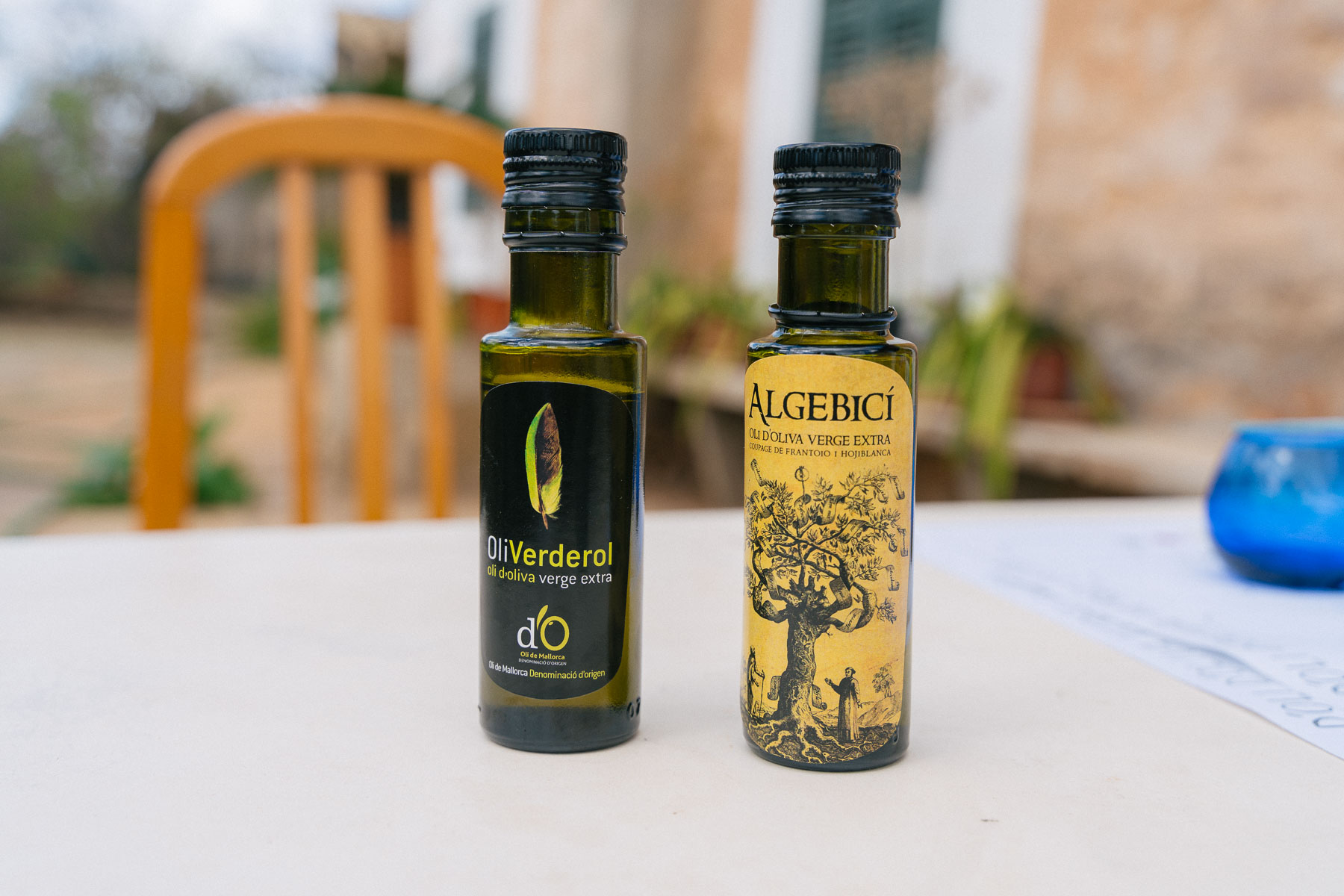
A few steps away from the bustling city, we can only hear the noise of some animals on the farm and the branches of the olive trees swaying in the gentle morning breeze. After the pleasant walk and while enjoying the knowledge that Joan shares with us, it is time for the tasting. At a small table on the terrace of the farmhouse, taking advantage of the sunny day, we sit down, ready to taste the Verderol oils.
Two varieties are produced here: one from frantoio and hojiblanca, and the other from picual, empeltre and arbequina. Both oils go through two laboratories before being marketed to check their acidity and possible defects, and now we are the ones who proceed to taste them in crystal glasses, as it should be. First, Joan pours a small amount and explains that the ideal thing to do is to heat the glasses by hand so that they are at about thirty degrees, although he, foresighted, has left them in the sun so that they reach temperature.
First, we pour a small amount of the Mallorcan variety oil, then take a sip soaking all the taste buds and breathe through the mouth to better appreciate the complexity of the flavor. It is fruity, with a leafy taste and a touch of artichoke. Joan, laughing, tells us that there are those who detect banana flavor, but perhaps, still inexperienced, we do not notice it. "We lack training!", we laugh. The second, with foreign varieties, is also fruity, but with a characteristic taste of almonds and nuts, and a little spicier in the throat.
Depending on the year, Joan and his brother produce around 10,000 liters, but they do not have their own oil mill. Once the grapes are processed, the oil returns to the farm and Joan now takes us to the warehouse, where the tanks with their two oils and the small manual bottling area are located. "Here the oil is bottled on demand so as not to alter the quality of the oil - it can usually keep for about a year and a half when bottled," he says.
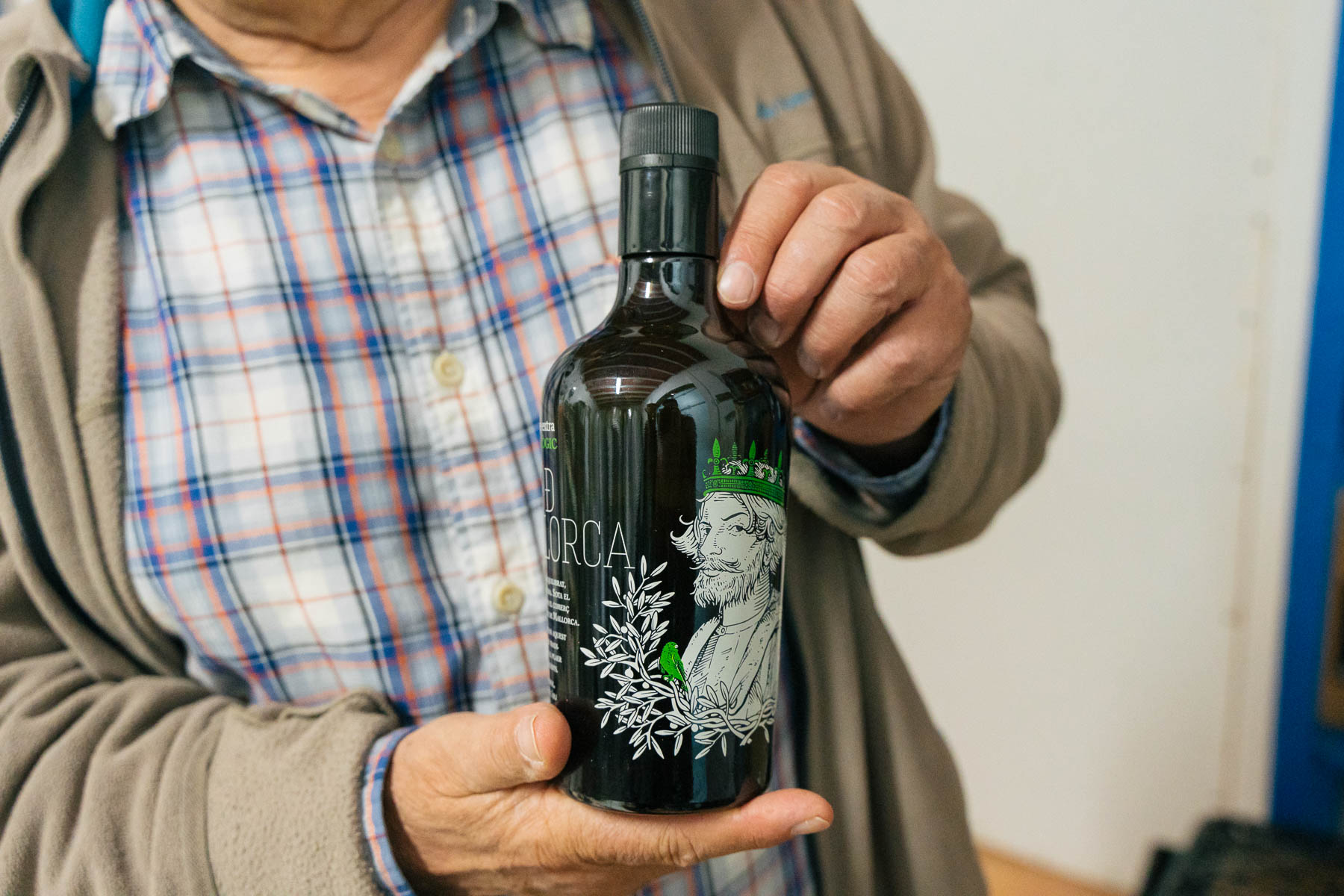
Communicative and enthusiastic, Joan also shows us the labeling process: each label contains a serial number, which must be noted and reported to trace that bottle and thus confirm that the production is organic. Obviously, this makes the work a little more laborious, but in this way the consumer is assured that the product they are receiving is of the highest quality.
Now, after an extraordinary morning in the Palma countryside, the tgoodbye to Joan and, to enjoy at home, we bought a very special bottle of oil: Rei Sanç, which he has created in collaboration with two other olive oil mills. Oil, the king of Mallorca.
Suggested options