 Gastronomy
Gastronomy
Read moreYumee. Where Cuisines Meet
Mark as favorite
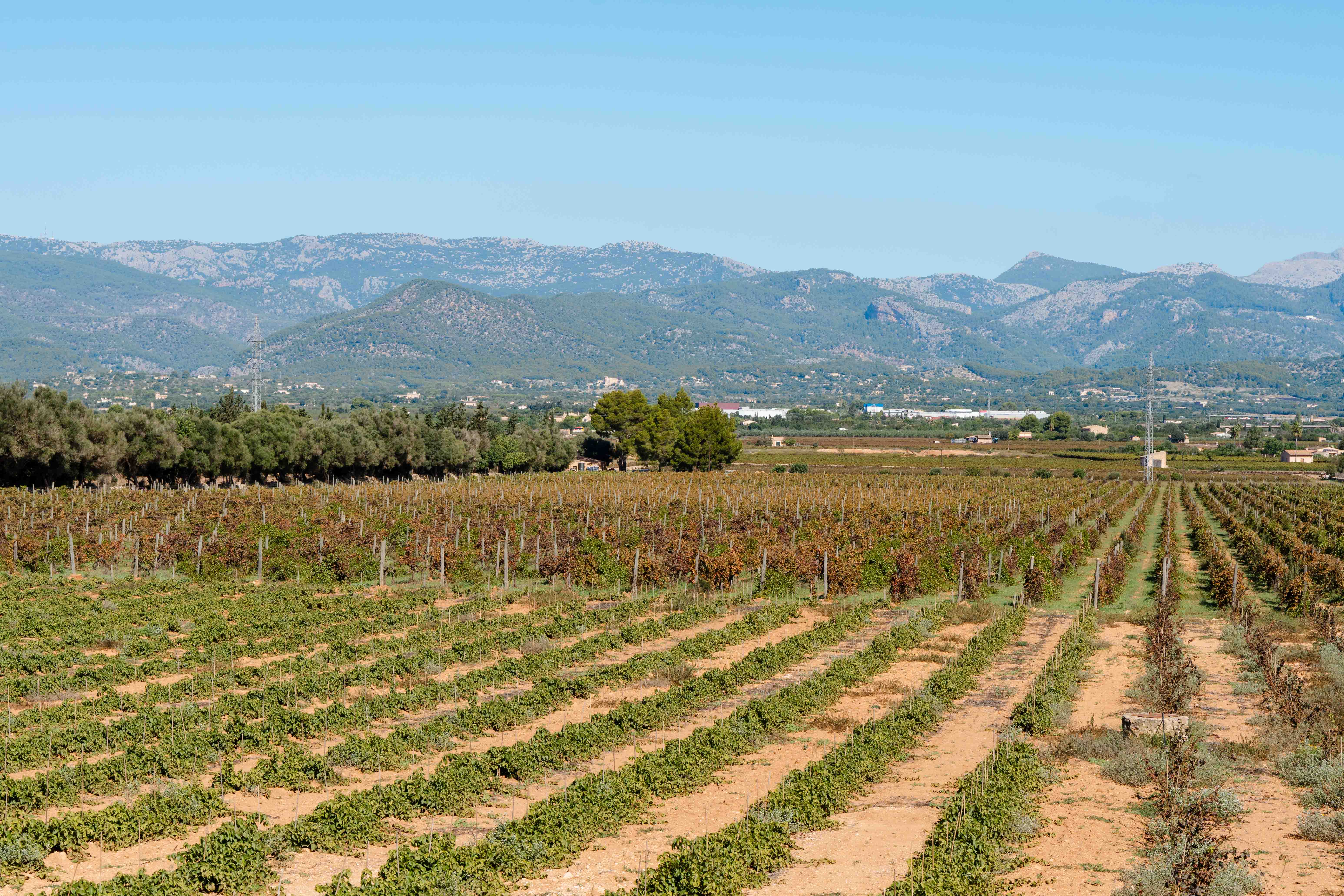
The house is set in an elevated position where you can enjoy the extension of the vineyards all cared for by means of an ecological production.


Author: Joan Ramis Boscana
Photographer: Jaume Oliver
To drive through the Raiguer region is to enter one of the cradles of Mallorcan wine. The fields flanking the roads are covered with leaves of vines, a landscape that is replicated to infinity and which we already witnessed when we visited the 7103 winery, located in Santa Maria del Camí. Today we head back to this village, a destination that many grape lovers have well marked on their maps and that we also know. It is at the entrance of the municipality where we find the Microceller Son Crespí, a project that Pere Crespí and Neus Beltrán developed because the cultivation of the vine is their raison d'être.
Our electric car crosses the entrance of this possessió entering its domains. On the left hand side we leave a field where the vineyard shines in all its splendor, and our eyes stop at a modest orchard that clearly shows us that in this project everything is done with care and love. We are on the grounds of Son Crespí de Passatemps, an old Mallorcan estate dating back to 1528. Ignasi is waiting for us near the building and indicates where we can park our car. As soon as we get out we are invaded by a feeling of absolute tranquility, a peace that rocks us in the midst of the most bucolic scenery. The house is set in a slightly elevated position which lets us enjoy the extension of the vineyards, cared for by organic production. After feeding our eyes with the spectacle of nature, Ignasi offers us a small tour through the house. The interior decoration and furnishings exude humility, respecting the architectural style of any country house. Tools hanging on the walls, a corner fireplace and terrazzo floor.
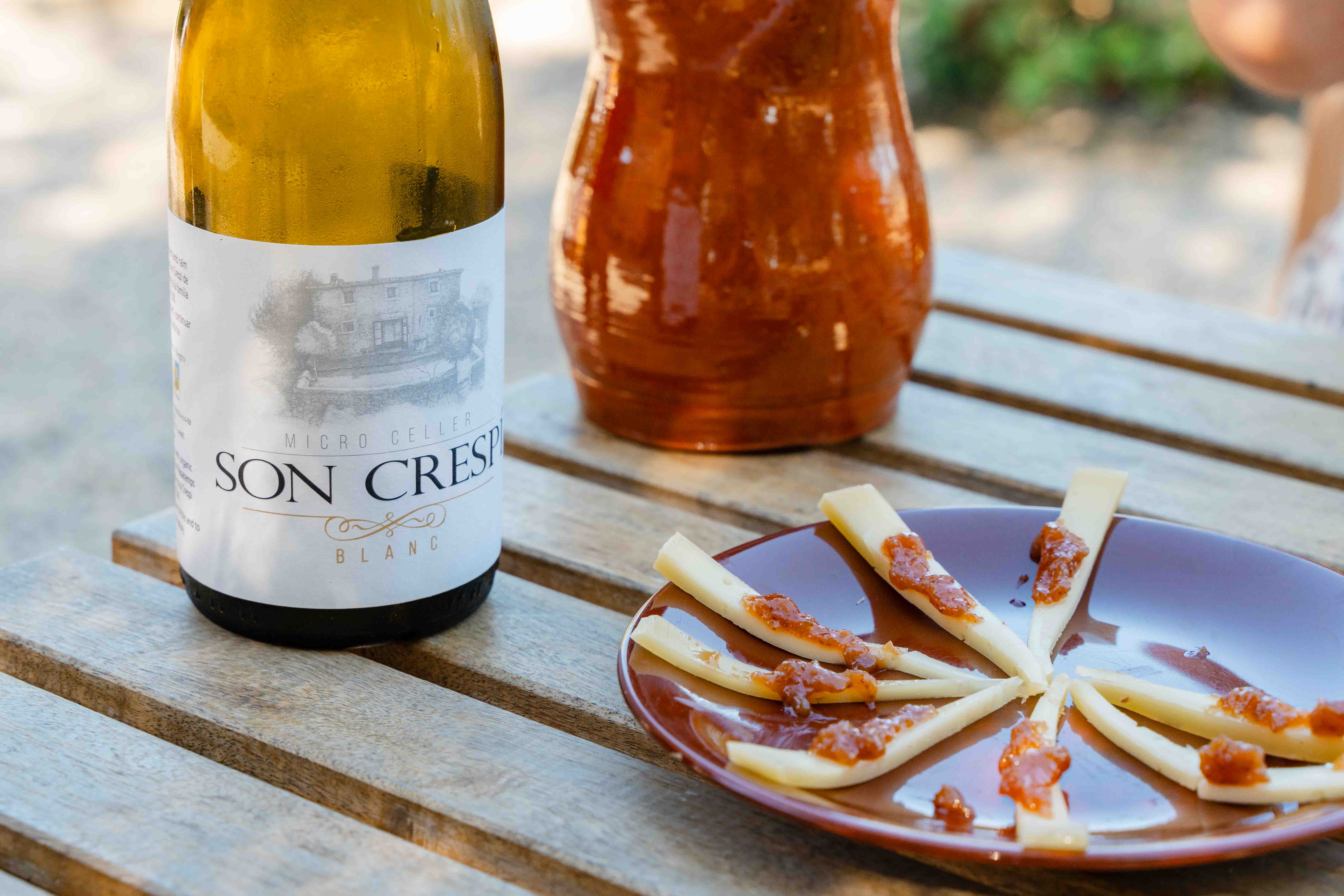
In this project there is not a single drop of pretentiousness; it is all modesty and passion for what they do. This is how Albert explains it to us on the terrace where the tasting is held, an enclave where the sunsets must seem like an illusion, with the sun fading behind the Tramuntana. Succumbed to the magic of the surroundings, we are offered the first wine: a white wine that is a coupage between manto negro and prensal blanc. In the mouth it tastes refreshing, it goes well with this summer that has just left. Our sense of smell is the victim of a party in which fruity aromas are combined, there is a hint of apples and pears in its taste. While we enjoy it, Ignasi tells us that in Son Crespí they keep forty percent of what they harvest; the rest is sold to other wineries because, being a microceller, they cannot process all the grape production. They put great care in the eight references they elaborate, the result of a manual work that has earned them the carta de maestro artesano, granted by the Consell de Mallorca.
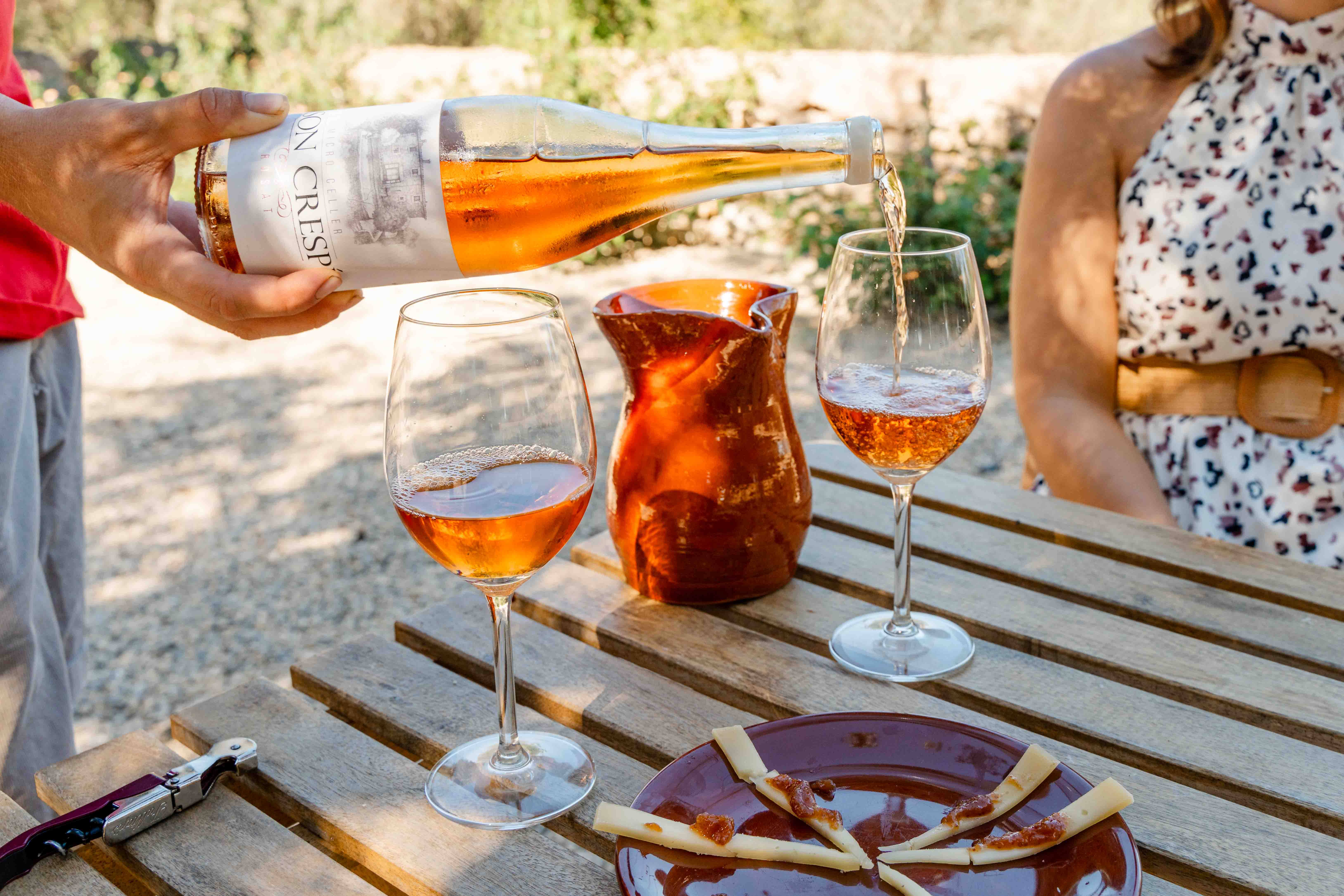
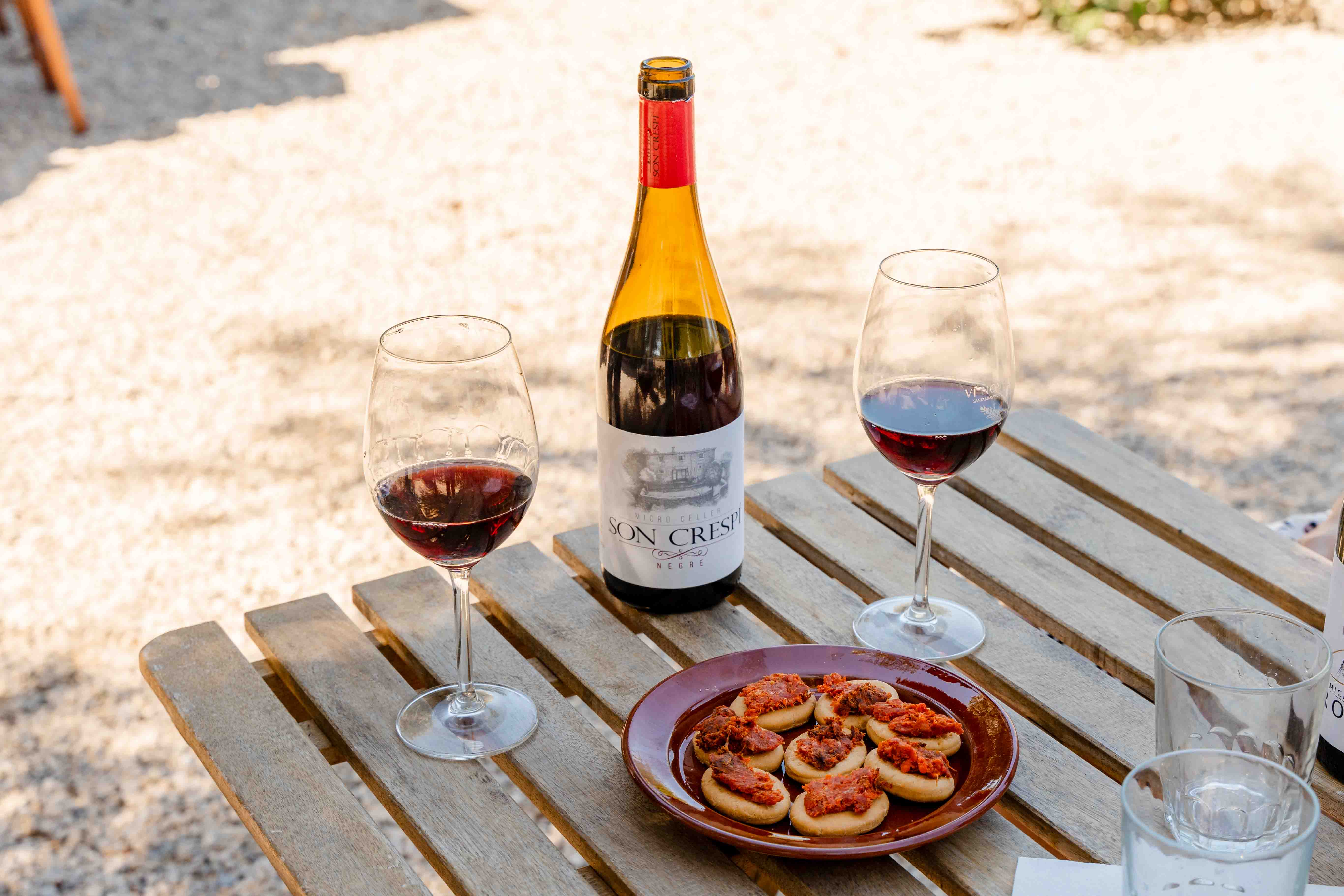
We match this wine with one of its best allies: cheese slices topped with a touch of fig jam. A snack as homemade as the second wine we are served, which is a rosé 100% manto negro, one of the most appreciated varieties in Son Crespí. The fruity recital initiated by the figs continues now with cherries and strawberries, the aromatic notes that take over our senses with every sip. Ignasi explains that Pere's father, one of the founders of this project, was the one who decided to plant local varieties on his land because, it was said in the past, Mallorcan grapes were sterile for wine production. This rosé we are drinking belies that statement, a truth we celebrate with great joy as we nibble on some Muro cookies spread with sobrasada. Birds fly over the table where we are sitting, a dog barks in the distance and noon time smiles at us.
It is at that moment when a group of ten people join the visit. Ignasi has to leave us and Albert takes his place. While he fills our glasses with a red wine with a slight lactic touch and echoes of acidity, he confesses that the staff that organizes the visits is exactly the same that works in the field. Those who have explained to us today the vicissitudes of this project use their hands to sow and harvest, they know the product they present through their touch with the earth. It is Albert's hands that uncork the last wine: a Gironauta, another white wine that pays homage to the mastiff whose barking can still be heard throughout the estate. An animal that walks around the vineyard because it is a member of the family, and which they have named Giró. This white has a yellowish tone and tastes slightly buttery, it is the antithesis of the first one we tasted, and it also has more body. It has been aged in French oak barrels for six months. According to Albert's words, they initially did not have high hopes for this wine and, in the end, it has become an amazing surprise. The same feeling that we, thankful for this visit, take home with us.
Suggested options