Pep Cànaves and Sebastià Ordines met while studying agricultural engineering in Mallorca, but it was not until 2013 when they embarked on the path of what is now 7103 Petit Celler. Back then, "without clients or money," as they admit sitting near their vines over coffee, they began experimenting with wine production in a garage. From those initial tests, 4,000 bottles were produced. This year, a decade later, they will bottle 50,000 units.
In reality, the world of the vine has never been alien to them. "In my house," says Sebastià, "there have always been vineyards. My great-grandfather made wine and sold it in bulk and, although my grandparents stopped producing, they sold Mantonegro grapes to the wineries". Pep, on the other hand, was introduced to this world as a result of his university studies and later specialized in oenology in Tarragona.
Since they got together, their production has been growing and evolving. "Our base is to work with native grape varieties and with them we try to produce different wines and products: vermouth, beer, sparkling wine, sangria...", they tell us on the porch of their winery in Santa María del Camí. That's how it is. They started by launching three proposals to the market and now they have thirteen wines, two vermouths -No Passis Pena and Te Dic Coses- and their successful sangria which, with 50% orange juice, Canoneta de Sóller, has been a complete revolution for the winery.
"When you buy a wine from a small cellar in Mallorca, you are buying history, culture and a way of being".
However, we would dare to say that the key to their success does not lie exclusively in the quality (and they have plenty of that) of their proposals. At 7103 there is an extra factor -let's call it personality- that is part of the essence of the brand and that they define with words and practice with deeds. "We have to be aware that when you buy a wine from a small winery in Mallorca you are buying history, culture and a way of being", they reflect.
A way of being that, in their opinion and despite the proliferation of wineries on the island, is not without risks. "In Santa Maria there are 7 cellars, but there are few farmers left. The figure of the pagès who plants grapes to sell them is scarce and if we want to maintain the landscape that defines us, there must be more of them", they say.
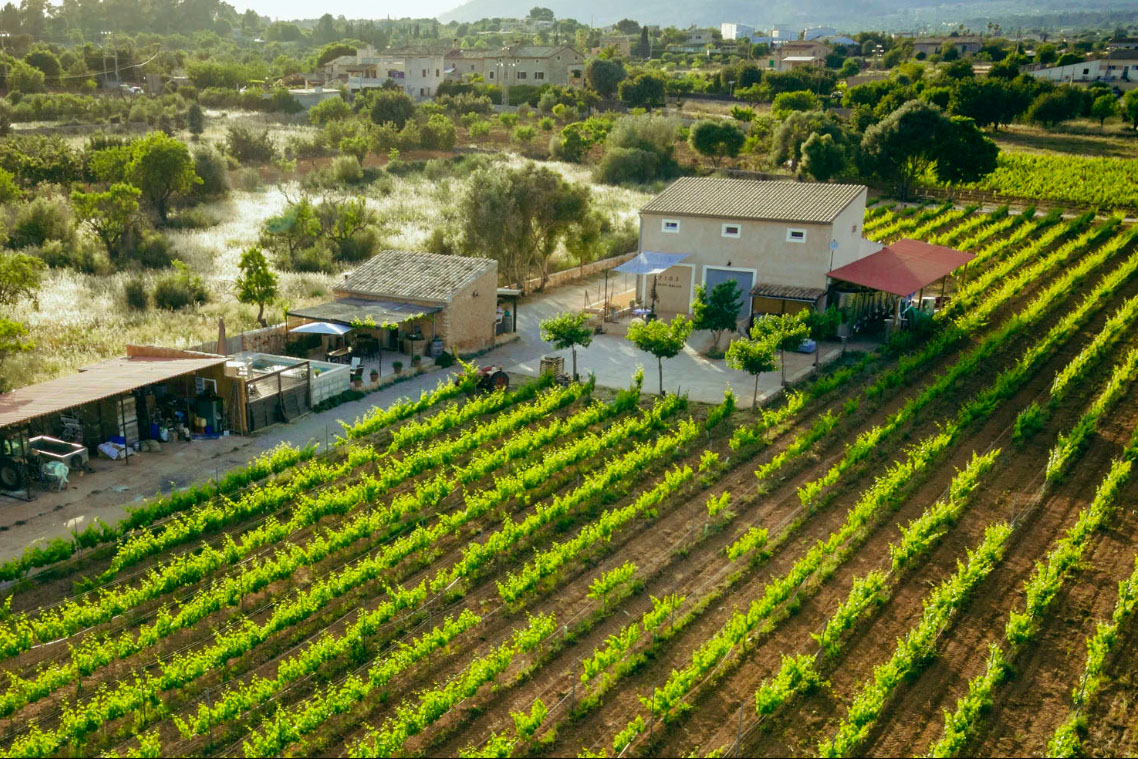
In their particular contribution to the conservation of this landscape and of the varieties of the island, a heritage value of Mallorca, in 7103 they cultivate Mantonegro, Premsal Blanc, Giró Ros, Fogoneu and Callet, although not all the vineyards are their property. There is little generational change in the village and, for this reason, they cultivate on family estates and on others that they rent from retired farmers.
Sebastià, you can tell when he speaks, is the one in charge of the land and the vines. Pep is in charge of production and Miquel, the latest addition to the team, is the salesman. "It's a well-oiled wheel," they say with a laugh. In fact, with Miquel's arrival four years ago, 7103 took a leap forward. Having worked in a much larger company and in charge of a much more extensive product portfolio, Miquel took on the challenge of making a winery with 5 products known in a market where there are more and more wines and at more affordable prices than a petit celler on the island can afford.
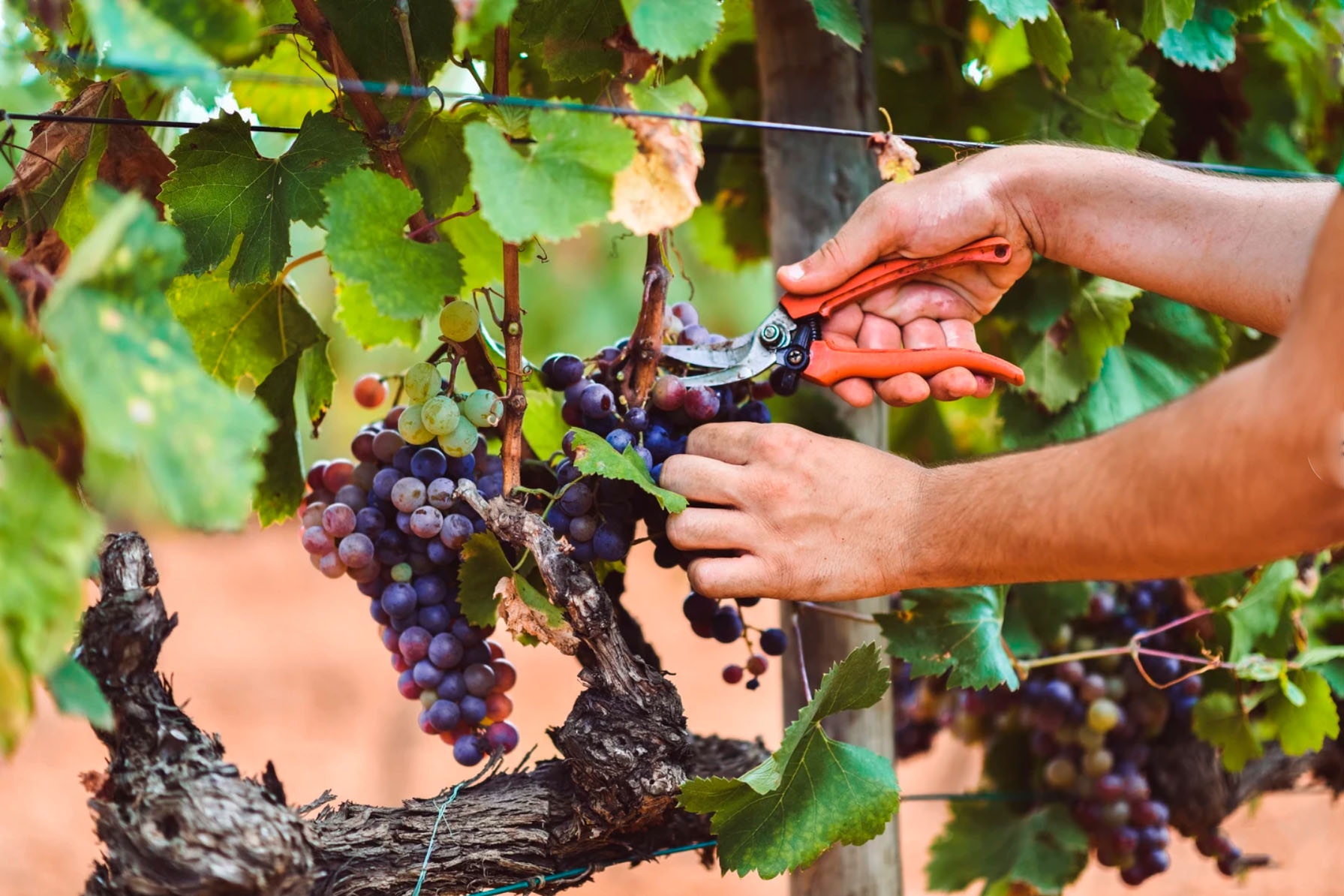
"We do organic farming and we put it inside a bottle. We are farmers who make wine”.
Competitiveness is not the only obstacle they have encountered along the way. "Before the pandemic we were somewhat reluctant to sell our wine in large supermarkets, but with the confinement we could only sell there because the rest of the commercialization stopped. But we did sell to many private individuals," they tell us. We don't seem to have learned much from those not so distant times. In that context, "people became aware of the work done by the farmers because we depended on what was grown here, however, we don't think there is any of that feeling left", they regret.
Despite all the difficulties faced by a winery like this one, 7103 is moving forward with optimism. "When we took the first production forward, we thought it was impossible to find 4,000 people who would want a bottle of wine from us. We never thought we could get this far," they say with a laugh in unison.
Now, installed in a new building that they finished building just two years ago, they aspire to create a more dynamic space to attract people to the vineyards, people who want to know the reality of the cellar in its most authentic form. The objective is absolutely coherent, because in 7103 there are no impostures, what they teach is what there is: "we do organic farming and we put it inside a bottle. We are farmers who make wine", they summarize.
This is a clear way of summarizing not only the work they do, but also -and most importantly- why they do what they do. After all, during our visit we understand that their desire is none other than to give added value to our varieties, to our tradition, to our culture, and with it, to contribute to the conservation of a landscape that defines us and that, if we want to continue to enjoy and admire, we must respect, sow and harvest.