Mead is the oldest fermented drink in the world. The Vikings considered it the drink of the gods, Julius Caesar tasted it and, centuries later, Shakespeare also enjoyed it. And although it is not yet a regular in our homes, bars and restaurants, its history goes back a long time. Its magic formula? Honey, yeast and water.
Marina Artigues is the one who knows the origins of this drink very well and tells us all about it -we admit it, we know that Shakespeare enjoyed mead thanks to her-. Her husband and she form the tandem behind Mandragora, a project they started in 2012 and later professionalized in 2021, encouraged by the good reviews and the recognitions they obtained at the Queen's Cup and the Mead Madness Cup.
Mandragora is a drink made in Mallorca with Mallorcan honey which makes it a unique product since, unconsciously or not, the general public tends to relate mead with Scandinavian culture, where it is much more common than in the Mediterranean. However, as Marina tells us, it was clear to them before choosing their name that they did not want to get stuck in the Viking imaginary: "we did not want to pigeonhole ourselves only in the Nordic culture, in the cliché. Since we are from an island and we do everything with local products, we wanted a name that was rooted here".
"We use sustainable beekeeping and we seek that our influence, that of the human, means only an aid to the bee".
That's why they chose the name of an eminently Mediterranean flower whose root shares a reputation with mead. "From the mandrake, it was once believed that it made women more fertile, just as it did with honey," says Marina. Choosing the name is not a trivial matter, but it is just one of many challenges in the making of a project like this.
Obtaining the best bees to achieve an excellent result was another fundamental objective. In order to achieve this, Mandragora relied on MelVici, from whom they bought the first nuclei "because of proximity, trust and because of how they work with native bees, accustomed to the climate here," recalls Marina, who adds that for them the welfare of the animals is non-negotiable: "We use sustainable beekeeping, we only remove what is left over and with that we make mead. At all times we try to ensure that our influence, that of humans, is only a help to the bee".
These have been great teachers, she assures, as have the beekeepers of APEMA, the Association of Ecological Agricultural Production of Mallorca, who have accompanied and advised this enterprising couple since 2019 because, as they recognize, the usual thing is to become a beekeeper and then make mead and they did it just the other way around.
"There is a lot of talk about the local product, but for initiatives to be born there must be real support".
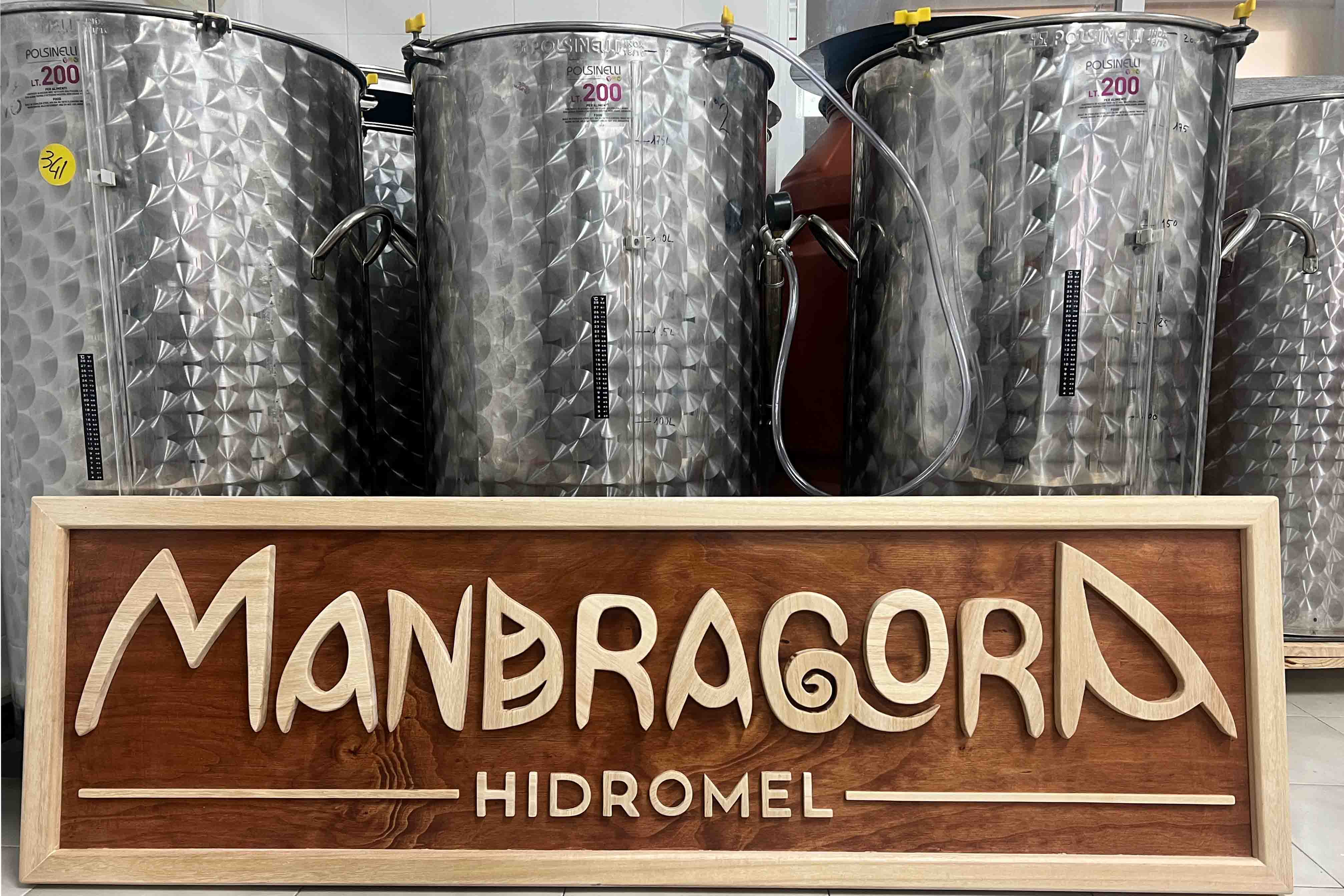
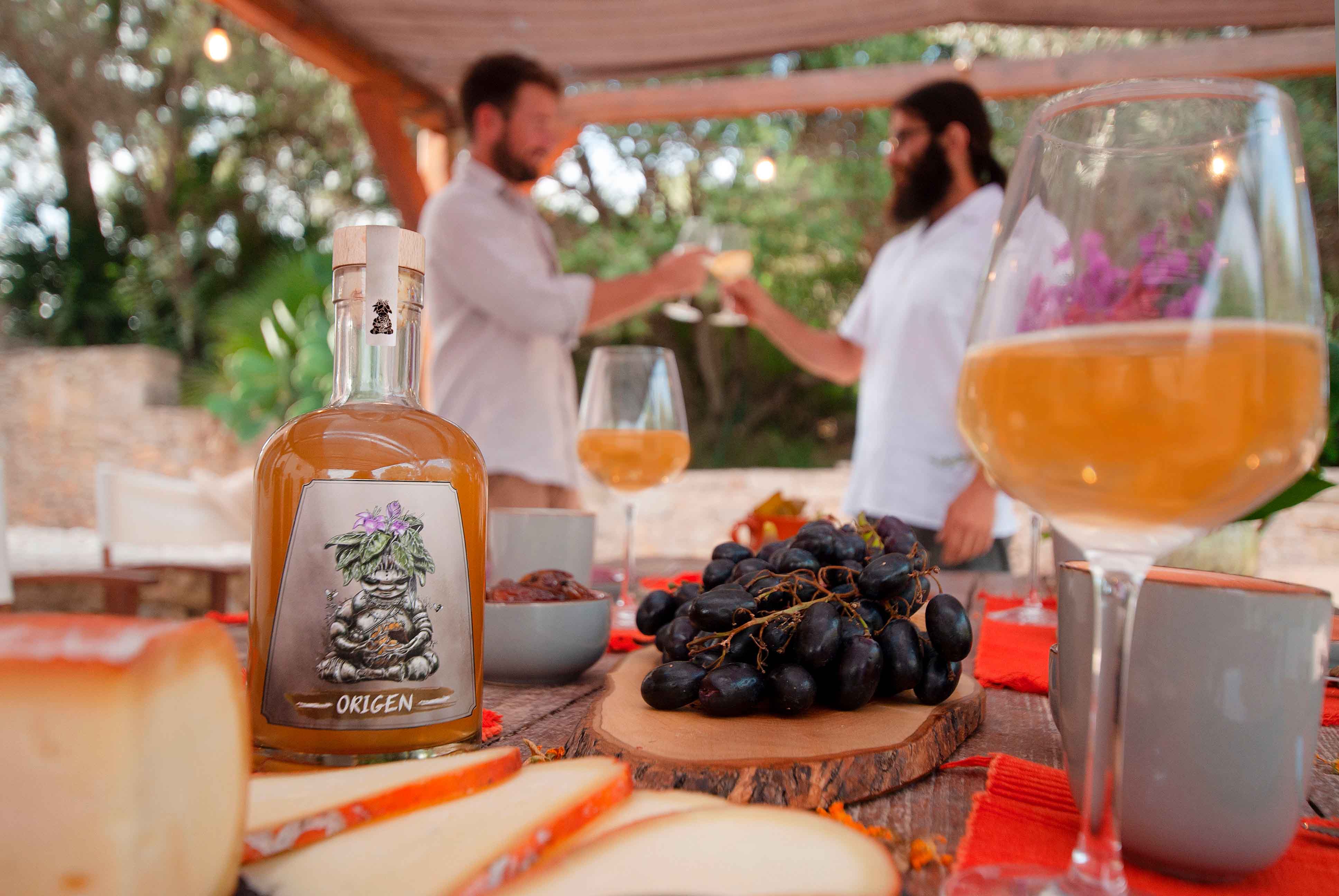
Collecting the honey in Cala Mesquida is only the first step in the process. Then it's time to mix it with water and yeast in their workshop in Inca and let it ferment. They do not use sulfites or stabilizers, so the control is exhaustive. Then comes the filtration and, finally, the maturation in barrels. The result is three delicious proposals: Origen XIII, Origen IX and Melomel Cireres. The first contains 50% honey and is perfect as a digestive; the second, with 35%, combines wonderfully well as an aperitif with cheese and grapes although, as Artigues says, "you can enjoy it whenever you want as long as it is in a glass because it needs to be oxygenated".
To bottle the two versions of Origen, Marina chose a bottle very similar to the oil bottle to differentiate it from wine and beer, beverages that are fully integrated into our gastronomic culture. "Unfortunately, many restaurants don't dare to try it. There is a lot of talk about the local product, but for initiatives to be born there must be real support. We are young entrepreneurs, we are recovering a lost drink, we have shown that this has a way ... but there are certain misgivings about the unknown," he regrets. One stumbling block is the lack of knowledge, but it is not the only one. The other is the bureaucratic limbo in which they have found themselves, not knowing what type of soil they could work on or not having an artisan charter that could certify their work as such.
However, the stones in the way do not seem to diminish Artigues' will, who goes all out with her product and her way of understanding what she does: "we fight every day against all odds because if we were to change, we would not be us". With a strength that would infect anyone and motivated by the opinions of their customers, this entrepreneur and photographer by training practice imagines a future organizing tastings, showing her bees and sharing the process with people. "It would be a dream come true," she says.
At the moment, Mandragora can be found in their online store, in stores specializing in local and gourmet products, in some restaurants and agrotourism, and at carefully selected fairs. "We don't want to be in a box collecting dust. We want to be where we are wanted", says Marina who, determined and enthusiastic, ends: "I know I came to this world to do this, I am very good at it. I must have done it in a previous life.