If bees were to disappear from the planet, humans would only have four years left to live. Some attribute this apocalyptic phrase to the German-born physicist Albert Einstein. Others, however, prefer to take the authorship away from him and give it to its true owners: the Union of Belgian Beekeepers, who in 1994 protested because they saw their work endangered by a drop in the price of imported honey. This version of the story is a reality that Pau and Biel, two childhood friends who not only share a long-lasting and enduring brotherhood, could well defend. The love they have for nature knows no bounds; trying to describe it would be like putting gates on a field. A countryside they know how to read, to decipher. They have contemplated it all their lives and have always wanted to build a project on its foundations. A local initiative based on the production of Mallorcan honey. Quite a challenge, quite an achievement.
We arrived in Alaró and looked for the headquarters of Mel Vici, the project that an intrepid pair launched in 2014. In the heart of the village, we find a house that looks humble, attached to others of similar appearance. Pau kindly opens the door and invites us in. We make ourselves comfortable in his workshop, full of jars of honey that go up to the ceiling and drums used for the maturation process. "We've known each other all our lives. We are from Alaró and we became friends when we were kids. We worked together as gardeners for a while. We love the countryside and we always wanted to set up something together". That something to which Pau refers, in the minds of both, took different forms: to have sheep, to raise lambs, to make goat cheese. They couldn't make up their minds. After long discussions, a friend of Pau's father's who kept bees came on the scene. That's where the idea came from. "Why don't we set up some hives and make honey?". That was the question they asked themselves, an idea they never thought of as a business. They did it just to try it out.
"When you get started you realize that in Mallorca there are no professional beekeepers".
Their intention was never to become beekeepers. They both focused their studies on disciplines that have nothing to do with their current profession: Pau has a degree in architecture and Biel has a diploma in tourism. It seems that nature and its laws exerted a power of attraction far superior to that of their careers. "This friend of my father's sat us down one day in his house and gave us a glimpse of what bees do. That got our attention. Apiculture is a sector unknown to the general public, a complex world governed by the vagaries of the weather and a meticulous and organized hierarchy - that of the bees. Biel and Pau's curiosity piqued, they enrolled in an introductory course given by Gori Lladó and Juanma Vergara. After these classes, their knowledge expanded significantly. They had a vast universe to explore.
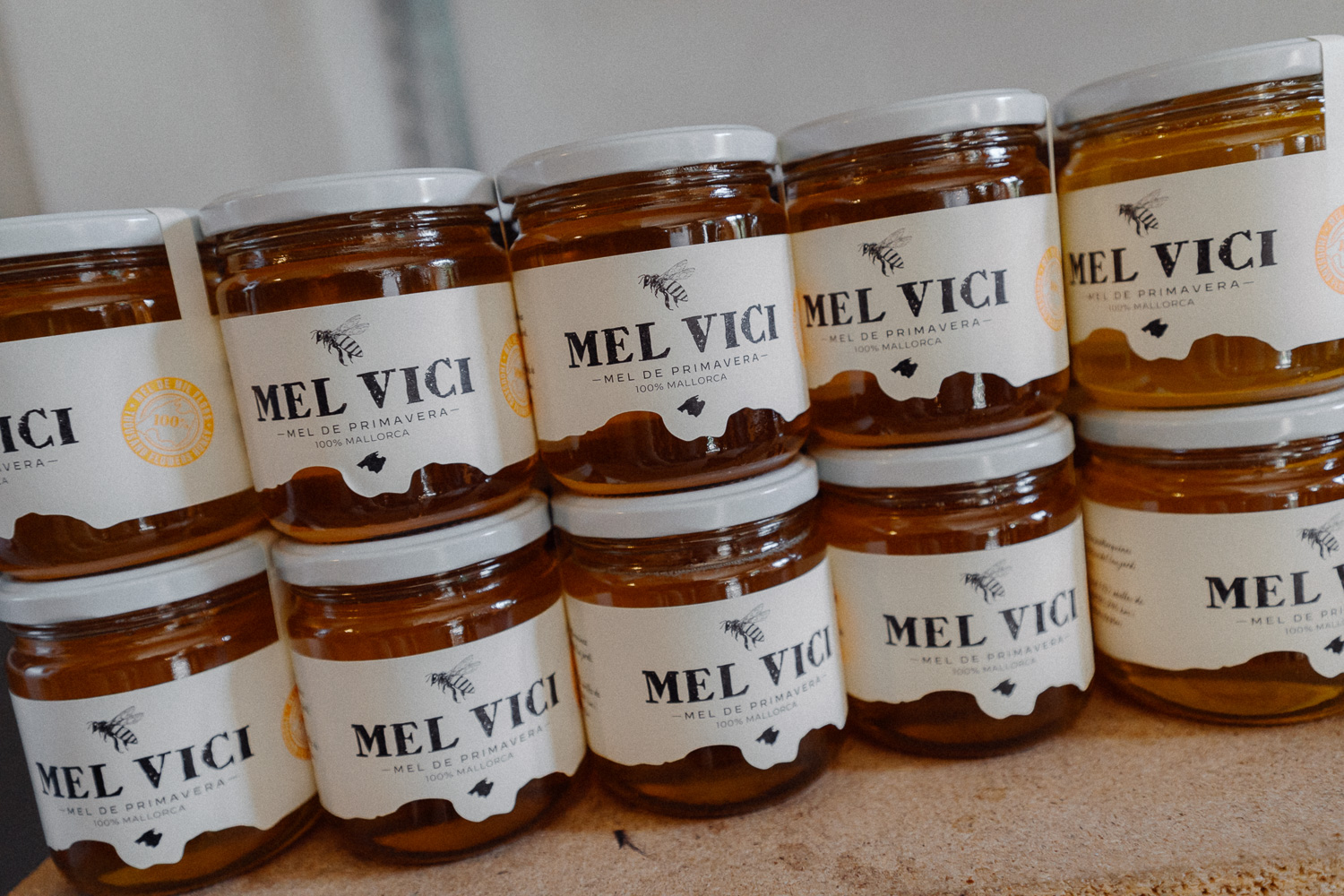
One of their first contact with bees was thanks to Civil Protection. They signed up for a list to get wild swarms, and in just one year they received an enormous amount. That very high number of swarms together with the hives they set up were the starting signal to grow. What we didn't know is that today they can proclaim themselves as one of the few to produce Mallorcan honey. "When you start you realize that in Mallorca there are no professional beekeepers. We saw that there was a lot of honey with names from here, but then the jars only indicate that the country of origin is Spain. That means that they buy the honey from outside. It's one of the biggest scams there is". We take a closer look at the Mel Vici label. It shows a bee flying over the name of the project. Just behind it, a sentence in capital letters runs vertically across the paper. It reads: harvested and packaged in Mallorca. Therein lies its differential.
If we value the huge demand for honey on the island, its scarce local production and the sad deceptions that flood the sector - frauds that the final consumer is unaware of -, the guys from Mel Vici could stand as the pioneers of Balearic native honey. Beyond some producers of more amateur cut that have
a few hives. "We have achieved a constant production because we do transhumance. We move the hives to places with different flowering". And not only that. Biel and Pau traveled to Barcelona to receive training from Gilles Fert, an experienced queen breeder. One of the most respected in the world. Thanks to his wisdom, they learned reproduction techniques and were able to make a genetic selection of their best hives. On the island, they can also be considered forerunners in the sale of queens. When Mel Vici did not yet exist, getting bees was a very intricate affair.
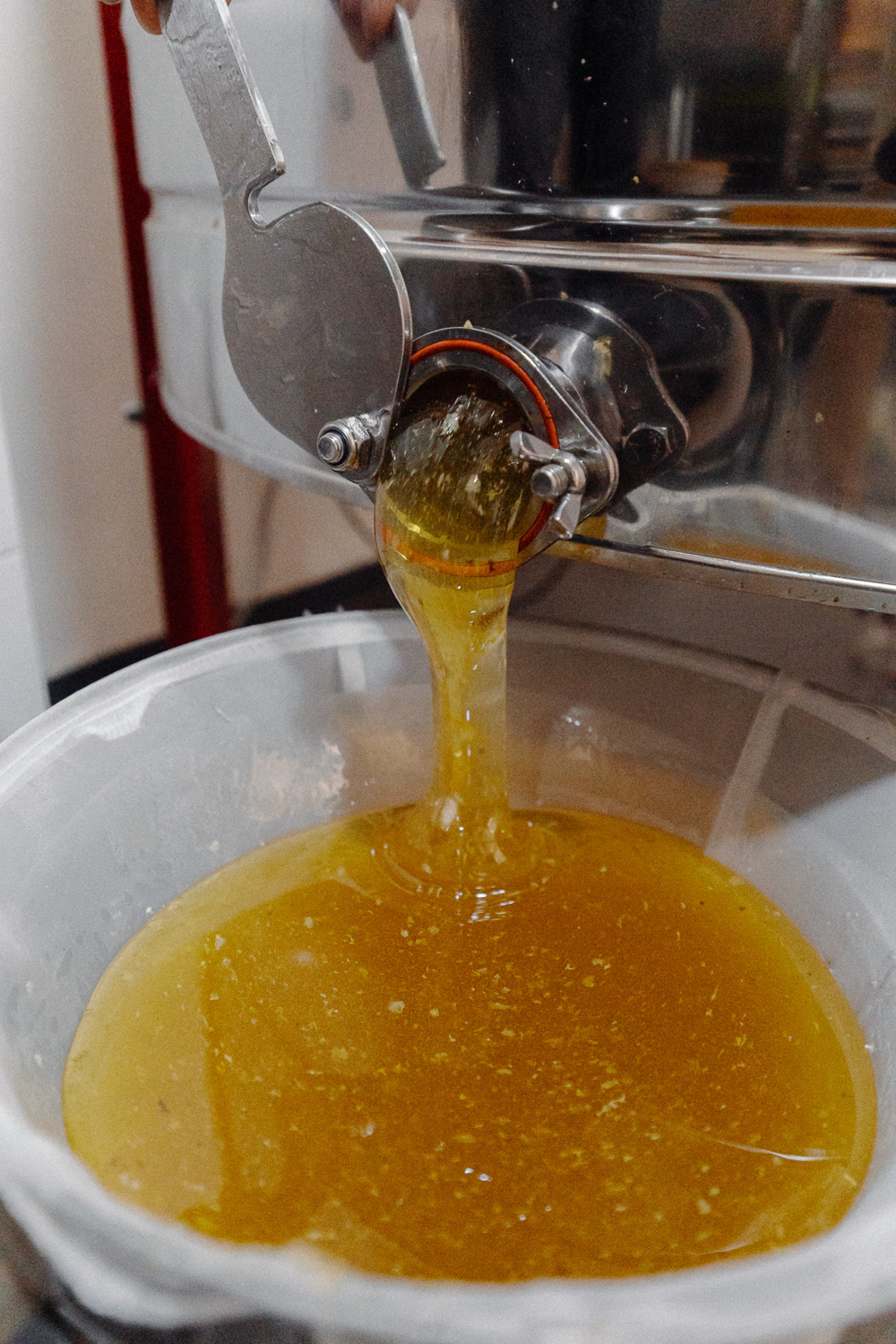
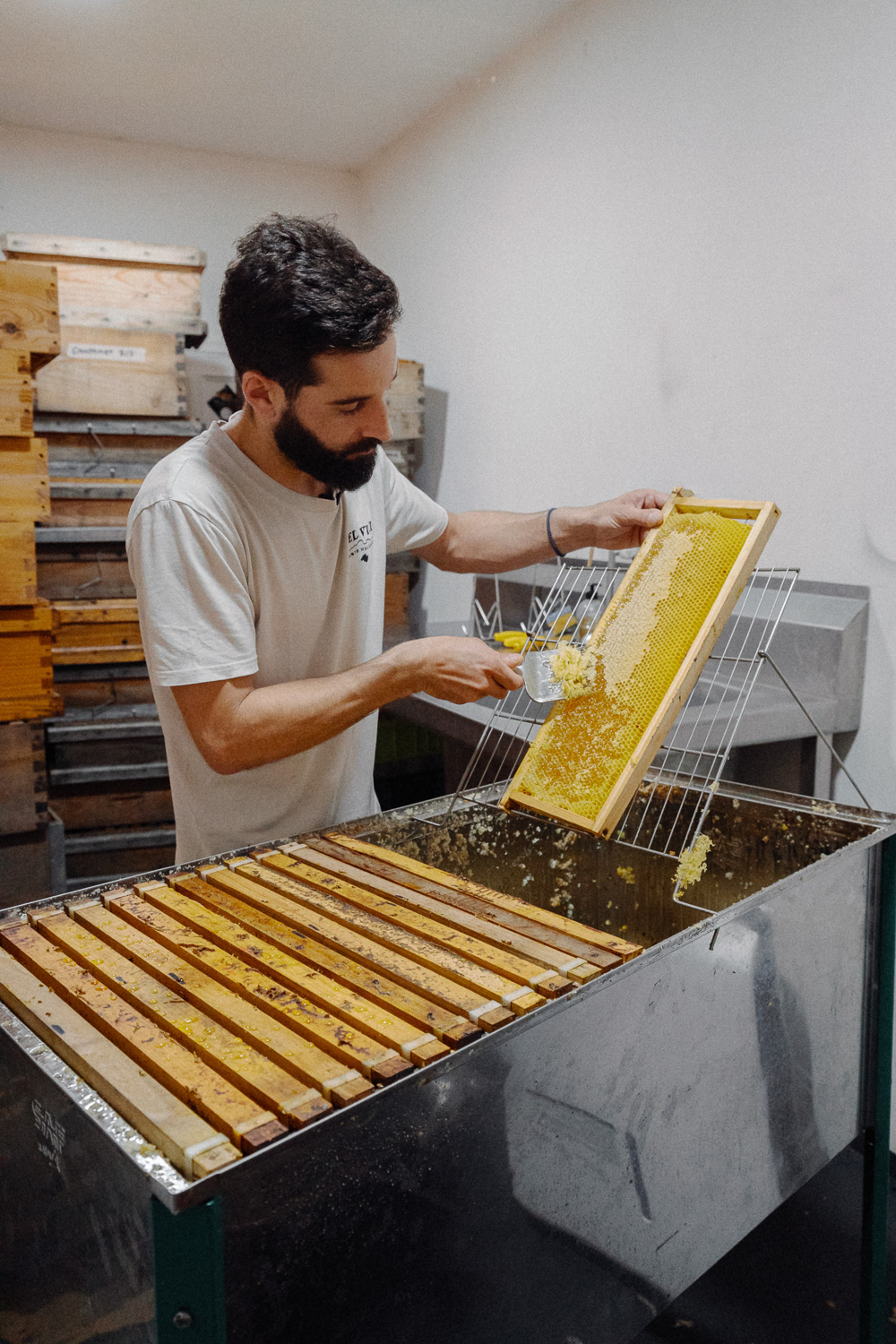
"The hard part is having high population levels at the time when flowering is at its optimum."
These two childhood friends define their early years in beekeeping as very intense. A job in which they have thrived on observation. Analyzing the behavior of their hives is crucial to a task they perform without gloves. Bare hands to touch, to feel these insects on which much of our food sustains. They have become so successful that Mel Vici also offers pollination services. "The honeybee is an excellent pollinator. It collects pollen and nectar from plants. What happens is that the pollen that gets caught on their hairs inadvertently falls on the egg of the flowers and fertilizes them. This causes an increase in the production of the trees. So farmers who have acreage under cultivation hire Pau and Biel to bring their bees to them. This increases the yield of their produce.
Mel Vici also provides maintenance services. These services consist of the production of their own honey for hotels, farms or agrotourism. This diversification of their work is turning them into experts. Before, they could not make a living from it. But for the past two years, their project has allowed them to be self-sufficient. "The difficult thing is to have high population levels at the time when flowering is at its optimum. Honey is the food that the bees have in their pantry when they can't find other food in the field. We have to get them to produce a lot of honey so that we can keep the surplus in that pantry". To do this, we have to control the rainy season, the flowering areas, the months of the year, the age of their queens or the population of their hives. A contemplative and romantic work, at the mercy of nature, which has already inspired other young people to make their own honey. Also here. In Mallorca.