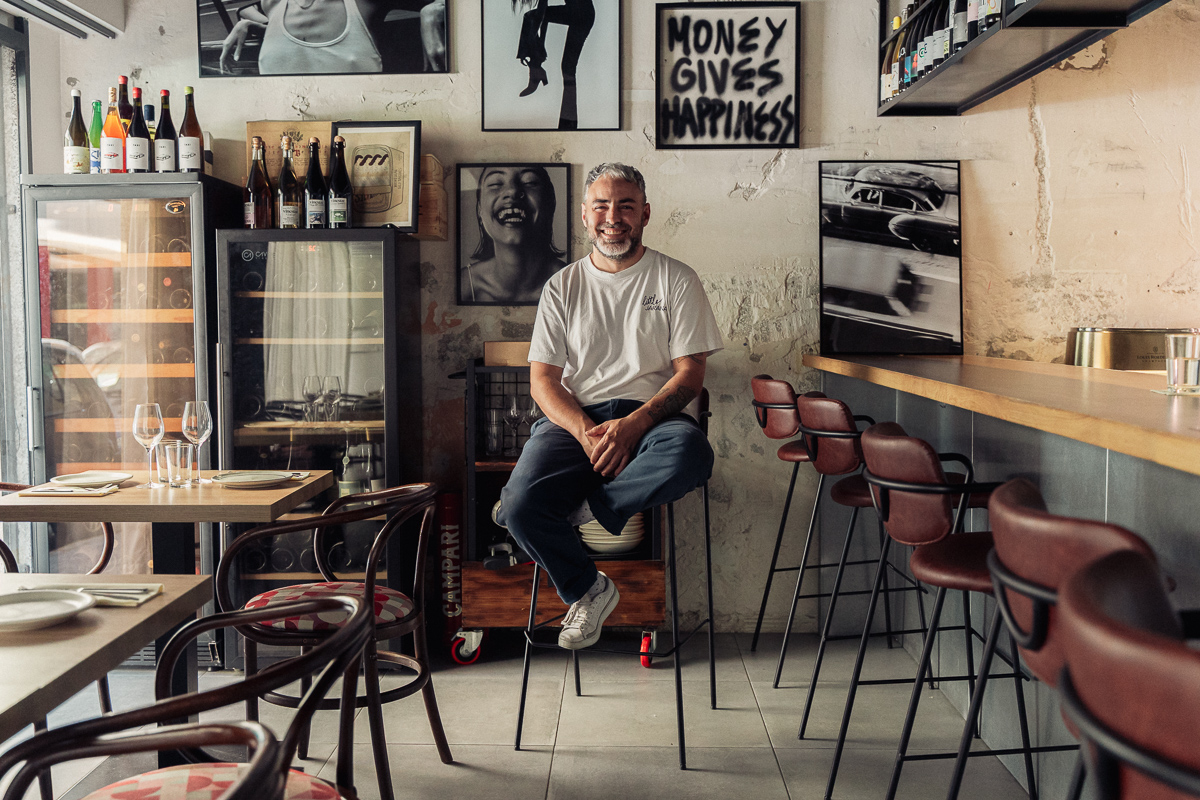
Gin Eva was born by chance. Eva and Stefan were working, back in 2009, in a wine cellar in Pollença and, after distilling marc and brandy, a colleague proposed them to do the same with gin. The result 'wasn't good', says Stefan recalling their beginnings, but 'we were hooked by people's interest. Everyone wanted to try it. After this first taste, the bug only grew and so they created Gin Eva. Three years later, their first brew came out of a small garage. A decade has passed since then.
Now, Stefan, Eva and Ulrich have been installed for a year in a warehouse in Llucmajor that they have named Casa Eva. With much more space than in their previous premises, they practice a transparent production policy system and organize tastings, in which in addition to being able to learn first-hand about the production process, attendees taste - and have fun - all in an aromatic experience. In fact, after walking around the warehouse, Stefan suggests a game to sharpen the senses: guessing the distilled botanicals that make up each of their gins.
A fun test -from which we came out more or less successful- and in which we discovered the differential point of Gin Eva, its magic: all the botanicals -except thyme- and citrus fruits distilled are from here, from Mallorca. Oranges from Sóller, olive trees from the fields of the Tramuntana, thyme from Campanet... In short, the most emblematic aromas of Mediterranean nature. "First we macerate all the botanicals in alcohol, which extracts the essential oils; then we put it in a bain-marie and when it reaches 78 degrees, the alcohol goes up the column, down the pipe and condenses," Stefan explains while pointing to the machinery.
"The gin world is a wild west. There's a lot of freedom, everything is being sampled".
The distillation process is done separately because "aromas such as vanilla are difficult to distill unlike citrus and juniper, which is easier" and above all because this way of working allows them to distill the botanicals at their point of maturity, in November and April, instead of having to do it when they are dry and out of season. Then, when the distillates have rested and developed their appropriate aroma, the gin is blended.
Thus, Gin Eva has created a range of handcrafted gins that condense the fragrance of the sea and the pure mountain air. For example, La Vermella, the flagship of the house. Light and balanced, it expresses a unique aroma thanks to juniper, lemon, a touch of bitter orange and canoneta orange, and an extra tangerine. Is it perfect? So much so as to win the recognition for best Spanish gin at the World Gin Awards 2019.
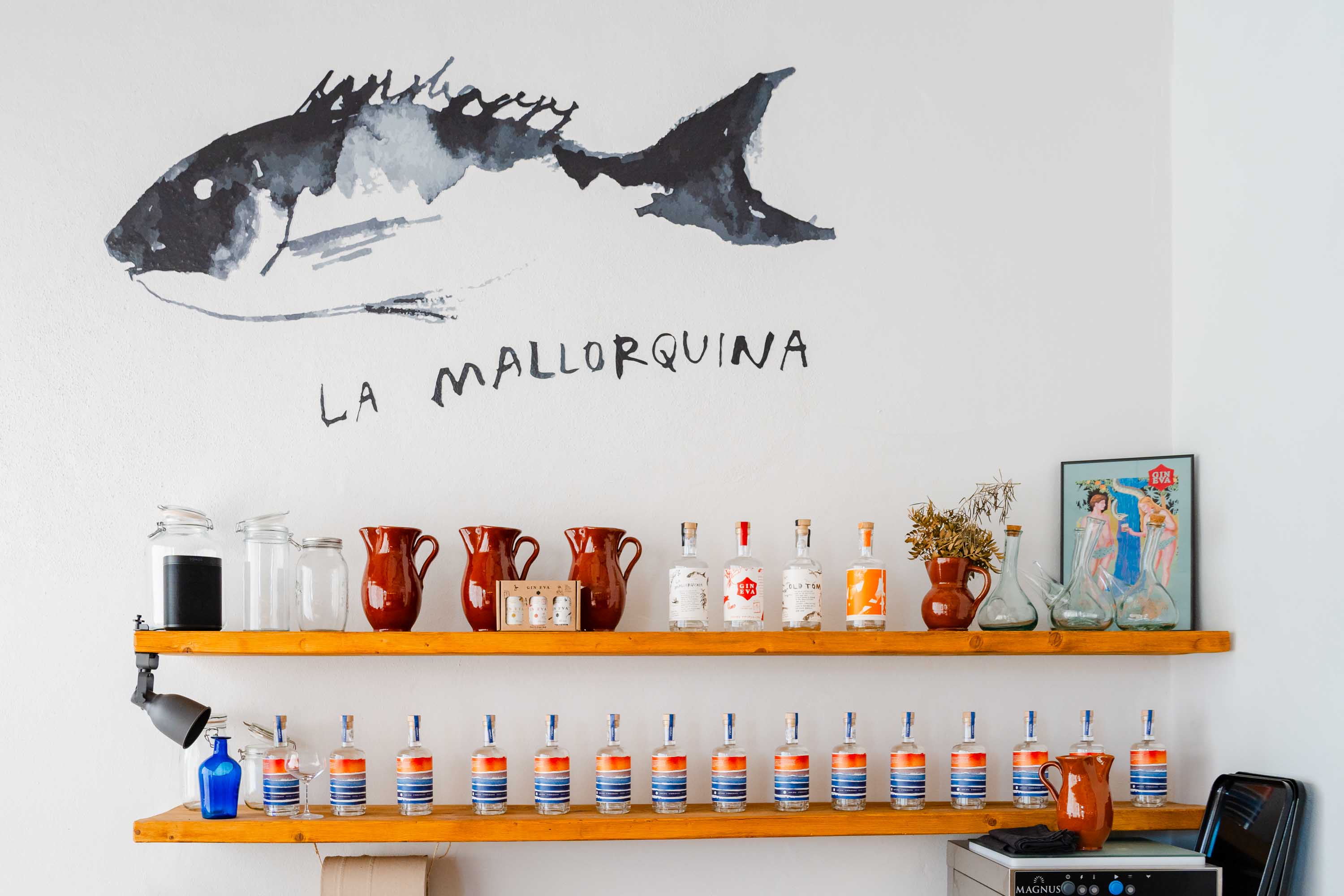
One of the typical products of the Mediterranean are, of course, olives. This gift of nature is the protagonist of one of Gin Eva's gins that honors this land of olive trees: La Mallorquina. Ideal for combining with Martini, this drink with an unmistakable aroma - it is enough to inspire us with concentrates to guess its main component - is made with the fruit of centenary olive trees from the Serra de Tramuntana and was also awarded at the World Gin Awards 2019.
S'horabaixa -a nod to the time the sun sets on the island-, La Canoneta -with this orange native to the Sóller Valley-, Old Tom -stored in barrels recovered from wine cellars- and La Bergamota -inspired by yuzu- complete the list of Gin Eva gins. A daring proposal, but conceived with conscience because, as Stefan says, "we have never made gins because the market demanded us to, but rather because we just felt like it".
As we continue tasting -and playing a guessing game- Stefan talks precisely about the evolution of a drink that is surely living its golden age: "The world of gin is a wild west. In wine there is a lot of culture, but not in spirits, so it is reinventing itself in an impressive way. There is a lot of freedom, everything is being tested".
"Selling Mallorcan products outside will also help us not to depend so much on this tourism and Mallorca has a very well recognized name out there".
In fact, the world of viticulture - because of his professional career and because of the rootedness of this drink in Mediterranean culture - is a point Stefan returns to throughout our conversation. "I arrived in Mallorca back in 2008 and when I went to a restaurant, they hardly had any Mallorcan wine. Now there are many more. It's a learning experience: if we drink wine from here there will be more wineries, it's a win-win situation."
This analogy can be applied to a gin - and indeed any gin - that is created on the island with local produce because, after all, it promotes the circular economy in a market where mass tourism reigns supreme. That, at least, is how Stefan sees it: "Mass tourism will take time to change, but it is changing as we speak. Selling Mallorcan products abroad will also help us not to depend so much on mass tourism, and Mallorca has a very recognized name.
Gin Eva's know-how and the use of local botanicals and citrus, precisely, are two factors that attract its customers, both those who come to Casa Eva - mainly Germans, Swedes and increasingly more Americans - and those who buy in stores or via the Internet (in Spain and Germany). Just as the origin of Gin Eva's fans is very diverse, so is their age. "It strikes me because in a wine cellar, a young person doesn't buy an expensive bottle, but a gin does," Stefan tells us before we say goodbye.
Maybe the heterogeneity of Gin Eva's public has to do with the moment of splendor that gin is currently experiencing around the world, but after getting to know the philosophy of this project -and smelling and tasting it- we are sure that there is something else. Perhaps the product of proximity. Perhaps the island essence. Maybe that invitation to enjoy, slowly and consciously, that comes with sharing a gin with a loved one. Or maybe it is a mixture of all these reasons, well macerated.