The rise of vegan products is indisputable and the food industry is striving to offer more and more alternatives to the animal-based foods that most of us have incorporated into our daily lives. As a result, supermarket shelves have been transformed in recent years, but consumers and nutrition experts alike are turning their attention to the long lists of ingredients contained in these mostly unhealthy and ultra-processed products.
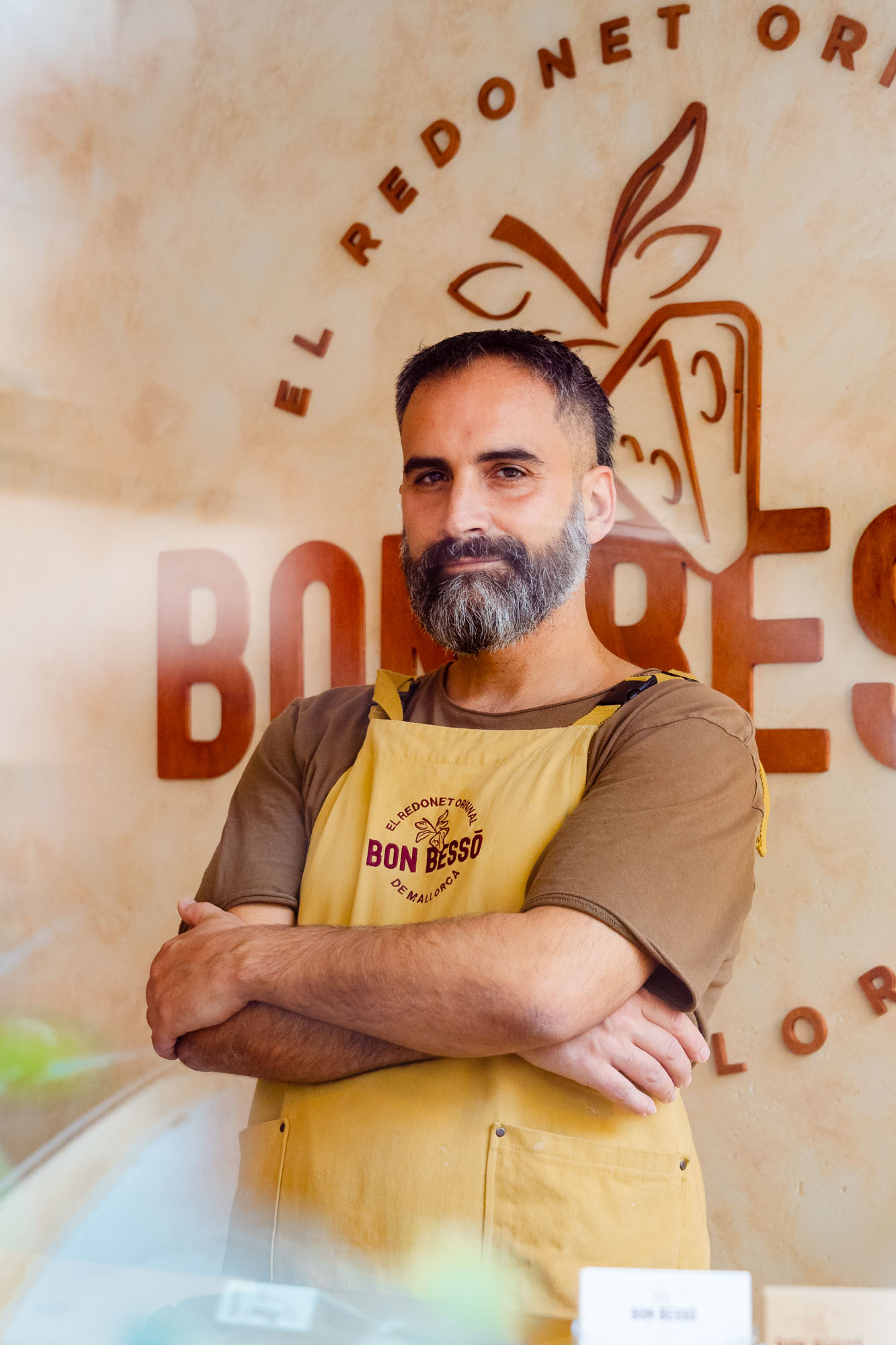
Against this backdrop, achieving a delicious, vegan and at the same time healthy cheese became Alejandro Mascarell's personal challenge. An objective that, without a doubt, after tasting his redonets, as he calls them, we can confirm that it has been fulfilled, so indeed fulfilled.
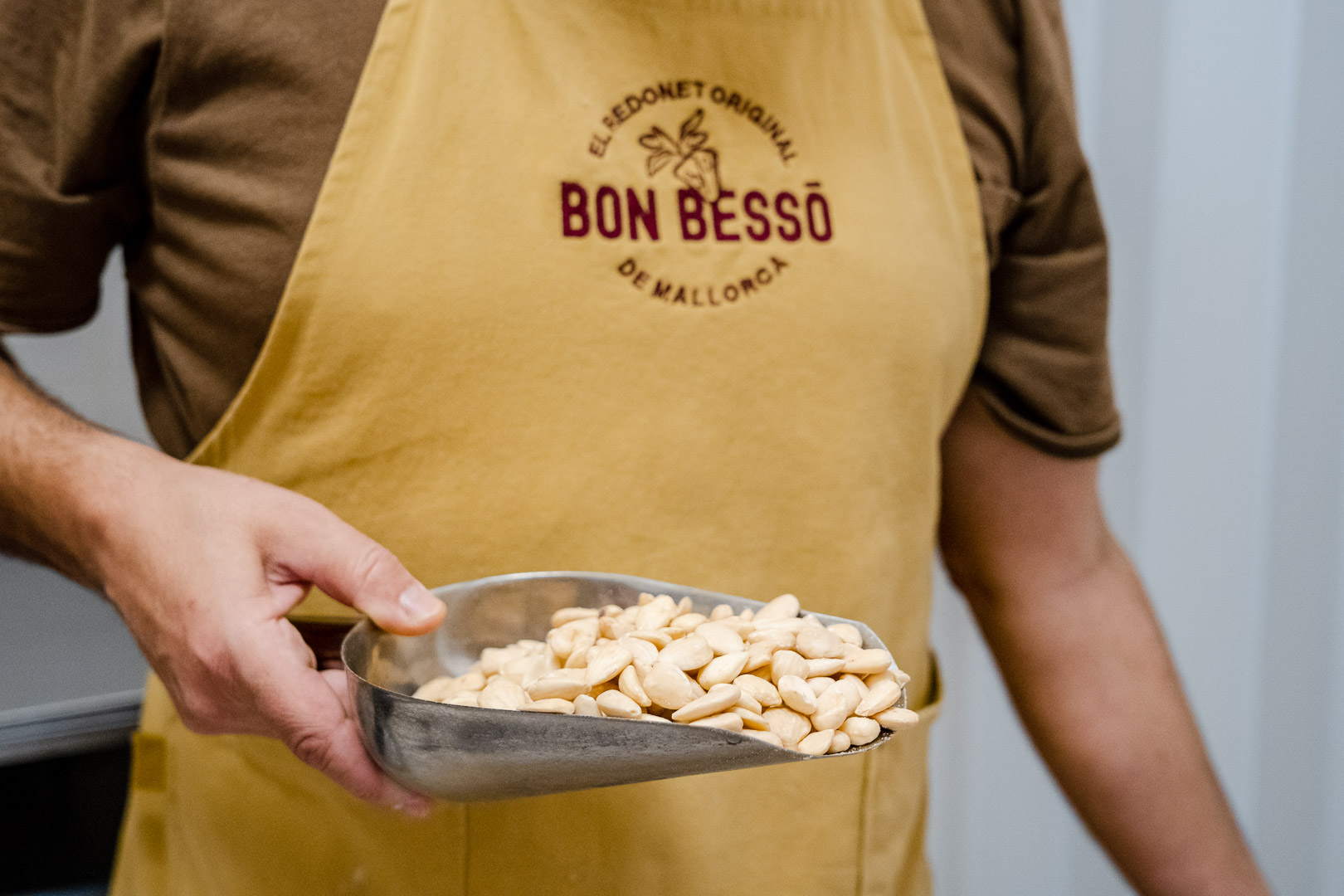
Bon Bessó, the company that Mascarell founded in early 2023 after many tests (and countless tastings) is the result of this search, materialized in a vegan cheese whose fundamental ingredient is the Mallorcan almond. "I started experimenting with almonds because it is a local product and we don't have to bring it from another continent, as is the case with cashew nuts. Then I realized that almonds, once fermented, have a much more varied umami," Alejandro says.
Although the redonets are produced on the island with ingredients from Mallorca, the seed of Bon Bessó was sown on another continent a bit by chance, as Alejandro recalls as we sip a Sullerica in his store on Rodríguez de Arias street, in the Santa Catalina neighborhood: "The idea for the project came 4 years ago after a visit to San Francisco, where I tasted artisanal vegan cheese for the first time. Then I moved to Alsace and there I started ripening cheese with cashew nuts, which are very easy to work with, but I started experimenting with almonds."
"I wanted to prove that a product could be rich without animal exploitation".
In France, the cheese paradise for any lover of this delicacy, Alejandro set out to show that these could be exquisite and vegan or, as he explains, "I wanted to demonstrate that a product could be rich without animal exploitation'. As in so many other projects that we have been fortunate to know about and report in Travel To Zero (Maüa or Uco are some clear examples), Alejandro's first tests began at home. He tasted, experimented, nuanced... until his roommate (French, of course) gave him the go-ahead: "he told me 'now yes, it's cheese', and here I started organizing tastings. One hundred and fifty people tasted the elaborations and the reactions were very good".
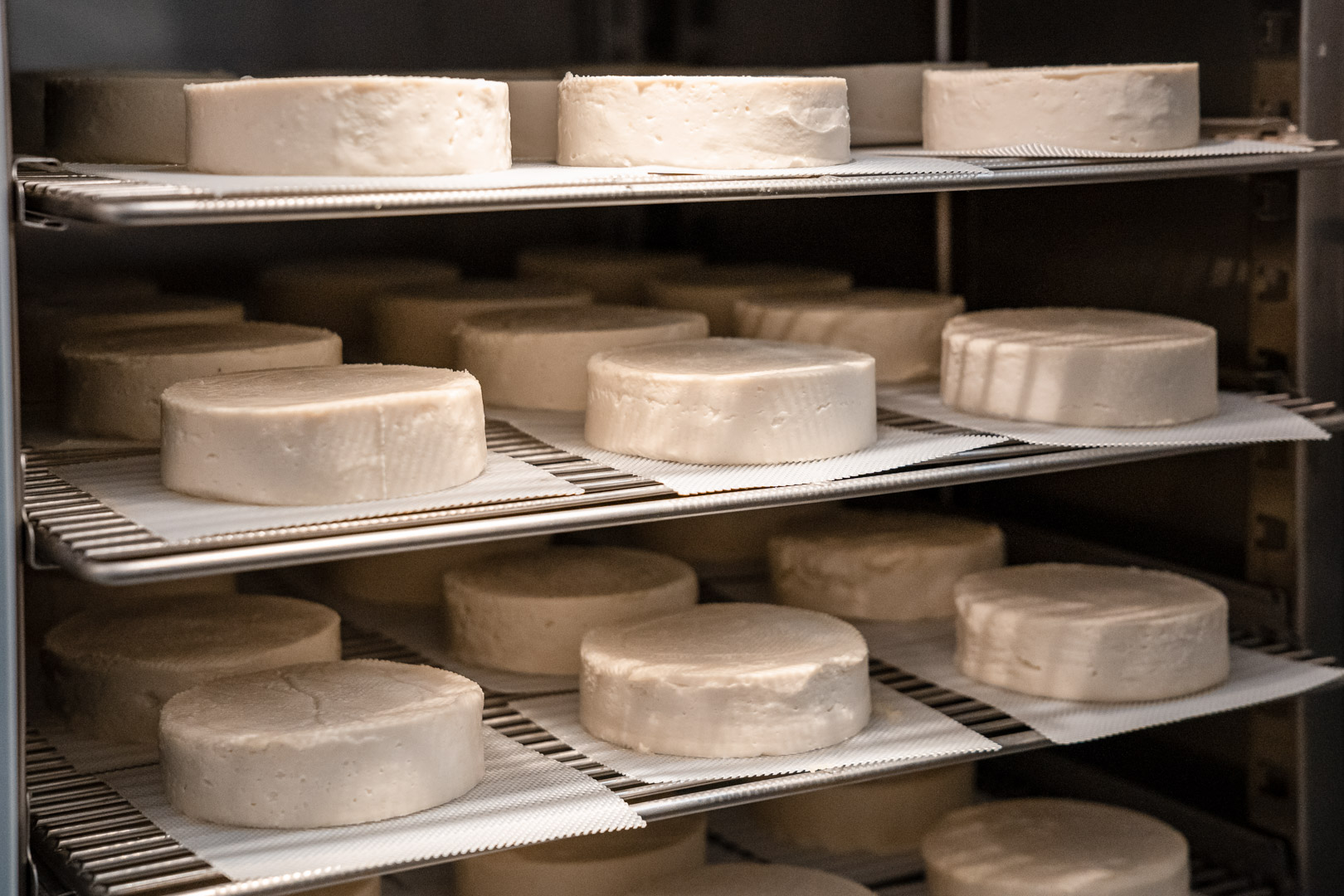
Once in Mallorca, Alejandro spent a year thinking about how to turn his creation into a real and viable project. The economic and bureaucratic part -this is also a common denominator of all projects- is always the least exciting part of the beginning, but the philosophy of elaboration of each redonet was already clear: it would be one hundred percent handmade. Thus, production, which takes fifteen days, begins with the dehydration of the almonds, which are then crushed. Next, a mixture of ferments - or probiotic strains - is inoculated. Then, once fermentation has begun, the dough is placed in the mold and, at the exact temperature and humidity, it is dried through air cycles.
The method is identical in all the cheeses even though Alejandro has created different flavor proposals, because the base of all his vegan cheeses is always the same: almonds, water, salt, probiotics and olive oil. He then adds other ingredients to diversify the flavor menu: the redonet 'Mediterrani' ripens with Mediterranean herbs, 'Tap de cortí' with sweet paprika and the summery 'Tomàtiga' does it with dried tomato shavings.
"It makes me very happy to be the first vegan cheese producer with products from the island".
All the ingredients - except the tomato shavings - are from the island, a fact that makes redonets a zero kilometer product that tries to minimize its ecological footprint out of sheer conviction. In Bon Bessó's workshop, sustainability guides the decision-making process, so much so that Alejandro himself is in charge of delivering the cheese to the city's stores on his bicycle, during the production process he uses the whole almond (the pulp is not discarded as it happens when making almond milk, for example) and the packaging of each redonet is recyclable and compostable.
Without starch or coconut oil, and with a list of surprisingly natural and native ingredients, Bon Bessó pays homage to an essential product in the culinary tradition of the Mediterranean and, undoubtedly, of this island: the almond. Perhaps that is why, when we ask Alejandro what makes him proud of his project, he is quite clear: "It makes me very happy to be the first vegan cheese producer with products from the island. A product seeking its own identity while adapting to its environment. That is what makes me most proud".
And, we agree with him, this is a good time for quality, artisanal and conscious vegan products, and more and more people -even if they don't follow a vegan lifestyle- are open to try new options. And yes, perhaps there are still many alternatives -less processed and healthier- than those prevailing in the market, but as Alejandro says, "the future is hopeful".