The guilty pleasure. That whiplash of exhilaration that runs through our body while our conscience, based on learning, tells us that this sensation will not last, and that it will be accompanied by a consequence that, in the long run, will harm us. This is the concept we resort to when we indulge in some habits that have been presented to us as harmful, but that also bring undeniable benefits to our spirit. Relaxing on the sofa at home to rest the mind or acquiring some whims that we have earned with the sweat of our work are considered guilty pleasures. A meaning that some people automatically associate with the following image: the image of someone reclining in their living room armchair, curled up under a blanket and nibbling on a bar of chocolate while their eyes almost roll back in their head. Chocolate. That word that no one can resist without feeling a pang of remorse. But what would happen if we got rid of all those prejudices? Is it possible to change this ambivalent notion about such a coveted product?
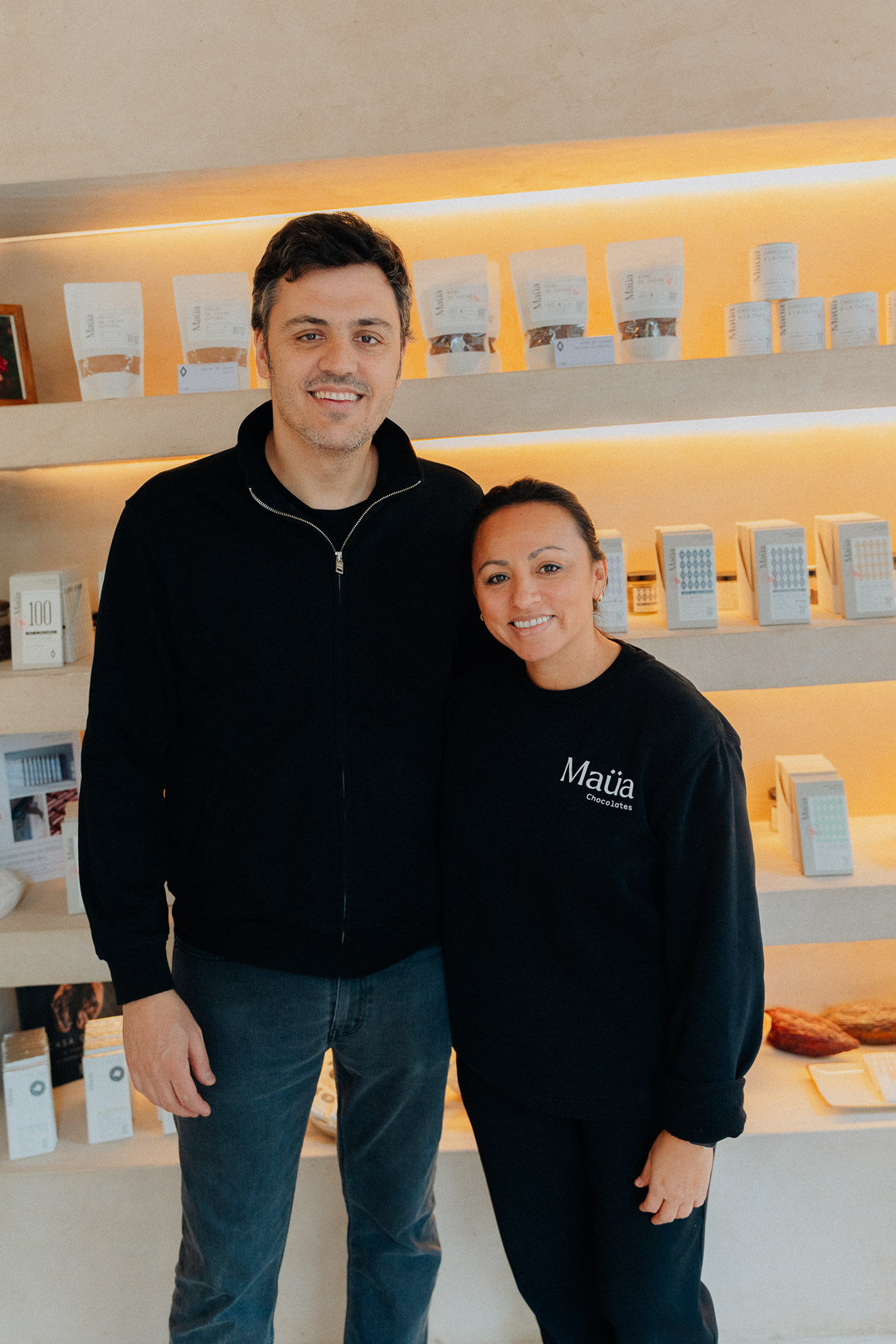
At Maüa, they are dedicated to stripping chocolate of all those labels in order to stick another one on it. "We wanted to offer a product that was totally different from what people can find in a supermarket. That's why we work with the bean to bar concept, which means from the chocolate bean to the chocolate bar." Silvia is from the north of Nicaragua, from an area that concentrates one of the largest coffee and cocoa plantations in the world. It was in her native country that she met Jaume, a Mallorcan agronomist who crossed the Atlantic on a university project to land in Central America. At that time, Silvia was working on cooperation projects and her duties consisted of supervising the initiatives in which Jaume collaborated, associated with the cocoa industry and sustainability. This is how they met and began their relationship.
Unfortunately, the pandemic aggravated the political-social crisis that was already hitting the Nicaraguan people hard, and they both flew over the ocean to seek refuge in Mallorca. For Silvia it was a discovery; for Jaume, a return. A return home in which he made his link to cocoa endure. "I would receive samples of the projects I was advising. I would taste them and give them my feedback. At that time, we had a small laboratory at home." If we add to that the fact that Silvia is a cooking lover and that she was captivated by the sweet smells that Jaume's work gave off, Maüa's roots are perfectly understood. In the midst of confinement, she asked a question that changed everything. "She asked me why we didn't make chocolate."
"We decided to do an internal crowdfunding round among friends and family."
Jaume had worked with multinational chocolate companies and had more than once walked around their factories, but he had never considered getting down to work because "it's one thing to see it and a very different one to do it". However, he knew the most elementary processes, and Silvia's question must have taken on an all too succulent form in a future that - why not? - they could glimpse. All that remained was to savor it. They got hold of a little machine that they still have. They used the oven in their own kitchen. They did some tests. They were satisfied with the result of their experiments and looked for an audience to test the product. They took advantage of an after-dinner family meal, when some palates wish to round off the banquet with a dulzaina. At that moment, they brandished a bar of chocolate in front of the diners without revealing to them - that was the fun of it - that they had made it themselves; they took refuge under the decorum of the guest who had bought the desserts. That was in July 2020. The rest is history.
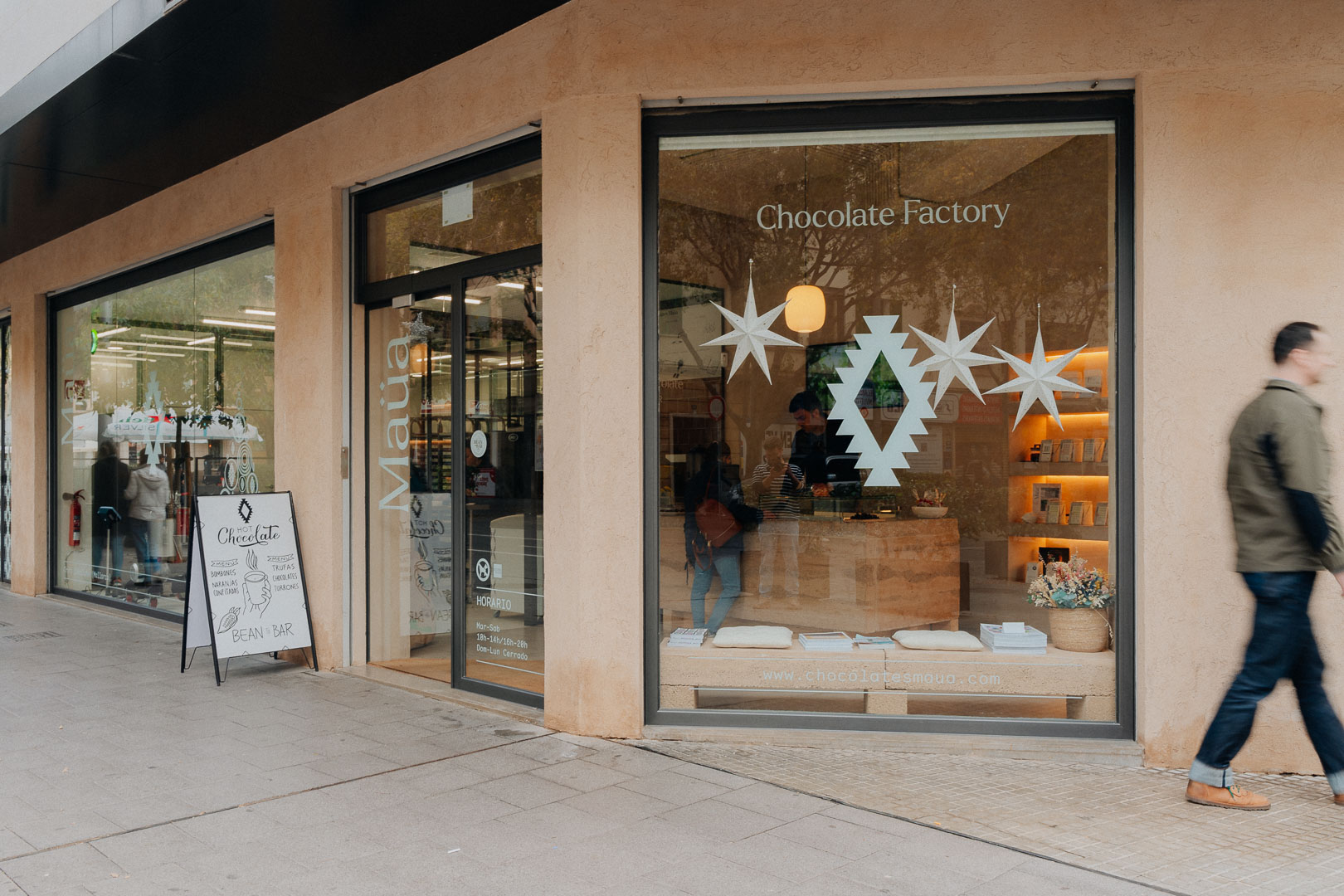
The success of that first improvised tasting made them persevere in their work. Little by little and without losing their tenacity, they broke down the limits of intimacy to extend a project that was flourishing. The fame of their chocolate spread from conversation to conversation. One friend tastes it, their mouth melts with pleasure and they tell another, with the creaminess of its texture still dancing on their tongue. The orders kept growing and they realized that they had to as well. They couldn't keep up. Neither could their home kitchen. Encouraged by the good reception of their creation, they found the place that today stands as their workshop, located in a corner of Aragón street, where nobody would say that alchemy is practiced. Maüa was starting to become a reality. "We decided to do a round of internal crowdfunding among friends and family. We got the investment we needed to get started and we joined Coop57, a financial cooperative of ethical services". A platform that injected them with the dose of capital that allowed them to reach the production levels they still sustain today.
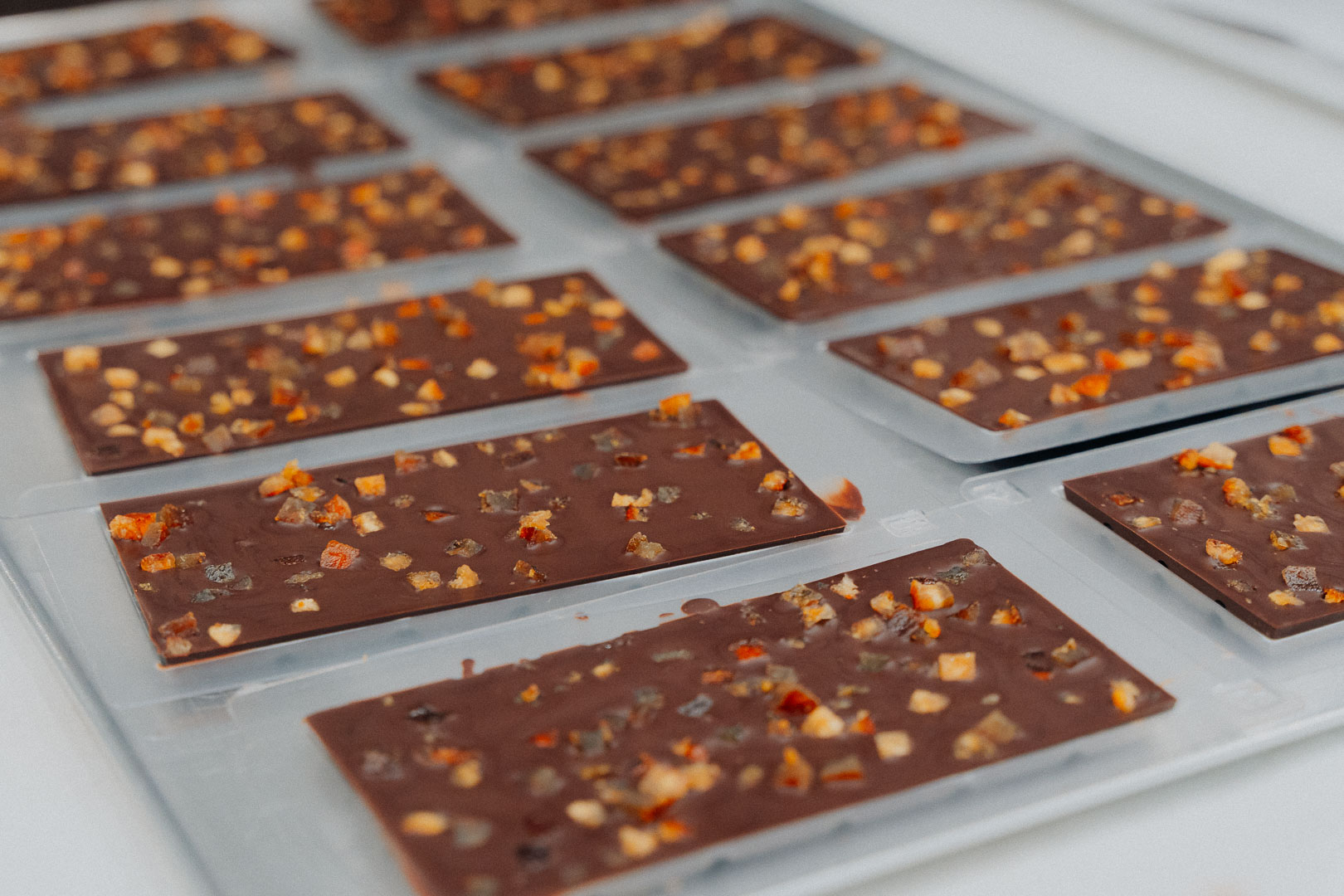
"We incorporate local products such as salt from Es Trenc, almonds from a
cooperative in Consell or oranges from Sóller".
The product that comes out of Maüa's workshop is unique because it comes from a single origin, unlike the mixtures that result in commercial chocolates found in stores. If we follow the transparent line that unites its production links, we will locate its source in the tropical density of the Nicaraguan jungles, where the cocoa harvest is celebrated. Silvia's longing for her homeland, its customs and traditions, served as inspiration. "The idea was to be able to work with small cooperative groups from the different places where we bring the cocoa from. And Jaume knows them. For us it is very important to know where our beans come from and how they are processed. To know how it was harvested, what the fermentation and drying system is, which is something we cannot have here and which is done at the point of origin". An origin that today in Maüa has spread to other regions such as Panama, Ecuador and Peru. Their philosophy consists of soaking in the procedures used by the producers who send them their raw material. That is why they visit them. "This is part of our product. We want to understand where it comes from, how those producers are, what payment they receive."
There is no doubt that the genesis of Maüa is nourished by the cocoa that germinates in Latin American farms. But the development of the product culminates in Mallorca. The ingredients that are born on island soil put the icing on the cake of a chocolate that fuses what comes from there with what is from here. "The cocoa that comes to us from Nicaragua is organic and we decided to use it to make inclusions. We incorporate local products such as salt from Es Trenc, almonds from a cooperative in Consell or oranges from Sóller. We are very purist, but we quickly realized that people want chocolate with things". This amalgam of flavors crystallizes in a genre that we taste live, right there, in one bite. The diaphanous purity of Es Trenc anticipates the sweetness of the chocolate; the citrus of the orange combines with the bitterness of Nicaragua. Silvia and Jaume adapt to the tastes of their customers because they are attentive, they know how to listen. Do you crave chocolate with ginger? They prepare it. You're crazy about chocolate with sesame? Said and done. This is not chocolate with stuff. This is something else.
The public that knocks on Maüa's doors is made up of people with a conscience. People interested in the nature of the product and willing to pay for its quality: foreigners who have heard about a different kind of chocolate, young people concerned about healthy eating. They are the ones who make up a community that does not stop growing and that is spread all over Spain. Their online store serves as a showcase, but they have found a real vein in gourmet shops not only in Palma, but also in Holland, Italy and Germany. However, if someone comes to the bakery they can also buy the product in situ, although they have short-term plans for the future: "In September we will raise the curtains and offer the product right here". A right here whose profits could have repercussions in the areas from which they extract the cocoa. "The idea is to allocate part of the profits to an investment in Nicaragua. To a school, because Silvia worked for ten years in education."
Maüa tries to transmit stories through chocolate. We have fallen in love with hers without feeling guilty.