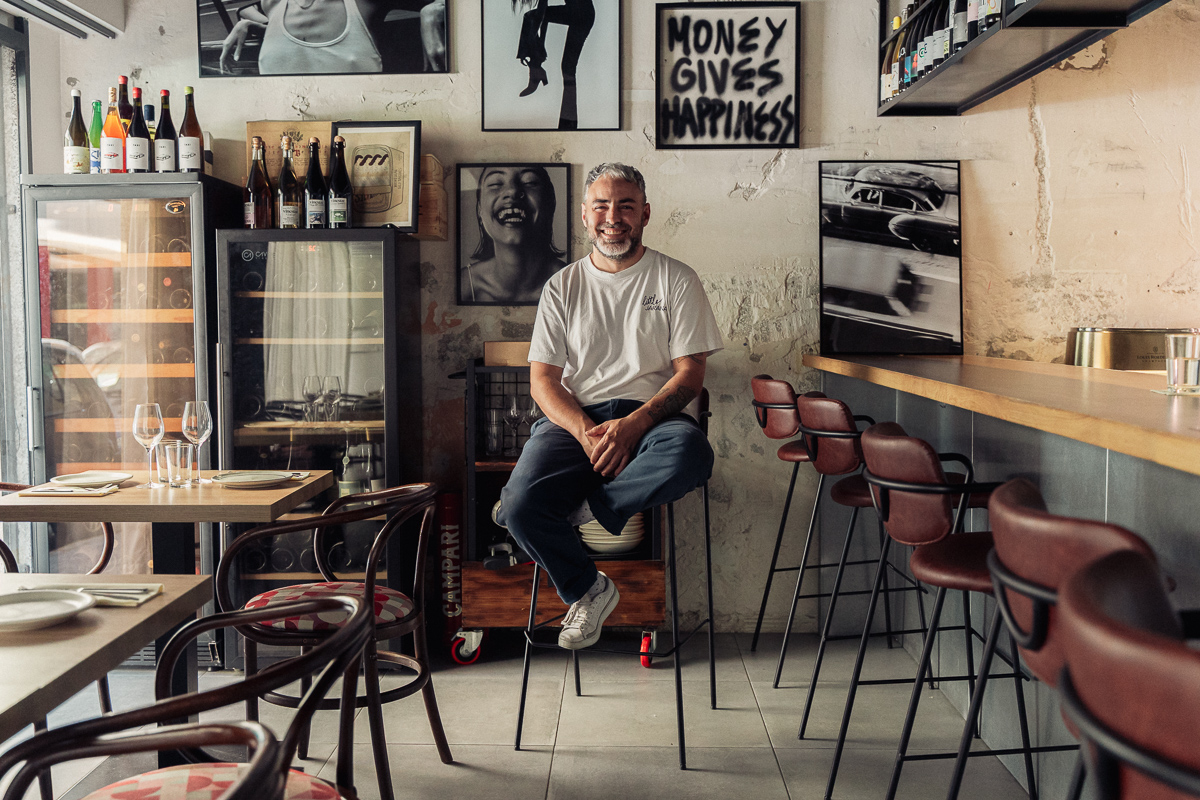
When Tomeu Lassio, sitting at a table in his restaurant, talks about the aroma of his grandmother's kitchen when he was a child, his eyes light up. It is, perhaps, the power of olfactory memory in someone who has always been very clear that his project is rooted in the roots of Mallorcan gastronomy. From a very young age he knew he wanted to be an entrepreneur, although at home they saw him as somewhat lost, so they asked him to talk to his cousin, a social worker. She was the one who reassured Tomeu's parents: "the boy has it clear, his place is in the kitchen".
This is how Lassio, at the age of 16, started at the very beginning: he approached the traditional cuisine of the island to investigate and understand its roots; then, he studied and gained experience in different restaurants for years. Already in 2012 he started offering a catering service and, in 2014, he opened his own restaurant, which bears his name, in Lloseta, the municipality where he was born.
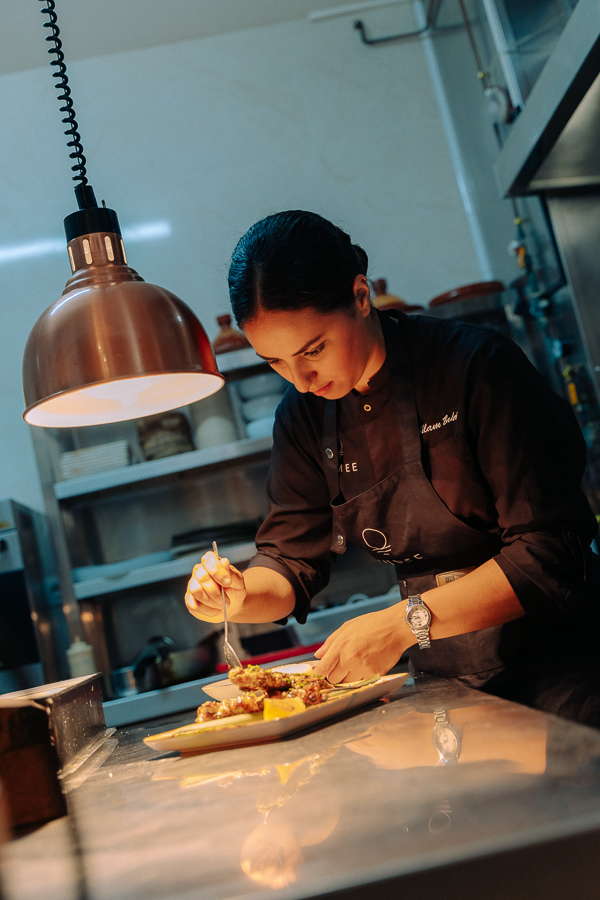
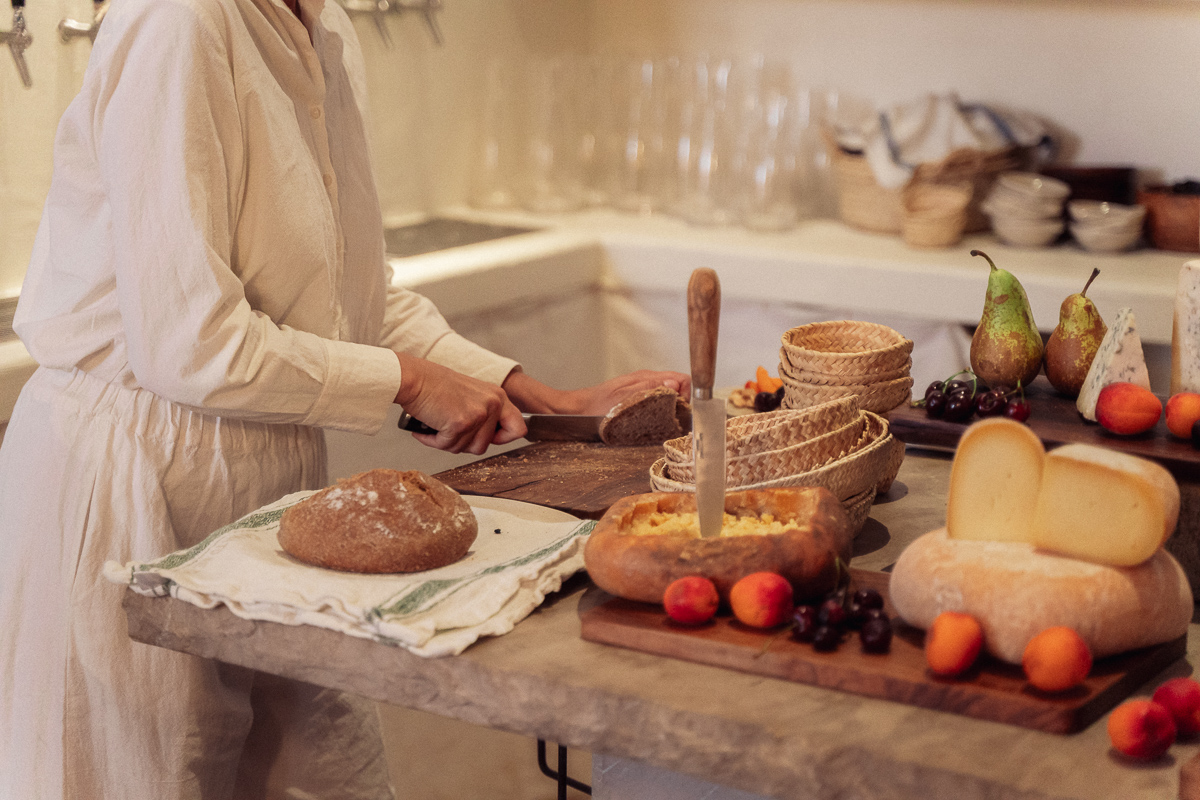
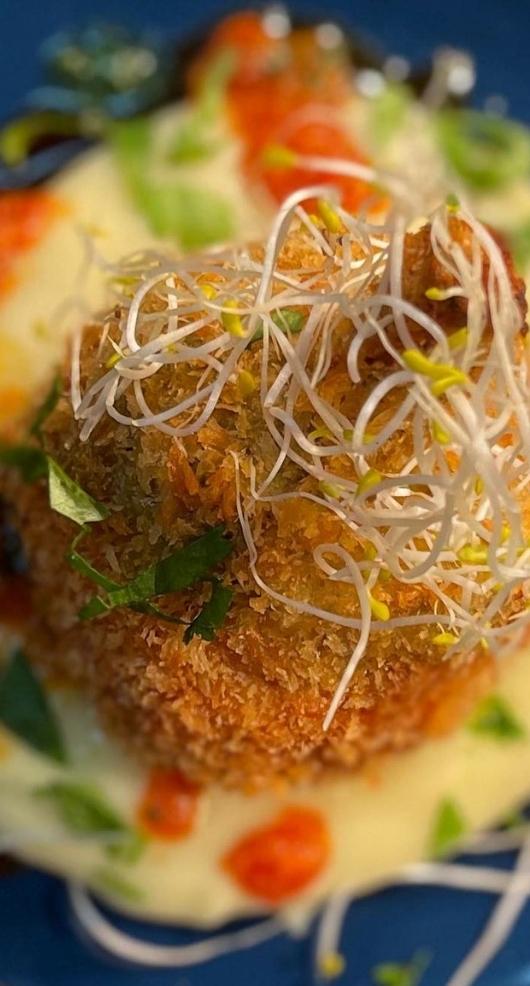
In it, this Mallorcan chef prepares and serves a tasting menu consisting of three starters, a fish dish, a meat dish and, finally, a dessert. The dishes change every day because the seasonal product marks the times. "Today, for example, I found bonito at the fishmonger's and it was clear to me that it would be the fish dish of the day. It's also cherry time, so the dessert goes that way," he says while showing us the product.
Seasonal produce and traditional cuisine go hand in hand. Like our ancestors, the main ingredients used are those that can be found in the market according to the season and the weather.
"There is an indescribable, incomparable smell that you can only find with local and seasonal products. That aroma is what I'm looking for."
However, part of the raw material he uses in his kitchen is even more local. The cook from Lloseta enjoys making his own elaborations with capers and almonds, and even prepares jam with the plums he collects from his little piece of land. "People appreciate it when you tell them that what they are eating has tomatoes from my garden or marjoram that I have sown and picked that same morning".
This is his cuisine, like the one you eat at home, but without fear of giving it a twist.
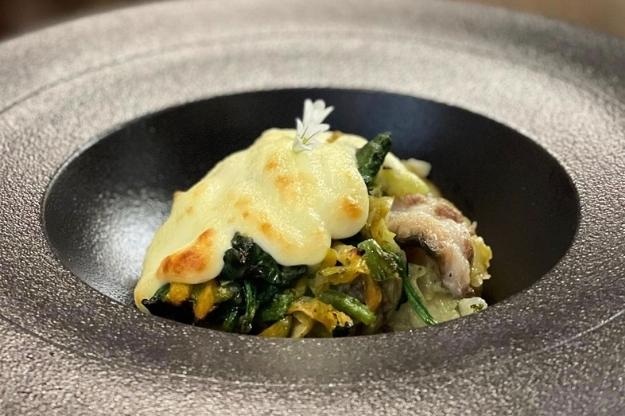
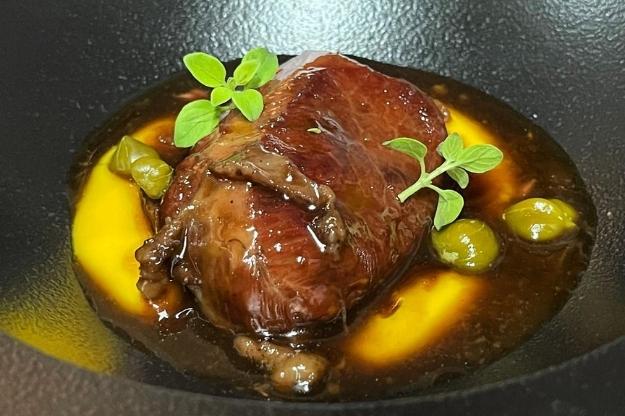
"Traditional cooking is the basis of any kind of cuisine. It is the beginning. Then come the sophisticated sauces or avant-garde processes, but the beginning is always in the roots".
In fact, Tomeu has never stopped searching and collecting old recipes so that they do not fall into oblivion. Ancestral recipes, from medieval cuisine and also from stately cuisine that tell the story of Mediterranean gastronomy and, in particular, of the island's past.
In addition to local and seasonal produce, Tomeu Lassio's cuisine has another indispensable ingredient: the slow pace. "When something has been cooked without haste, following the process step by step, it is noticeable both in the flavor and in the aroma. For me, it is essential not to be in a hurry and to stay away from the speed at which we do everything today. I like to invest the necessary time in each elaboration process".
Tomeu Lassio's cuisine is a tribute to gentle, simple and well-made things. In fact, this spirit prevails not only in the kitchen, but also in the restaurant, where he is the only one that works in the kitchen and his wife in the dining room. "We seek closeness, that everything passes through our hands, to be able to exchange impressions with the diners... and that is only possible in this format".
Some may think that, in a world in which transgression and constant innovation are sought after, the Mallorcan recipe book implies certain limitations. Nothing could be further from the truth. As Tomeu says, traditional cuisine is like the seed. Then creativity comes into play and he is inspired by almost anything: reading books, eating a fig under a fig tree, going hiking in the mountains, travelling...
So they can say that cooking is a sacrifice. "The kitchen is grateful, open and fun if you take the risk to try it. For me, it gives me freedom to cook every day at my own pace while my daughter tells me anecdotes and I make plans with my wife for the following Sunday. Who can call it a sacrifice to dedicate yourself to your passion while sharing time with your family?" he asks before returning to the kitchen to prepare the dishes for tonight.