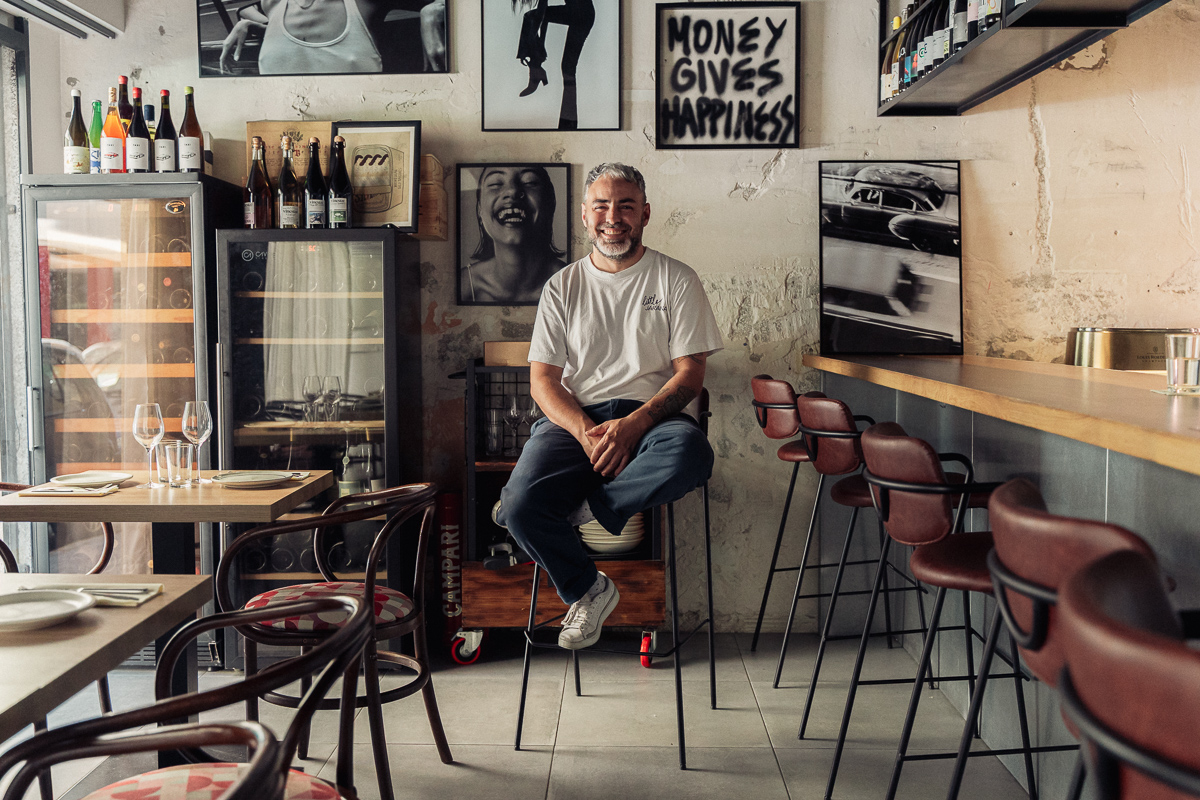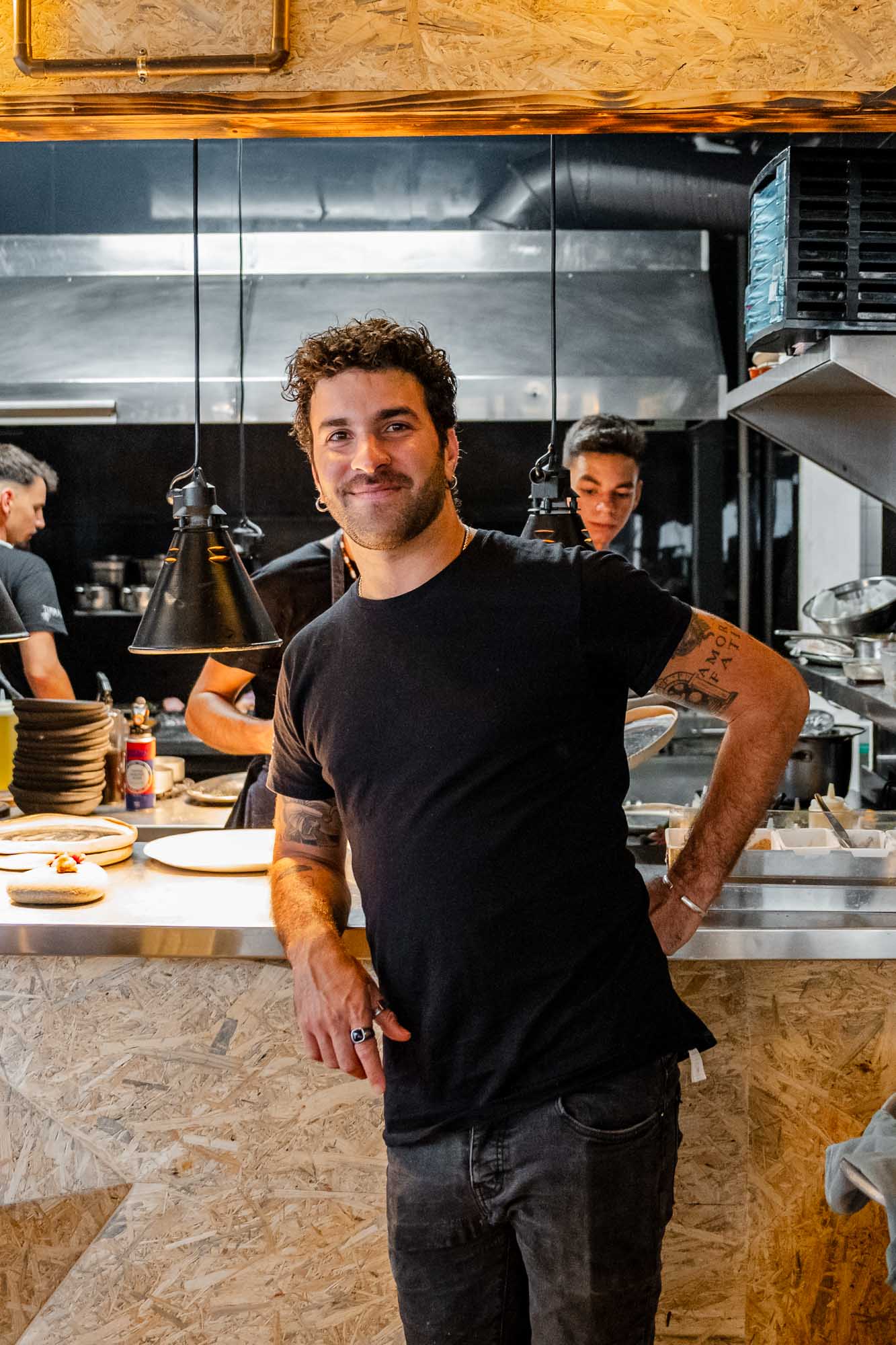
At La Gatera everything you see has been created from hotel and construction waste, and even from materials recovered from the garbage. It is the rebellious, somewhat crazy sister of its neighboring restaurant, Terrae, and here we had a Món beer while chatting with the creator and captain of both projects, chef David Rivas, about sustainability, gastronomy... and about being consistent with what one learns and feels.
The professional journey of Rivas, who was born in Venezuela, began in Barcelona, where he did his studies in cooking. Then he lived and worked in Norway, Hong Kong and back to Norway once again before coming to Mallorca. It was in the kitchens of the Nordic country, "where zero waste is deeply rooted", that Rivas imbibed a vision of work that, in reality, is a way of thinking, of being in the world, of seeing life. This philosophy, increasingly in vogue, is called zero waste and advocates reducing waste to its minimum expression through responsible production and consumption and maximizing recycling, reuse and composting.
Settled on the island, Rivas says, "I was looking for something that could satisfy my hunger to continue doing things like I did in Norway. That's how Terrae was born", a restaurant through which "with products from here" he recovers concepts as old, logical and modest as utilization. In his kitchen all the juice is squeezed out: from a pumpkin, the flesh, the skin and even the seed are used, from which powder is made to finish a dish, and from the quartering of a tuna - which Rivas buys from local fishermen - absolutely every part is used so that there is no waste.
Beyond the food, the zero waste concept involves the entire production process. For this reason, this restaurant has rethought cooking and preservation methods as common as those involving the use of vacuum bags in search of a more environmentally friendly solution. Quite a challenge that they took on responsibly when they realized that "in every service the plastic garbage ended up completely full."
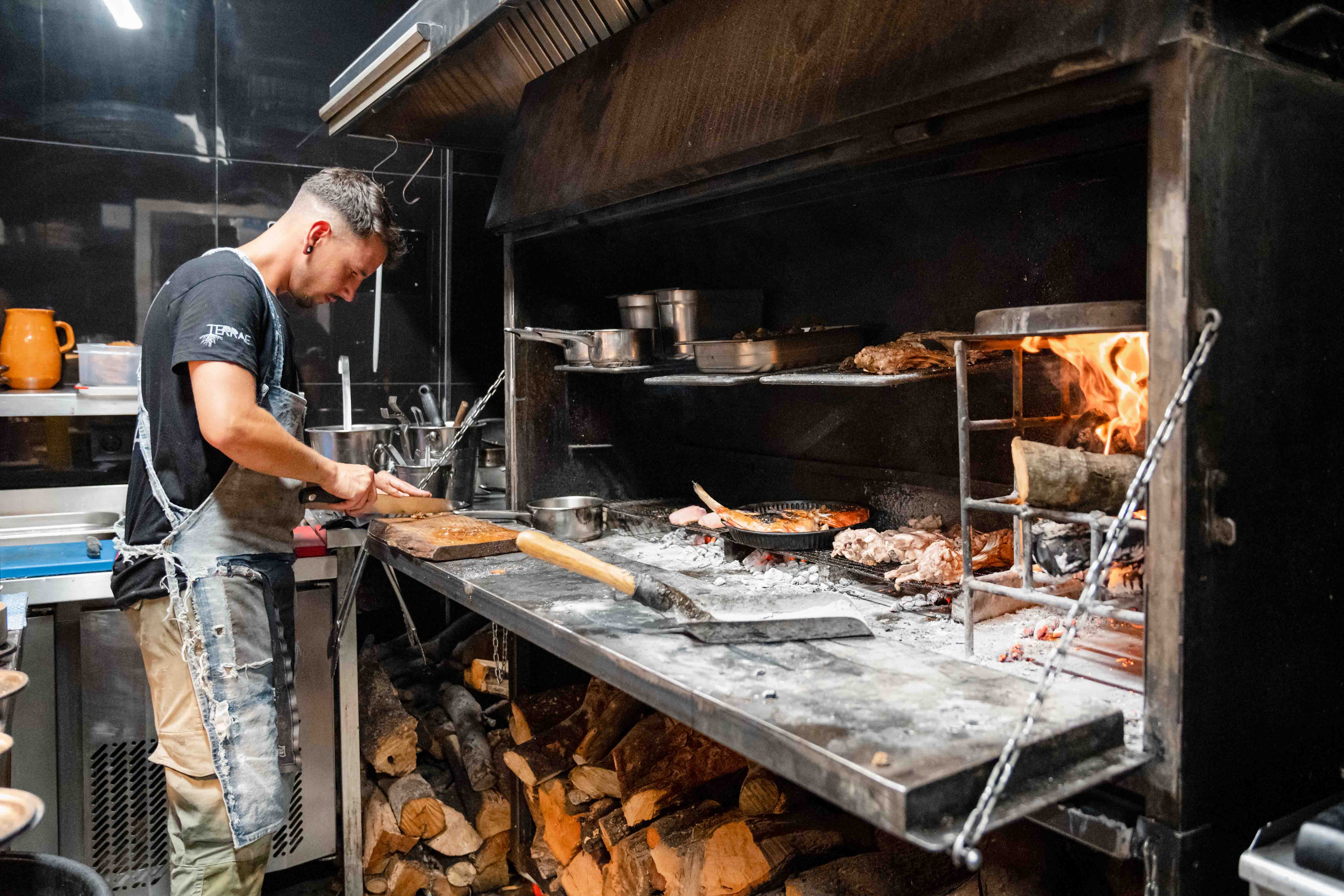
"We do it without gas because we glaze on a wood-fired grill created expressly for it".
To replace the huge amount of bags, the alternative was based on tradition thus recovering culinary techniques such as preserving and pickling, traditional preservation methods that also allow them to reduce demand for energy: "fermentation, for example, does not require a refrigerator" and "we also do it without gas because we glaze on a wood-fired grill created specially for it, which uses the residual embers from the service", explains Rivas.
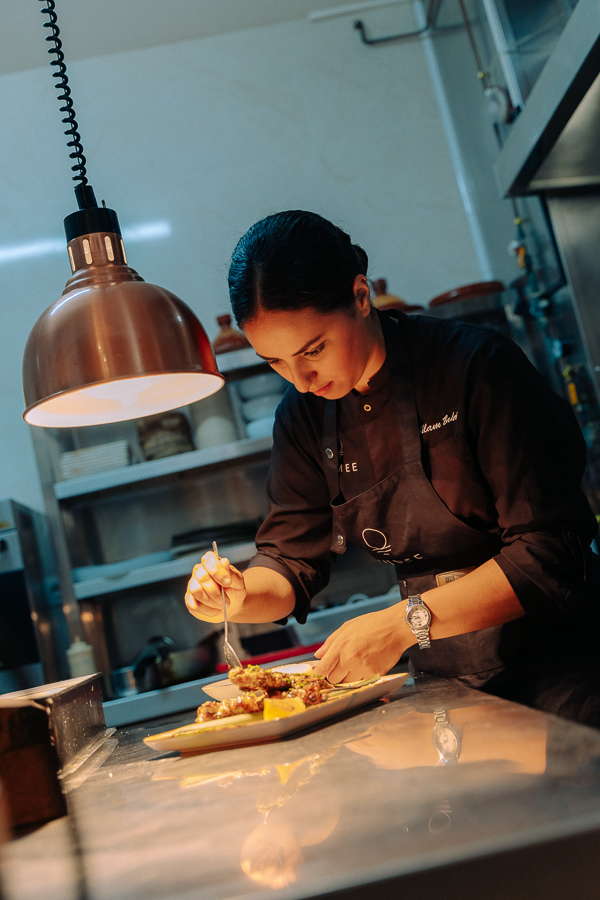
Working in a kitchen following these precepts is slow and requires time, tests, ongoing training and a lot of creativity so that "the decoration, the economic approach, the resources and the raw materials" are sustainable. For now, they are already creative and sustainable at the same time inside the kitchen (their cactus leaf coke is a must!) and outside, in the dining room, too: they have built much of the furniture from wood waste, reused and recycled.
The proposal and the brilliant dishes of Rivas and his team are very successful. The restaurant is packed every night and recently Terrae has been recommended by the Michelin and Repsol guides thanks to a menu and a tasting menu that is cooked to the rhythm of seasonal produce. But it hasn't always been this way. In 2017, when they opened, "distributors did not understand that I did not acquire products that are essential in other establishments and it was hard for the public to come. I could not understand why people did not see that this type of business favors the economy of the island, of the people."
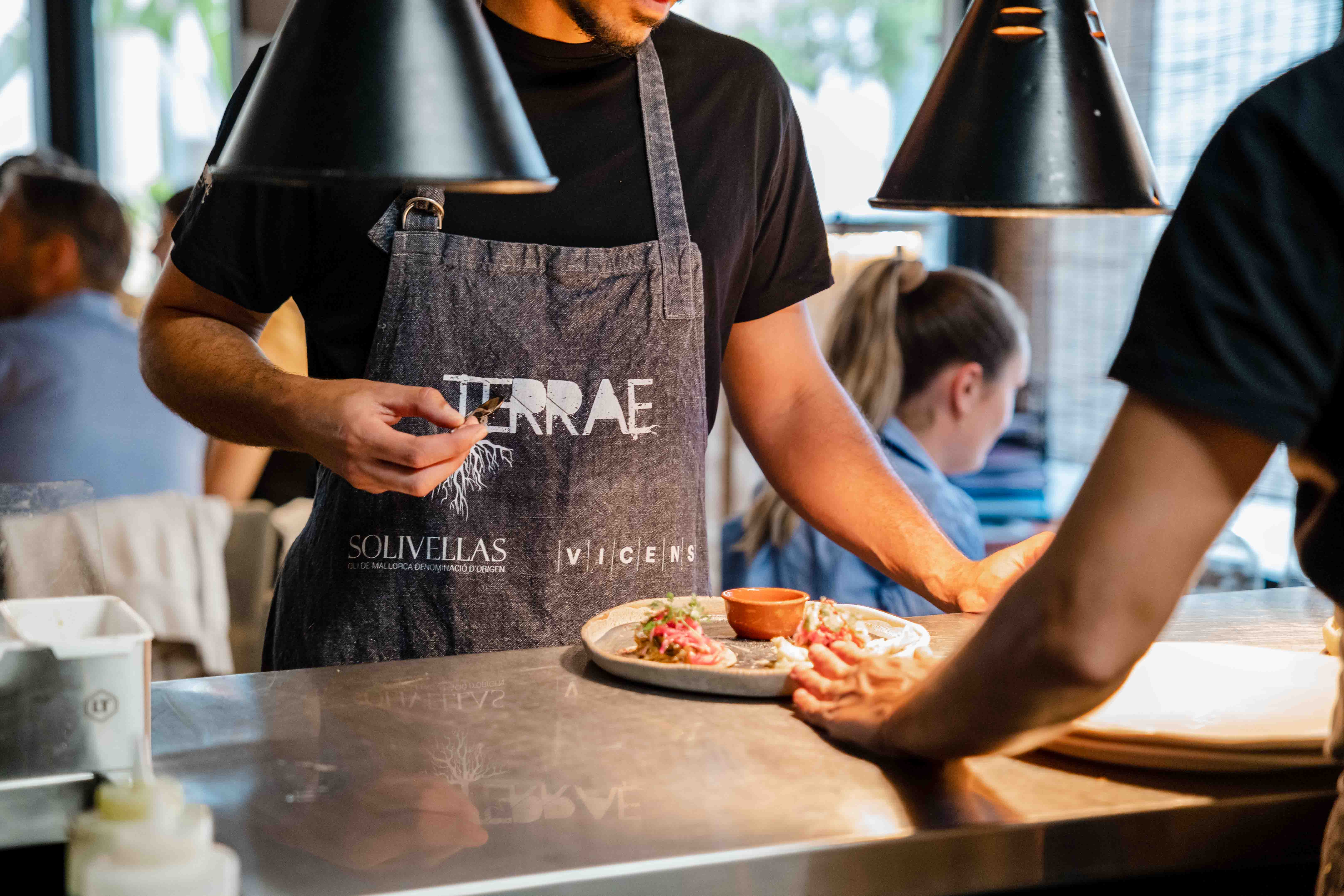
"70 % of what we use is made in Pollença and Puerto Pollença".
Perhaps the only thing the project needed was time, as the tables have turned and Terrae is now the place where everyone, locals and tourists alike, want to go. However, the zero waste concept and the driving force behind it, the local and circular economy, have remained unchanged since day one. The produce David buys is from local producers - as much as possible - the beer is artisanal, the cola is from Puig and the wine is from the island, of course. Even the firewood, ceramics and napkins are Made in Mallorca "and I would say that 70% of what we use is made in Pollença and Puerto Pollença", says the chef.
While we are finishing our Món before going to browse around the tables at Terrae, we take an interest in La Gatera. Rivas tells us that it is the place to have a drink before or after dinner and that they sometimes offer live music, but that their idea is to gradually create a cultural space that brings together exhibitions and hosts micro-theater sessions.
Terrae is optimistic about the future: "We are positive. Zero waste existed in the past without us being aware that it was the right thing to do," reflects Rivas. "After a while, we have recovered it to rethink how to update intellectual capacity and technology to do the common good". He himself, who created a restaurant to "feel comfortable in the environment and continue learning" is a great example of this. At the end of the day, it is a matter of principle. Of sustainable principles.