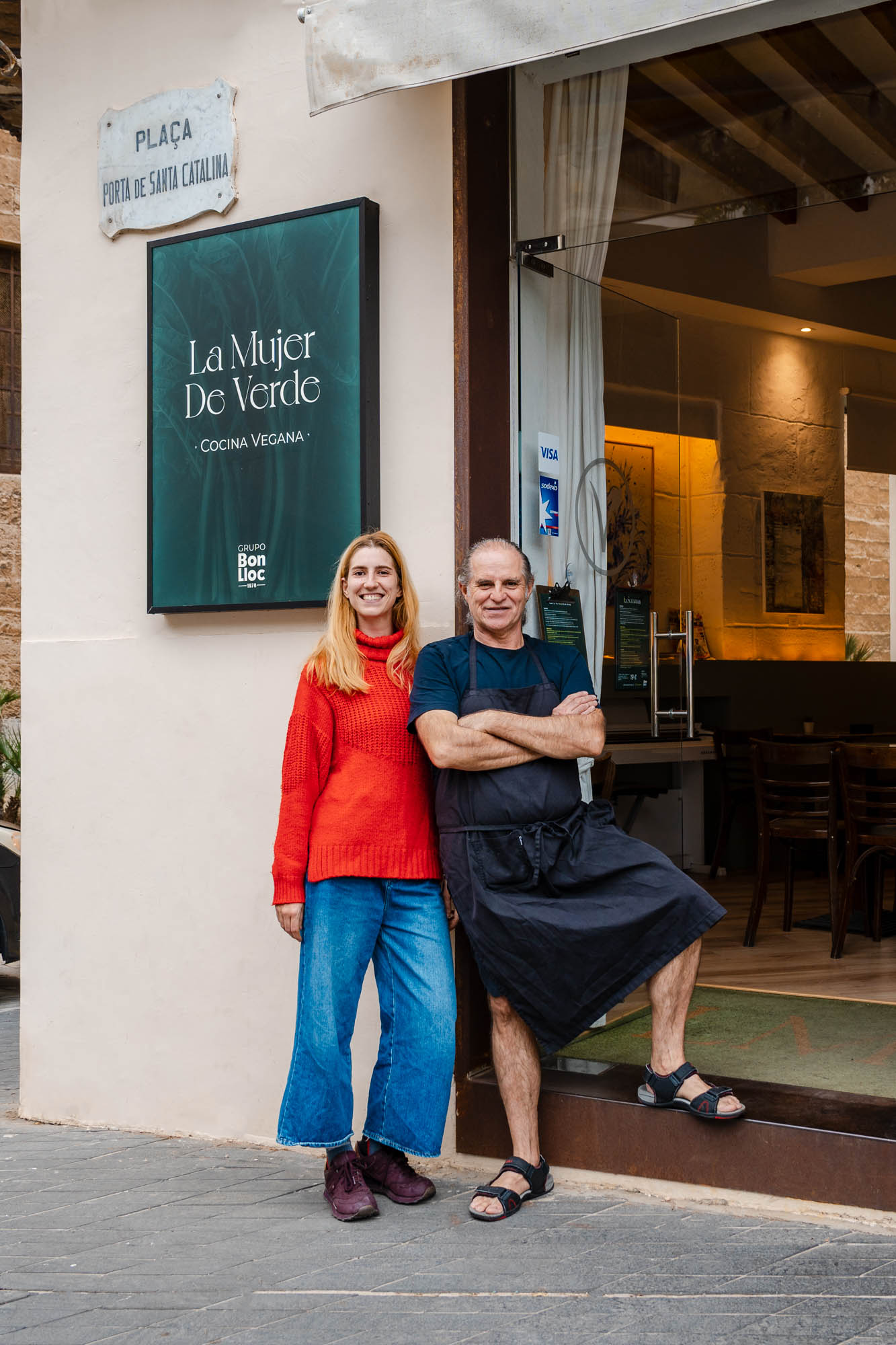
There is a song by Izal that describes a woman looking out a coffee shop window. Someone who incites us to smile. A heroine who wants to grant her superpowers to others so that we are all on the same point, on equal terms to enjoy what life gives us. This musical theme and the name of the restaurant where we are sitting are homonyms, as we are seated at a table at La Mujer de Verde. An establishment that opened in 2021 in the porta of Santa Catalina. Listening to the lyrics of Izal, we see ourselves almost embodying the role of this mysterious character. The only thing missing is the costume with which the woman is adorned. In an involuntary way, we see ourselves emulating her gestures. We glimpse the city of Palma through the window of the local: some children play in a playground, a couple kisses on a bench in the square. We smile. We have Paula Ramirez sitting in front of us, the spokesperson of a project that has also made everyone who crosses its doors smile.
"I gave my father a ticket to see the Izal concert when he turned sixty. He didn't know the band and the last song they played was La Mujer de Verde. It really touched him, he got goosebumps". Paula refers to the influence exerted by that score, verses inspired by a protagonist who sheds a halo of light on the helpless. To those of us who do not know what to do when we are lost. We don't know if that was the state of mind that Juanjo Ramírez, the restaurant's chef, was in when he heard a musical composition that lodged in his head and never came out. That was in September 2021, almost a year before father and sons set off on the adventure that has brought them this far. For Juanjo, setting up a restaurant was nothing new. We are talking about one of the partners of El Bon Lloc, a place that earned an unparalleled reputation for a very laudable and simple reason: it was the first vegetarian restaurant founded in Mallorca. That said, we could consider Paula's father a pioneer. The Bon Lloc opened its doors in 1978. If we take into account the social context of that time, we will understand his feat.
"We wanted to incorporate improvements in the menu, so that the food was of higher quality".
It was the pandemic that triggered a change of plans. The Bon Lloc had to close because of the confinement, a closure that coincided with the moment Paula and Carlos - her brother - decided to take up entrepreneurship. "La Mujer de Verde " is like a cousin of the place my father founded. We wanted to incorporate improvements in the menu, that its food was of higher quality and that the dishes were more international". We are regulars at La Mujer de Verde, in love with Juanjo's hands when he plays with them in the kitchen. This precursor of veganism joined the project that his children wanted to launch. We have tried their weekly menu for lunch and also for dinner; opening at night is another of the novelties that make a difference with respect to El Bon Lloc. The subtlety of its lighting is like a lighthouse that, in the dark, guides you to the greenish color of its walls.
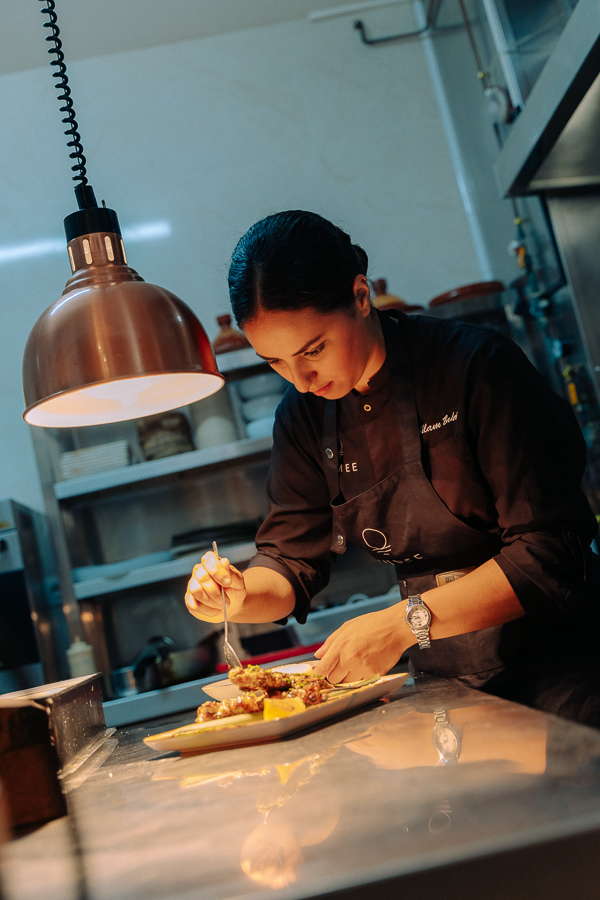
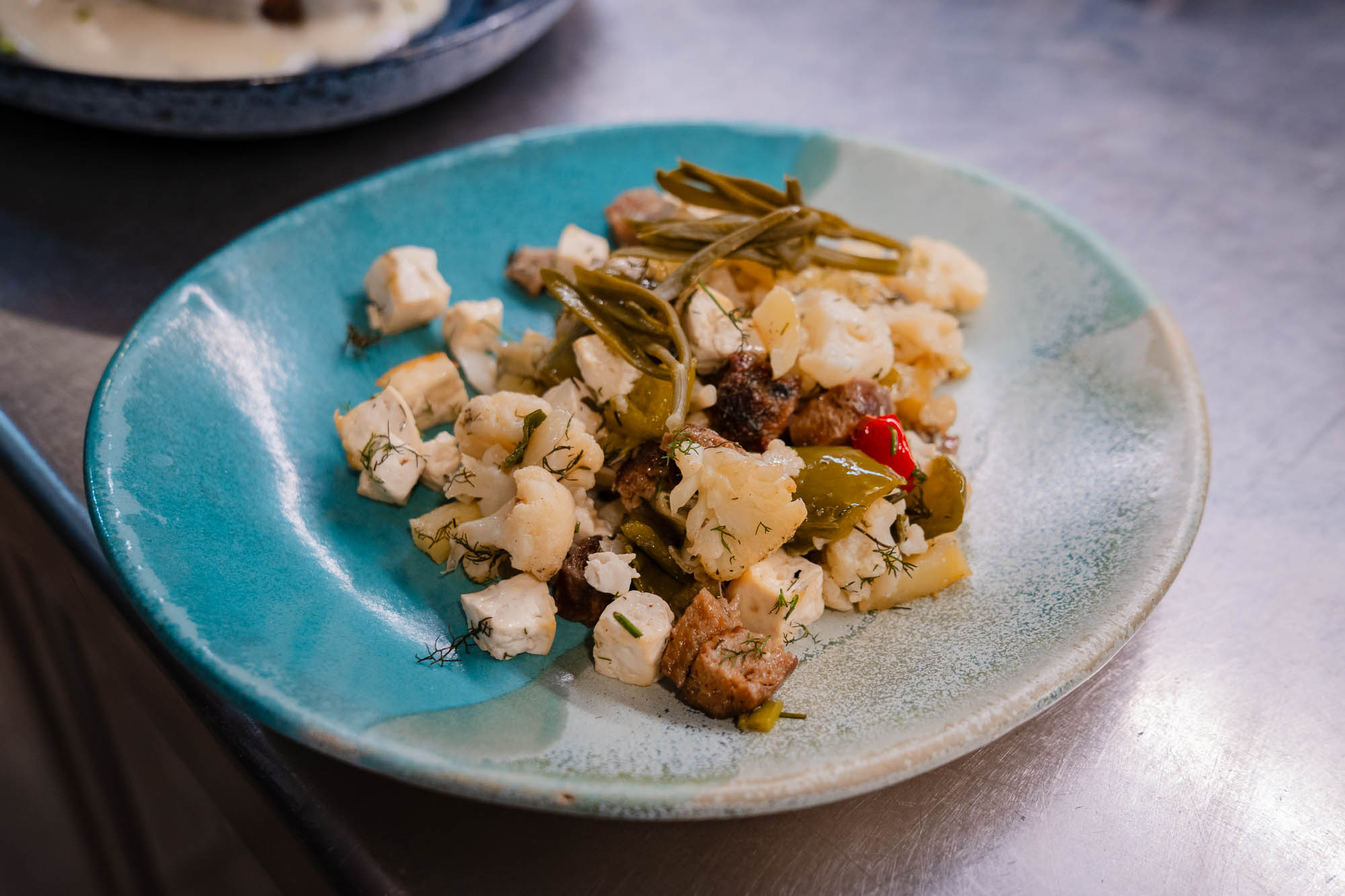
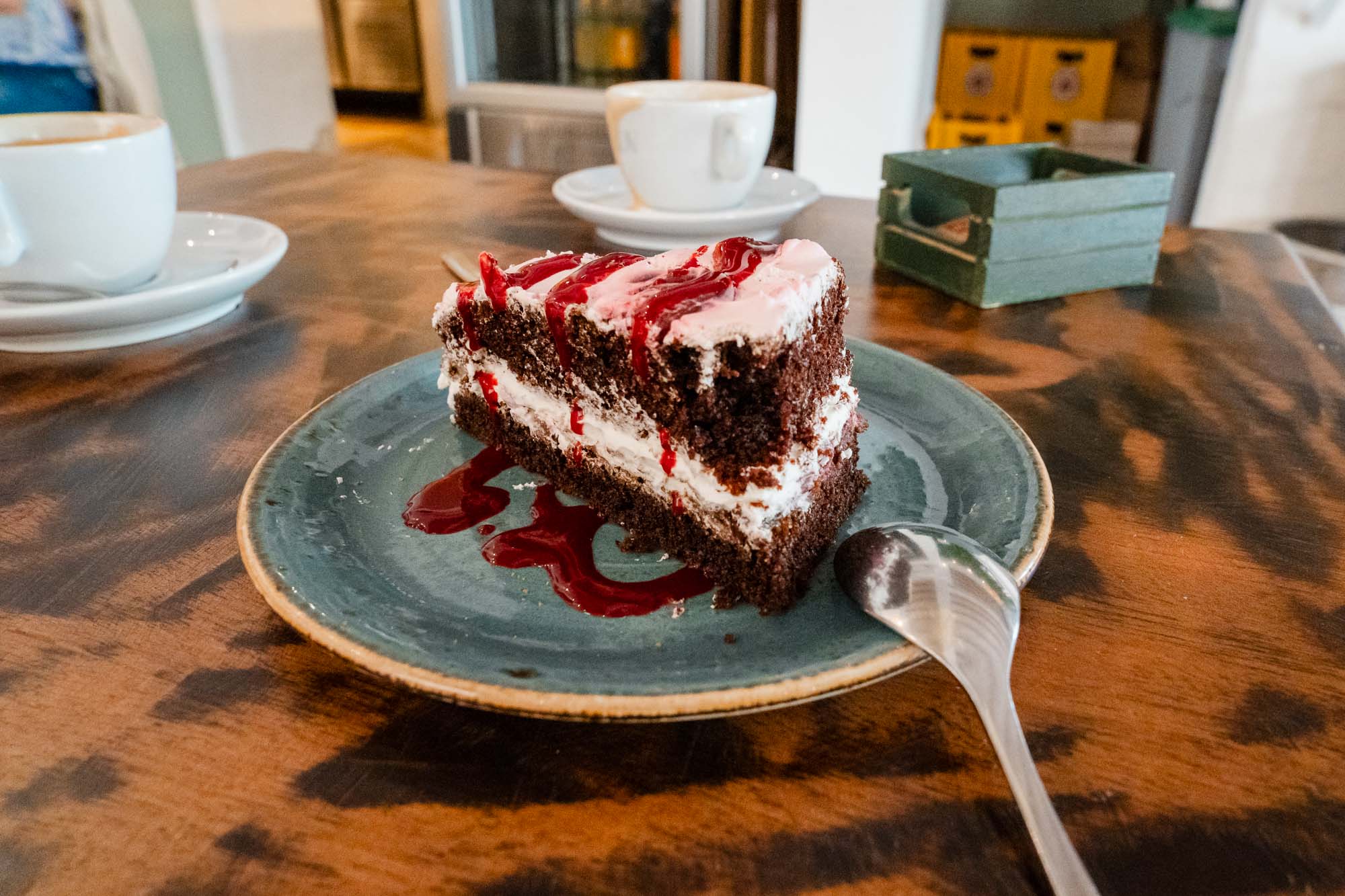
It is three o'clock in the afternoon when we meet Paula. Some diners are finishing their meals and others are settling in at the tables, waiting for the menu. The times we've filled our bellies at La Mujer de Verde, which have been a few, we've savored beet ravioli, larded jackfruit tacos or grilled eggplant with pea hummus. What Ramírez and his assistants prepare between the stoves are true culinary feats. Since we have already eaten today, Paula invites us to some delicious desserts. While we sweeten our palate with the vegan side of Ferrero Rocher and Kinder Bueno - this is how they describe in their menu this mixture called hazelnut remix -, Paula explains why healthy eating has been a pillar in her family. "My father has always been very combative. As a young man he was already involved in all the social struggles and demonstrations. In fact, he was one of the first to push for Cabrera to become a natural park". At that moment, she takes out her cell phone and shows us an image of a younger Juanjo in the nineties. It is not surprising that someone so guerrilla and passionate, adhering to all the movements that pursue a more just world, opened the Bon Lloc and then joined La Mujer de Verde with his children.
"The data shows that more and more people are vegan and vegetarian every year. This is the future."
The public that comes to this place is as diverse as its dishes, and shares the same traits as its founders: environmentally conscious and health-oriented people, mostly women in their thirties and forties. Pointing to the establishment's prime location, Paula says, "We are from Palma and grew up here, and this is one of the few areas of the city that can still be considered a neighborhood. We like the idea of knowing who our neighbors are". That familiarity that gives off the restaurant's energy is also practiced when it comes to sourcing their products, as everything comes from local producers. At La Mujer de Verde everything stays at home, on the island. The quality of the ingredients is excellent and its roots are completely natural. "The data indicates that every year there are more and more vegan and vegetarian people. This is the future. Restaurants like ours are also increasing globally because the other option is no longer sustainable. What will happen at some point is that meat will be for elitists".
We look at the walls of La Mujer de Verde, where some artists who live on the island can exhibit their work for an entire month. In this way, they give visibility to the creativity that governs in Mallorca through works with a feminist, animalist or vegan message. The place serves as a showcase for those who cannot afford to be in a gallery. It is called democratization of art. We sink our spoon into the last portion of the hazelnut while the illustrations of Belén Pez, from the walls of the premises, captivate us with their strokes. Paula bids us farewell with a hug and a smile, the same smile that the protagonist of Izal's song encourages us to always wear. The same one that Juanjo Ramírez wields when we pass in front of the kitchen. We see him holding a basil bud between his fingers. He approaches the door, puts his hand on our shoulder and thanks us for our visit.