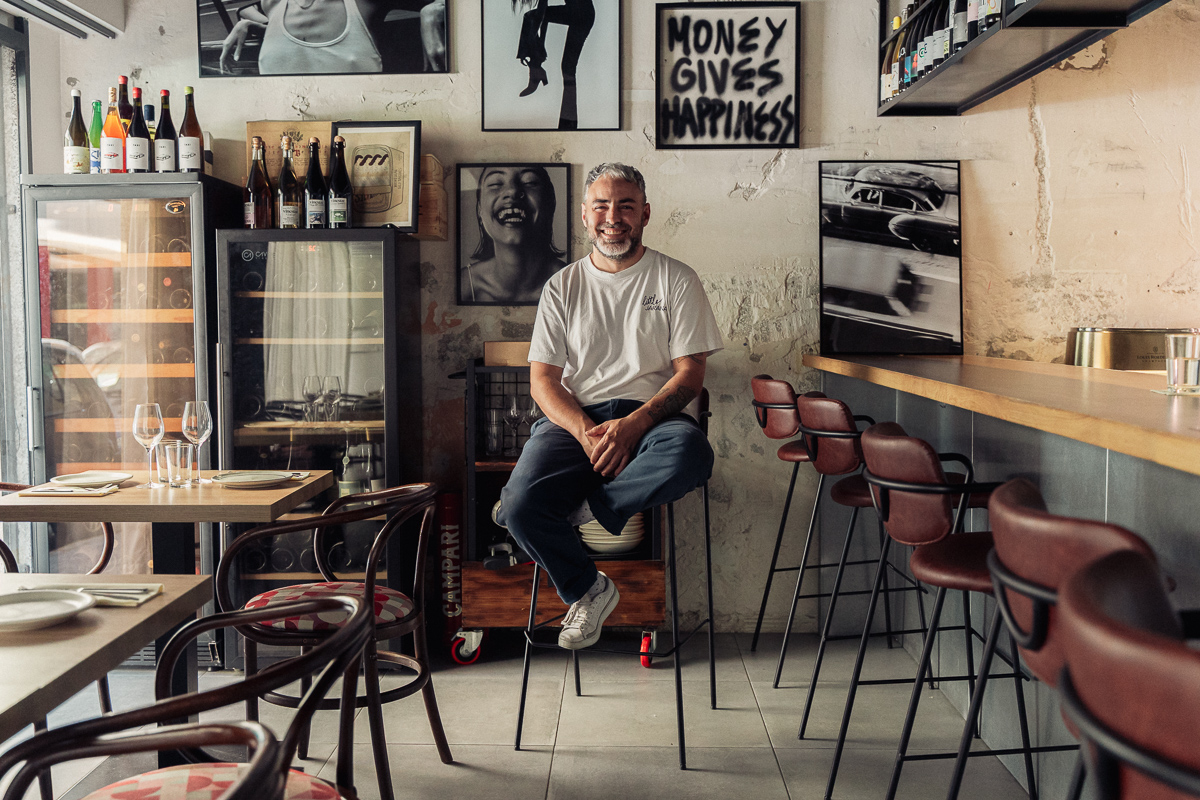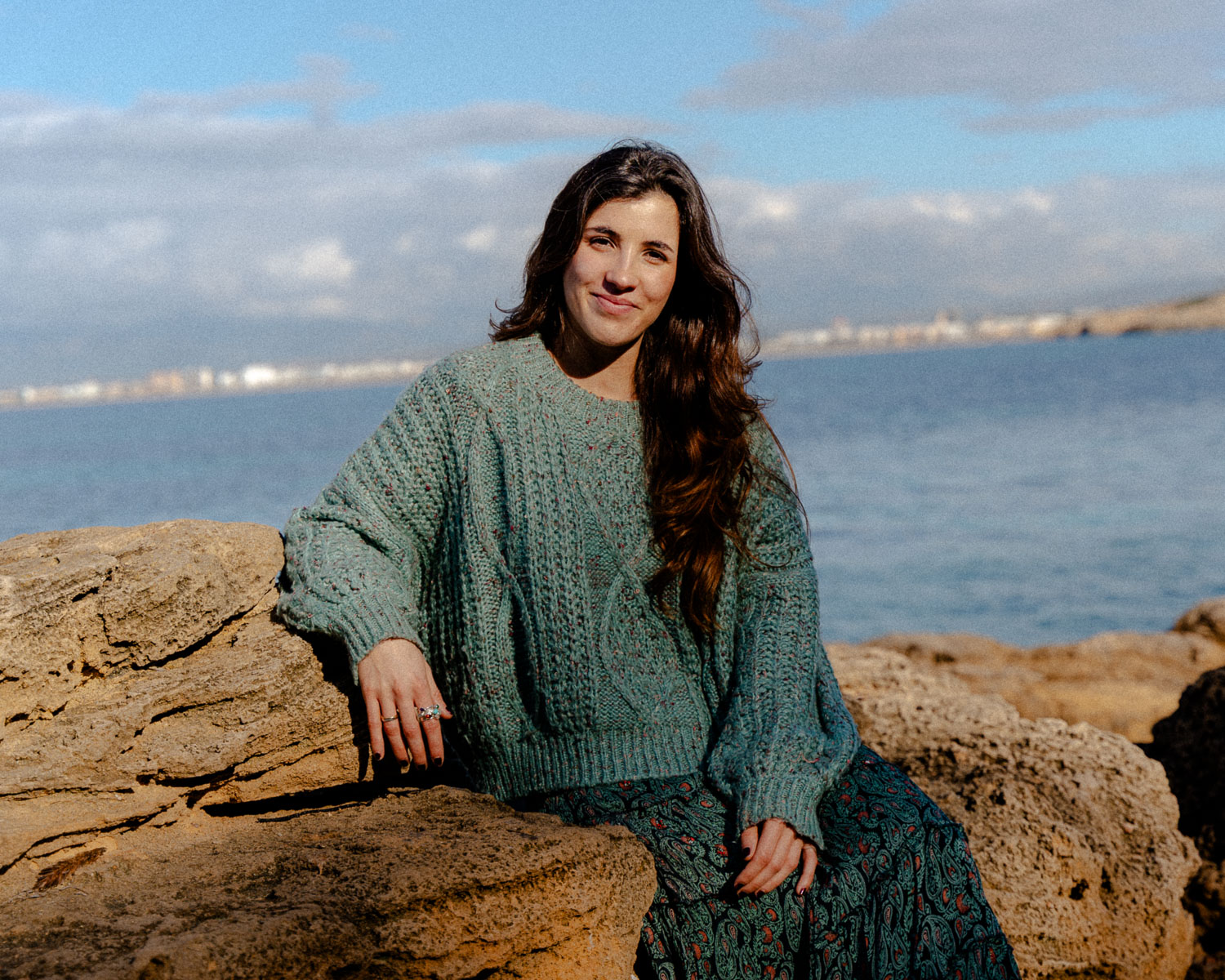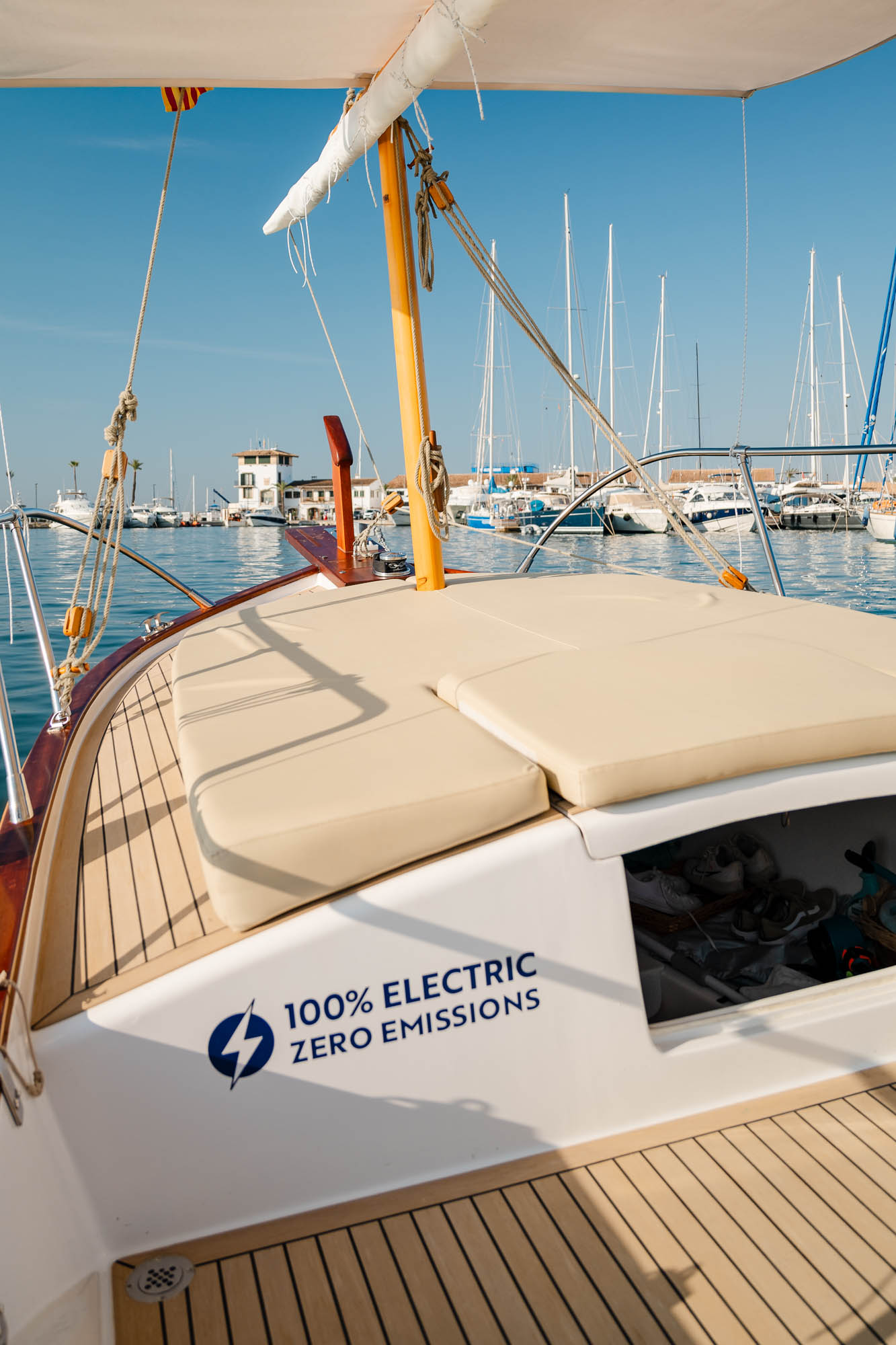
It is not every day that we are lucky enough to get to know a project first hand on the high seas. Gonzalo, at the head of Medvolt Marine, is responsible for this opportunity to enjoy this maritime adventure, as he invited us to take a ride around the Bay of Alcúdia with an electric llaüt that the company has manufactured for the hotel Playa de Muro Village *****.
With the sea as a backdrop, Gonzalo explains how this initiative came about: "during the pandemic, we not only considered how to build an electric boat, but also what to do with it". Sustainable tourism was the answer: "we are pioneers as a shipyard on the island, but Europe is asking to decarbonize and we saw an opportunity there". They started building a llaüt for the popular festivities in Sóller and when they realized that the idea was feasible, they turned to the Conselleria to apply for the European subsidies that could make this shift in paradigm actually possible.
With the Sustainable Development Goals (SDGs) and Next Generation funds in mind, they have since converted five vessels and sold, in just over a year and a half, six llaüts manufactured ad hoc for charter companies. The first two years, Gonzalo says, were invested in development and research, because although "sustainability in tourism is growing a lot, there was nothing really in the sea".
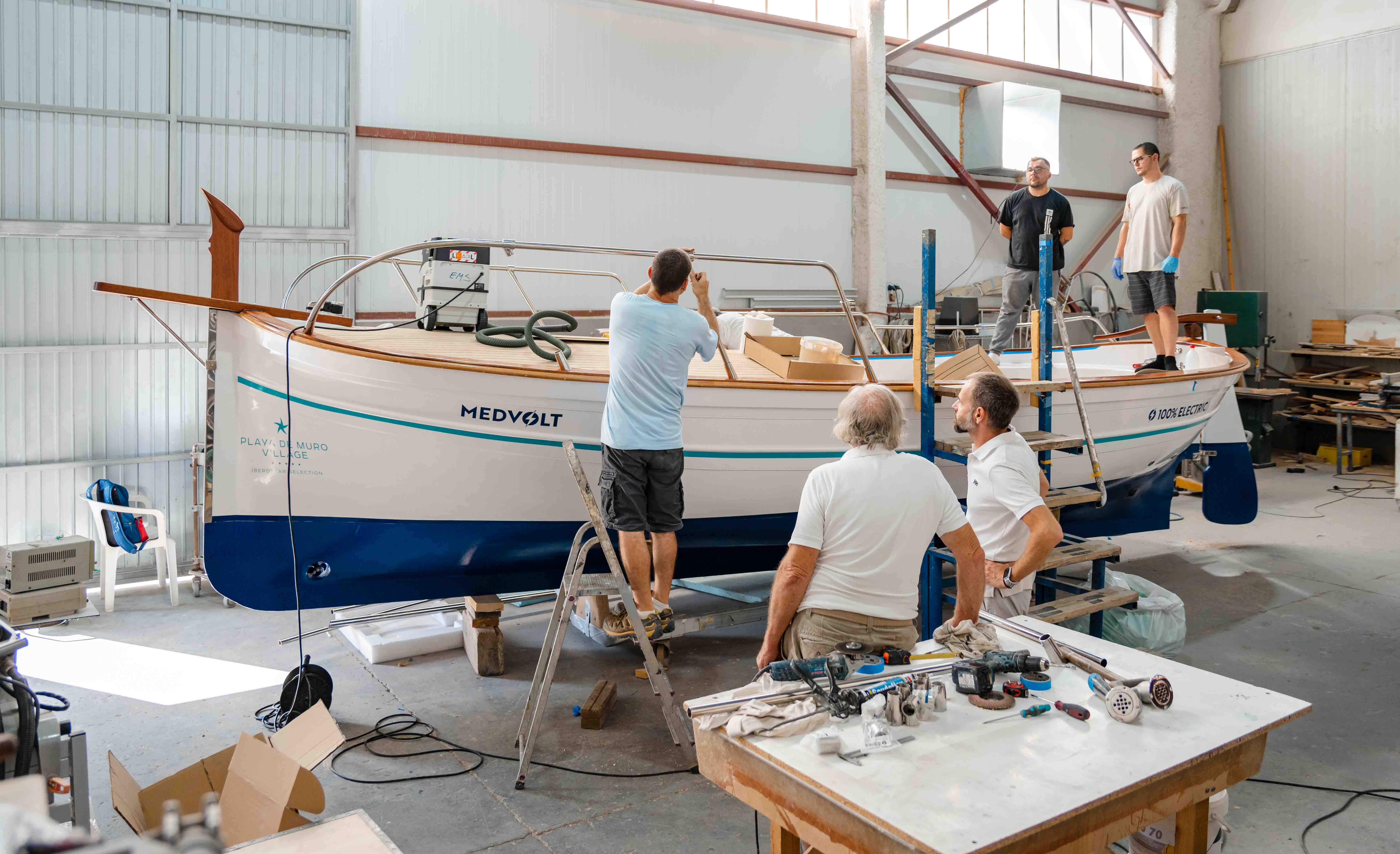
They are currently building three models: a 7-meter model, a 5-meter model and a third proposal, a 9-meter model with an overnight cabin. It takes about 20 days to create a llaüt from scratch and three weeks to tackle a re-motorization. What takes the most time, he says, "is the paperwork, much more than the technical part, and the numerous quality controls." However, nothing stops these entrepreneurs, who see how their private customers are mostly from northern Europe, "where the use of private electric cars is much more common, as well as electric boats for sailing on lakes". However, he recognizes that "both in Catalonia and in the Valencian Community there is a lot of interest in the llaüt".
"Sailing fast is stressful and uncomfortable; the satisfaction is immediate but in the long term it makes no sense".
The format is undoubtedly the soul of this project. The llaüt is a typical boat of the islands conceived for fishing because of its practicality, but today it is used as a pleasure boat. In addition to its strong Mediterranean identity and its humble past, it is aligned with the company philosophy that supports Medvolt, which is none other than: "to show tourists the island with the culture of our place here", that which respects the times and does not understand hurry and, for that, "you do not need a lot of engine".
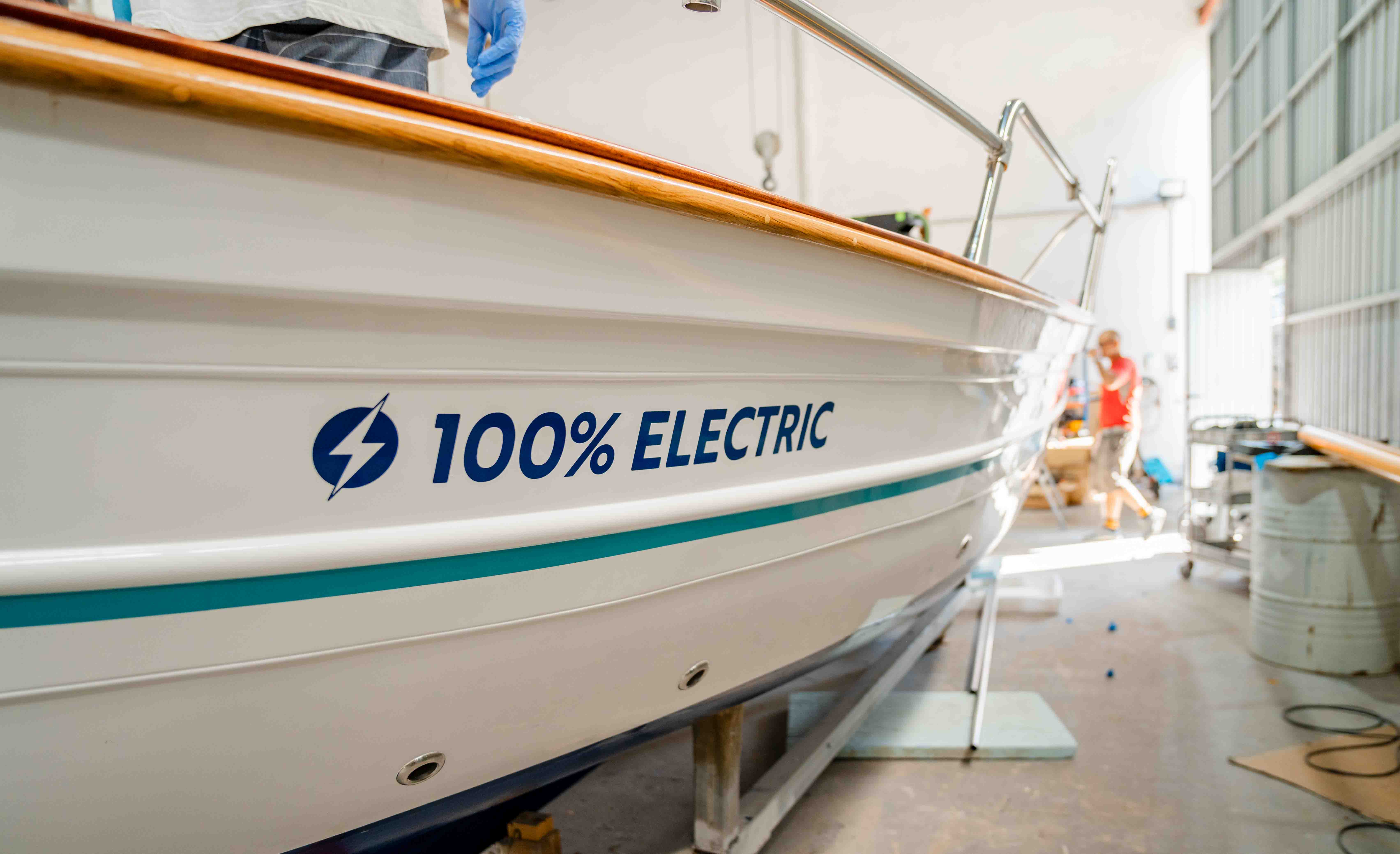
The benefits of an electric boat are numerous: hardly any noise - which not only bothers people but also marine wildlife - no emissions, no odor, no incidents and without sacrificing comfort. In fact, the boat in which we take this pleasant ride has a refrigerator, a shower and a small cabin in which to take shelter. In addition, as Gonzalo emphasizes, maintenance is also very different from that of a motor boat: "for a charter there is hardly any maintenance beyond having to plug it into the mooring".
Cost is another point in favor of these electric llaüts. Although the initial investment is high, of course, because of the price of the batteries, Medvolt's CEO calculates: "an eight-hour sail in a boat like this can cost four euros, much less than what it costs to sail with a combustion engine". In addition to this long list of benefits to be taken into account, there is another not insignificant one: the energy independence of not having to be dependent on the ever-changing market value of oil. The island's fishermen know this well, as Gonzalo recalls, "last year, when oil prices rose so much, they had to stay ashore because it was actually cheaper not to go out fishing".
The llaüt can be 100% customized at Medvolt's shipyard in the Can Valero industrial park: from the colors to the cushions, including the wood, with the premise that the materials chosen must be respectful of the environment. To manufacture this model in which we went sailing, for example, they opted for synthetic teak: "Natural teak, which comes from tropical countries, is highly sought after and it is very difficult to have guarantees that it has been harvested with permission". In addition, for every meter of teak purchased, he says, a tree is planted. "Every boat is a challenge," Gonzalo says.
It is clear to everyone that the sustainability of electric batteries is constantly in the spotlight. Gonzalo, aware of this, points to the false myth of their lack of recyclability. "As more and more sustainable alternatives are being created, optimal recycling companies are already being organized," he assures. In addition, the useful life of a battery is 3,000 days, guaranteed without using more than 20% of its capacity. They themselves, as distributors, are committed to giving a second life to their customers' batteries when they stop working.
"There is no point in going to a nice cove and taking the pollution with you right where you are going to enjoy".
In a society where speed reigns, Medvolt vindicates the pleasure of sailing slowly and enjoying the experience over the possibility of reaching the destination quickly: "sailing fast is stressful and uncomfortable; the satisfaction is immediate but in the long term it makes no sense. It's a misunderstood luxury," says this sea enthusiast, who believes that his company has shown that people are interested in getting to know the island in a responsible way in the face of climate change, which is already an emergency. With the fires in Greece and Tenerife in mind, he reflects: "the few who did not believe in climate change must have understood by now that this is not a matter of the future, it is one of the present, and the administration has to commit to it".
Humans have always sailed - here, mainly by sailboat - but with oil, boats began to prioritize speed. Renouncing the rush, Gonzalo recalls that it takes just 40 minutes to reach Es Coll Baix and 10 minutes to reach the island of Alcanada from the port of Alcúdia by electric llaüt, while you can talk, contemplate the views and live the journey.
Aware that theirs is an exciting road that they cannot travel alone, Gonzalo chairs the National Association of Electric Boats (ANBE), which brings together several companies that, like his, want to encourage both the industry and individuals to bet on an alternative way of sailing. In the end, he sums up, "we live from the sea and we feel responsible for taking care of it and respecting it. It makes no sense to go to a nice cove to bring pollution right where you are actually going to enjoy yourself".