At Vins Can Coleto they have not been able to decipher where their family nickname comes from. The only thing they know for sure is that, generation after generation, on their father's side, they are from Can Coleto and that a coleto was, in ancient times, a medieval armor. However, this unknown did not condition them when it came to deciding the name of their winery because, come to think of it, the history of their wines is the history of a family.
So much so that the story of this winery in Petra begins with Miquel Horrach's grandfather (with whom we met to learn about the project), who as a child helped in the harvest of neighbors and acquaintances. Between harvests, his curiosity for the world of the vine grew to the point of daring to make his first foray into wine production. In fact, making wine for self-sufficiency was commonplace at the time and Horrach did it as the custom dictated: the grapes were put into a press - a kind of boot with vertical stripes - and stepped on. Then, the juice that came out was used to make wine for everyday use, the wine of the house. He must not have been so bad at it because, although he produced a small quantity and hardly did any business, his grandson tells us that he soon began to exchange it for other products and animals among his friends and neighbors.
Years later, Miquel's father inherited the interest in the production of this liquid, so deeply rooted in the island, and passed it on to his wife. Both also did their own tests and home research, and together they made wine for four years for their own consumption with no other intention than to enjoy it and share it. However, when they realized how well received they were, in 2000 they decided to create Vins Can Coleto.
"We were the third winery to produce organic wine in Mallorca, although now there are about 20. My father did it this way because he believes in organic philosophy".
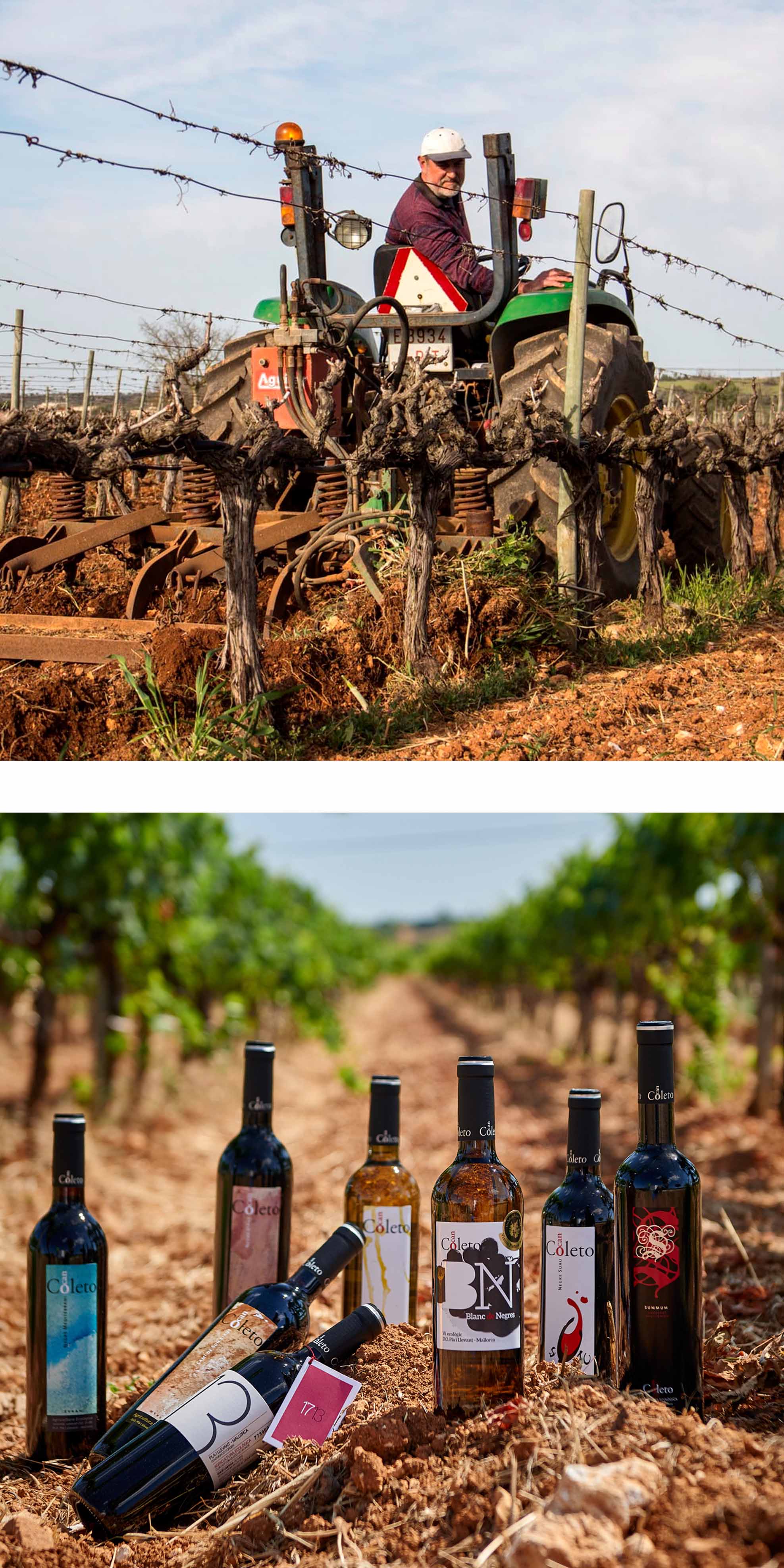
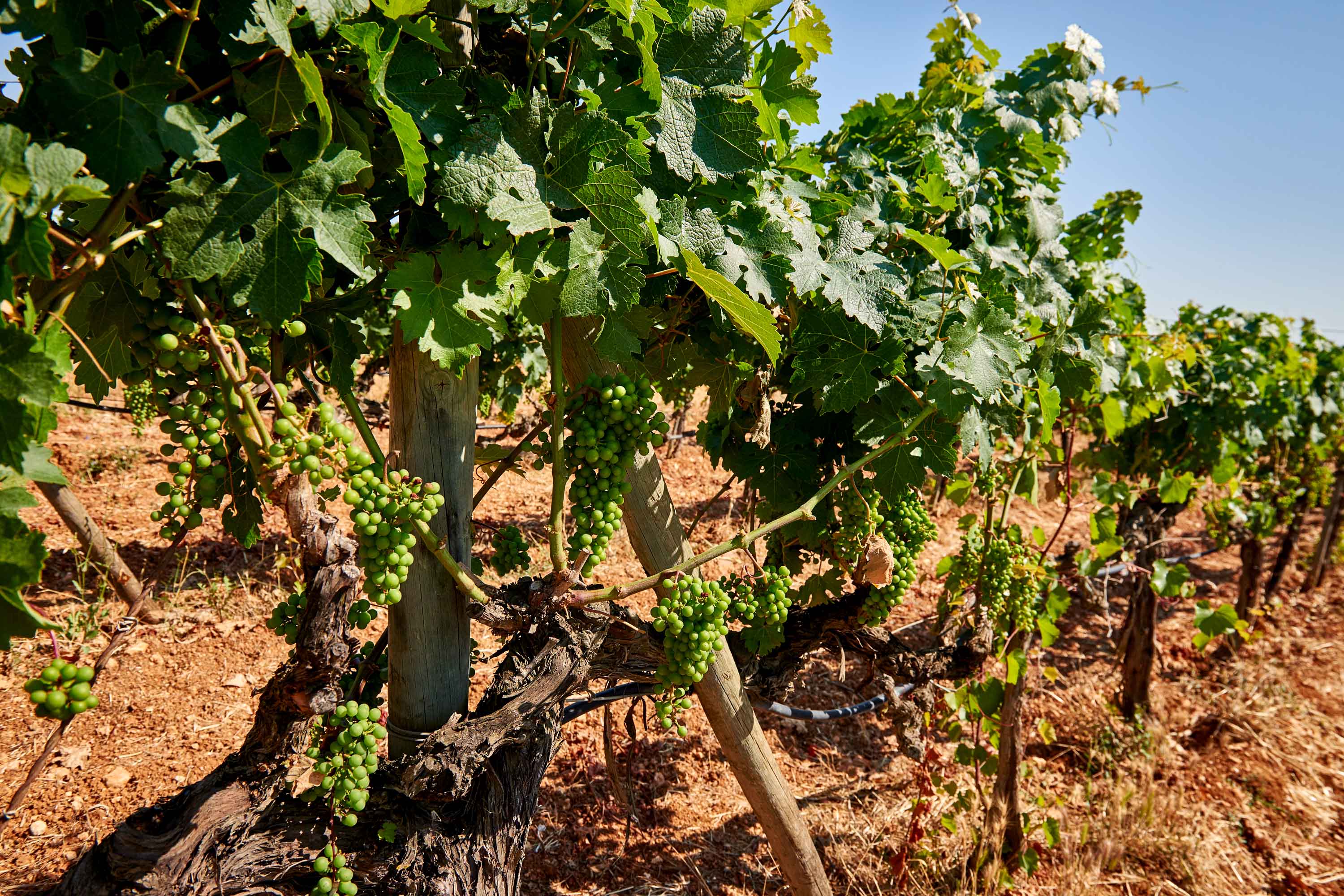
The Petra winery has been characterized since its beginnings by its organic production, a model they pioneered and have turned into a seal of identity that they are still proud of today. "We were the third winery to produce organic wine in Mallorca, although now there are about twenty. My father did it this way because he believes in ecological philosophy", Miquel tells us. The road has not been easy because over time, he adds, "we have realized how complicated it is. It is more expensive and involves a lot of work", but this is his way of understanding wine and it does not seem negotiable.
Over the years, this way of living viticulture has given the Coleto family many anecdotes. As Miquel tells us, in the beginning they planted rose bushes at the edges of the vineyards because if the plants got sick, it was a clear sign that the vineyards were in danger and, in the absence of artificial chemical products, they had to be attentive to act quickly. However, he says today with a smile, "Chardonnay and Syrah got sick before the rose bushes".
The autochthonous varieties are the protagonists of Can Coleto - Monastrell, Fogoneu, Callet, Montenegro - but they coexist with foreign vines that fit very well with the red soil of the Ses Ferritges de Petra area, such as Cabernet Sauvignon and Merlot. From these vines are born their exquisite Negre Virat, Camí de Son Eixut and Blanc de Negres, the latter, the only one exported outside Spain. "It is the one we produce the most because it is most in demand, but it was an experiment," Miquel confesses. The fact is that this particular white wine is produced from black grape varieties. A rara avis technique that consists of separating the skin of the grape and some other secret trick that the family keeps. We respect the silence, we like the halo of mystery.
"Our goal is that Mallorcans buy our wine and value what is done locally".
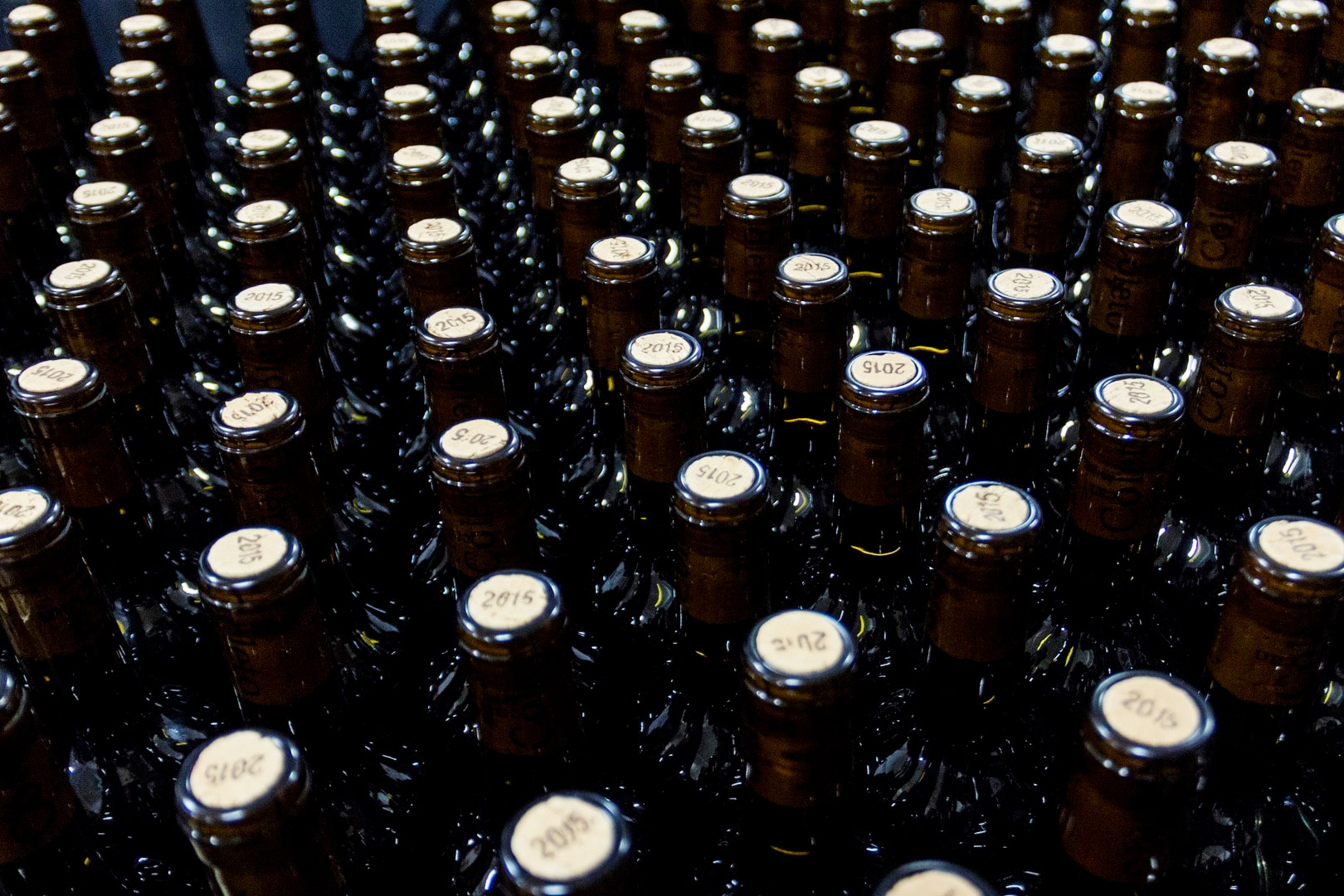
What started as a hobby on a plot of two thousand square meters over the years has been professionalized and Can Coleto has grown exponentially. Now the winery has two and a half hectares of vineyard and produces a thousand liters a year. They are at the maximum production that they can cover in the current facilities, they confess, but it does not seem to keep them awake at night because their objective "is to compete in quality, not quantity". Well, actually the objective is twofold because they also aspire to be a reference in their land, our land: "our objective", Miquel adds, "is that the Majorcan people buy our wine and value what is done locally. You have to see what's inside to be able to compare".
In Can Coleto, proximity, neighborhood, roots... are not concepts that are written on wet paper, they are the basis of a philosophy that is practiced every day: the Mallorcan food chains are their main customers, they buy their bottles from a company in Petra, they buy the corks from another located in Inca and, of course, their neighbors in the village buy directly from the winery. "It is important to favor local and proximity commerce," Miquel concludes. We couldn't agree more. May they continue writing their history for many more years to come.