Tonia Fuster began studying architecture in Barcelona, but after a year she gave it up for industrial design. Specializing in product design at the School of Design of the Balearic Islands, she got involved in a project in which she had to develop a wooden lamp and the process of research and design was transformed into a collection that ended up winning the first prize Art Jove.
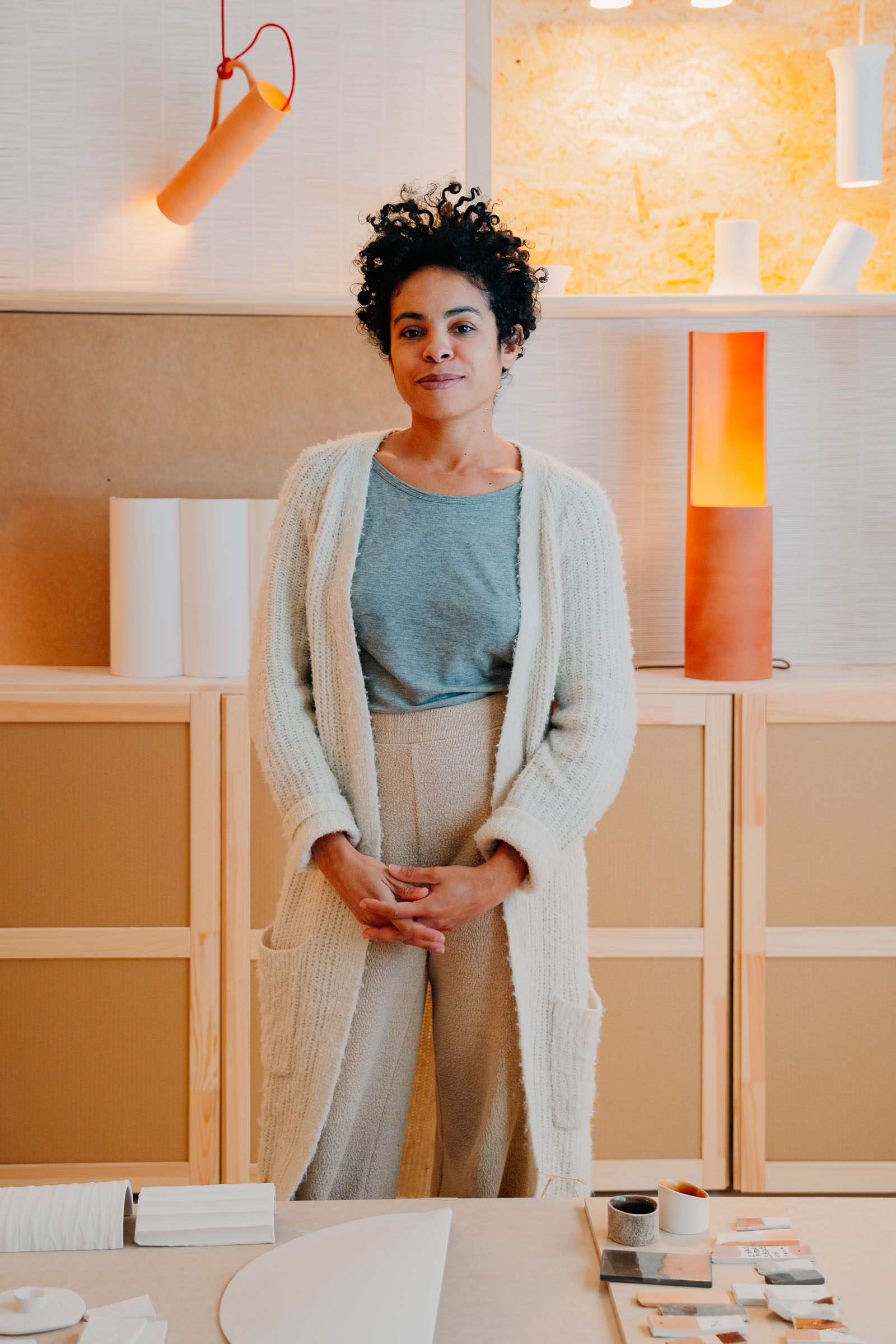
The Mallorcan designer herself tells us, in her new workshop in Palma, about her beginnings. She experimented and designed on her own while working at IKEA until she decided to quit her job. "Through Instagram, other people saw my work and they called me to participate in the exhibition Made in Mallorca, in Es Baluard". Getting involved in this project -which brought together eleven local artists, artisans and creatives in a group show that was also exhibited in London-, Tonia understood that she had to come up with something that would fit the shared purpose -products thought, designed and produced in the Balearic Islands that were committed to sustainability-.
With this idea in mind, she began to design and realized, she says, that "ceramics was the best fit," so she went for it. She designed four lamps and she was spot-on: "I hit the nail on the head. I started producing because there was a demand for it. Since then, she has embraced the world of lighting with creativity and a lot of meaning in her Studio Islas project, with which she creates aesthetically timeless lamps and a design that honors, with deep sensitivity, the essence of the Balearic Islands - the simple, the rural, the genuine side of this area of the Mediterranean.
The countryside, the teles de llengües and the constructive elements of Mallorca inspire this designer who repeats, on more than one occasion during our chat, that she is not a ceramist."I am not a ceramist, I am an industrial designer who likes to work with her hands, and ceramics has been a material that I have discovered along the way and have happened to be good at."
"Ceramics belong to everyone."
It is neither false modesty nor a consequence of the so-called imposter syndrome, a label with which Tonia does not commune because she believes wholeheartedly in the power of "everyone doing what they like". "Ceramics belong to everyone," she says with conviction as she ponders aloud. "Paparkone is an architect and look at what ceramics he makes. Because he is very meticulous, he goes into great detail, he takes it very seriously." She speaks with the contagious enthusiasm of someone who enjoys doing her job."It comes naturally to me and I like to experiment on a small scale, on shapes and models."
With the passage of time and experience, her creative process has evolved, irremediably. "At the beginning, when I started designing, it was a very long process. Searching for information, a lot of drawing, a lot of mock-ups... With time you get to know yourself, you get to know the people and the material, so you just try it out. Ceramics is like that: having an idea and testing it out because we have been experimenting for many years now".
She speaks in the plural because, although she started out alone, Studio Islas is a team project. Mercè is in charge of production along with Tonia, who also assumes the management tasks, and Joan, the assembly of each piece.
"I'm a person who focuses on something and improves it until the result is very good, so I thought it would make sense for me to specialize in just one thing".
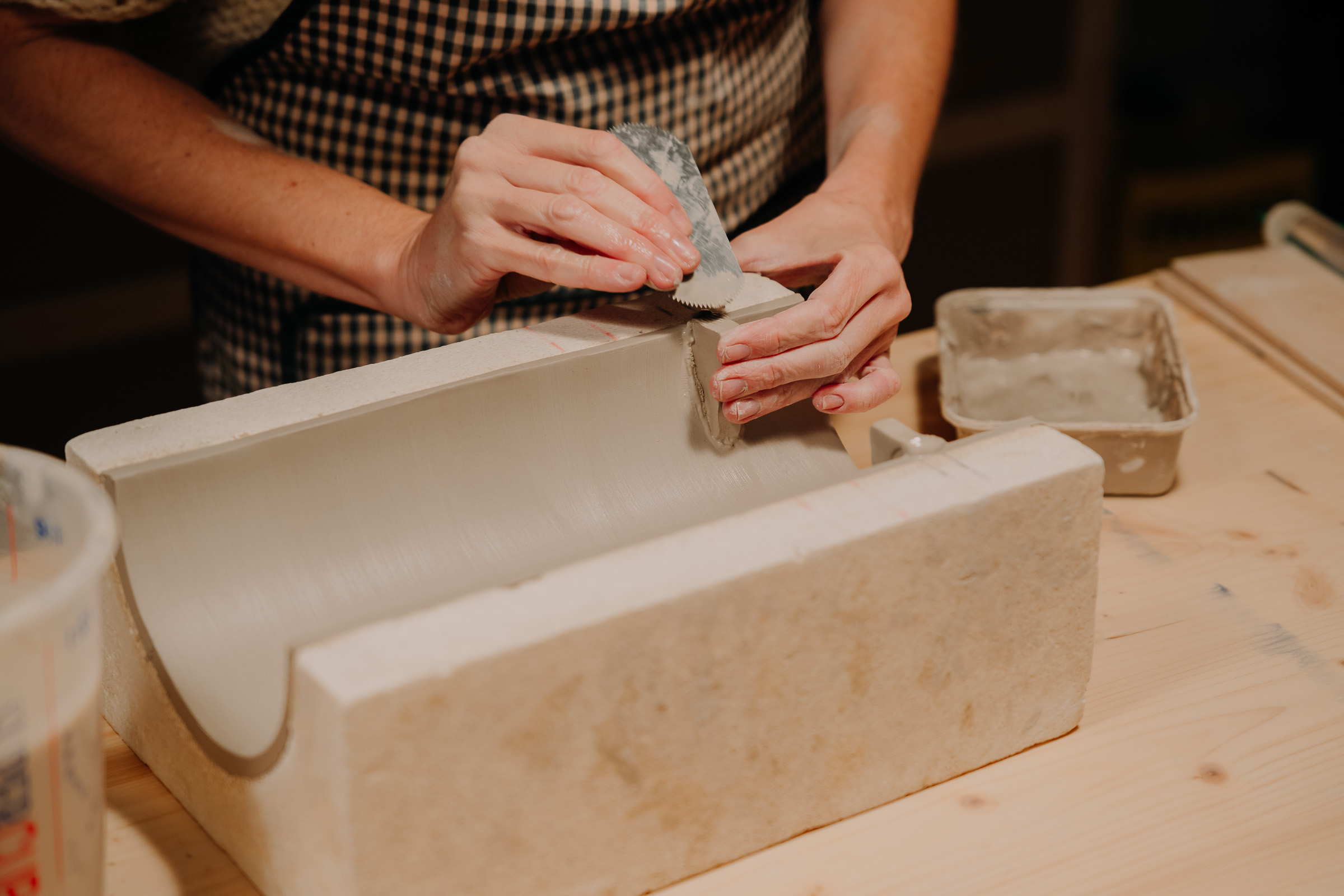
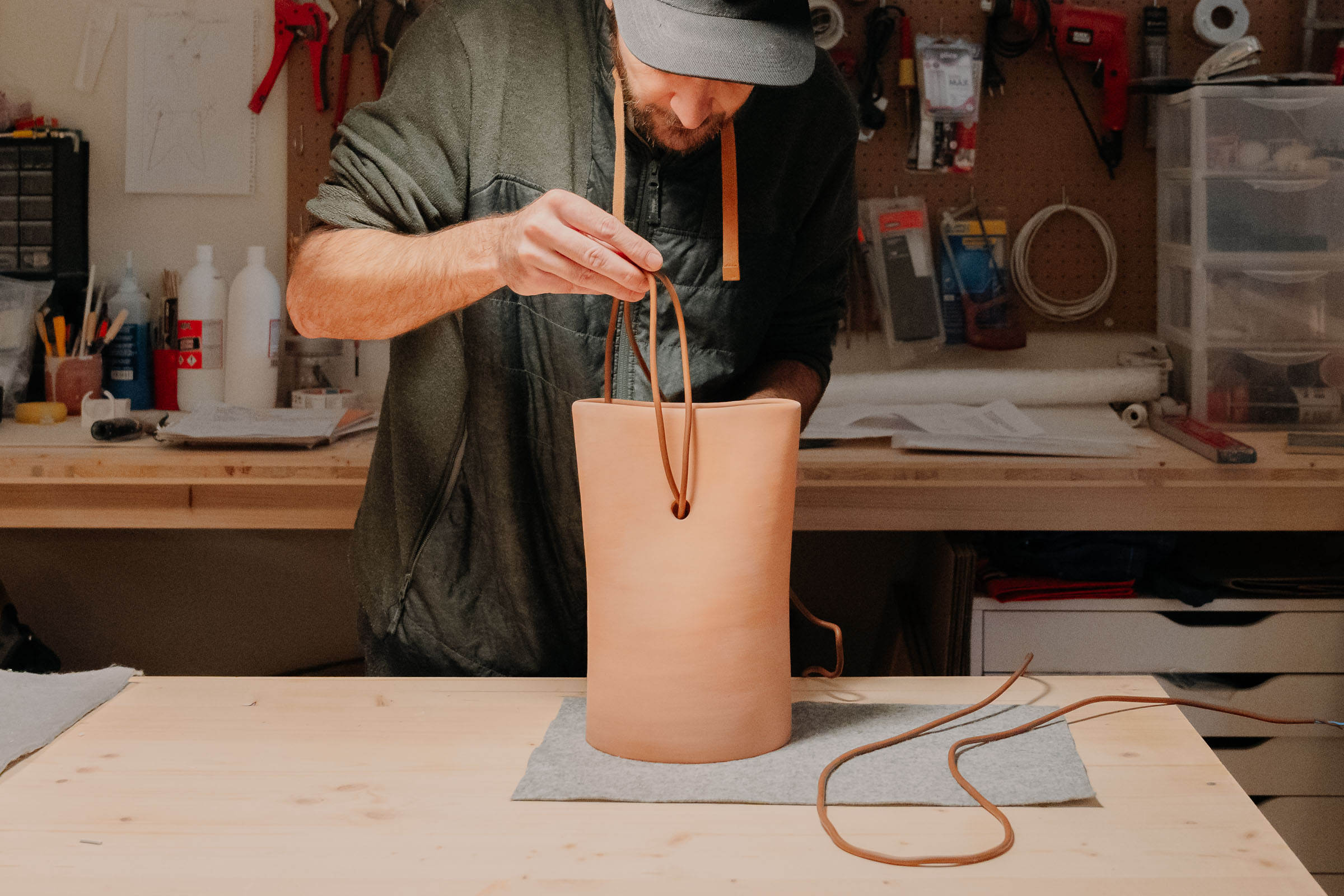
Experimentation is not at odds, far from it, with an arduous and meticulous process of perfection. In fact, behind its organic shapes and apparent aesthetic simplicity, there are many hours of work for someone who defines herself as a monothematic: "I'm a person who focuses on something and improves it until I get it just right, so I thought it would be good for me to specialize in just one thing. In addition, each lamp takes time to make.The process takes at least two weeks between the different phases that follow the design: production, firing in a circular kiln, drying and polishing.
Since its inception, ISLAS' pieces have captivated architects and interior designers, as well as direct clients -foreigners, Spaniards and locals alike-. In fact, when we visited the workshop, the team was immersed in the production of lamps that would end up illuminating a store in California. Part of this success is surely due to their way of understanding and practicing design through a language that seeks to "reduce it to its maximum essence, to fit in with today's spaces, to simplify the idea to the minimum expression.That is the process. Our way of thinking".
The sale is made by email, Instagram or through the website. First, a budget is drawn up and, once accepted, the lamp gets started. For Fuster, this is the valid system because it allows him to get to know the customer and his needs beyond "a button to buy two units.The communication with the client is closer.
At present and for the moment, the clay they use to give life to Studio Islas lamps is Valencian because, explains Tonia, "the clay here has very specific characteristics and can be crunched in a lamp, and perhaps not in a smaller object like a bowl". However, she is open to experimenting with other muds or other shapes. Now, in fact, she is immersed in the creation of a candle holder, which, she admits, has generated her some insecurity. However, "in ceramics, you try and then see if you like it or not.You don't spend thousands of euros testing".
Open to change, the Studio Islas team does not rule out exploring the possibilities of color. Although for now one of its hallmarks is the search for the naturalness of clay -white or terracotta-, Fuster tells us that they are "introducing different textures, finishes and glazes... but it requires a lot of experimentation". Trial, trial, error and, above all, sense.
The future of Studio Islas looks, precisely, like a horizon full of possibilities. Although the idea is to continue with the hybrid format of showroom and workshop, they are already thinking of a small store in a more commercial location, of incorporating staff and, why not, of expanding the range of materials, beyond clay. "Maybe some collaboration with people who make glass, for example."To grow, after all, but without losing its essence.To continue being a company that is inspired and produced on the island through a contemporary and handcrafted design model that pays tribute to the Mediterranean light.