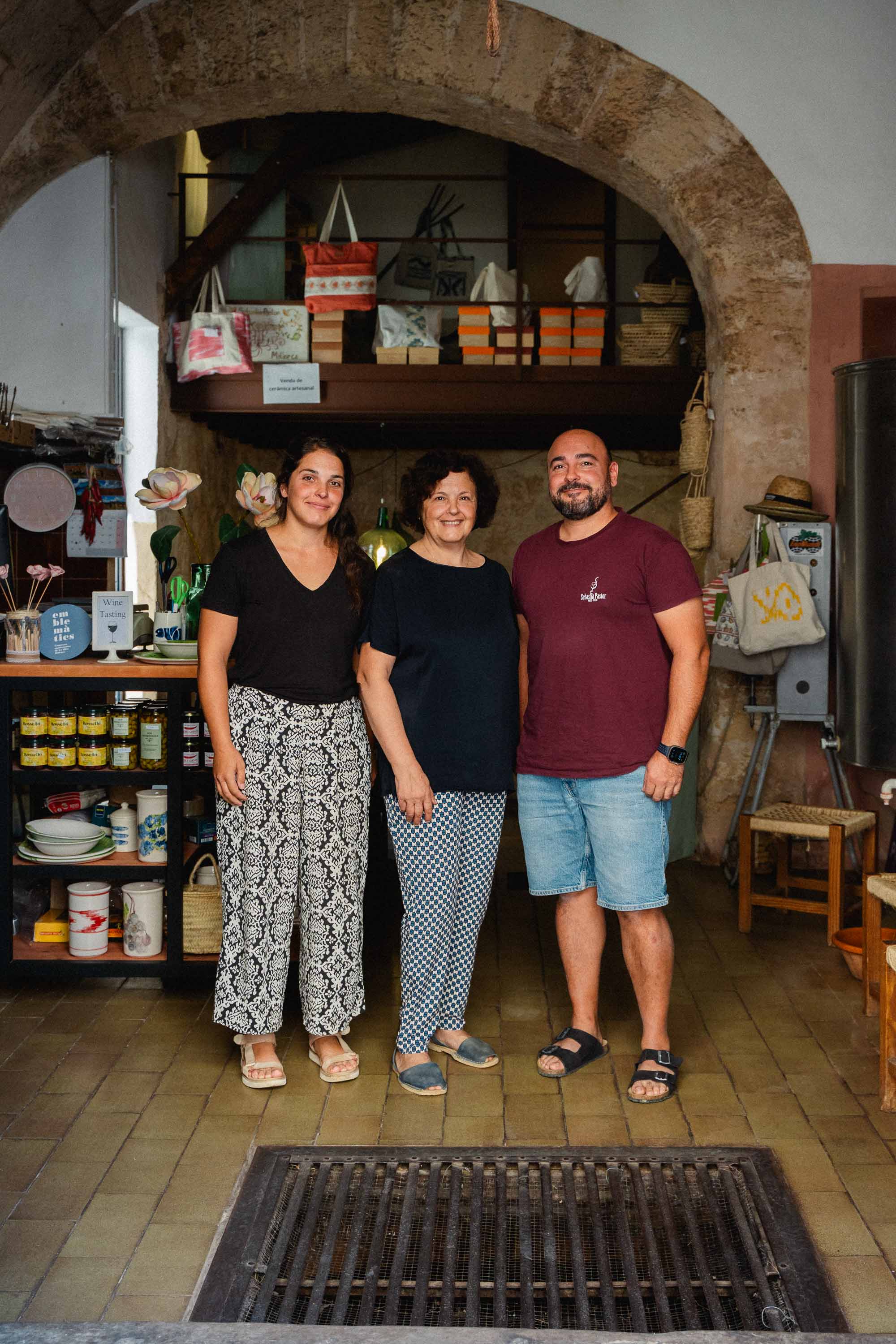
It was 1937 when Sebastià Pastor i Mayol was faced with reality: continuing to make wine from third-party vineyards was no longer an option. Faced with this situation, he decided to start planting his own vines and making wine at home until he opened the doors of a small cellar at 17 Paborde Jaume Street in his hometown of Santa Maria. Almost ninety years later, we meet Maria Antònia and Sebastià in the same place where this adventure began.
The Pastor siblings are the fourth generation to take over the winery with the firm intention of continuing to write this story, but their understanding of the vine draws on their roots: both are involved in the work in the fields, they sell “a la menuda” ( in bulk) their own produce and practice ancestral viticulture which, as Sebastià assures, “It is just about doing what has been done up until now. In our case, it means repeating what we learnt from our ancestors”.
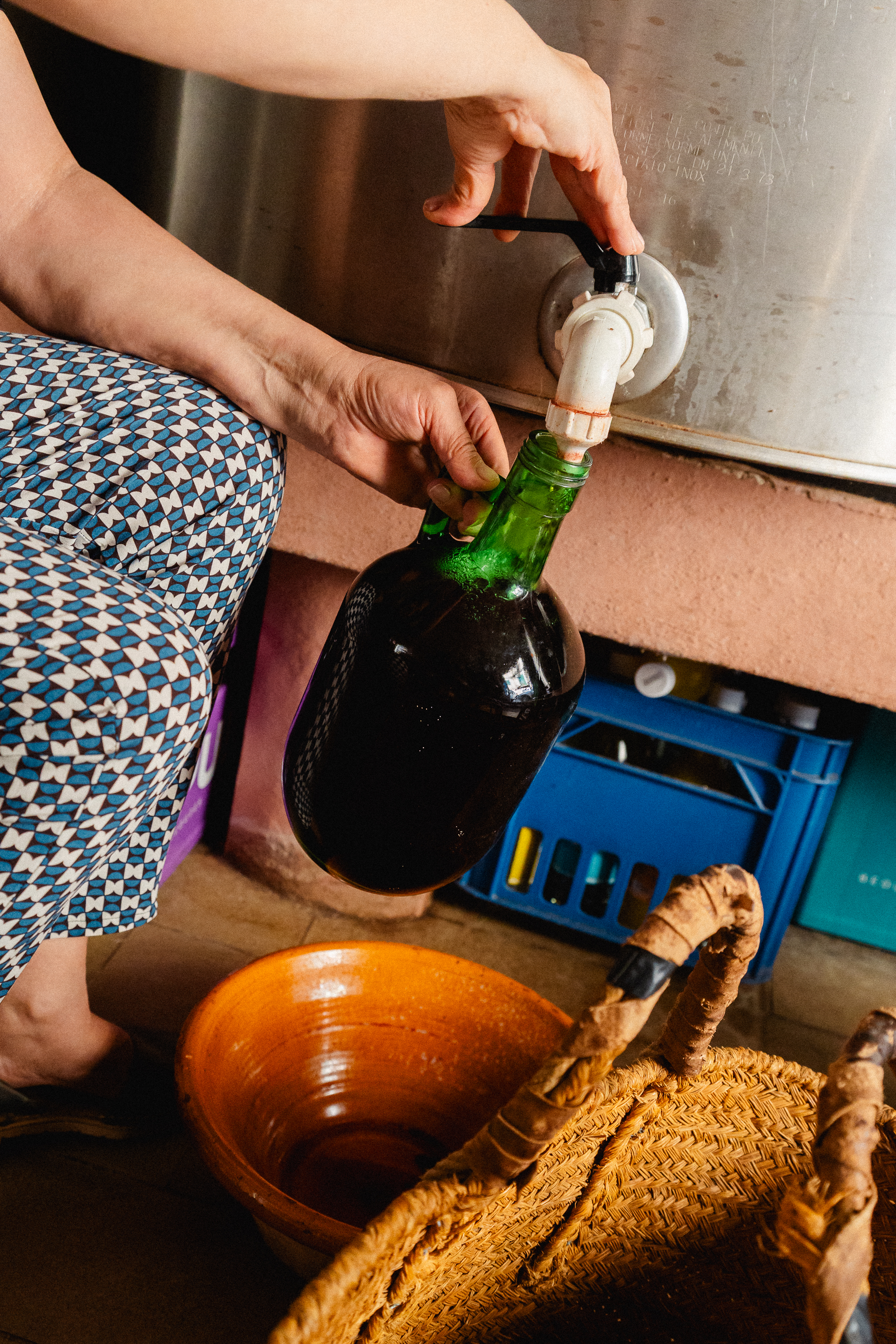
The friendly, relaxed atmosphere is palpable and contagious in this cellar, where villagers come and go with their traditional “barrelet” or wine skins or containers. “To be more sustainable, I always say we need to go back to buying wine “a la menuda” reflects Sebastià, while his mother, Catalina, who is in charge of direct sales, fills the containers and chats with the neighbors. “Bulk wine has been associated with low quality, but that's not the case at all,” she says, aware that this type of sale has practically disappeared on the island in favor of bottled wine, which “can be recycled, but consumes energy.”
«It is just about doing what has been done up until now. In our case, it means repeating what we learnt from our ancestors.»
While they wait for their barrel to return to the old Can Vinagre cellar, the regulars take the opportunity to catch up and browse the products stocked in the small grocery store: locally sourced olives, cheese types, and jams that the Pastors carefully select. “We try to introduce artisanal products from the island that are unique and high-quality and those you can't find everywhere to defend and promote local products,” adds Maria Antònia.
Now that the harvest is over—described as scarce in quantity but very good in quality—from the 20 hectares they manage (some owned by them, others by family and acquaintances), it is time to let the vineyard rest, a respite in which the grasses will grow and form a spontaneous vegetation cover “so that the soil remains structured and microbiology is activated,” which will provide “organic matter to fertilize in the most natural way possible and take advantage of the water that filters through.”
The method is ancient, but more necessary than ever. In Pla de Buc and Torrent Fals, as throughout the Mediterranean, rain is becoming increasingly scarce, so the Pastor family's philosophy is to optimize resources and allow the plants to survive on their own. “This is achieved by planting deeper so that the roots go in search of water in the subsoil,” explains Sebastià, who compares the aging of vines to our own kind: “When we are young, we are eager to do things, and as we grow older, we regulate ourselves and do things, but with more meaning.”
«Yes, in the end, being the fourth generation is a source of pride, but also a responsibility. What we want is for the story to live on.»
After the winter dormancy, the cycle will begin again: sowing, pruning, and harvesting, a process they experience firsthand and carry out with the help of two other young people. "I've always wanted to know why things happen. When I was young and was given the typical answer ‘because it's always been done that way,’ I didn't feel satisfied, so I decided that if I was going to dedicate myself to this, I was going to delve deeper,“ recalls Sebastià, who studied chemistry at the University of the Balearic Islands and oenology at Rovira i Virgili University in Tarragona, an education that has allowed him to set up his own laboratory ”to control, not to change, because what we are looking for is to fine-tune the ideal moment for the harvest, preserve what nature gives us, and improve quality overall."
While Sebastià supervises the evolution of the wine, Maria Antònia, a winegrower, expands the business at fairs and events, aware that new scenarios have opened up in which wine plays a socializing role. "The issue has changed a lot. Before, people went to learn about the product, now it's a way to get together, like a party, and we try to adapt," she says, while celebrating the success of the experiences they organize: tasting and pairing menus, sushi dinners, Mexican food nights, and their Sunset Vineyard Vibes, a summer party that allows them to create a bond with the community around them and which this year has exceeded their expectations.
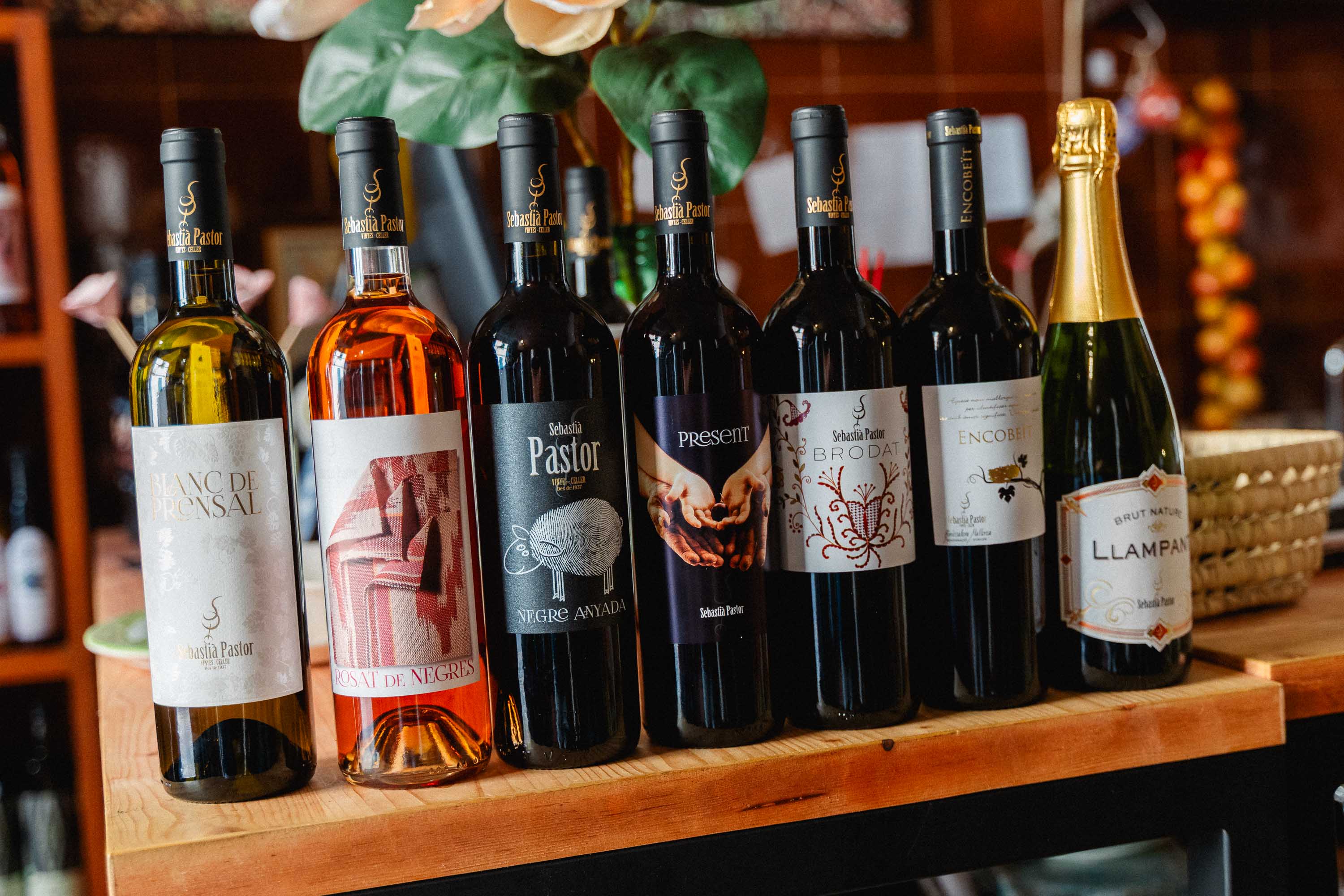
Although no two harvests are alike, Sebastià Pastor's average annual production is 50,000 liters, a figure that translates into seven different wines, from which we ask them to select three. Maria Antònia has no hesitation: Prensal Blanc is fresh and elegant, perfect for a sushi dinner. Sebastià opts for Encobeït (to shelter, in Catalan), a very special signature wine in the family since it has been worked on by four generations. “It's a black cloak from a sixty-year-old vineyard, so I would pair it with a dish of llom amb col, always playing to the home crowd.” Finally, both agree that Llampant, their sparkling wine made from 80% Prensal Blanc and 20% Chardonnay, is ideal “to enjoy with suckling pig.”
At a time when wine consumption is more fashionable than ever and wineries are proliferating, it is surprising that the generational change is being lost. However, the Pastors, with determination, are taking over small local estates with the aim of continuing their legacy, knowing that their vision of success would be “to keep the business as it has always been and continue with the traditions,” Maria Antònia reflects aloud. Sebastià looks at her, with the complicity of a brother, and nods his head. “Yes, in the end, being the fourth generation is a source of pride, but also a responsibility. What we want is for the story to live on.”