 Gastronomy
Gastronomy
Read moreYumee. Where Cuisines Meet
Mark as favorite
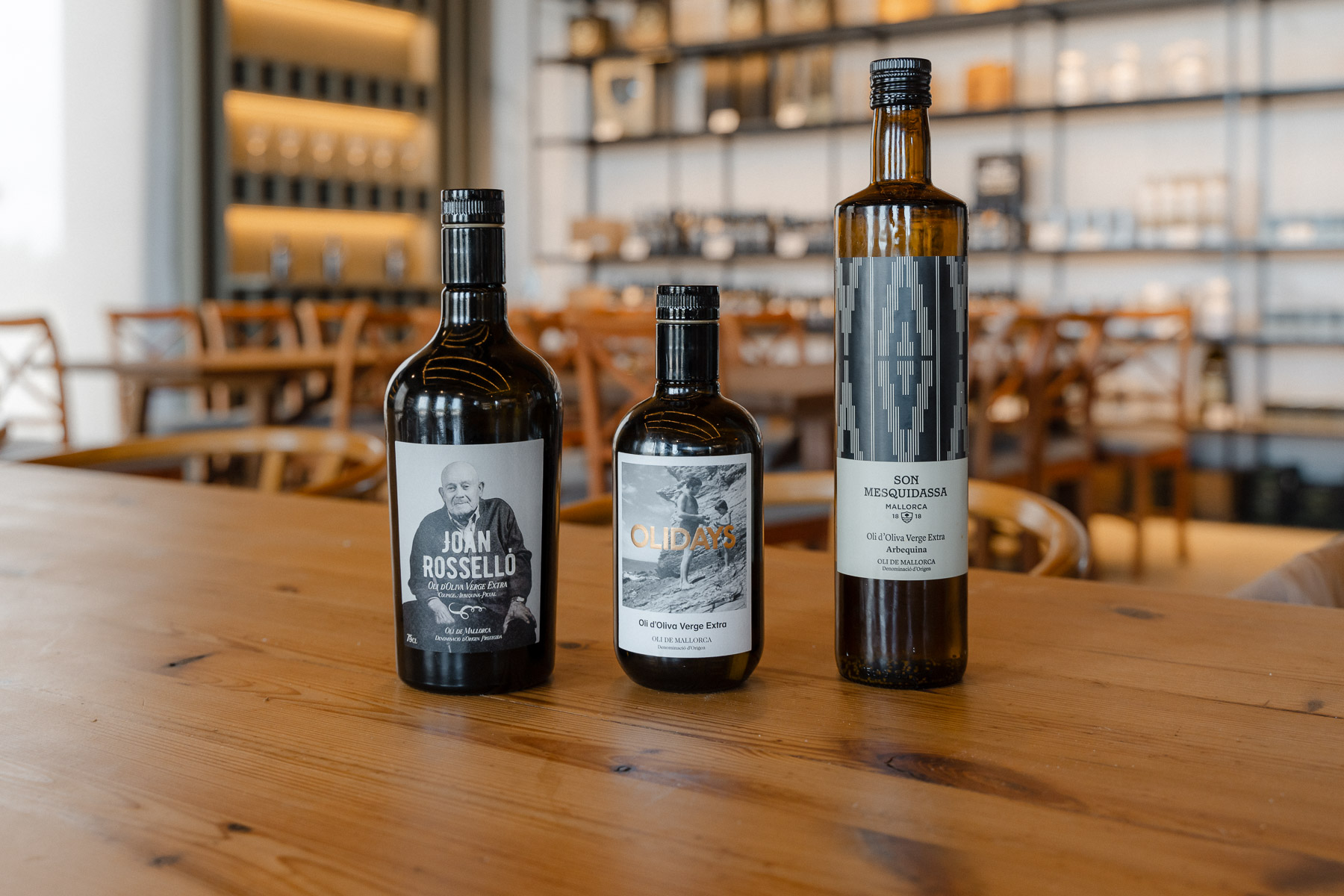
Through their fragrance and flavor, Son Mesquidassa oils are a gift for the senses - and an ideal present for a loved one thanks to their strong commitment to design.


Author: Aina Coll
Photographer: Jaume Oliver
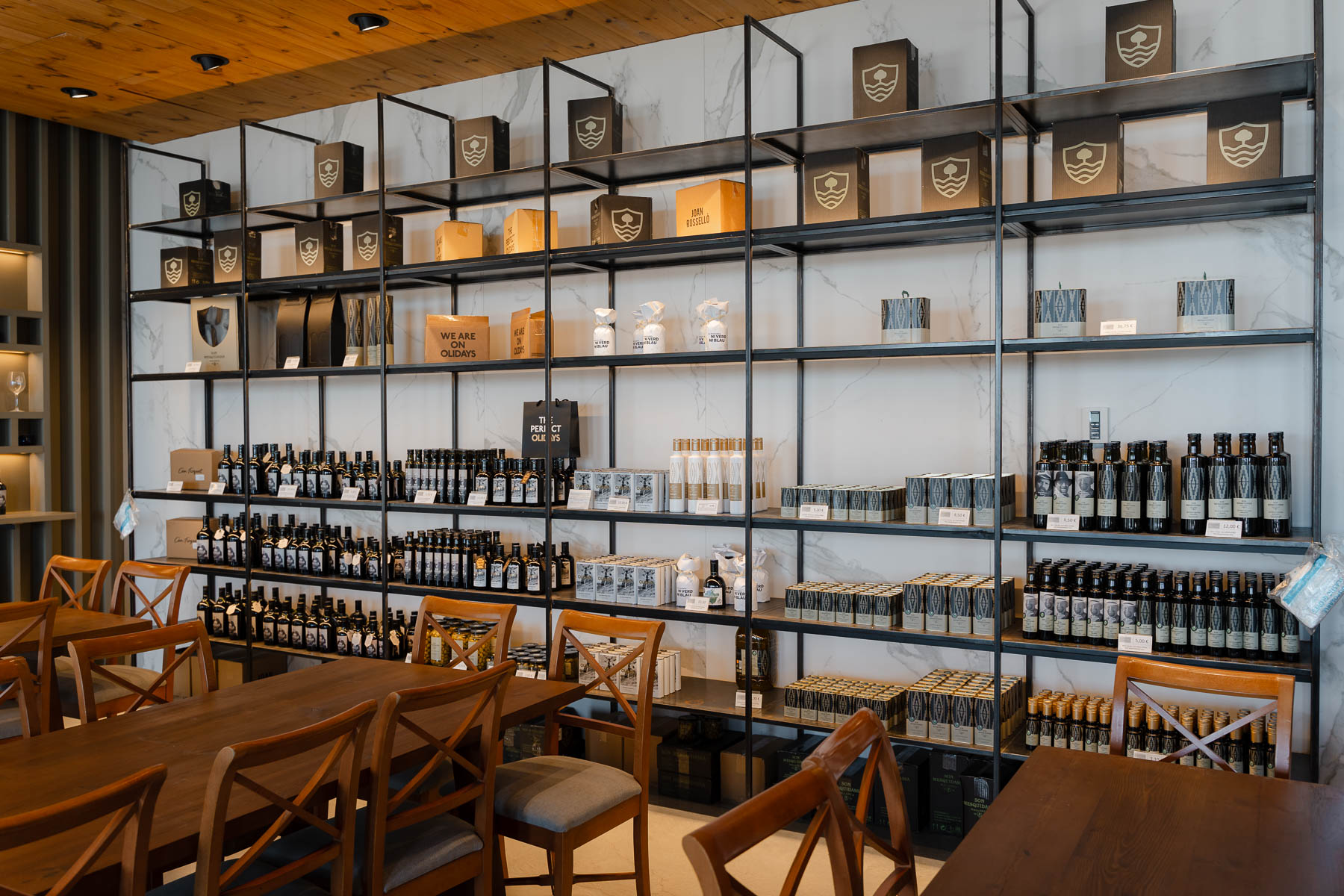
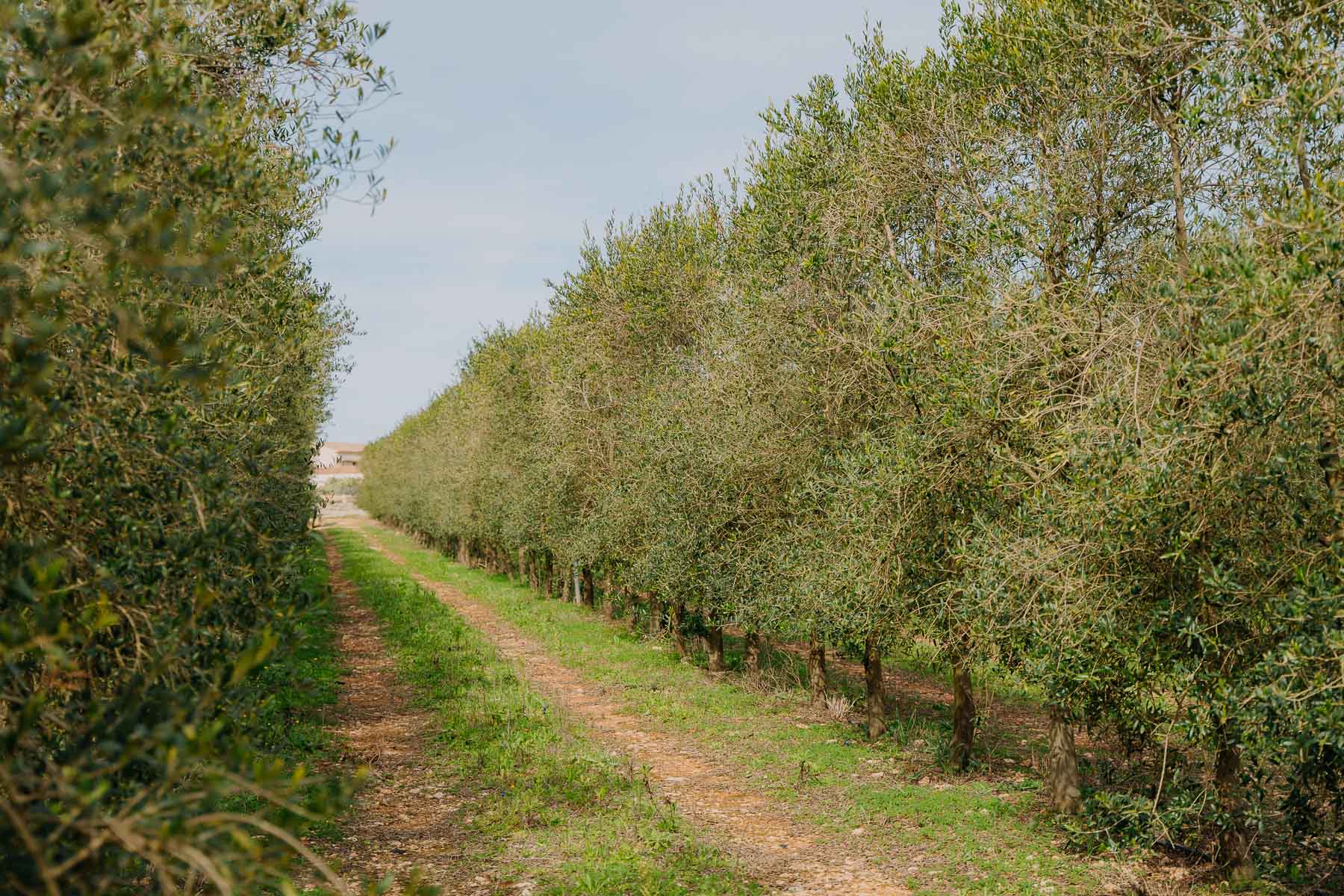
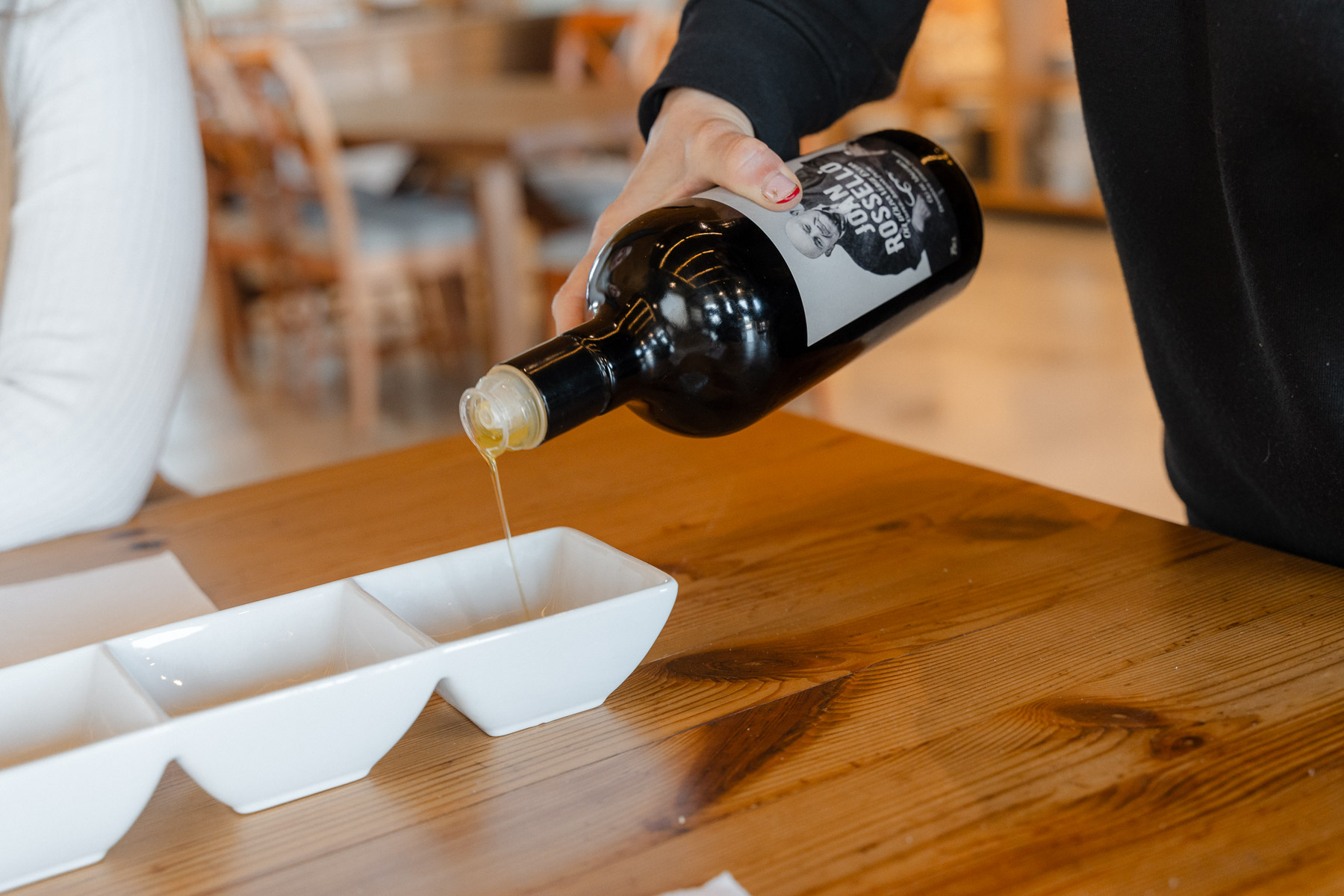
At the foot of the Puig de Sant Salvador there is a field of almost 100 hectares full of olive trees. 150,000, no more and no less, among which the native Arbequina variety predominates. It is Son Mesquidassa, the project that the Rosselló Castell family inaugurated in 2019 in a bet that brings together agriculture, sustainability and technology, and pays tribute to an idiosyncratic product of the Balearic Islands such as olive oil.
One morning in March we go to Felanitx eager to get to know this project (yes, we are becoming experts in Made in Mallorca olive oil -and we love it-). As soon as we arrive at the estate, we are impressed by its dimensions, a vast field that seems to have no end, filled with rows of olive trees that draw a beautiful postcard, leaving us speechless as we walk along the path that leads us to the gates of the building. A large stone house that blends into the natural landscape awaits in the background amid absolute calm.
Once inside the building, we are welcomed by the person who will be our guide on this visit arranged to get to know Son Mesquidassa and taste its oils. The first floor of the building is occupied by a large dining room where breakfast is served and tastings are held, and where wood is the only decorative element, with the permission of the local oils on the shelves.
After the introductions, an explanatory video previews what we will then discover in person: how Mediterranean agriculture is honored here. Once the projection is over, we return to the outside, where we are told that the olive harvest, which takes place punctually in October and November, is carried out with machines to speed up the process and ensure that only two hours pass from harvesting to milling.This speed has a justification: it is the only way to preserve all the aromatic properties and quality of the extra virgin olive oil.
Back at the facilities -which have a contemporary design- they detail, phase by phase, the process that follows the harvest: once the olives are gathered, they are classified -according to variety and degree of ripeness- and then, through a very long conveyor belt that is dyed green, they arrive at the place where they are washed and weighed, and then the milling of the fruit begins.
During crushing, we are told, the liquid is separated from the mass with a cold shake at 20 ºC and the paste, an enormous green mass that resembles olive paste, is separated from the oil, which is filtered to eliminate any leftovers.
The process, we understand, is perfectly designed and has always maintained sustainability as a priority: the olive pit acquires a second life, as it is used as biofuel for self-consumption that also generates hot water and heating in the facilities. The olive waste then returns to the soil to nourish it and, as an ecological herbicide, makes it possible to dispense with chemical products.
After showing us the machines and understanding the process, we visit the warehouse, full of stainless steel tanks - we counted up to sixteen - that remain at between 18 ºC and 20 ºC. Meanwhile, of course, the work continues in the field, because after the harvest, it is time for pruning, which is done manually so that when the harvest arrives again, the harvesting machine does not damage the branches of the trees.
In between so much technology, we also have time to delve into the history of Son Mesquidassa and ask about its history. Three generations of the family have been involved, to date, in the production of this oil that achieves the perfect balance between modern agriculture, technology and tradition. The driving force was Joan Rosselló, the promoter of Conserves Rosselló; he was later followed by his son, Tòfol, and now it is Malén, Xisca and Joan who are the captains of a project that began to take shape in 2007 and materialized in 2013 with the planting of the olive trees.
Still surprised by the magnitude and vanguard of Son Mesquidassa, we return to the dining room to finally taste three of their oils. We start with the classic Son Mesquidassa, made only with Arbequina olives, which gives off a fruity aroma reminiscent of apple on the nose and hazelnut on the palate. Definitely, this oil tastes like everything we like from Mallorca.
Now comes the turn of Olidays, quite similar to the previous one in terms of flavor, but with a more intense aroma. The key is, we are told, that the olives were picked in the first days of harvest, which increases both its quality and its aroma. We love the oil, but we cannot overlook the design of its label, which evokes a few longed-for days of vacation, rest and beach that, at the beginning of March, we are already longing for.
Finally, we taste Joan Rosselló, an oil that pays homage to the founder of Conservas Rosselló, the seed of Son Mesquidassa.
This oil is seventy-five percent arbequina and twenty-five percent picual, and is characterized by an even more intense texture and flavor. We are already projecting ourselves by serving it on a slice of artisan bread and samphire. Who needs more?
After the tasting, and before returning to the city, we enjoy a stroll through the countryside. Surrounded by olive trees we come to a conclusion: through their fragrance and flavor, Son Mesquidassa oils are a gift for the senses -and an ideal gift for a loved one thanks to their firm commitment to design-, but, in addition, their vision and know-how are a respectful and heartfelt way of paying homage to our countryside. An essential oil mill that, balancing technology and tradition, is worth discovering.
Suggested options