Georges Duhamel used to say that the Mediterranean ends where the olive tree stops growing, a shrub that rooted naturally in the lands from the southern Caucasus to the Syrian coast. An evergreen plant that the Phoenicians brought to the peninsula in 1050 BC. Since then it has rained a lot, and the drops fallen from so many downpours have made the olive tree proliferate in Spain as a symbol of immortality, since its presence in our landscape has been as long-lasting as its age. The olive tree not only attracts glances for its beauty; it also crowds people around its trunk because the olive, its fruit, is a highly coveted product. But the olive treasures another extremely rich good that is the basis of our diet, the liquid that Spain distributes to the rest of the planet and that makes it one of the largest exporters of olive oil in the world. In Oli de Santanyí they know of the privileged location that Mallorca occupies in the Mediterranean, an island full of olive trees in almost all its geography and with an ideal climate for the production of oil. "The land here is of enormous importance. In addition, the wind means there are no pests and we are very close to the coast. The microclimate is perfect.
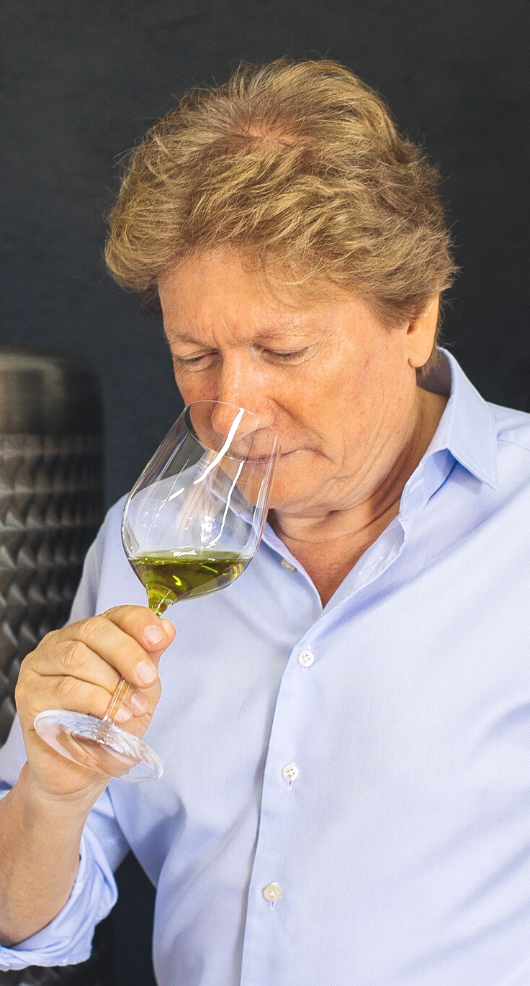
Dr. Dirk Müller-Busch welcomes us at the Son Pati de Llevant estate, a hidden place near the Mondragó Natural Park, among the winding paths that run through this part of the east coast licked by dreamlike waters. The house where Dirk lives for six months of the year - he has had the property for two decades - has a traffic circle in front where we parked the car. As soon as he saw us, he left us some wellies because the field, after a rainy morning, is bathed in dew. "In this area we are far away from any kind of pollution, and that's a big advantage if you want to set up a project like this." Dirk is the director of Oli de Santanyí, an initiative that consists of an olive grove with six hundred specimens from which they extract a limited edition extra virgin olive oil. We walk through the countryside while Dirk, proud of his accomplishments, enlightens us about the land on which his olive trees stand.
"This land is two and a half hectares. We don't use pesticides or insecticides. The fertilizer we apply is natural and during some months we cover the soil with flowers and plants". This is one of the hallmarks of Oli de Santanyí: sustainability. Wrapped around their trunks, some trees still have the remains of sheep's wool, the method used to combat insects when the olive trees are still young. Hooked to the branches of a carob tree, some boxes serve as a roost for bats to sleep in. The nocturnal hunters that clean the air of possible threats to the field. Compared to conventional agricultural procedures, these techniques involve much more laborious care. But a job well done yields results that, year after year, propel this project to the top of a sybaritic market where industrial things have no place.
"I like to treat the production of oil as if it were that of a quality wine".
Oli de Santanyí's agriculture, at the antipodes of herbicides and fertilizers, delves into the furrows of the earth to believe in natural cycles. We walk through the field, the humidity makes our boots shine and we are about to step on a mushroom; a sign of life that indicates that this soil is mined of nutrients. "This all started in 2010 with another partner, but for the last year it's been just me running the business. We dug six hundred holes to which we added some manure and waited for the first harvest." The reason that moved Dirk to articulate such a large-scale project, with ecological underpinnings, is inherent to his principles. When asked about his interests, he shows half a smile and confesses to being a lover of good wine and high quality food. That is why the green gold contained in his olives is aimed, above all, at customers with a gourmet taste. His predilection for oil is like that of a youthful love, it goes back a long way. "Before starting Oli de Santanyí, I traveled to many places to see how oil is produced. I wanted to know all the steps and I was all over the world: in South Africa, Uruguay, Portugal, the peninsula... Also in Mallorca. Ten or fifteen years ago, the productions I visited were of very low quality".
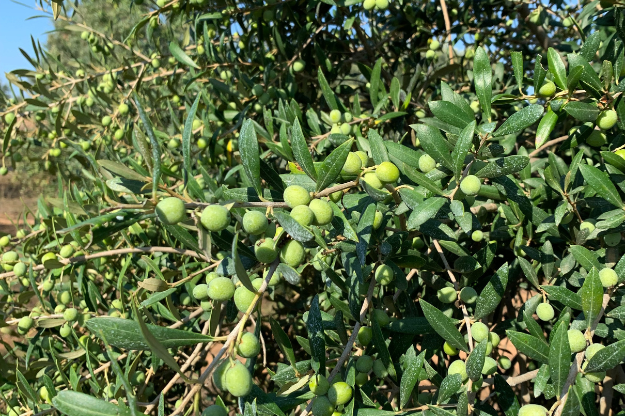
The disappointment Dirk must have felt as he traveled the globe was the origin of a light bulb going off in his head. A light bulb, although an energy-saving one. Environmentalism is another of his hobbies, and he decided to implement the practices of this doctrine in the agriculture of his project. To materialize his fantasies, he had the invaluable help of two engineers - the Majorcan Miguel Capllonch and the Portuguese Joao Gomes - and an oil expert who works in Tuscany: Adriano März. The union of their knowledge led to the planting of olive trees whose fruit has a strong local component: empeltre, arbequina and picual, the three varieties allowed by the Regulatory Council of the DO Oli de Mallorca. "I like to treat the elaboration of the oil as if it were that of a quality wine. What we do is a coupage, a blend. Each olive variety has its own characteristics". If the arbequina gives stability to every year's production, the empeltre gives the oil a woody flavor, while the picual - the one Dirk likes best, we suspect - gives it notes of bitterness and spicy traces.
"The olives we select from our harvest are the best, and we keep them at a very low temperature."
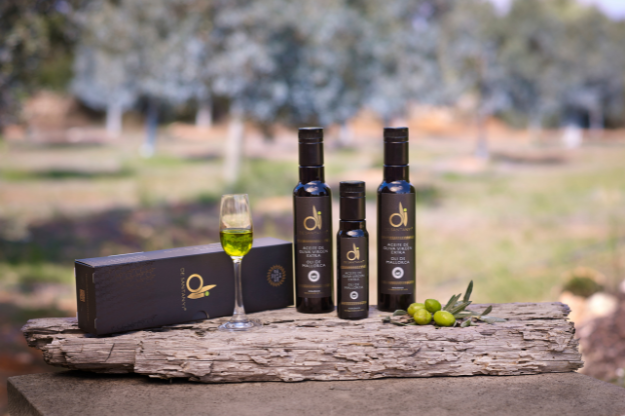
At the end of each year, they combine the three types of olives and obtain a total of no more than a thousand liters of oil. A modest run that depends on a very early harvest that takes place at the end of September. "We soon understood that to get an excellent product we must pick the olives when they are green. This way we won't get as much quantity, but the quality will always be far superior." Oli de Santanyí produced its first oil in 2016. And although the color of their product is close to a greenish tone, the gold of the international awards was not long in coming. The laurels were girded in Cordoba, New York and Los Angeles. A warm welcome that has to do with the cutting-edge technology of their oil mill, designed ad hoc for a pioneering project in antioxidant production. Dirk opens the door to the place where the modern machinery of Oli de Santanyí operates its miracle, located next to the field. "We need fifteen kilos of olives for one liter of oil. The olives we select from our harvest are the best, and we keep them at a very low temperature." When he says very low, Dirk means twenty degrees Celsius. These conditions will reduce the liters of oil to be extracted, but will favor its quality. The same applies to the double filtering process: by eliminating impurities, liquid is lost, but fineness is gained.
The freshness required by the olives once they are harvested by hand is achieved by means of a refrigerated truck, which keeps them at the right temperature for a couple of hours and transports them to the oil mill. The whole process is free of oxidation and fermentation, and crystallizes in sales that take three to four months. His transactions are carried out through his website all over the world: Switzerland, United States, England... Although the product can also be bought in the stores of Flor de Sal, Sa Vinya and the Selecta Izquierdo stall in the Mercat de Santa Catalina. Dirk assures that ninety percent of the extra virgin oil sold in supermarkets is not really extra virgin. Oli de Santanyí can boast that it is, and that it is certified as an organic product by the CBPAE. Next to nothing.