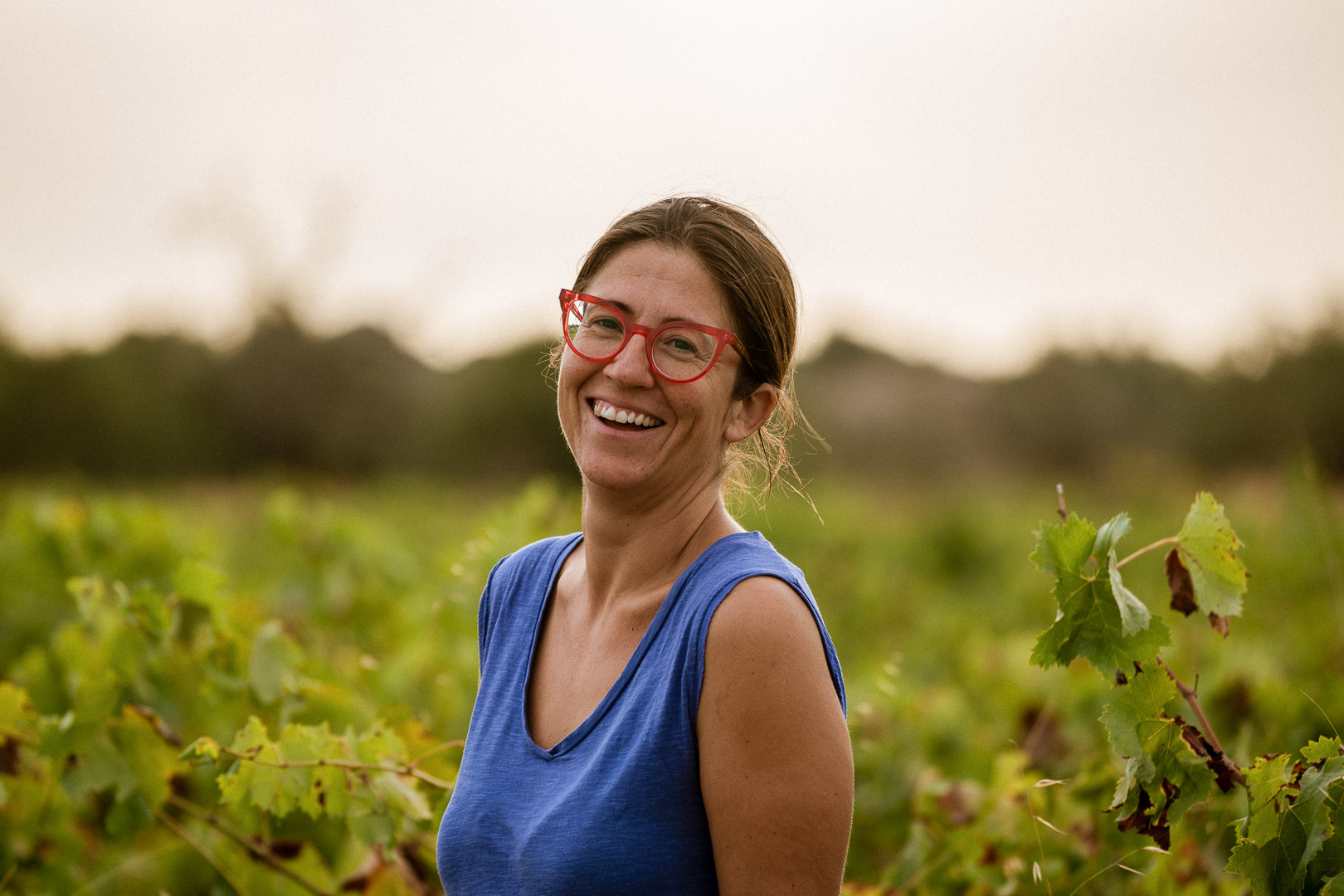
Bàrbara Mesquida expresses herself with contagious enthusiasm. She studied Catalan philology (a desire she had longed for since she was young and which, she says, her mother encouraged her to fulfill) and later trained in oenology. With impetus and determination -which overflow from her throat when she speaks- she settled in Camí de Sant Joan with a new project in mind. 'I only had sòtil and trispol' (roof and floor), she recalls, 'but in three and a half months I was already installed' in Porreres. Although this looked like the West since it was an abandoned space where everything was still to be done, I decided that this would be my way of living'. All of it being a true declaration of intentions.
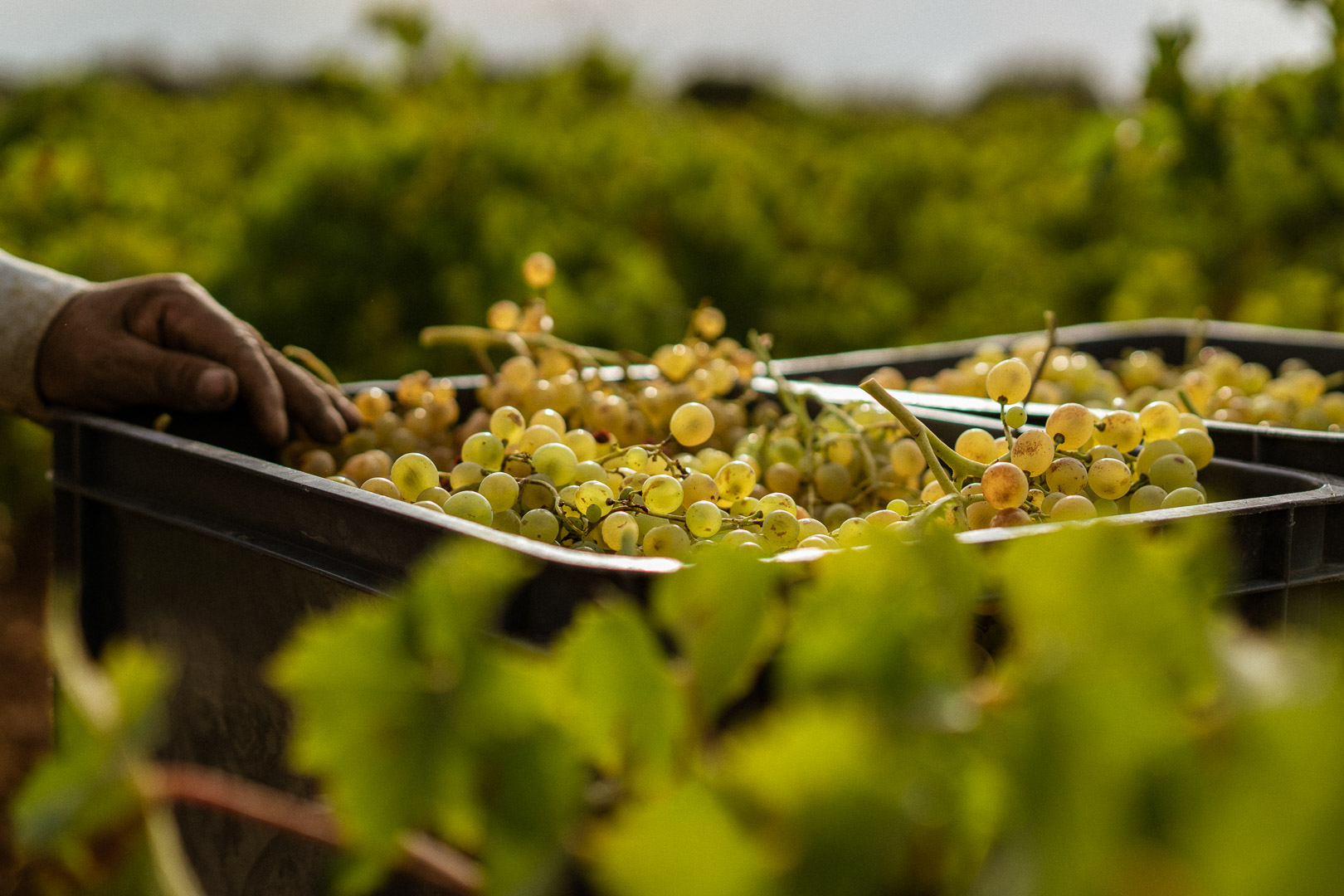
With the strength transmitted by those who know they are where they want to be, Barbara chats, relaxed, close and cheerful, while she shows us her circular garden, which condenses her vision of life: one that promotes self-consumption and a 'holistic look that feeds from biodynamic agriculture'. Between the orchard and twenty hectares of vineyards -located between Porreres and Felanitx-, Mesquida Mora is already a solid project and open to permanent self-revision in order not to deviate from its purpose.
'The projects must feed from the public and the private. I was the one who came up with the idea and it is a way of creating a community, without pretensions, and of giving life to the space'.
The facts prove it. Between 2010 and 2015 she decided to 'abandon a row system designed for mechanization' and commit to the landscape and agronomy with the goblet vineyard system, which allows her to create a more protected structure that also consumes less water. It is the principle of the Mediterranean: optimizing water', she states emphatically.
In fact, at a time when the scarcity of rain is worrying us all, Barbara reflects aloud: 'I do not believe in irrigation viticulture. The situation is becoming more and more extreme and planting vines dependent on that water is suicidal because it is scarce. I prefer to do little, but extremely good!'
Her way of understanding the countryside and adapting to it is as clear as her narrative, and it is none other than 'to leave the next generation healthier lands than the ones I found. No pesticides or herbicides'. She leads by example and practices preventive rather than curative work, in which the land takes care of itself and nature dictates the times, despite the fact that she has renounced the biodynamic agriculture certification 'to devote resources to planting trees instead of filling out paperwork'.
Mesquida Mora's main activity is the vineyard, but it is complemented with guided tours and activities that the winery organizes in the Son Porquer mill, a meeting space open to culture. Starting this summer, Bárbara also plans to install a food truck and open the cellar. To create a place to go, taste some wines, try some cheese and enjoy the sunset. Or as she defines it, 'a relaxed and simple approach' to wine culture.
Determined and somewhat impatient -as her daughter often reminds her-, her head never stops generating ideas, such as the collaboration with the Porreres Town Council and APAEMA (Association of Producers and Producers of Organic Agriculture of Mallorca), which promotes activities for children, the elderly and people at risk of social exclusion. The projects must drink from the public and the private. I was the one who had the idea and it is a way to make community, without pretensions, and to give life to the space'.
'As a life project, I have a great time. Doing something you love is a privilege'.
And this is not the end of the projects for someone who thinks about, someday, producing her own jam or making oil. A return to that Arcadia that for Barbara 'makes sense' despite being a 'romantic' idea. Whatever comes, the point is to enjoy it, and she does it conscientiously: 'As a life project, I have a great time. Doing something you love is a privilege'.
After a long and very interesting conversation in the vineyards, we went into the winery, that floor and that roof that welcomed Barbara twelve years ago. A space that preserves the cowshed and adapts to the lunar calendar to mark the rhythm of the harvest. Here begins our tasting, an approach to Mesquida Mora wines from the hand of its producer. A luxury.
Sincronía white represents the youngest vines of the Porrerenc cellar in a perfect blend of chardonnay, premsal, giró and parellada, which impregnate the palate with the freshness of the Mediterranean thanks to a soft pressing that respects the aromas of the grape and has become the best seller of the house today. Its label? It has just undergone a rebranding and an image as Mediterranean as that of a boat sailing is so appropriate.
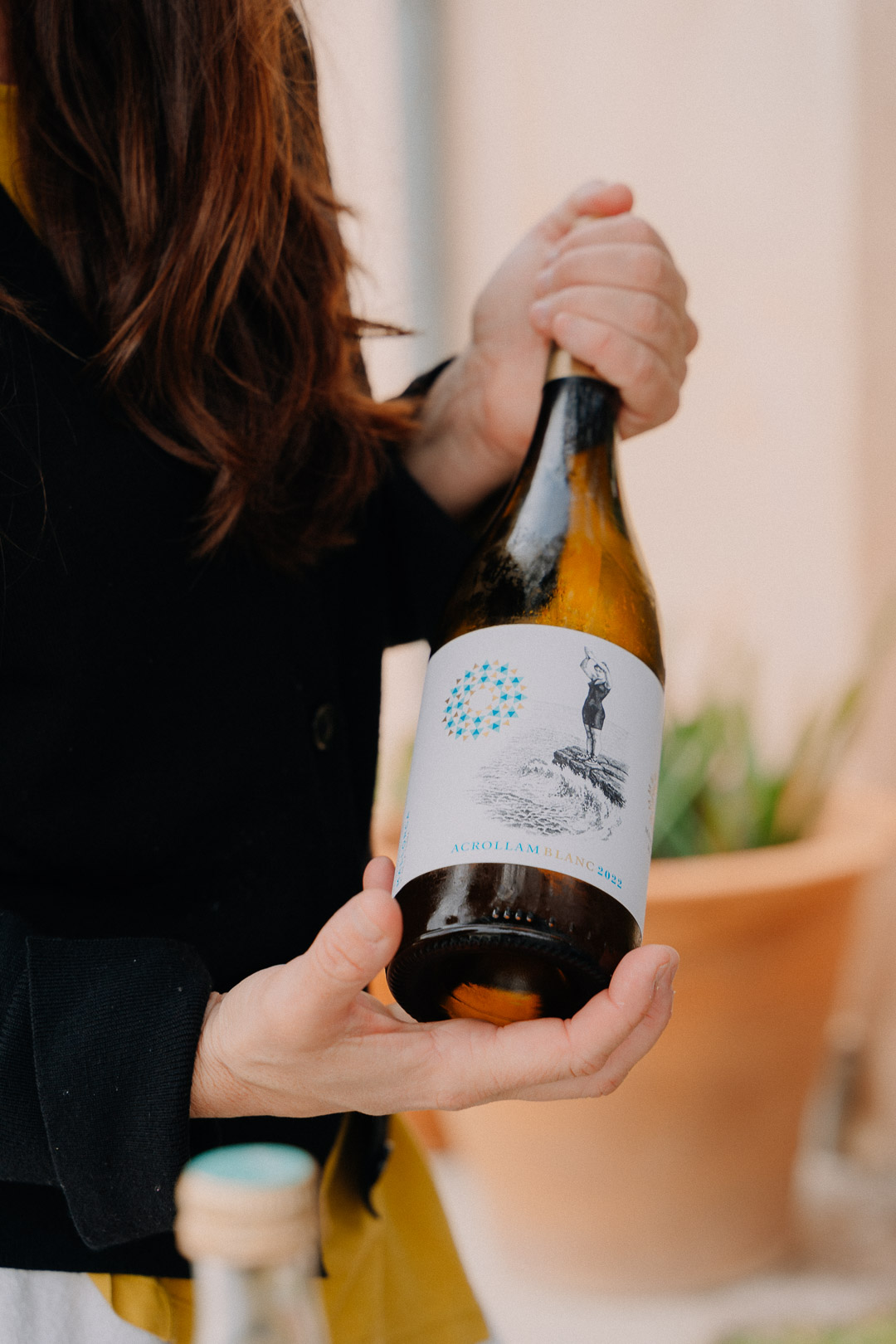
Acrollam -Mallorca read backwards- tastes of fresh fruit, perhaps a little saline, with 50% premsal and 50% gyro. It was quite a challenge for the winery after the hot summer of 2022, Barbara tells us, who comes and goes and offers us invaluable time to enjoy each glass in calm.
Trispol and Sòtil pay homage to Bàrbara's beginnings, because, as she explains, 'when I had to reinvent myself, I was very clear that the idea was to make two very different wines: the earthy part and a more subtle one. This is what Trispol and Sòtil are like'. The first, whose label is a nod to the hydraulic tiles of her grandparents' house where she started walking, is a wine with a lot of structure, almost earthy, that tastes of red fruit. The second, Sòtil, is much lighter, delicate and floral.
Biodynamic, enjoyable and with a story to tell -Bàrbara's training is evident in the narrative written in the notes of her wines-, anyone can enjoy a Mesquida Mora in Germany, Norway, Sweden, Finland, the United States or Japan. Also in Mallorca, of course. We, for the moment, already visualize ourselves this summer, sitting in the shade of a vine, admiring the sunset and toasting to the women who, with a floor, a roof and a land, decided to create their own way of living.