Sometimes chance, other times a coincidence or a seed of curiosity that is nurtured and actually grows can all end up transforming our lives. Something like that happened to Martí Mascaró when his former boss started talking to him about his beehives. Dazzled by his enthusiasm, one day, Martí asked him to show them to him... and the magic happened.
What began thirty years ago as a weekend hobby turned into a new and unexpected working life. 'I would never have thought I would be a professional beekeeper', he now reflects, 'but seven years ago the conditions were right for me to leave the tourism sector and devote myself to beekeeping'.
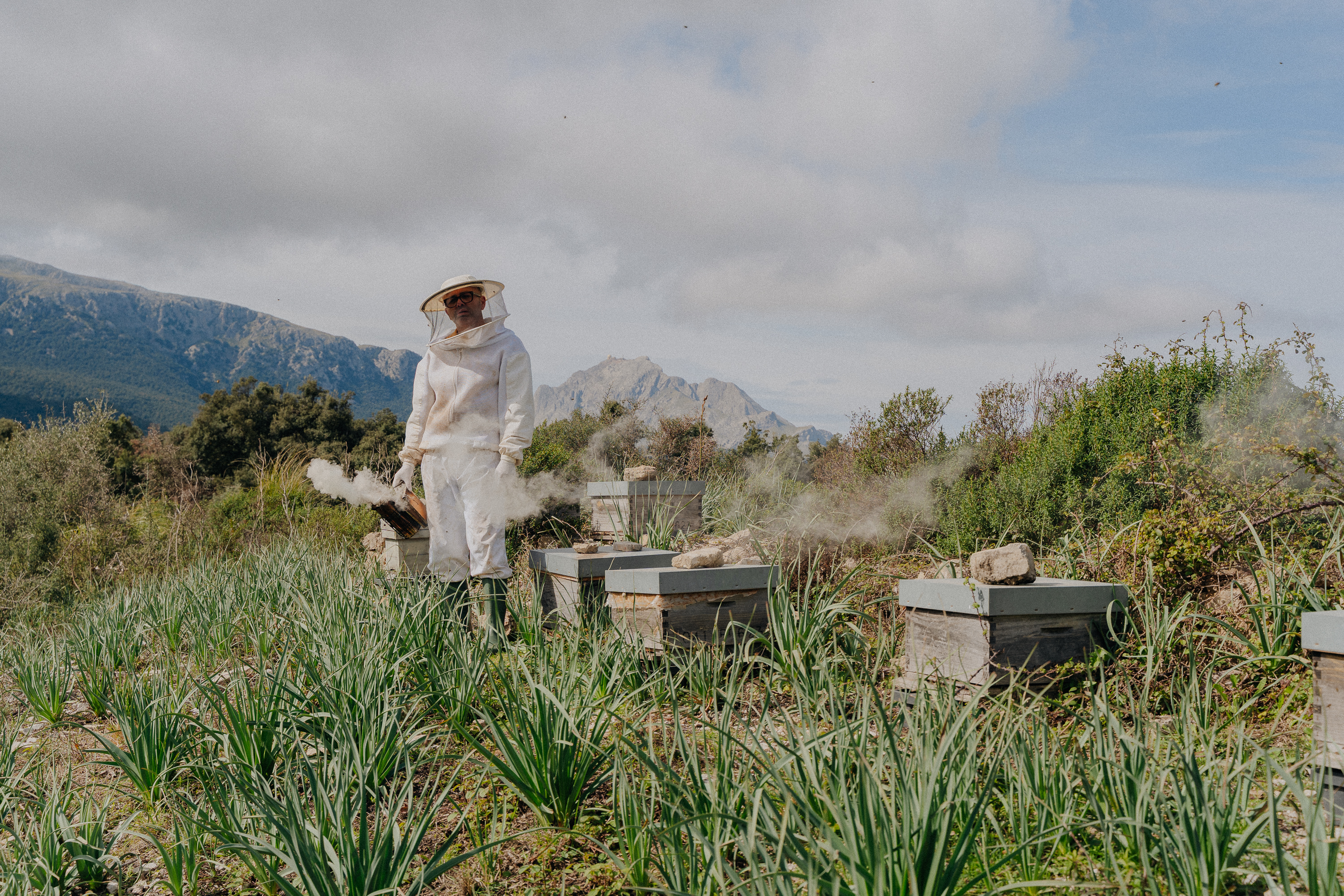
Since then, from apiary to apiary - he already has twenty-two - Martí has drawn a map of delicious flavors and sweet aromas that cover the island, especially the Serra de Tramuntana, from Fartàritx, in Pollença, to the possessió de Mosset, in Escorca; from Monnàber Vell, in the municipality of Campanet, to Puig de Galatzó. From these emblematic points comes its honey: Mel Caramel.
The location of the hives is not random but quite the contrary: its location is key to the idiosyncrasy of the project because, to achieve organic certification, the apiaries must be at least within a radius of more than three kilometers from any industrial agricultural activity. However, beyond certification, for Martí it is also a question of principles: 'the pesticides they use kill the bees and I have always wanted to stay away from that'.
Thus, with clear ideas, a sustainable vision that runs through each of his decisions and artisanal know-how, Mascaró investigates and tries to understand the richness of the environment and the diversity of the island's ecosystems to ensure that each honey he produces is unique, different and excellent. Nevertheless aware that, as in any organic farming activity, there are factors impossible to control, such as the weather.
'Beekeeping is the most difficult branch of agriculture because you are totally dependent on the weather, in addition to the exposure of many invasive species'.
'In Mallorca we have a Mediterranean climate that means either torrential rains or periods of drought that determine the production of honey', he explains, because 'the lack of rain affects the system, but also the time when it happens. Ideally it should rain before flowering because if it rains when everything has already flowered, the water washes the nectar off the flowers'.
Beekeeping is the most difficult branch because you depend totally on the weather, in addition to the exposure to many invasive species', continues Martí, who is particularly worried about the vespa velutina -a South Asian species that eats bees to feed their larvae- which already caused havoc last year and has become 'a big problem on the horizon. We beekeepers are very concerned'.
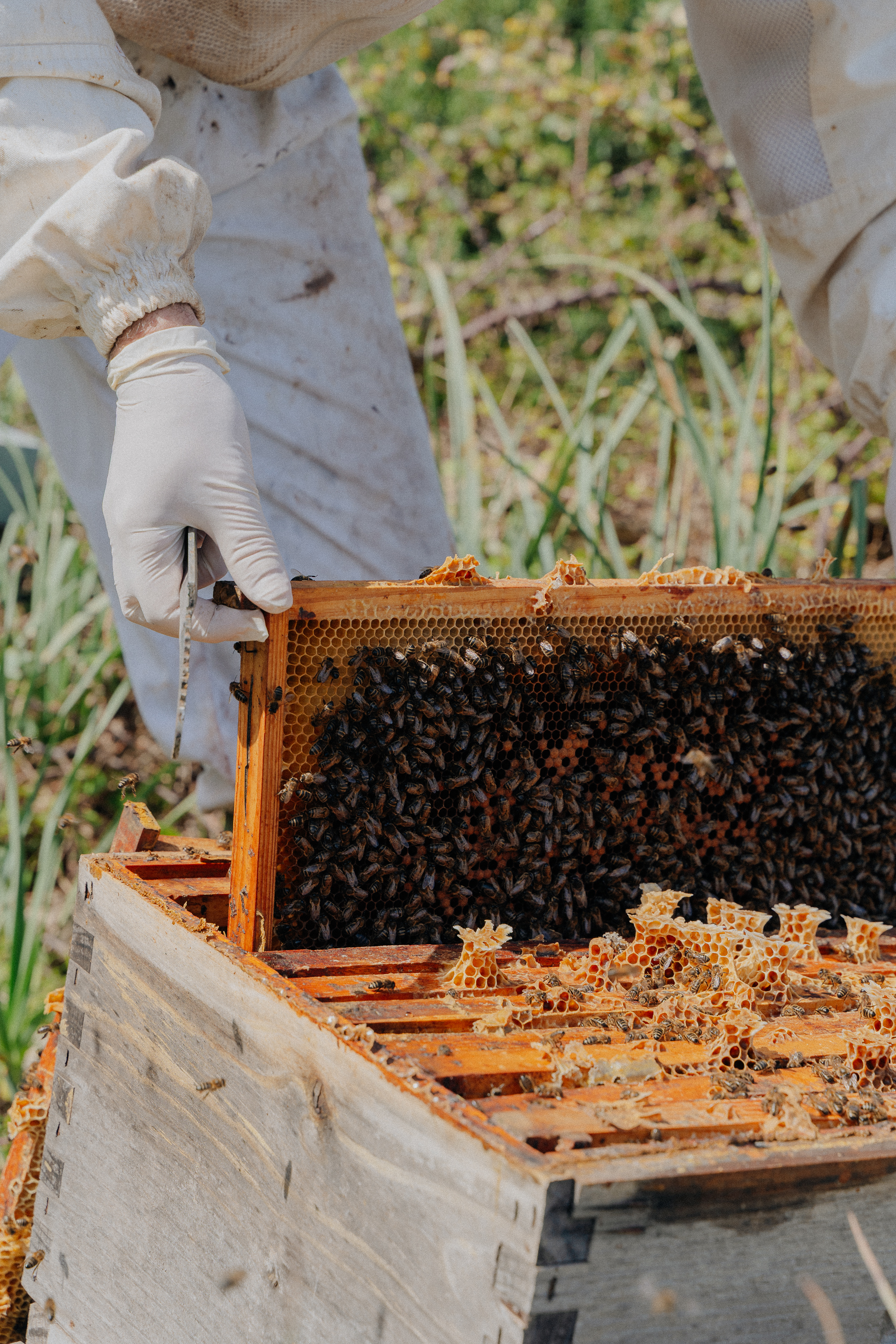
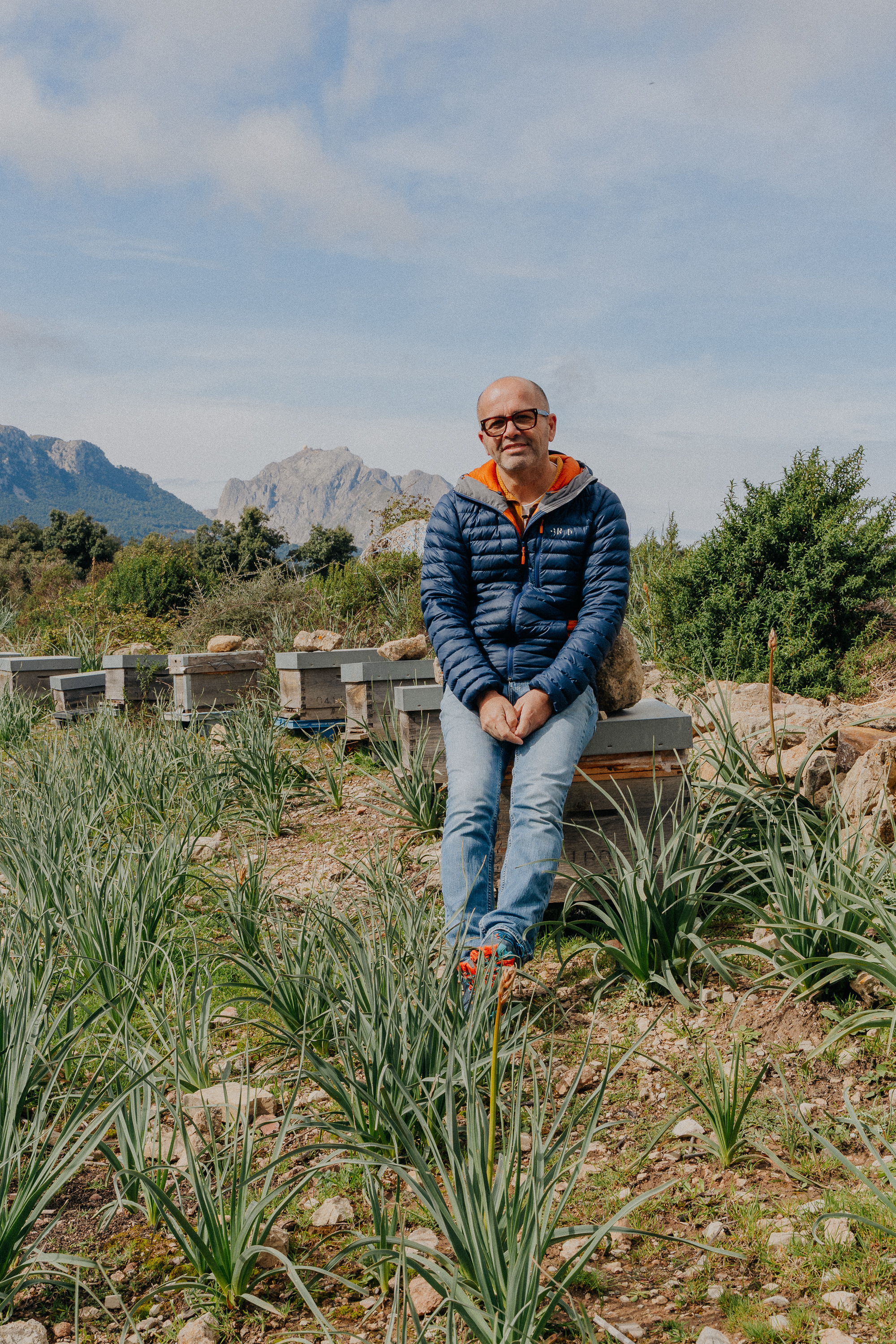
'There is honey that is bought abroad and then packaged here as Mallorcan honey'.
Despite the difficulties, Mascaró has made a hobby turn into his profession and his profession into a way of life and, although he is not the only one who produces certified organic honey on the island, his project is already a benchmark in the sector despite the fact that production remains quite limited. A word, production, key to the passionate beekeeper who stresses the importance for consumers to differentiate between producing and packaging. There is honey that is bought abroad and then packaged here as Mallorcan honey'.
Be that as it may, beyond quantity, Martí has always been obsessed with the quality of his honeys, an effort that has led him to reap its rewards: since 2017 he has been participating in the Biomiel organic honey competition, in which an international jury analyzes, every year, samples from around the world in terms of flavor, aroma, color and texture. In 2024, Fartàrix won a gold medal and six more varieties of Mel Caramel won a silver medal.
The quality and local and international recognition endorse the production of Mel Caramel, but also the image and packaging of the brand, professional and inspiring, cared to detail, as well as the sale, which dispenses with intermediaries: honey, for now, can only be purchased directly on the web or at craft fairs to which Mascaró personally attends.
Far from civilization, Mel Caramel's bees work in locations on the island with an extraordinary biodiversity that is reflected in the organoleptic properties of each jar. An artisanal luxury for our -sweet and tasty- delight.