When we ask Paolo Tornarini how Megarawbar came about and, above all, how he got here, the Italian snorts and cannot hide the huge smile on his face. Perhaps because his story is, like those interesting and passionate stories that we like so much, the result of an idea that was born without great expectations but that was, unstoppably and organically, taking shape with effort and a lot of desire.
"The first bar I created was an experiment. A test for my son and me, both bicycle enthusiasts," Paolo tells us as we chat in his shop in Lloseta, surrounded by cycling references. "I've always been interested in food. In my family there are chefs and pastry chefs, and when I arrived in Mallorca eight years ago, I started working in the kitchen of a hotel". However, his current project was born away from this environment.
"I made some bars with natural ingredients as an experiment. I'm very interested in nutrition and health, and I wanted to try an alternative to the sports food we're used to." So he made his first creations and gave them a try. The feedback couldn't have been better, and when a friend suggested him to participate in a cycling event in Consell, he couldn't refuse. Without him knowing it, Megaraw was about to take his first big step, because the idea was liked - and a lot - by cyclists and collaborating brands.
"After the confinement people were very emotionally receptive to new ideas, especially if they were made here".
Encouraged by the positive reviews, Paolo bought a machine in Madrid to improve the format of the bars and ordered the boxes from a company in his home country. The day the order arrived to the island, we were confined and "everything suddenly stopped". Or not. Locked up at home and with time to research, Tornarini was giving shape to the project and, finally, in the summer after that the first units went on sale. "I had to do a lot of sales work to make us known, but at that time people were very emotionally receptive to new ideas, especially if they were made here in the island".
After that came five more, all produced from natural and organic ingredients such as dates, oranges or pistachios, because Megarawbar is not only a product designed for the recovery of athletes, Megaraw is also an invitation to reconsider what we eat and how this way of eating affects our health, nowadays and tomorrow as well. "That's why we don't manufacture based on what it costs us to produce, we do it based on what an athlete really needs," he says firmly.
Focused on this search for a healthy alternative, research is an essential part of a project that has recently launched its first recovery products, formulated with oats, banana, pea protein and superfoods such as maca, baobab and açaí, foods loaded with nutrients, proteins, minerals and fiber, and free of gluten, lactose and any ingredient of animal origin.
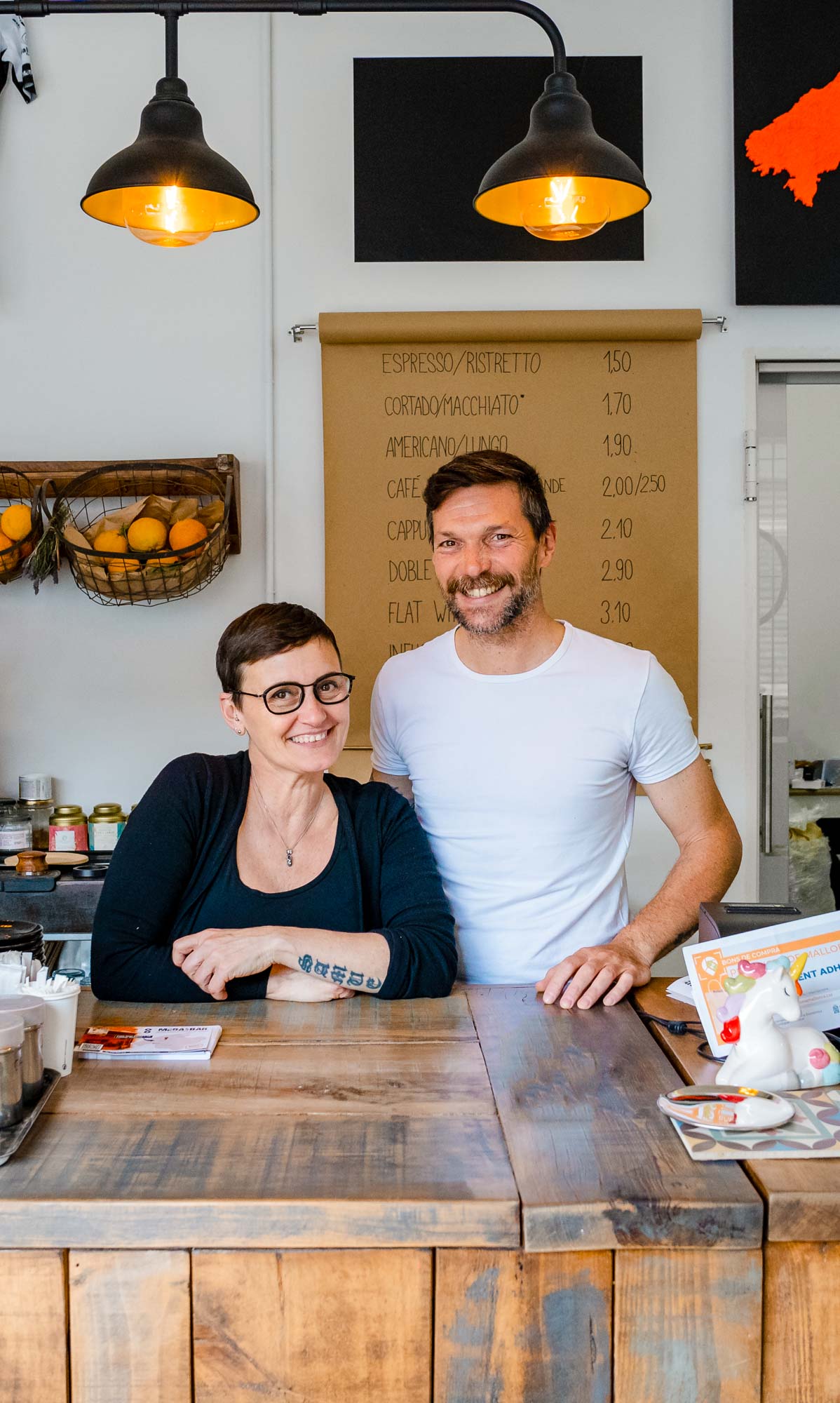
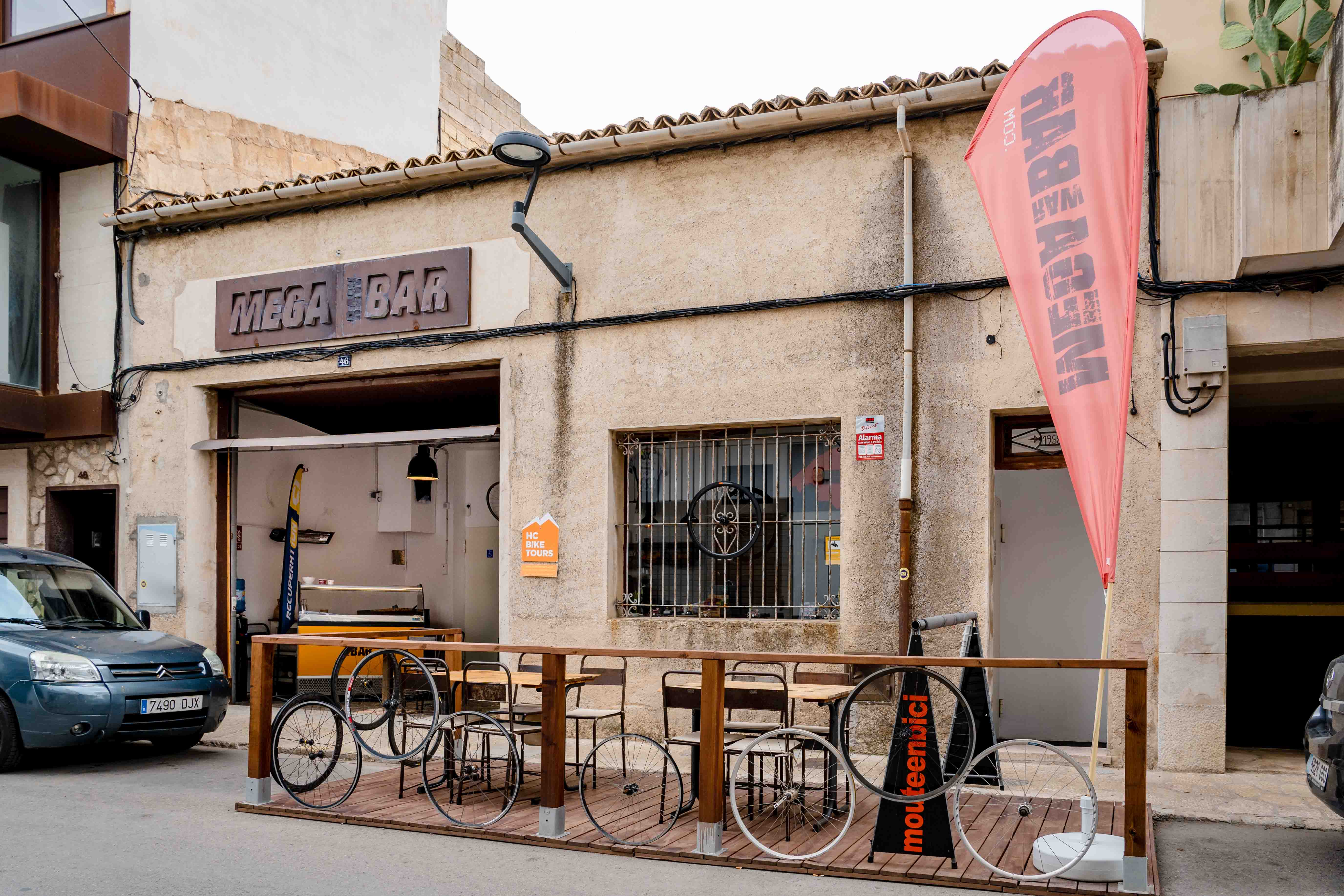
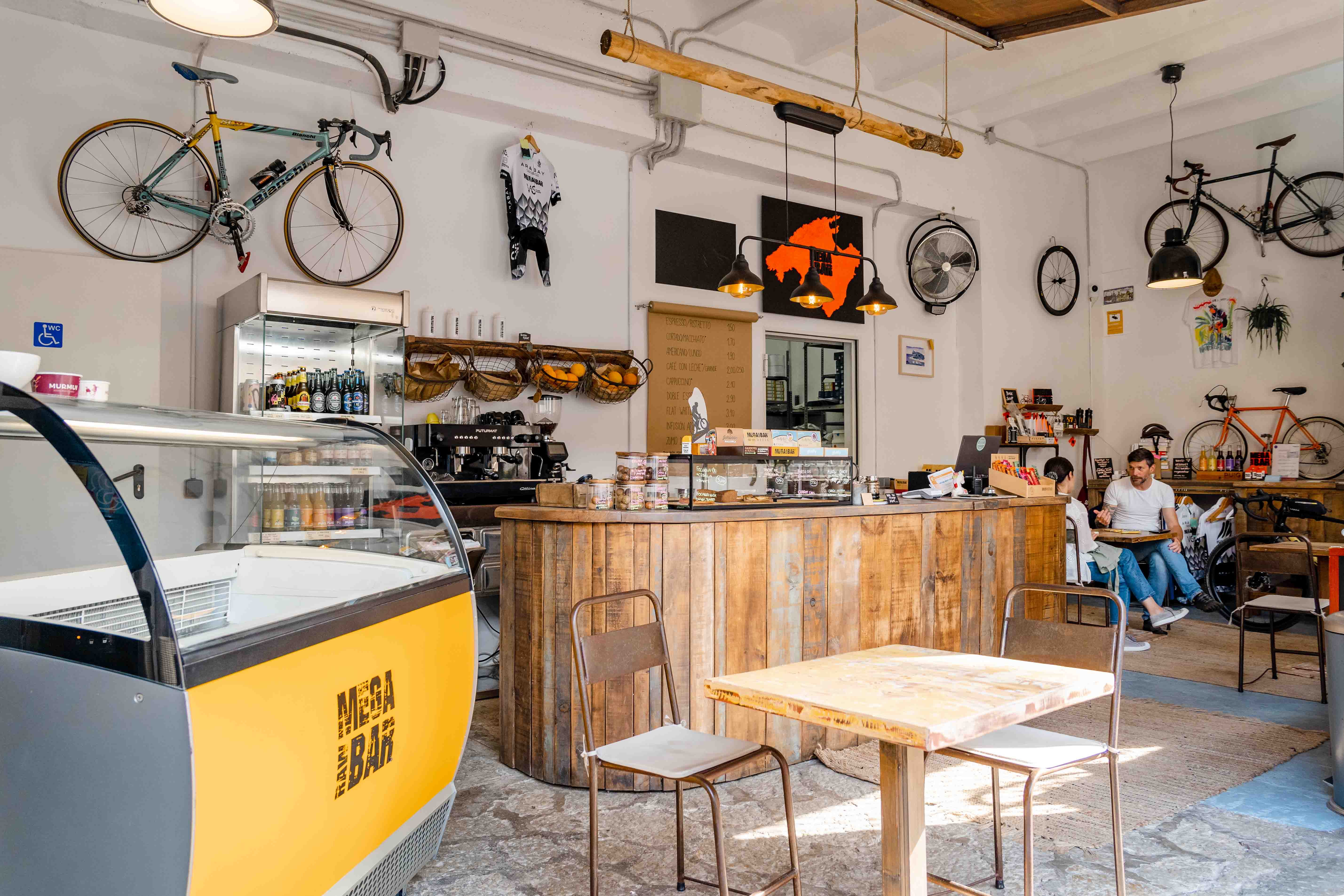
The production of each bar is carried out in Lloseta. In this village at the foot of the Serra de Tramuntana, Paolo lives with his family and here, thanks to a friend, they found the ideal place. "Our idea was to have a bakery and a store, but the possibility of the cafeteria came up and we said why not?" Said and done. At first, "we thought no one would come and that it would be our office, but during the high season of cyclists it has been crazy and, although the concept has been difficult to explain, more and more people come from the town and we just love it," says Paolo.
The café's setting is made up of tables, bikes, vegetable toasts and incredibly tasty pastries made by Paolo's wife Serena and a team of young workers from the village. Serena Sirini, who now joins the conversation, was also in the kitchen world before Megarawbar. A specialist in raw vegan baking, she already ran a shop in the village where she made plant-based cakes and pastries to order. Now she is in charge of production and supplier management and, although "the technique is very different, every little challenge is a new learning experience," she tells us.
"Making the revolution is difficult, but we planted our own seed".
Between challenges, the couple weaves alliances with athletes, companies and entrepreneurs with whom they share values and concerns. From these collaborations are born other collaborations made in Mallorca, such as the bar they have devised with Johannis - Es Garrover - whose star ingredient, of course, is the island's carob - or their latest bet, the bar they have created with the cyclist (and world Gravel champion), Joan Horrach.
Creating community, with professional and amateur athletes, from here and there, and with more and more resident public. This is how Megaraw is writing its present and sowing its future, already exporting to Italy and Portugal, as well as Madrid, Alicante and Catalonia, in Spain.
Aware that "Mallorca is a showcase", their sights are set on organic growth, working from five in the morning until night to reduce costs without sacrificing the greatest possible amount of local produce with a noble objective: to do your bit to contribute to healthy nutrition and create new products so that "the youngest begin to understand the importance of the things they eat", says Paolo.
Before saying goodbye, we tasted some delicacies fresh from the bakery. Here, production is daily so that the product reaches the palate as fresh as possible instead of spending months in a warehouse. Between bites, we ask about the most beautiful part of this story. Serena thinks for just a few seconds. "Personally, what I prefer is the contact with people, an exchange that if it weren't for the cafeteria we would miss out on. And the impact we generate, too." We smiled, because Paolo had already let it slip, a while before: "to make the revolution is difficult, but we planted our own seed". Long live, then, this delicious, nutritious and healthy revolution.