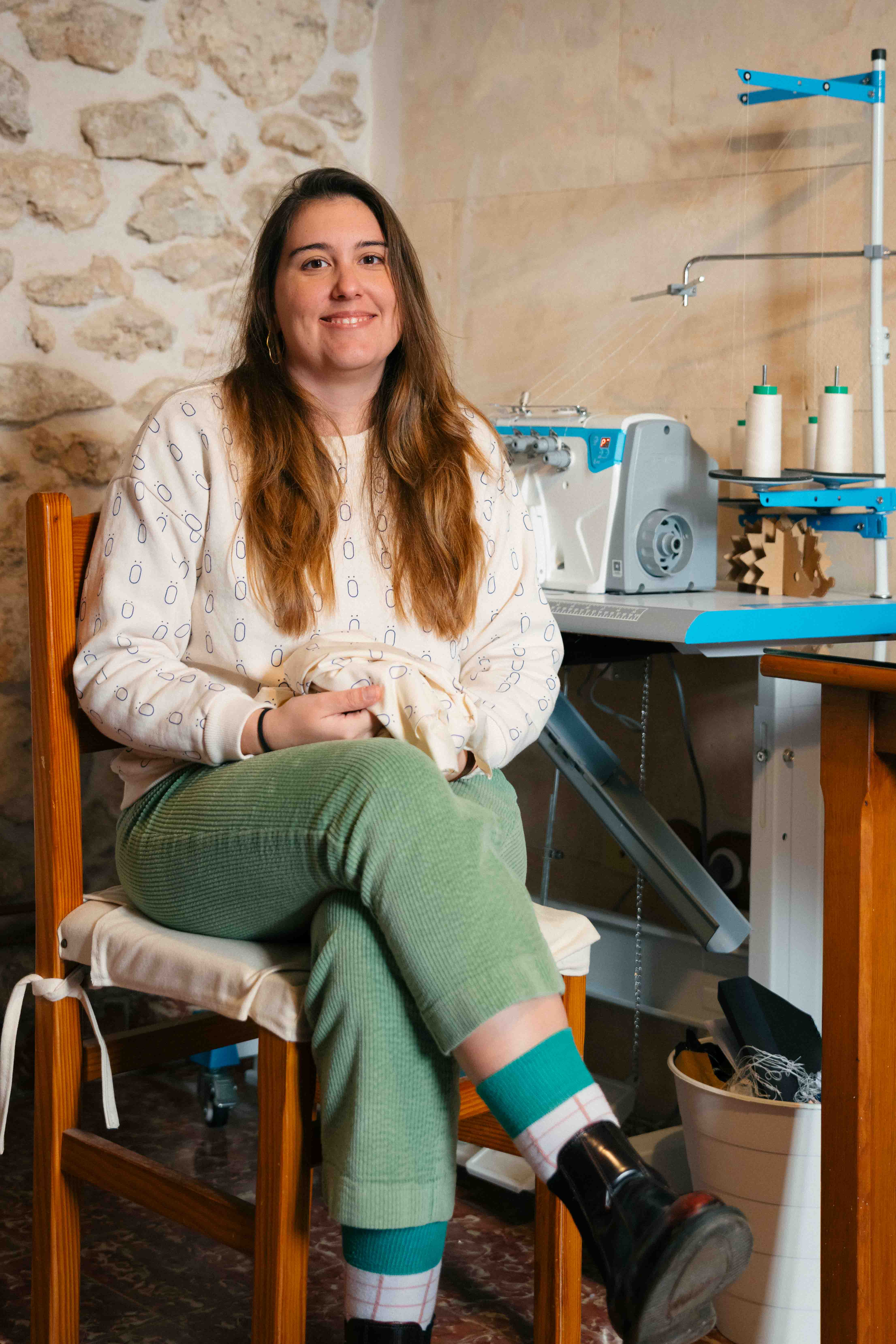
'Close, sustainable and local' is how Miriam Ferré defines Mediterranean Pöppy, the professional project with which she designs, prints and manufactures garments for babies, children and adults. The concept has remained steadfast since she began her career in Barcelona, although her brand has been transformed after learning, thanks to the wisdom of master craftsmen, the craft of the llata (dwarf palm).
The end of a period of work prompted Ferré to work freelancing through Poppy Kids, a brand with which she produced clothes for the little ones from a sustainable point of view and with a lot of creativity. However, a stay in Mallorca would change her course. Eager to learn, she moved to the island and discovered how to produce palm accessories: 'my master's degree was to find the person who could teach me directly. For me, taking a master's degree meant having an additional role and I decided to invest it that way'.
After a period of apprenticeship and an unavoidable love affair with this artisan tradition, she combined both disciplines and now, based in a village located in the interior part of Mallorca, she creates clothing and accessories made of palm that come from a very particular vision. Its differential factor? She does not work with stock, here everything is produced on demand.
'Dwarf palm is an instrument that teaches you who you really are. In the end, it's like knitting or crocheting'.
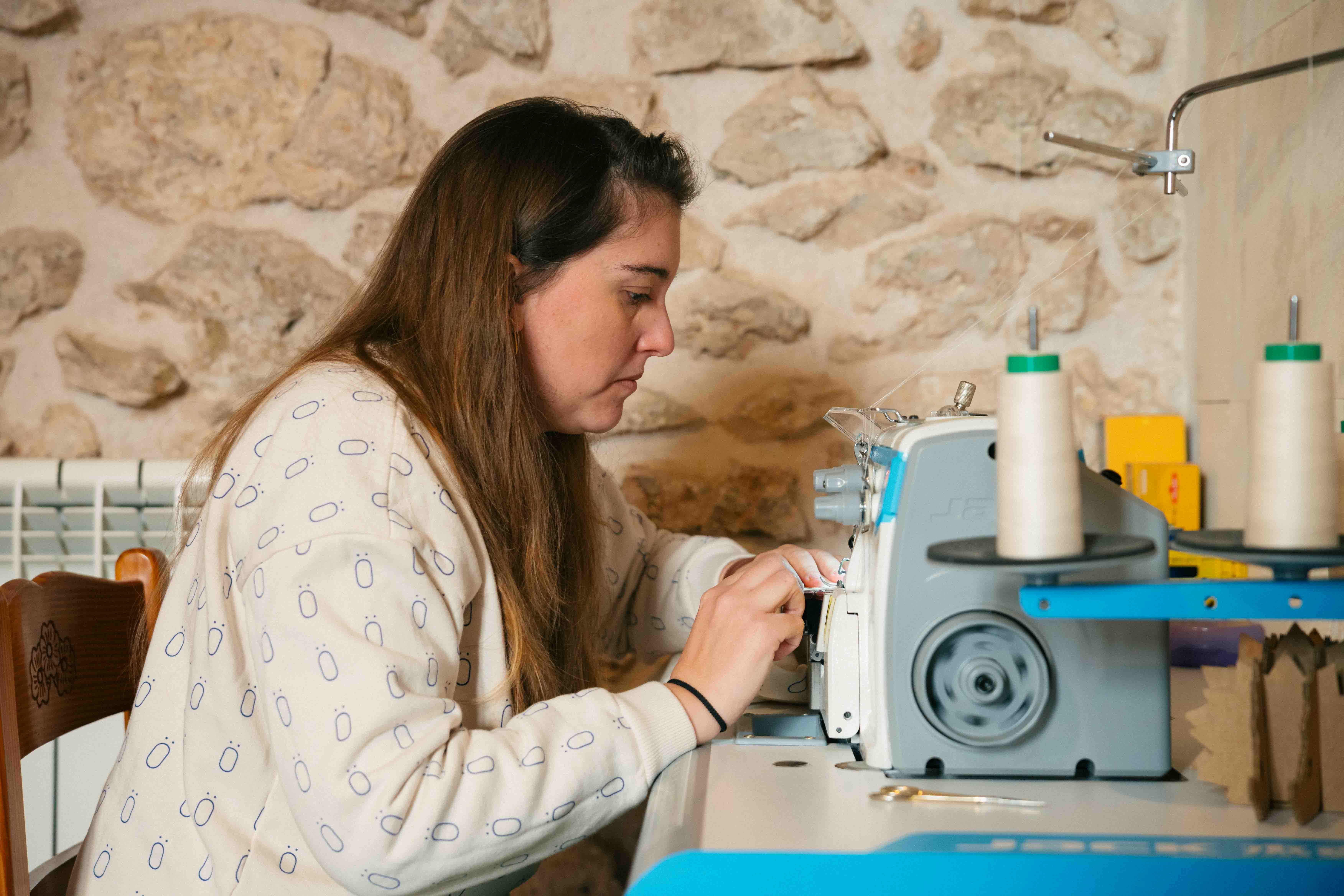
On a planet where 39,000 tons of clothes are thrown away, it was vital for Ferré to transfer her principles to her business. So I thought, 'Within the framework of my resources, what can I do? First I thought about designing standard sizes and having someone produce the pieces, but I thought this concept even needed a change. I studied design, I know how to sew, so I decided that all the garments would directly be made by the order'.
Now she creates pieces for babies, children and adults - 'many parents when they saw the prints for children asked me for a garment in their size', she says proudly - from start to finish.The whole process goes through her head and hands, from inspiration - in which nature plays an essential role - to manufacturing. She researches fabrics, plays with colors, designs and prints, and then asks her trusted pattern maker for the right pattern for the garment she has created.
When the pattern arrives at the workshop, everything is ready to be made, only the order is missing. By working on each garment to order, Miriam avoids overstocking, but she also manages to take advantage of every bit of fabric, every scrap, because 'from an uncut fabric,' she says, 'you can make a thousand things'.
Her timeless designs do not understand labels and her colorful garments are also respectful of the skin and the environment. I always try to choose natural raw materials, linen or organic cotton. With socks I haven't managed it yet, but it's my next goal,' she says with conviction.
Working according to a pre-order system implies a waiting time - from three to five days, in general - something that her customers, mainly local, Nordic and Italian, understand because they practice 'another way of consuming', far from the times imposed by fast fashion, 'and they look for design, exclusivity and quality'.
'Now that there are more restrictions on moving surplus to Africa and we are becoming more and more aware of how harmful it is to burn surplus made with synthetic materials, big companies will have to go down this path, too.'
This way of understanding fashion, perhaps still a rarity, Miriam believes, is the future because 'now that there are more restrictions to transfer surpluses to Africa and that we are becoming increasingly aware of how harmful it is to burn surpluses made with synthetic materials, large companies should also go this way'.
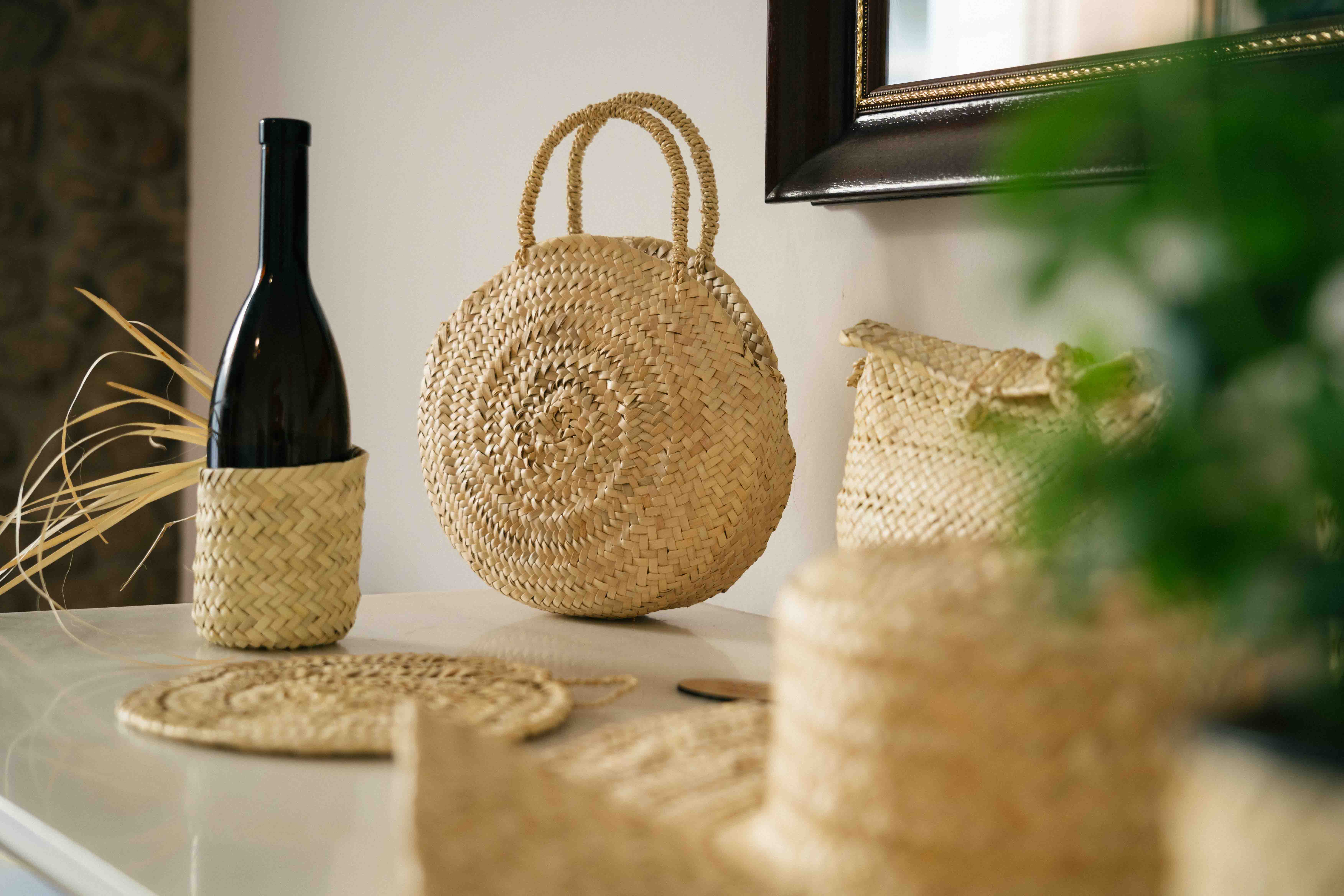
At Mediterranean Poppy, clothes share the limelight with palm hearts. With the vocation to contribute to the permanence of this craft rooted in the Majorcan east, she learned the trade alongside artisans from Capdepera, Artà and Pollença, and discovered that each pair of hands follows a technique and that the result is always unique.The llata is an instrument that teaches you who you are. In the end, it is like knitting or crocheting'.
Her passion for design, she says, challenges her to transfer it to the palmito and generate, thus, handmade but more modern pieces. In this way, Ferré spends her afternoons weaving tin and her mornings working on textiles. Determined and sure that she is working on what she likes from the perspective dictated by her principles, Miriam attends pop-ups and specialized fairs -such as the Rata Market- and also has an online store that works also as a showcase.
This way of producing and selling allows her to be in direct and human contact with the customer, and even open the doors of her workshop if someone is curious to know where and how the garment they are going to wear is made. Hand-delivering the order, the comments I receive, and knowing that what I make is for someone makes me happy,' she says with a shy smile.
Sustainability, which runs through the foundations of Mediterranean Pöppy in a transversal way, also affects the packaging that wraps the garments: cut-out boxes that can be reused because, if something has been clear to Ferré since she did her internship, it is that there are many ways to take advantage of the resources around us.
Engrossed in her project, Miriam knows that she is where she wants to be and that her vocation goes beyond dressing us up or creating a basket with her hands. Her desire, she says, is to share her way of understanding design and fashion, and to help us reflect on our way of consuming. Without moralizing or lecturing but making us participants in the process. For this reason, she now plans to give a monographic course and teach what she learned upon her arrival on the island.The objective is noble and twofold: that craftsmanship does not fade away and that we all contribute, with our actions, to make this a kinder planet.