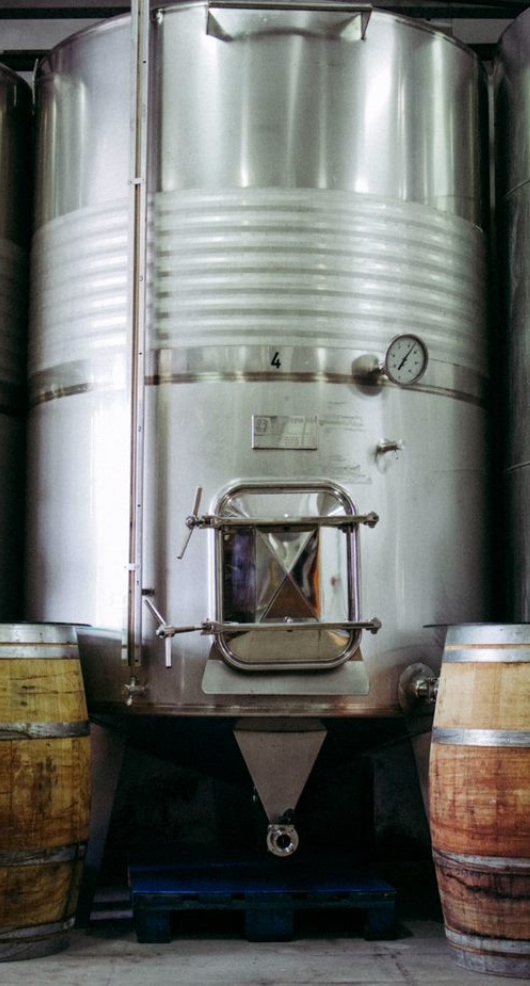
The day we visited Jaume de Puntiró, on the balcony of the cellar's facade, there was a dry pine branch, which would soon be replaced by a new one, a green one. When this gesture -whose origin is somewhat uncertain- takes place, the villagers know that the vi novell, this year's young wine, is ready to be tasted. This is one of the traditions that the Puntiró cellar preserves, but not the only one. Here wine is still sold in bulk, with reusable containers, and the word celler sounds again and again. It is no coincidence. Pere Calafat, now in charge of the business his father founded, reminds us of the beauty of this word, which has always been used in Mallorca to refer to the establishments where wine was produced, stored, aged and sold in the center of the villages, and which is now very often replaced by the word bodega.
Like the language, the wine world on the island has also changed a lot in the last thirty decades in Mallorca. In the nineties, there were about 12 cellers or wineries on the island. But at Jaume de Puntiró they accept this increase in competition with optimism: "Before it was very difficult to find a wine from Mallorca in a restaurant, now there are many and even menus with wines exclusively from here", explains Calafat. And this is undoubtedly good news for the sector.
Jaume Calafat i Nadal was the founder of Jaume de Puntiró. It was 1980 and, by then, he was already producing wines without using substances that were harmful to the land, although organic certification came in 1994. Now, his sons, Pere and Bernat, are the owners of the winery, where only three people usually work. The concept of petit (small) also comes up several times in our conversation. It is true that the celler is small in size - nothing to do with the huge cellars that have been expanding in recent years in Mallorca - but it is no less interesting for that reason. In fact, its wide range of proposals surprises more than one.
"In Jaume de Puntiró, tradition and innovation coexist".
We dare to venture that the passion that Pere transmits for his craft is the engine that drives this heterogeneity. A passion that has been able to combine the traditional without renouncing to new possibilities. Pere confirms: "In Jaume de Puntiró tradition and innovation coexist". Divided into five sectors, each line of wines is a bet. The Original range is the traditional one; the Artístic range is born from the concepts of culture, nature and research; the Divertimento range plays with fermentation; the Author wines are always different, unique and impossible to repeat; and their latest project, Agatges, contains two sweet wines, one rancio and even olive oil with denomination of origin and organic grape jam.
Over the years, therefore, they have been creating new proposals, but without renouncing their way of doing things, always respectful of the land and biodiversity, and exploring the possibilities of traditional and native varieties: manto negro, callet, premsal blanc and giró blanc. Each of these wines is produced in different quantities each year. Some produce a thousand bottles, others six hundred. And many are born as experiments, the fruit of curiosity. This is the case, for example, of Brisat, which is fermented with the skins for fifteen days to obtain an orange color, or the Amicamat (black and rosé) which are made each year with different grape varieties and processes determined by meteorological factors. Buc also deserves a separate mention. The result of this wine of characteristic flavor and intense aroma is due to a process of research and observation of the land, and is, as Pere tells us, a nod to the culture from here, from the island (its name is a loan from the poem Buc de gust, by the poet Biel Mesquida).
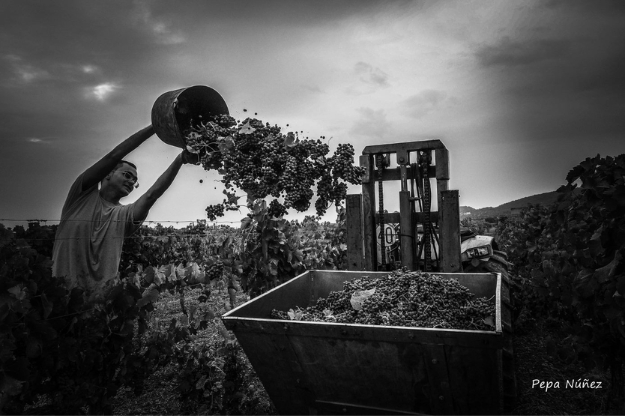
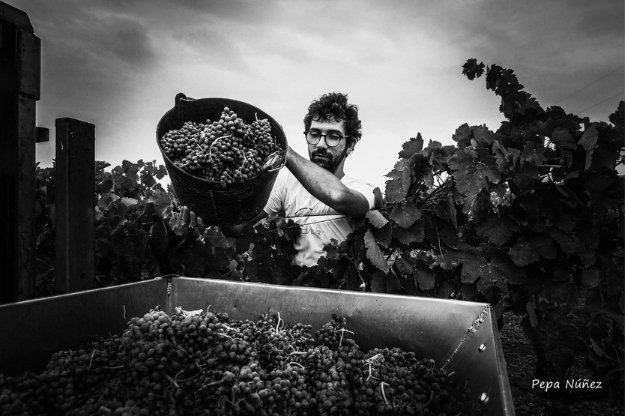
"We have not invented anything. We do things as they have always been done".
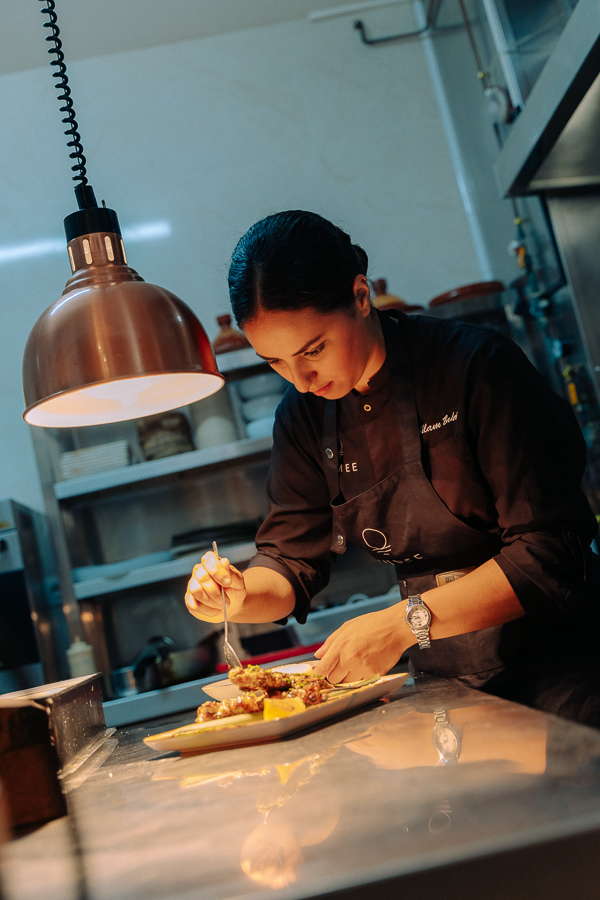
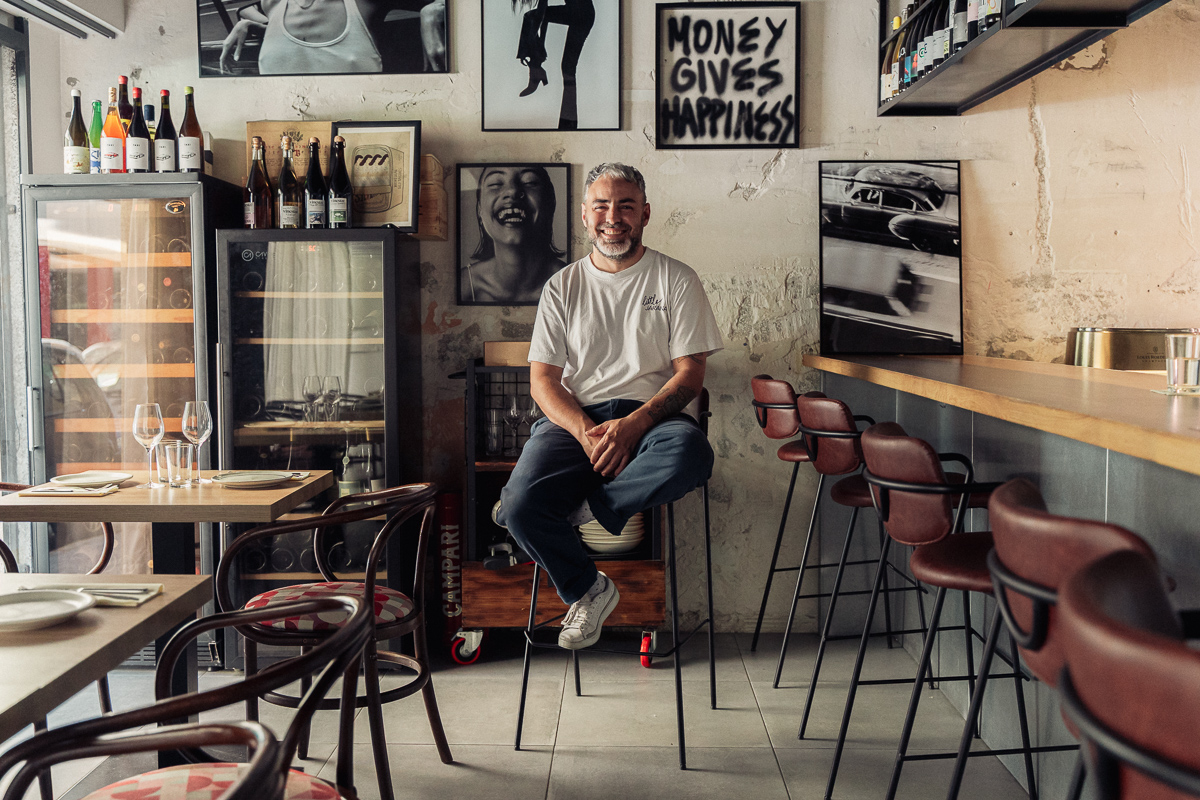
Culture is an intrinsic part of the essence of Jaume de Puntiró. It is noticeable in the names of the wines, in their labeling, in their way of understanding viticulture and also in their daily life. In the celler they organize poetry recitals, exhibitions, book presentations and glosses contests, always enlivened, of course, with a wine tasting. It is a way of uniting wine, literature, tradition... and creating links between people. "We like to create links between people with whom we share the same way of understanding things, like Es Ginebró. We've known each other for years. We love their vegetarian and organic gastronomic proposal, and they serve our wines in their restaurant."
After being able to taste some of their wines at plaça Nova de Santa Maria, we talked with Pere about his way of understanding the vineyard, artisanal production, sustainability and wine. We discussed how the energy crisis and climate change may affect a sector that is so sensitive to change. We also share anecdotes, memories of when before - not so long ago, in fact - our grandparents used to go to the nearest celler to buy their young wine in bulk with their wicker-covered glass carafes. Then, Pere Calafat smiles and says "we haven't really invented anything. We do things as they have always been done". And we always like this one because it means tradition, respect and roots. Three invisible but essential ingredients in the wines of Jaume de Puntiró.