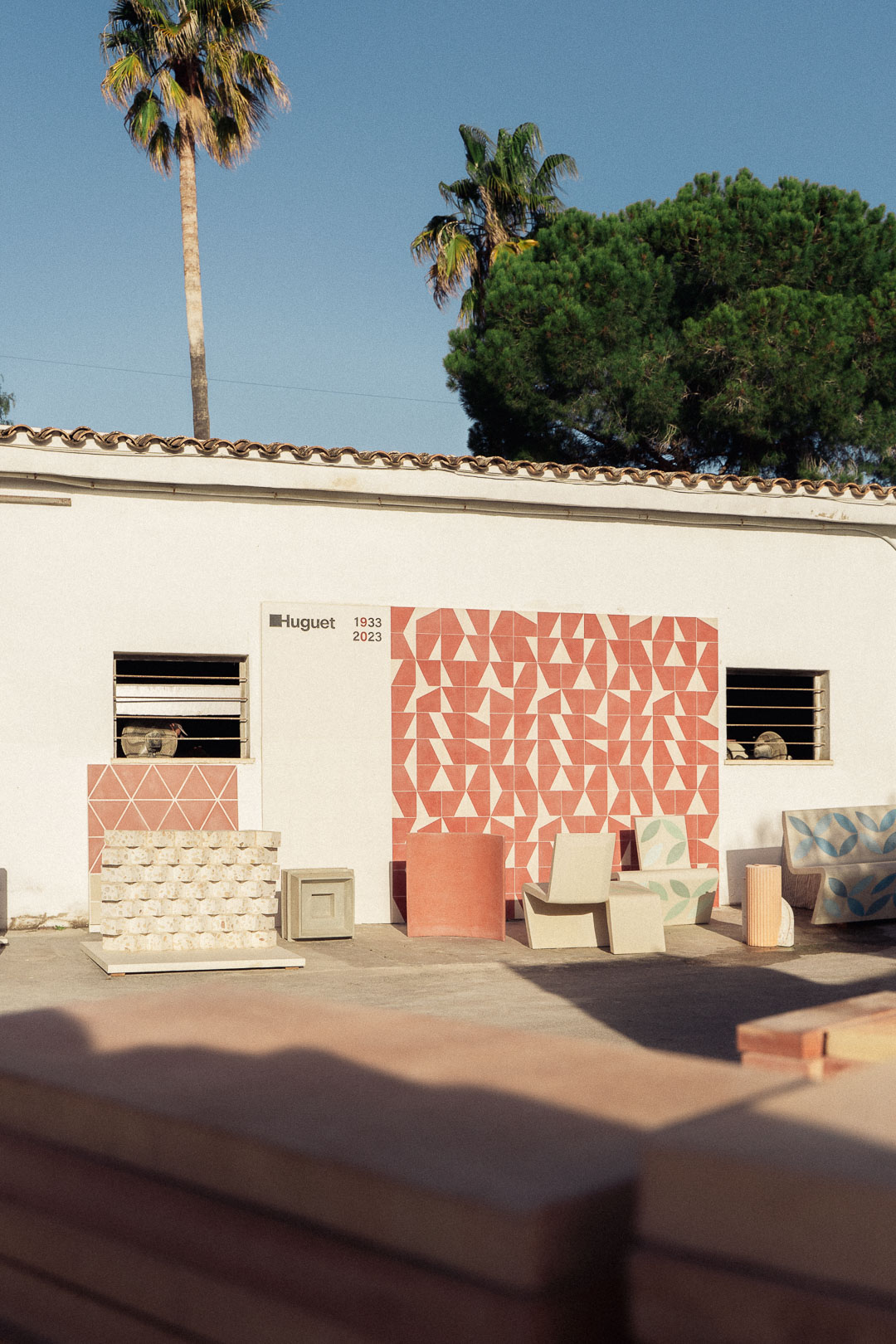
CAN PA, in collaboration with Jasper Morrison, in Palma; Tiffany Wonder, with OMA, in Tokyo, and Camper Lab, in Paris, are some of the latest projects in which Huguet, one of the most iconic hydraulic tile and terrazzo factories on the current scene, has participated. Its history, family-based, but also one of revision and reinvention, is a demonstration that looking back and returning to the origins can be, in addition to being coherent, the key to success.
It was 1933 when Biel Huguet founded, in Campos, a small company for the manufacture of cement pieces, fundamental elements in the island construction of the time. After his death, his wife Margalida became involved in the management of the company until his son Damià, in 1962, took over the leadership of the company. These were buoyant times for the tourism sector and urban growth, a factor that dictated a decisive change in the sector: craftsmanship lost strength in the face of mass production and market demands relegated the production of hydraulics to a more than residual level.
'I believe that Huguet has stood out because, when faced with a proposal, the initial answer is always a yes',
However, the Huguet family kept its machinery, a key decision that would facilitate the turnaround in the 90s, when Biel Huguet - grandson of Biel, the founder - embarked on a new stage that would resume craftsmanship and customized production with a differential value: betting, strongly, on design. This history, which is still being written today, adopts patterns and geometric shapes, draws Mediterranean colors and takes shape in molds that Isabel, a technician in Huguet's design and product department, shows us on any given morning of production in the factory.
'I think Huguet has stood out because, when faced with a proposal, the initial answer is always a yes,' he reflects, aware that design has been key to the company's reinvention in a highly competitive sector. We experiment and make highly customized tiles, which almost no one else offers because, in addition, manual work is being lost'. This is how Huguet tiles dress homes, stores and showrooms; and shape bathtubs, tables, sinks and furniture in Barcelona, Paris and Berlin, in Tokyo in New York, and, of course, also on the island. We like to see our tiles in projects all over the world, but we also value very much that people from here count on us'.
In a business vision that shuns trends, opts for customization and embraces contemporary design, at Huguet they also have a standard line that they sell through their online store, an avenue that allows them to reach more and more diverse audiences, from someone who is going to 'renovate an old family home in a village on the island and wants the same pattern and color' to someone 'from Australia who wants a custom table'.
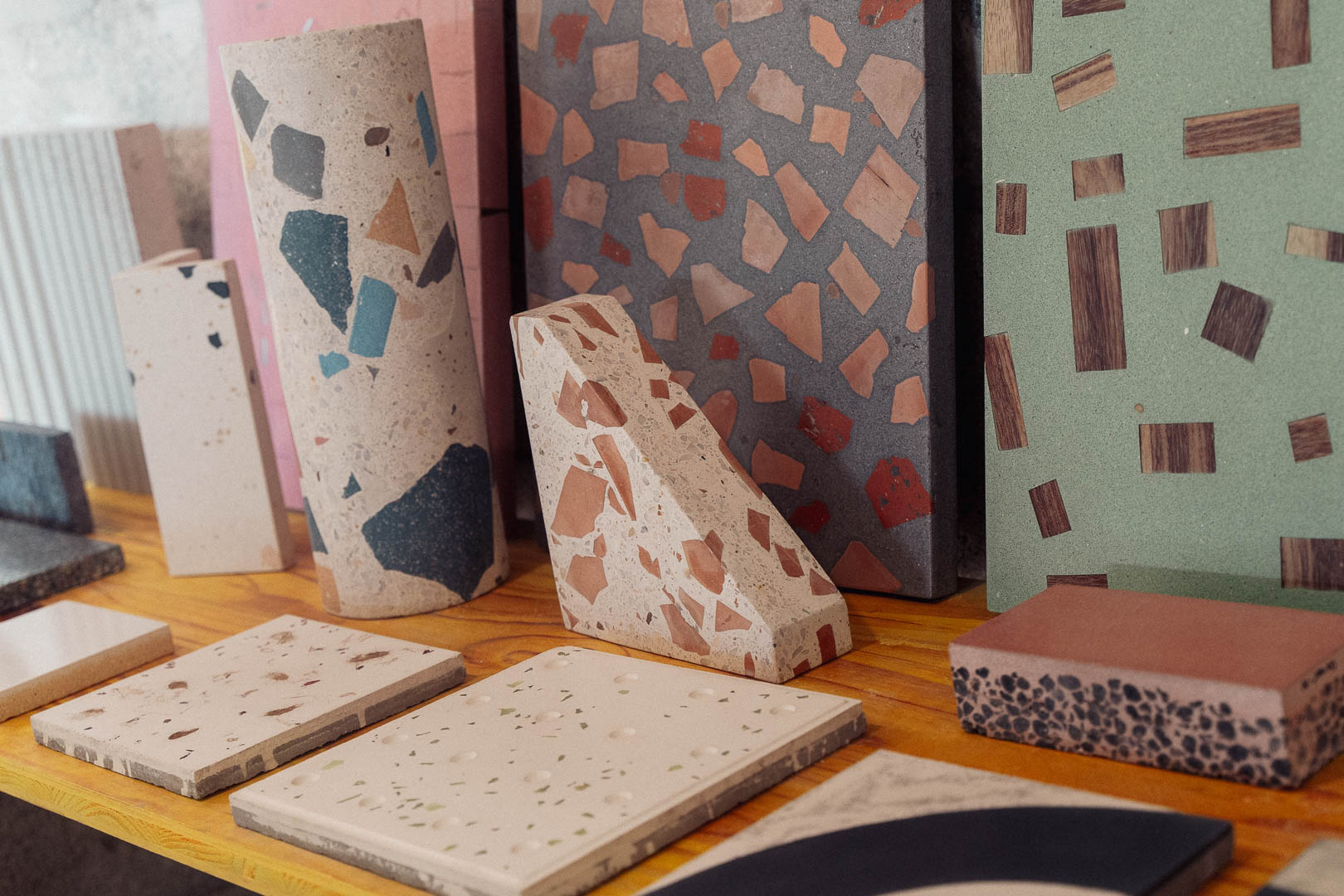
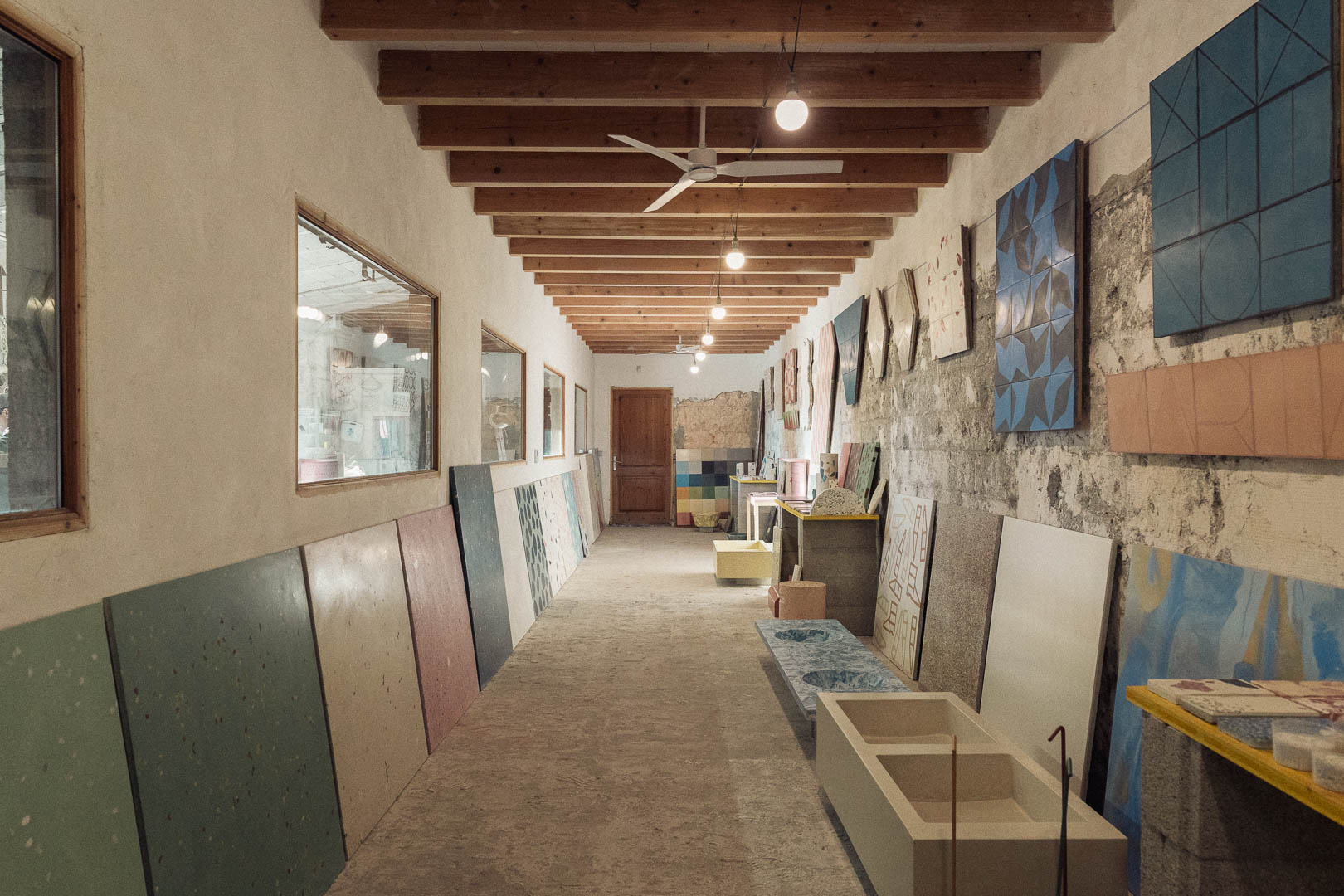
'The essence of Huguet is based on the desire to offer the craft and this tradition to today's designers and architects and try to update something that is so much our own'.
Aware that its raw material is cement, for years the company has been exploring ways to find more sustainable alternatives, such as lime, clay and compacted earth, and even experiments with leftovers from construction sites and shoes that add even more value through creative alliances. It is the perfect match: putting the wisdom of a traditional craft in the hands of an artist. The essence of Huguet is based on the desire to offer the craft and this tradition to today's designers and architects and try to update something that is so much our own'.
They have hit the nail on the head, of course, as evidenced by their press appearances (in AD, Wallpaper*, ICON Design or the New York Times) and the countless awards they collect (ADI FAD awards everywhere and recognition of their business strategy), but, as Isabel points out, 'Huguet's greatest success is that we work with leading artists and designers from all over the world who are top in their sector' while at the same time they have been able to grow without altering their system, without renouncing their essence. In fact, reclaiming the past - what they were as a factory, what we were before the boom. And so, with machinery inherited from 1933, they continue to manufacture handcrafted beauty. From Campos to the world.