Often we are not aware, but everything around us always leaves an imprint, for good or even sometimes for bad, inside us: where we grew up, our childhood, our studies or simply a color. It is something that is there. This is the case of Balbina, who grew up in a family where they understood that craftsmanship was an indispensable condition when it came to elaborating and creating. Something logical, on the other hand, taking into account that her father was a carpenter and her mother was a ceramics enthusiast.
This led her to study Fine Arts in Barcelona, where she had the opportunity to acquire basic notions of sculpture and molding. She specialized in photography, video and marketing. Her first company was dedicated to graphic design, web and social networks. Years later, she would embark on another business project, radically different: online sales of Nordic furniture.
It was then that she began to realize that she needed something more, she felt the need to create something. She wanted and needed to connect with herself. Without realizing it, she had created a digital bubble that kept her apart and disconnected her from everything.
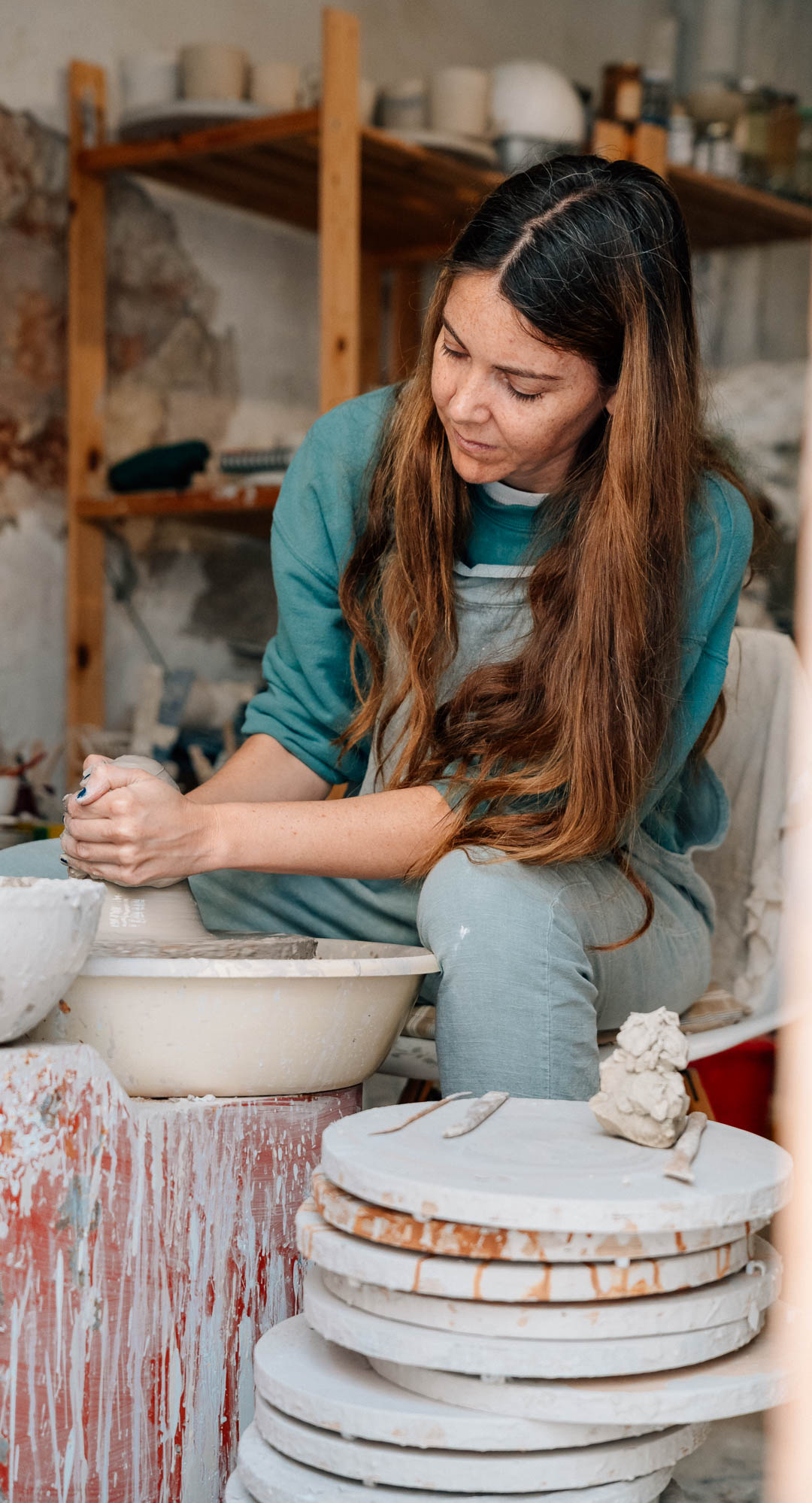
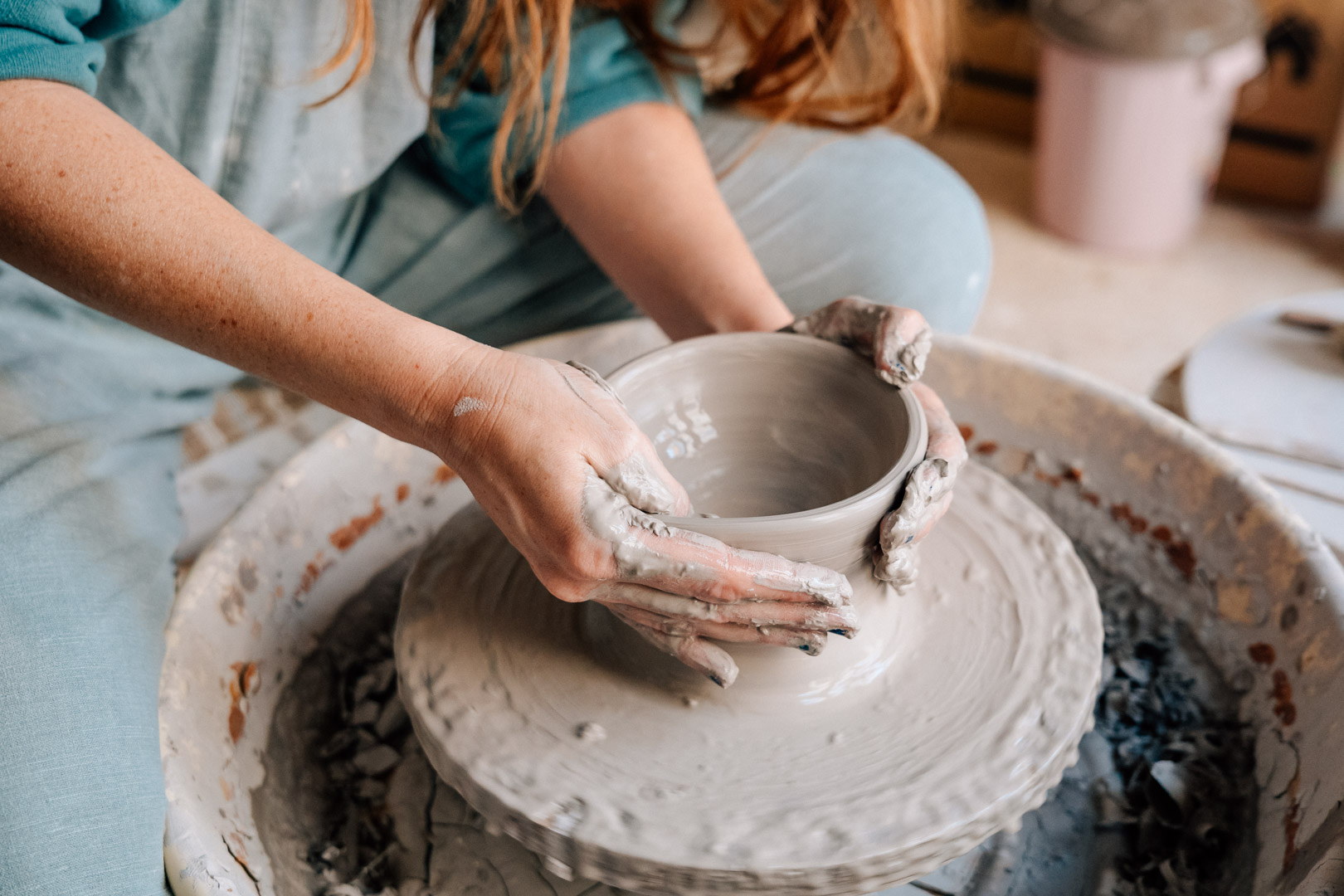
As she kept making her mind so as to where she should direct her professional life at that moment, she decided to go visit her mother, as she remembered that some time ago she used ceramics to disconnect and give full rein to her more artistic side. As soon as she started molding she knew that this was what she needed. "The same day I tried my mother's potter's wheel, I took it home with me." She would also take with her the kiln and all the materials her mother had at the time.
"If I like the result, surely there's someone else who might like it too".
With just the basic notions she had acquired during her studies, she began to make pieces. The first thing she molded were lamps for her house. Satisfied with the final result, she thought: "if I like the result, surely there is someone else who might like them too". She created her own brand, Bal Ceramics, and started producing for others. Soon the first orders started coming in.
One of those first projects became an interesting personal challenge for her. The pieces she had been asked to make had very characteristic shapes, and at that time she had never made anything like them before. After trying several different ways, she discovered that the best way to make the pieces was to use molds. But of course, she didn't have the necessary knowledge at the time. But that didn't stop her. She signed up for a course in Barcelona in to learn about it and today, together with the lathe and the churros technique, these are the 3 forms of production she uses.
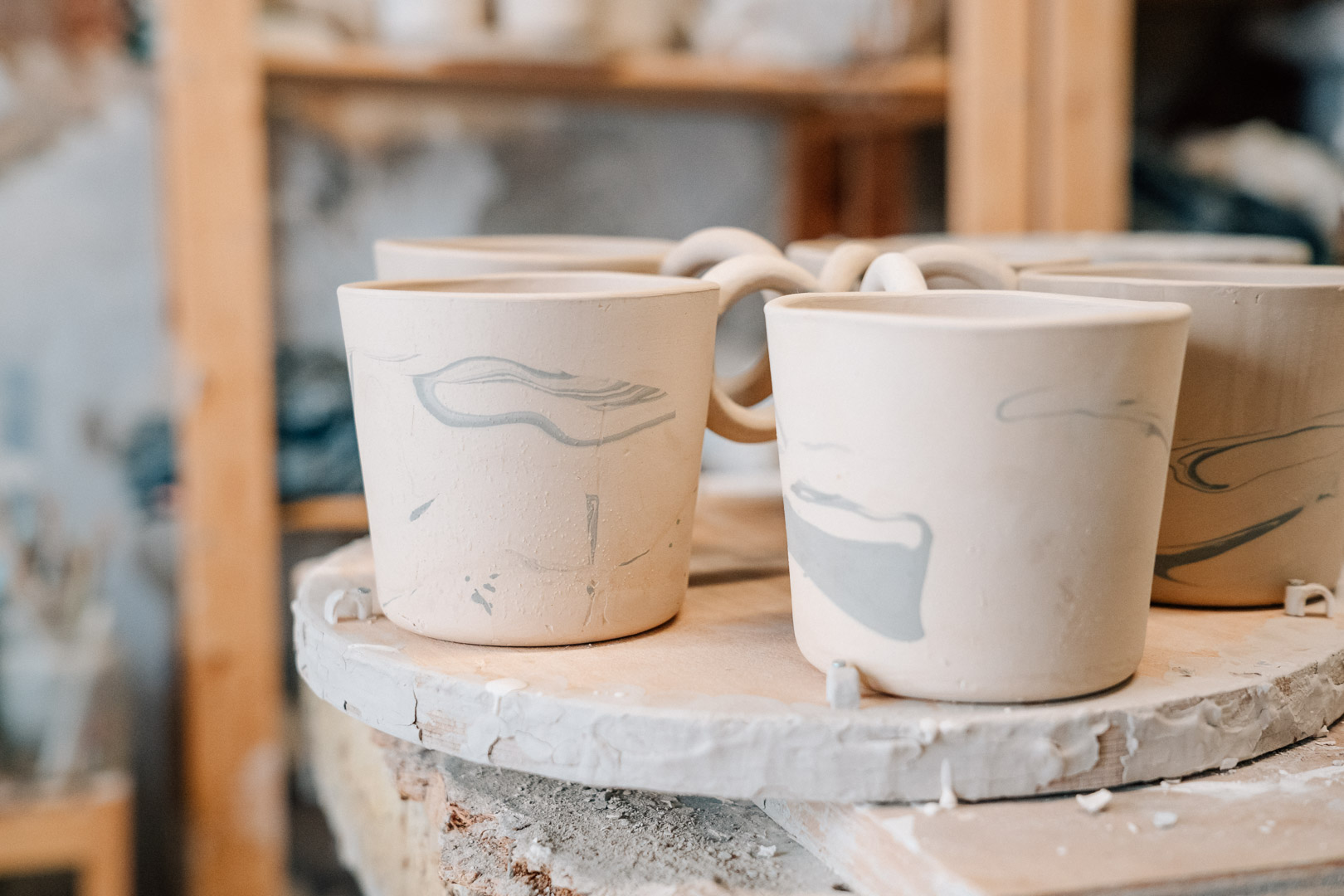
In addition to her method of creation, from the very beginning she was clear about how her pieces would be like. Her works are minimalist, made of honest materials (stoneware, porcelain and clay), barely unglazed, with the use of neutral or matte colors. If we observe her creations, the predominant color is blue. And she has a reason: this color, she tells us, reminds her of Mallorca.
"More and more people value and appreciate things that are handmade".
It is not only the color that inspires her from this beautiful island, but also the raw materials. She surprises us with two projects: the first one, where she fuses clay with llata -also known as palmito-, a material used to make baskets, hats or carpets. And she does it, she says, because ceramics are colder and she likes the contrast and the contribution she gets with the vegetable fiber. In the future, she would like to incorporate other materials, such as wood, for example.
The second one is simply wonderful. One day, while walking around Lloseta, she decided to pick up the mud from the ground and used it to create a new collection. And the fact is that life in the villages, their slower rhythms, the greater connection with people, the tranquility and the cleaner air that is breathed, are an inexhaustible source of inspiration. Since then, whenever she travels to different places, she takes a sample of the soil and processes it to see if it would be possible to use it.
All these pieces can be purchased through her website. But we can also buy them through the different stores she collaborates with, such as Artisteo Taller, Just Sant Elm or Rialto Living. At the beginning, in addition to making commissions for these and other companies, the ones who bought her pieces were mostly foreigners. But little by little, she acknowledges, "more and more people value and appreciate craftsmanship. And not only because of the boom that ceramics has been experiencing for some time now, but also because we are increasingly aware of the importance of supporting local projects, not only for the people who are part of it, but also because it serves as a boost to the social and economic fabric of the territory and we also make known the culture and craftsmanship of our beloved island.