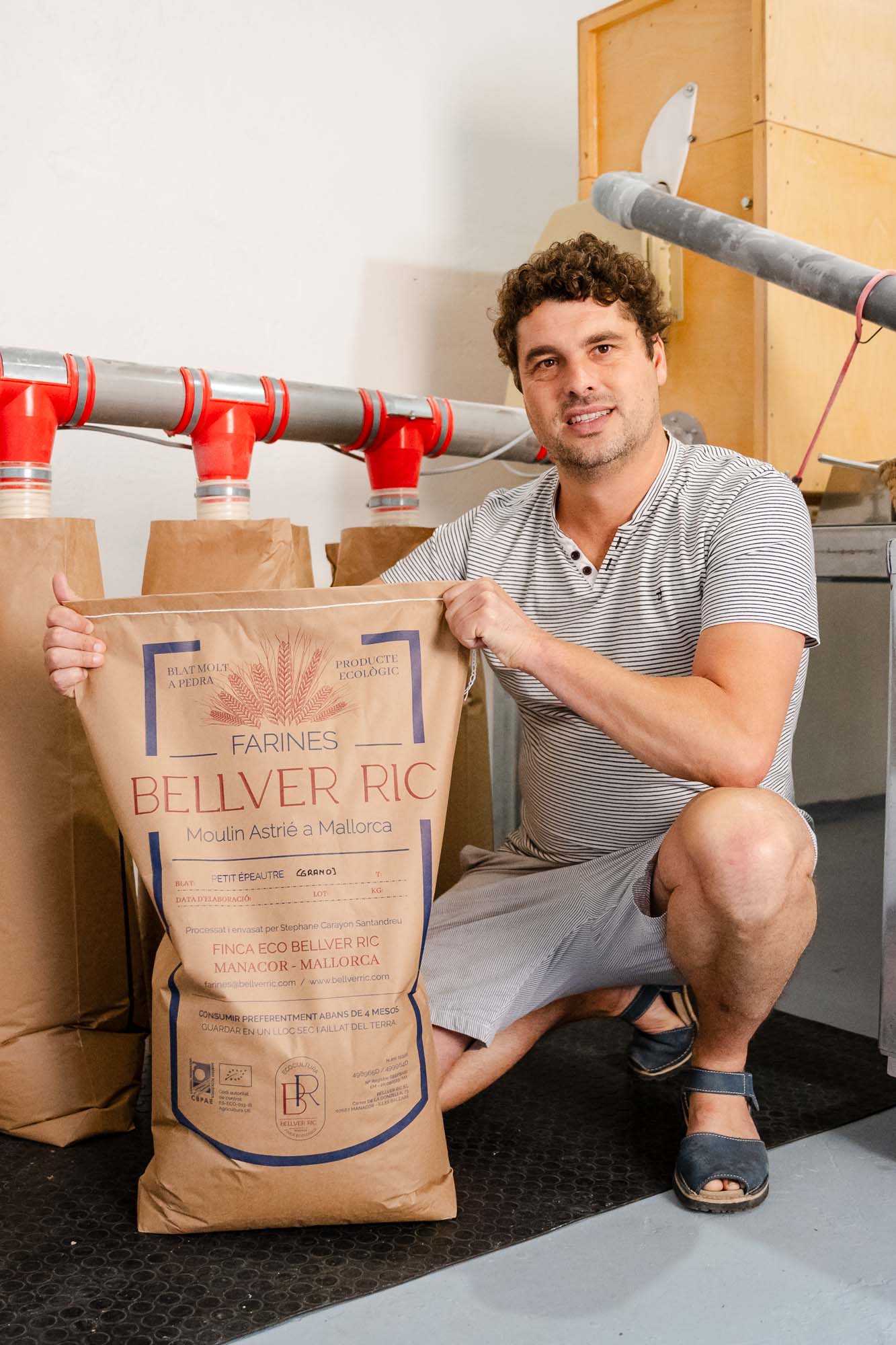
The secret of the grain -now it will change its skin and will be called Farines Bellver Ric- is a small family business of ecological production that cultivates ancestral grains. This is, perhaps, the simplest definition we have managed to extract for Stéphane Carayon's project, but we are aware that it does not cover -by far- all the work, history and values of this proposal that was born nine years ago in the lands of the grandfather of this land lover, half French, half Mallorcan.
The story of Farines Bellver Ric begins with years of travel and a lot of time spent working, learning and touching the different lands that make up the planet. From Australia to America; from the Amazon rainforest to Asia. With a backpack full of learning, Stéphane returned to Europe and, captivated by the knowledge he acquired, he trained in a French school of agriculture. Here, in Mallorca, the land of his mother, he met Silvia, his current partner, and both undertook the challenge of converting the family farms into organic and buying, some time later, Bellver Ric in Sant Llorenç.
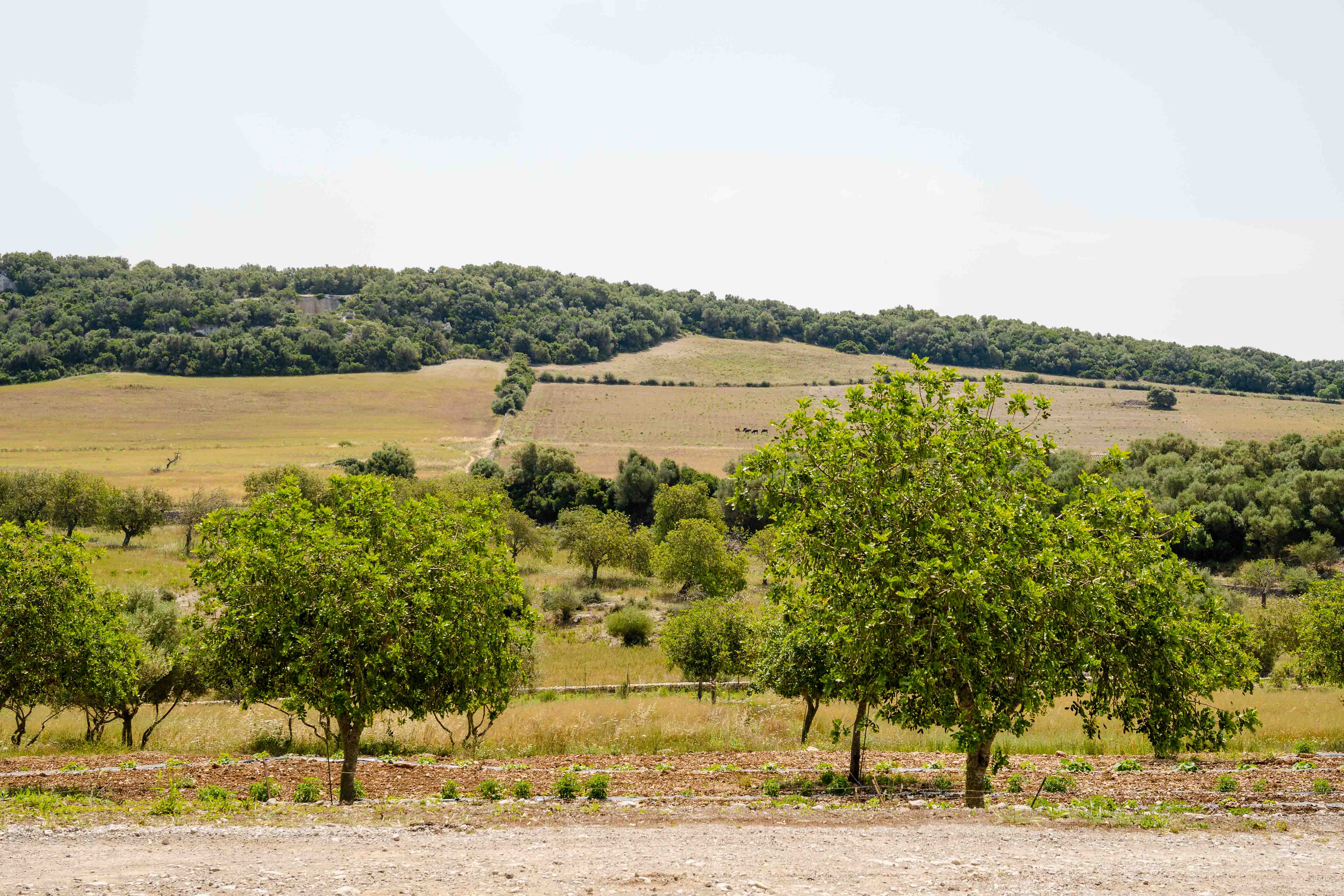
In these fields of the Majorcan east, Silvia is in charge of the orchard and fruit trees, and Stéphane of the grain and flour with a simple and clear objective that he expresses with wise words: "what we do is to take care of the land in a healthy way with organic farming and then feed people with it. To offer, in the global mess we are in, a local solution".
"Seeds are nomadic, like humans, but if they are kept well, it is because they have interesting properties for it".
A noble purpose, no doubt, which, as Stéphane assures, allows him to "keep his feet on the ground, but his eyes open" and which came to him in different ways: on the one hand, the time he spent in the Amazon and what he learned there from the indigenous community, he recognizes, made him change his mentality about how we relate to the environment. On the other hand, an inspiring project, led by French and Italians, was born in 2000 and replicated the Syrian seed network - the cradle of cereals - in Europe. These farmers and scientists, he tells us, "have been investigating why flours are refined and why it is so difficult for us to digest bread, for example, with the aim of proposing a different approach to that of the industry and seeking an alternative".
In the search for this other way of doing things, at Bellver Ric they work with non-hybrid seeds such as xeixa, camut, senatore cappelli and the three families of spelt (monococum, dicoccum and the large grain, triticum spelta). Seeds that come and go and are from nowhere and at the same time are from everywhere if they manage to take over the enclave because, as Stéphane explains, "seeds are nomadic, like humans, but they adapt to the climate. If a seed is kept well, it is because it has interesting properties for it".
While we talk in a relaxed way and listen in rapt attention, Pere shows up, a friend of Stephane's with whom he shares "time and energy", because, we are told, Pere's cows graze on the land of El secreto del grano and clean the weeds while leaving fertilizer and nourishing the soil. A true example of collaboration and circularity. This is what we like so much.
Stéphane's grains -and his flours- have already reached, according to his calculations, 200,000 people and all the cardinal points of the island because, among others, he works with renowned restaurants such as Béns d'Avall (Sóller), Santi Taura (Palma and Pollença) and Fontsanta Hotel (Colònia de Sant Jordi), and collaborates with bakeries such as Uco, Bordoy Microbakery or Forn de Barri.
"It is the consumer who has the power, who can choose between buying bread with bad flour or bread made by an artisan".
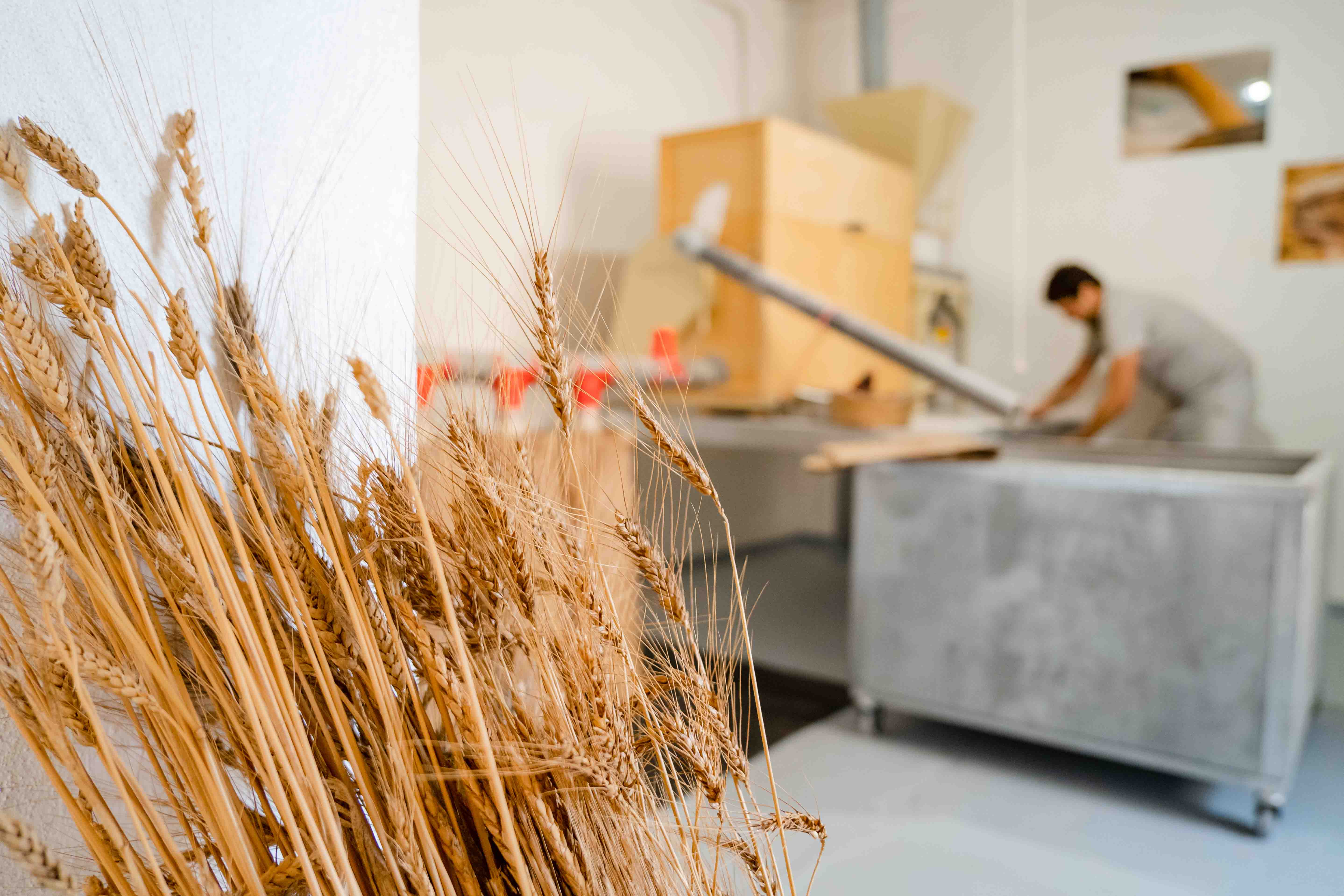
However, beyond the work and the sense of productivity, Stéphane understands his role in the field as the one who mediates between the soil and the consumer so that the latter connects with the land. That is why he is always open to his customers coming to the farm, seeing how the grain is processed in the mill and knowing where the forty tons of flour he produces in a year come from. "I seek transparency and I want whoever buys from me to be able to see the whole chain," he says honestly.
This chain will soon be joined by another link: bread making is Carayon's next goal, and he reflects on the rise of new artisan bakeries on the island: "although there is no peasant bread yet, there is more and more artisan bread from conscious bakers who work with producers and their flours," which is already an important step for a necessary change of paradigm. To continue on this path, that of "healthy food and a viable future for our children", in the eyes of this producer, flour maker and future baker, "we have to work in a healthy way with the land and remove the chemistry, little by little".
It is time to look to the future and the future is in our hands - never better said - because, for Stéphane, "the biggest change you can bring about is with your credit card". It's probably true: if it's a matter of choice, no one chooses as many times a day as the one who does the buying. "Whoever has the power is the consumer, who can choose between buying bread with bad flour or bread made by an artisan". We couldn't agree more. We are committed to being part of the change.