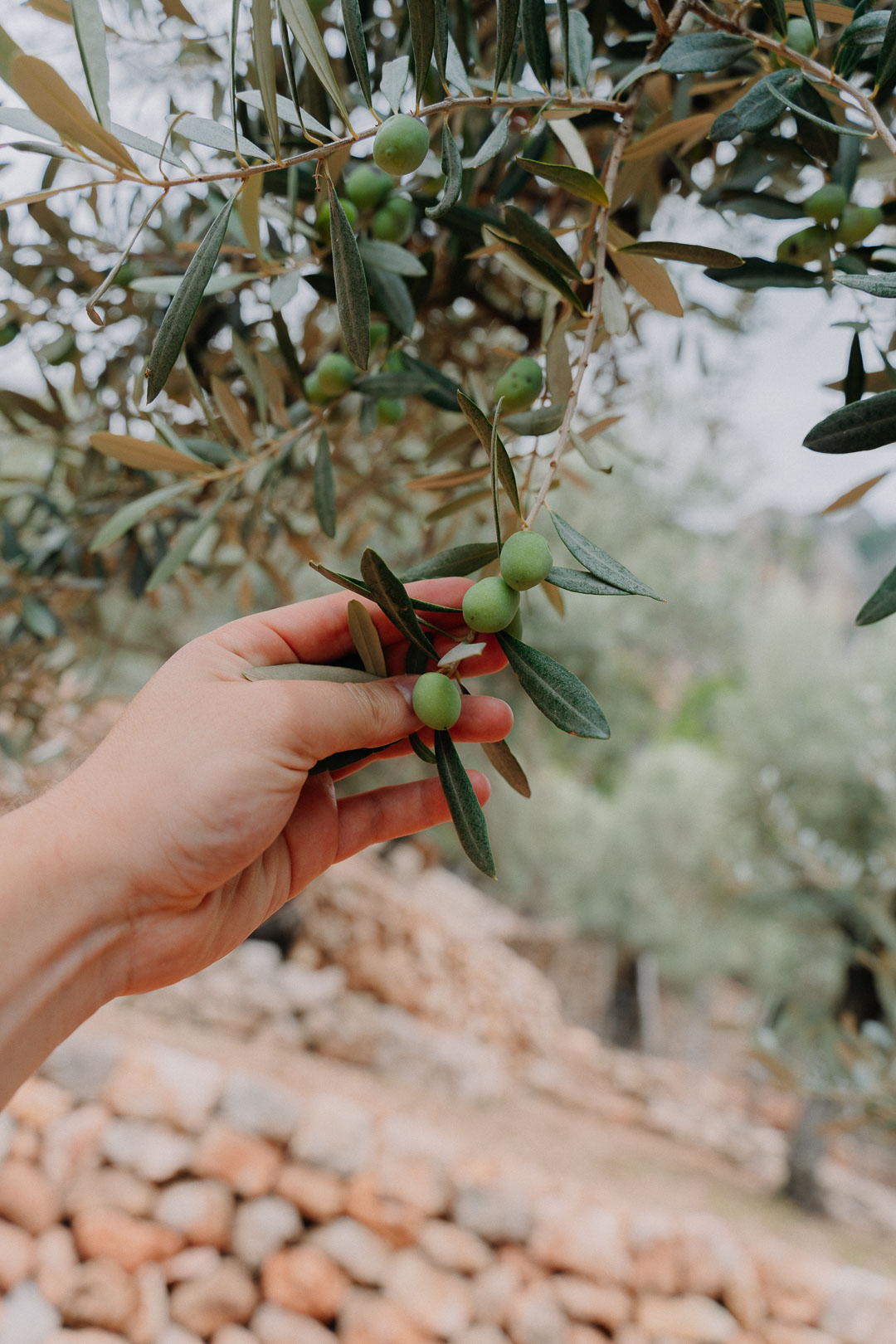
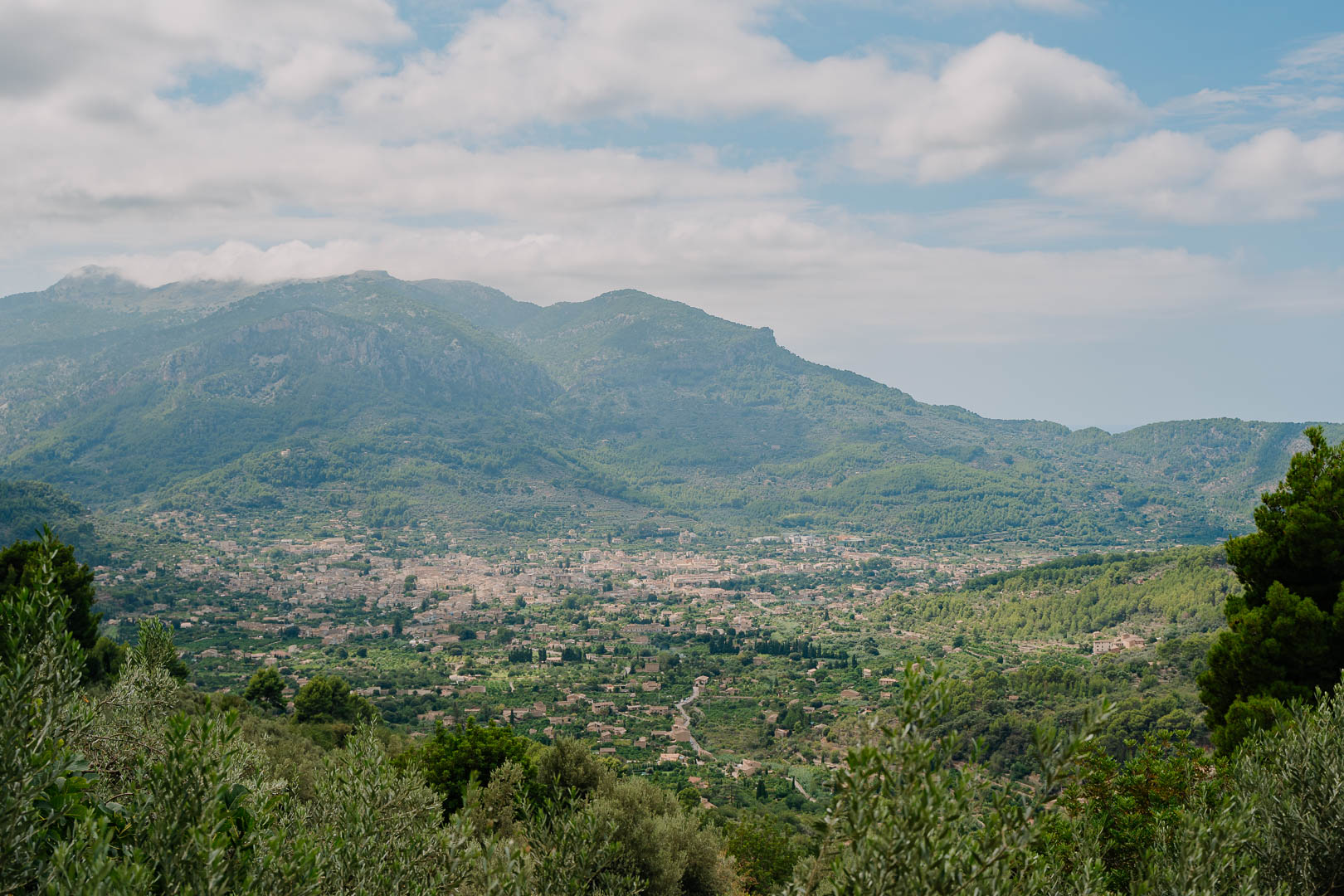
A seregall is a rocky and stony area, originated after a landslide. From these materials, for centuries, farmers have created terraces, cultivation areas and water pipes along the Serra de Tramuntana. The fact that the Gual Pons family estate, in Fornalutx, is called Es Seregalls is no coincidence: these constructions trace its landscape together with the five hundred olive trees that, since 1994, have been recovering from this previously abandoned olive grove.
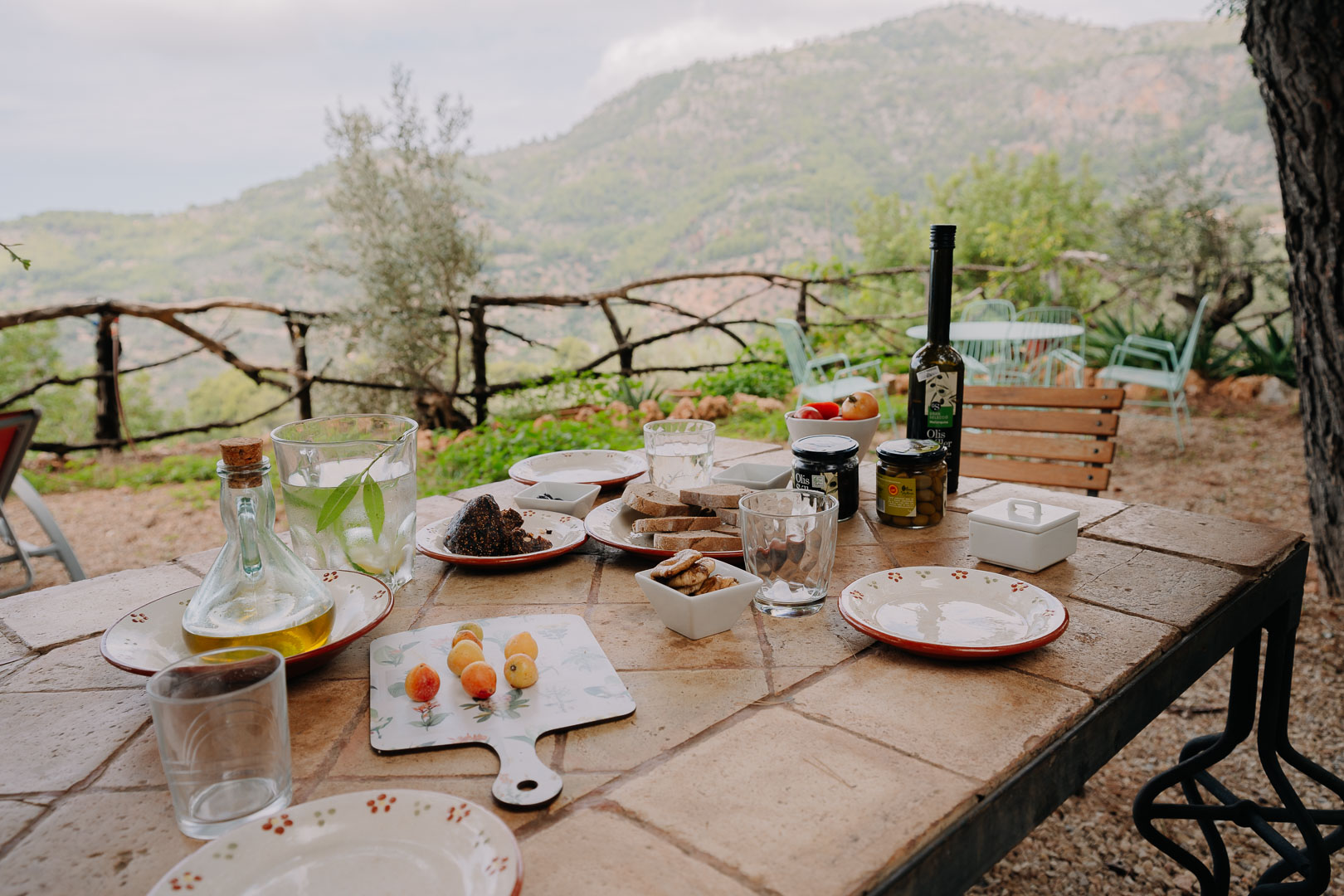
Joana goes back to two decades ago, when there was still a lot of work to be done on this estate to restore it to all its splendour, while she has plates, cutlery and pa amb oli to be berenated in the middle of the morning. She welcomes us cheerfully and hospitablely, eager to tell us the history of Es Seregalls, its evolution and its essence, twenty years later: 'We are an agricultural farm that has opened its doors'.
On a day-to-day basis and throughout the year, in Es Seregalls the olive trees are cared for, the olives are harvested when October arrives and they are delivered to the Cooperative of Sóller, of which the estate is a part, so that they can be in charge of making the table olives and extra virgin olive oil. With the fruit that is discarded, oil is produced that is not marketed, 'a very popular oil among rural families that is used for cooking'. The dynamics, then, are quite similar to that of any olive grove on the island.
'The fundamental thing is not the economic value, but maintaining the tree and the crop.'
'We see a large number of people crossing the Sierra de Tramuntana, but surely no one has explained to them what they see, so we chose to make information panels from the point of view of the farmer'. The idiosyncrasy of the Mallorcan olive tree and its morphology, the vocabulary rooted in the countryside, but also the history of the dry stone walls, the geology, botany and ornithology of the Serra are available to anyone who visits the estate with the desire to know more about what surrounds us or, as Joana defines it, 'popular wisdom that implies the richness of the olive grove'.
The initiative began last June and invites locals and visitors to take a break. To observe, discover and understand the life of the mountain olive grove from a perspective that promotes sustainable tourism. 'Tourism yes, but respectful, and for it to be like that you have to show what you are. If not, you don't stop being a franchise', says Joana, happy because, despite the short time that has elapsed and the fact that they started in the hottest months, the response has been positive. 'The tourist enjoys discovering this corner of the world and the local seems to ask himself 'what have they told me so far, that I had not understood anything'.
'I think it's wonderful to have synergies with other projects with concepts similar to ours. Es Seregalls has opened up to be generous'.
This is the key: the desire to transmit information runs through the raison d'être of Es Seregalls, which also has a small museum of trades, the Porxo petit, offers guided tours - which can be booked directly on its website - and gives workshops, such as the one they orchestrated together with Licors Tramuntana or the most recent, with which they have taught how to dry figs in the sun, as has traditionally been done on the island. 'It is important for us to recover and preserve customs and traditions. In the end, our idea is that everyone can have access to this information and value the usual'.
While we tasted a serva for the first time in our lives, we reflected with Joana on concepts as fashionable as sustainability or slow food, we agreed on the importance of unraveling the multiple layers of local produce and creating links with companies with similar philosophies. 'I think it's wonderful to have synergies with other projects with concepts similar to ours. Es Seregalls has opened up to be generous'.
With her eyes set on the horizon of a beautiful landscape that draws the Vall de Sóller, Joana sets the objectives of the estate: 'that those who visit the Serra take away a broader knowledge of the place they have passed through and that the people who live in Mallorca can learn more about our tradition and our culture'.
When UNESCO declared the Serra de Tramuntana a World Heritage Site in the category of Cultural Landscape in 2011, it was based on two concepts: landscape and cultivation. It seems logical, then, that we all share the responsibility not only of maintaining it, but also of approaching its entrails, its history, its particularities. And of course, to transmit this wisdom to those who live here and to those who are passing through, generation after generation. There is no better possible tribute to our environment.