Accidents can be painful, leave an indelible mark and interrupt progress aimed towards a certain goal. But what would happen if we were to turn their meaning upside down? Some accidents bring about positive changes, give us a breadth of vision that we did not even harbor before the misfortune. Accidents force us to stop and reflect, to pause and light a torch. Depending on how you look at them, they can illuminate opportunities.
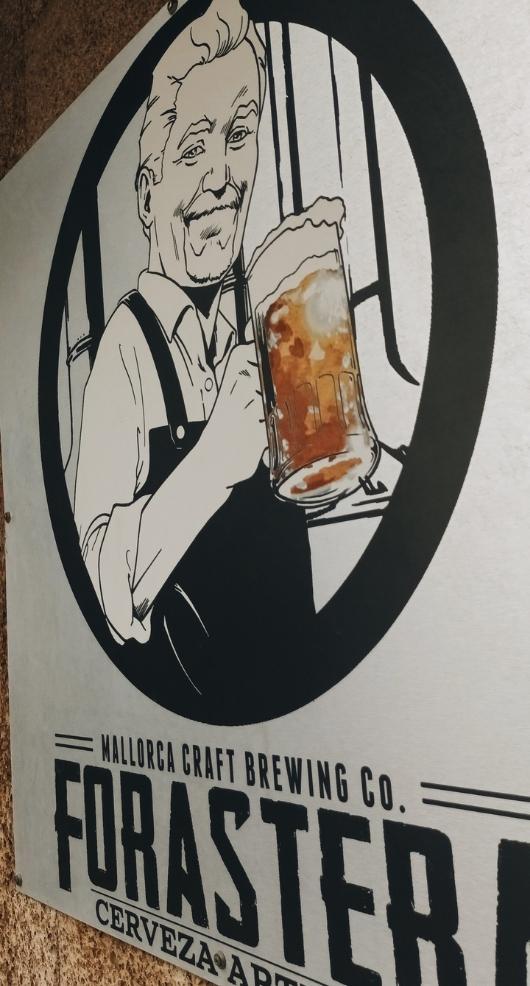
That's what happened one day to Sven Gohdes, who a few years ago had the misfortune to break his ankle. An injury that left him unable to exercise his profession as a brewer for some time. A fracture that kept him at home and led him to experiment, from inside his kitchen, with a liquid he knew well. Forastera is a Mallorcan beer brand based in Alaró, a project that Sven runs with Marta, his partner. She is the one who welcomes us to their brewery, a place that also serves as a tap room: "We are very proud of our product". This is the letter of introduction that she offers us as soon as we sit down on some stools, near the bar, between the silver of the tanks and the shine of the glasses. A spacious establishment that has become a sanctuary for tasting hops.
Marta expresses herself with conviction when describing her beer. Her voice is impregnated with values that she puts up with romantic as well as vindictive notes. "What we wanted was to make an artisan work. We wanted to escape from the big corporations, from all these structures that are destroying the planet. The important thing was to do something authentic to bring the taste back to the palates." At that moment, Sven enters the premises and greets us animatedly. With a marked Germanic touch in his way of speaking, he pours us a Sa Roqueta. One sip is enough for us to understand what Marta means by the recovery of flavors. We are in front of a Pils that tastes like glory, light. A refreshing blonde with an aroma that anchors us in the land it comes from. Its content treasures the properties of the countryside.
"We chose Mallorca because as you get older, you realize that you have fewer summers left to live".
After a second sip, Marta goes back to the Middle Ages. A trip to the past in which we can glimpse how some mothers, by virtue of its benefits, fed their children on craft beer. "They were drinks with a very light alcohol content. They had all the nutrients of malt and the water was purified. In the old days it was seasoned with medicinal herbs like coriander or rosemary. So those children were given a very good health cocktail."
Marta explains the history of beer while Sven works among the machinery. The two met in Berlin, one of the world's cradles of beer culture. It was there that she spent a few years working as an engineer. She tells us that on her way home from a hard day's work, riding her bicycle, she would stop at Hops & Barley some days. That was the name of the place that Sven and his partner had just opened, a brewery where they also sold their own product. Marta and Sven's relationship wasn't the only one forged within the walls of that tap room: "Suddenly I ended up being the most boring one at parties. I was either drinking craft beer or drinking juices." Since diving into the alluring intricacies of craft, Marta has been living a stabilizer- and preservative-free love affair with local brews.
But Sven had a dream that was not projected in Berlin, but in the panorama of Mallorca. The fall of the wall brought about a political change on a planetary scale, and Sven was able to cross the borders of his country for the first time. His destination was the island. His uncle gave him the ticket, a present that he took advantage of to rent a motorcycle and explore a place that captivated him. He always wanted to return. Marta, born in Leon and with her eyes set on adventure, also longed to make a Copernican turn in her life. "We chose Mallorca because as you get older, you realize that you have fewer summers left to live. So it's better to go somewhere where the summers are longer."
The year she began her new journey was 2013. The area where Forastera saw the light of day was El Molinar. In the middle of that old fishermen's neighborhood whose alleys lead to the sea, Sven and Marta brewed a beer that catapulted them to local stardom. A beer with a different smell, a different body, a different texture. "We were lucky that our product was liked, and in 2016 we saw that the El Molinar brewery was getting too small for us. So we started the search and found this place here, in Alaró." Currently, Forastera's catalog is limited to ten varieties. Marta confesses that if it were for Sven's inexhaustible creativity, that number would be much higher. But they prefer to limit production to ten, consisting of five main varieties and five seasonal ones. "When we are at fairs, it is very nice to see how people come up to us without asking what we have. They ask us directly for a Sa Roqueta and an Another Fucking IPA". The public knows and recognizes their work. This is the reward for the effort.
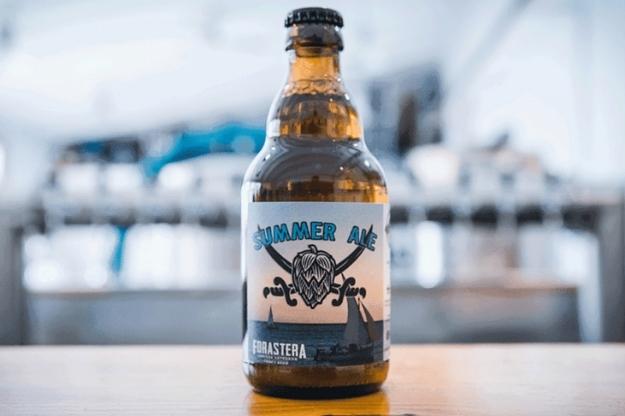
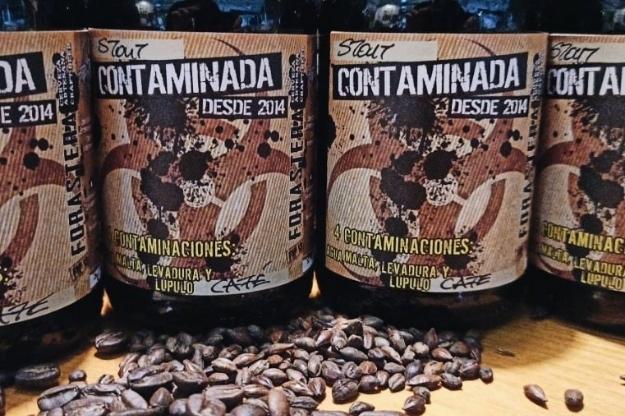
"Those of us who make craft beers are small and local businesses, so we are contributing to the sustainability of the whole environment".
Almost a decade after its inauguration, Forastera has a good handful of points of sale: gourmet stores, shopping centers, bars and restaurants distributed throughout the island. Although it is true that it is difficult to find a glimmer of visibility among the dominance of industrial brands. "Forastera is a craft beer run by two people. It is a small project and all our gestures are dedicated to caring for biodiversity". That is its hallmark. The water discarded by their osmosis filter is used for irrigation, part of the furniture has been obtained from the Fundació Deixalles, they have ceded their establishment for clothing exchanges and the malt resulting from the brewing process is donated to livestock farmers in the area.
Marta considers that in Forastera they practice a semicircular economy because "unfortunately our malt is still not Balearic. There just isn't any. APAEMA carried out a study and concluded that the native barley is not of sufficient quality to make beer with it". This lament, however, is accompanied by an optimistic message: she assures that the seed can be brought from Northern Europe to grow it in the Mallorcan climate. Half the way, therefore, has already been covered. The remaining stretch has to do with the malting process, and Forastera has done its research. They know how to do the sprouting and drying to prepare the grain, but being two people they do not have the capacity to do that. They need a third party involved in this aspect of the project. That is why they are appealing to anyone who would like to collaborate with them.
In Forastera they get the cereal grains from a family business in Germany. A project light years away from the multinationals. On the other hand, the time of the pandemic helped them to start the bureaucratic procedures to obtain the organic certificate. They have had it since 2020. This is the story of two people from outside, outsiders, who came to this archipelago to strive to make a beer with Mallorcan traits. A beautiful blend. "Those of us who make craft beers are small and local businesses, so we are contributing to the sustainability of the whole environment. And that's healthier for everyone”.
Sven approaches us at that moment and asks if we want another beer. The accident he suffered was indeed quite appropriate.