Sometimes an unexpected event changes the course of our lives, personally or professionally. So it was in the case of Alejandra Epifani who, back in 2012, suddenly became unemployed. Trained in industrial design and specialized in product, the truth is that the Argentinean based in Mallorca had never dedicated herself to her sector and it was then when she thought that the time had come to get into it.
However, there were some doubts in her mind: on the one hand, she had young children and wanted to enjoy them; on the other hand, she was "a little afraid of designing for others, she wanted to be responsible for everything that happened". In these circumstances, Epifani approached the world of design and realized that it "had evolved a lot towards computers" and she had not been updated for years.
In love with carpentry, she finally decided to investigate waste recycling. To her surprise, she realized that there were many initiatives in this field, but with hardly any quality design. It was precisely here that she opened - or rather, built - a new, tailor-made door to work with what she now earns her living with.
At the beginning, Alejandra started designing and making cardboard furniture with discarded boxes that she collected, cut and then glued with water-based glue, but they had two disadvantages: they were very bulky and required a great investment of time. Two disadvantages to which we had to add the reluctance of the public who, as Alejandra says, "thought that the furniture would not last". Faced with this triple obstacle, the only thing left to do was to "recalculate the path".
"I enjoy working on the role, I feel like I am playing".
No sooner said than done. With experience in the world of jewelry, Alejandra began to experiment, copying other materials - such as stone, wood and plywood - through paper. With her first creations, she gathered her friends and, she says, sold everything. Then, she exhibited in a store during the celebration of the Nit de l'Art, in the Christmas market of Felanitx, and the acceptance was enormous. She did not stop. Cartonpia was born, the union of cardboard and utopia, inspired by the paradox that "something so fragile can be eternal".
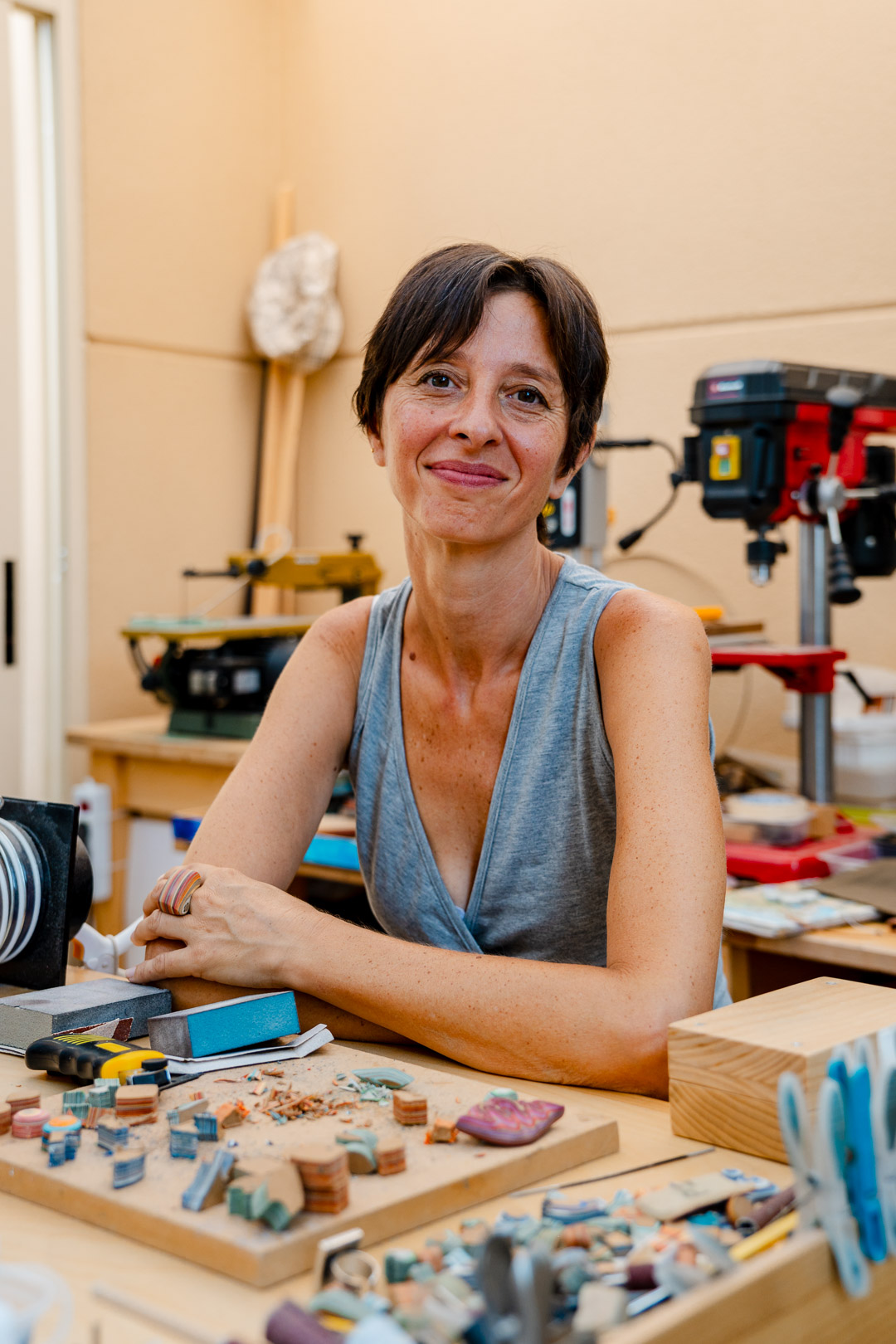
"I enjoy working with paper, I feel like I'm playing", she tells us in the small workshop she has organized in her house in Marratxí, where we talk under the watchful eye of her cat, who is curious among cardboard cutouts. Here, Alejandra keeps countless materials, cardboard and paper that she collects from schools, supermarkets and offices. Cookie boxes, old books, calendars from past years... Everything is useful to develop her talent and creativity. With them she has created lamps, sculptures and jewelry, lots of jewelry.
The method, now that she has mastered it, seems simple when she explains it: "First I see what colors I have, determine the order and when I decide the thickness, I prepare sticky water. When I have all the pages wet, I put them together in a press for four or five days so that they stick together well. Then I let them dry in the shade. "The result is a consistent material that somehow gets the paper back to its original state. "I like to say that I create my own wood."
In this new wood, an elegant and original grain appears to determine the chosen paper patterns, which gives her jewelry a unique and original look. Once the material is dry, Alejandra shapes each piece with the templates she has designed: geometric or organic, but always simple and inspired by nature. "I've been adapting to what people have been asking me for," she assures with a smile.
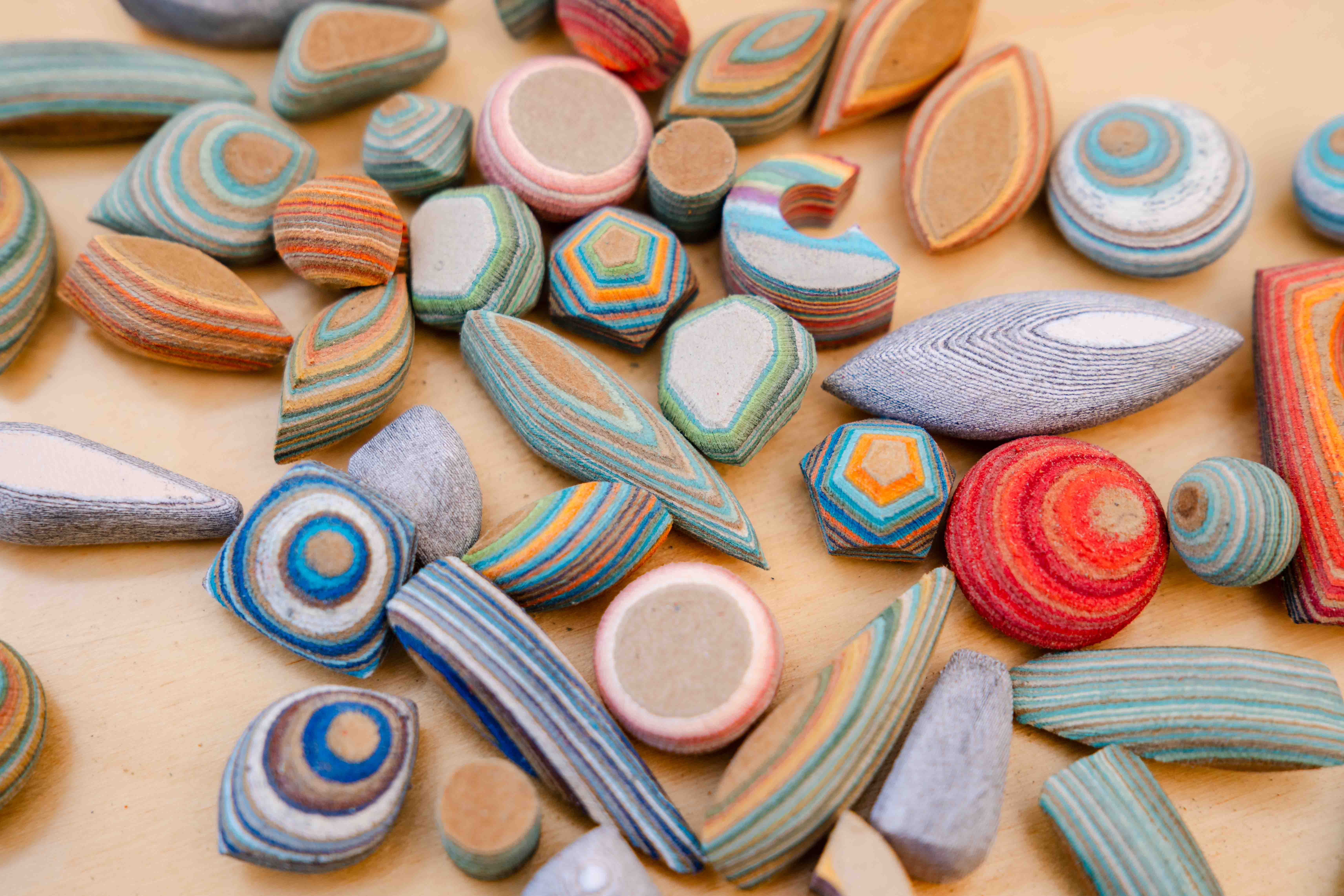
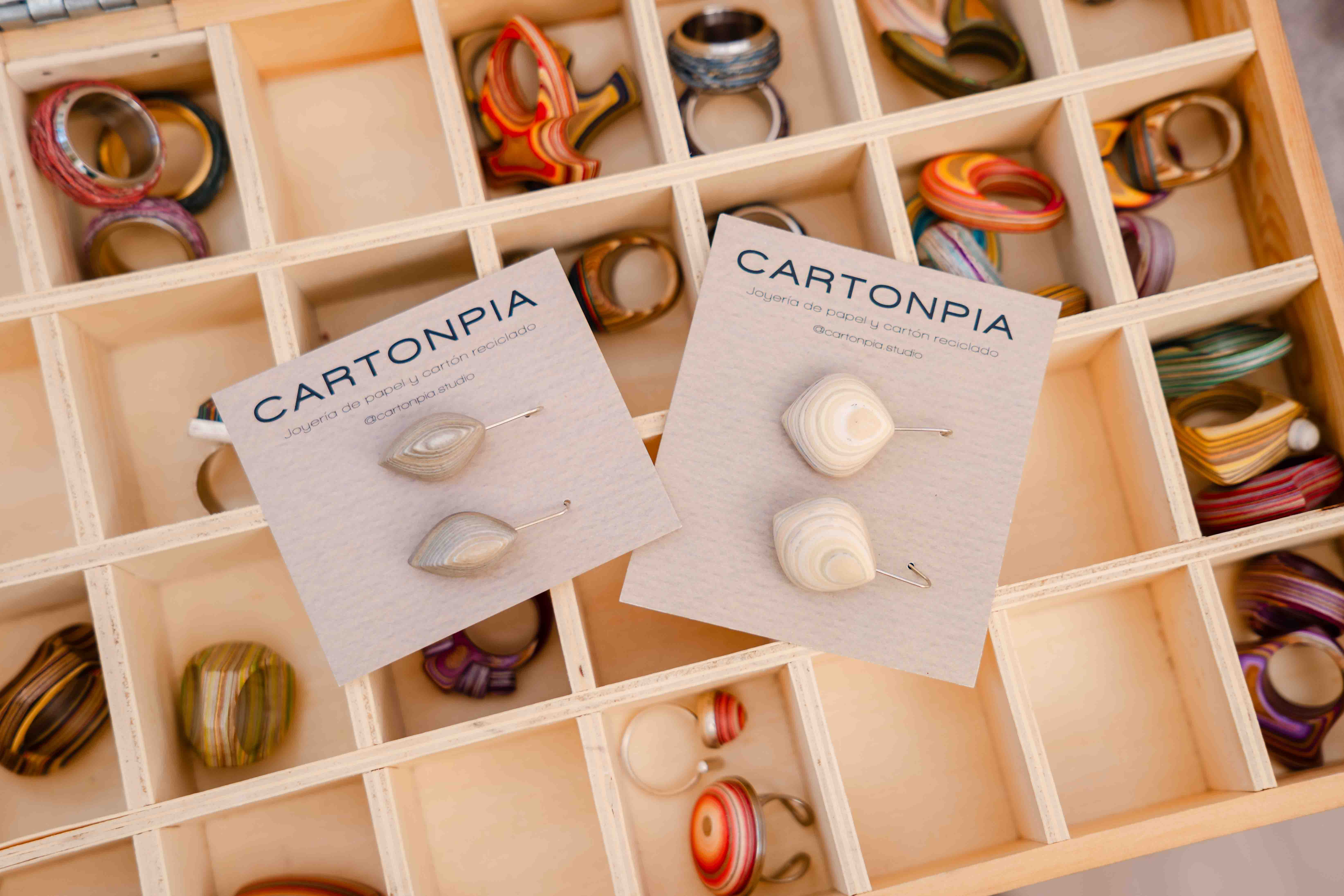
"I say I create my own wood".
When she started, she recalls, she barely had any tools. She cut paper and cardboard with DIY tools while doing it very slowly for fear of cutting herself, but over time she has been acquiring professional tools and, above all, experience. "I have learned in a self-taught way, with a lot of trial and error, and with artisans who have taught me their own techniques."
Now, Alejandra creates her earrings, necklaces and rings with much more skill, but with the conscience and affection of always towards a job that has given her many joys. She has sold in Malaga, Berlin and Munich, in stores, at fairs and markets -she has her fixed stop at the weekly market in Sineu since 2016- and in any of these places, she always turns to transmit her work process. "People are very surprised when they see the material because many think it is painted wood. And that's because," she continues, "we have access to everything and we have lost the ability to surprise".
She has also taught a lamp workshop and another monographic workshop for the students of the jeweler Damià Mulet. In addition, in 2022 she received the prize for sustainable craftsmanship, awarded by the Consell de Mallorca, for her work 'Bubbles of an Atlas'.
"I work when I want and where I want. I wouldn't trade the freedom it gives me on a family and personal level for anything," says this atypical jeweler who combines goldsmithing with piano lessons. She also takes a deep breath when she is asked how she faces the future: "the goal I set is to have enough stock to be able to dedicate myself to developing a sculpture or a lamp, but I can never get there. And, well, I always want to learn more: on the lathe, in the workshop and explore other objects with this material. But everything is time, time, time. Time is a tyrant," she concludes with a laugh.
Sustainability, of course, is a core value of Cartonpia, although Alejandra believes that, in addition to recycling, it is essential to "take a few steps back in life and in time, and stop generating garbage". To do this, she calls for a return to that time when we used to consume in returnable packaging because the key is, she says, to stop thinking about recycling and stop generating waste. A thought that we share and that, we want to believe, is not utopian, just as her beautiful and inspiring project hasn't.