Our visit to the Ribas winery ends at noon in a charming courtyard of the family home. Located in the center of the village, this nook breathes an unusual calm that allows us to enjoy a very special tasting with all five senses. Wine, Iberian ham and a selection of delicious cheeses rounded off the moment. We tasted Ribas rosé, a proposal with a Mediterranean character: summery, evocative and perfect to share with friends in a summer afternoon chat. Then we tasted Ribas Negre, a cherry red, balanced and warm cherry red wine from vineyards with twenty-five years of history. We finished with Sió Negre, perhaps the winery's most representative wine. This is a wine that takes us to the end of a wintry day with its body, complexity and aroma, and which emerged as a tribute to grandmother Sió, a woman, we are told, who was an active part of the modernization of the winery in a world, at that time, dominated by men.
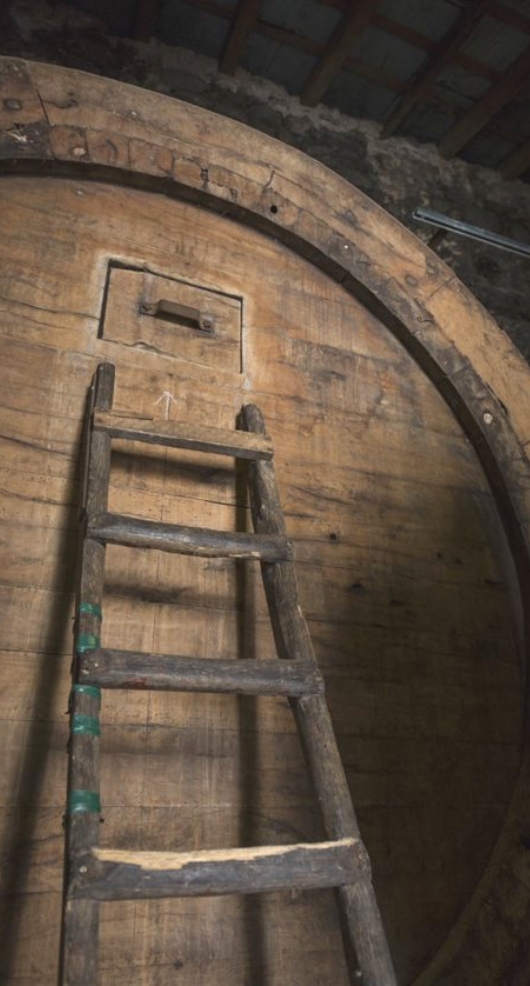
The wines, the tasting, the environment and the peace that reigns in this typical courtyard of the old houses that are commonly found in the interior of the island, are the perfect culmination that confirms that, in Ribas, things are done with affection and respect for the roots. In fact, we sensed it from the moment we arrived and settled in another cobblestone courtyard for a few minutes until the guided tour began. We immediately joined the other curious visitors to get to know the facilities of the oldest family winery in Mallorca. A winery founded in 1711 by Pedro Ribas de Cabrera that, in the past, also produced wheat and olive oil and that, nowadays, combines the experience of the farmer and the R&D of agricultural engineering to create wines of extreme quality.
"The harvest is still done by hand because we need the eyes of the grape harvesters to choose the best grapes".
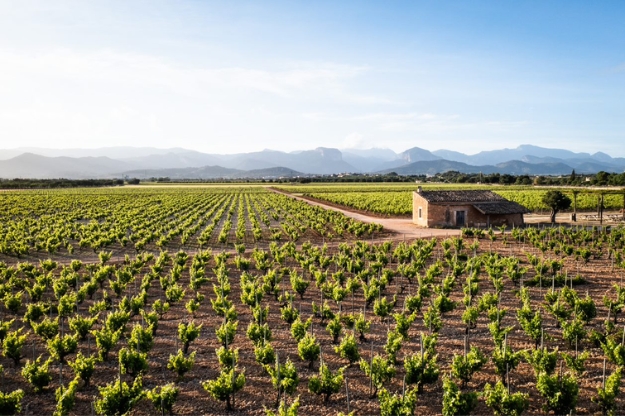
They undoubtedly preserve many things from the traditional, artisan, rooted work. The treatment is familiar, the respect for the land is deep and the manual labor is non-negotiable because, as they explain, "the harvest is still done by hand because we need the eyes of the grape harvesters to choose the best grapes". It is also clear to Ribas that reuse and waste minimization are vital. In fact, the grapes they discard are taken to a shepherd who, in return, gives them their natural fertilizer-free compost.
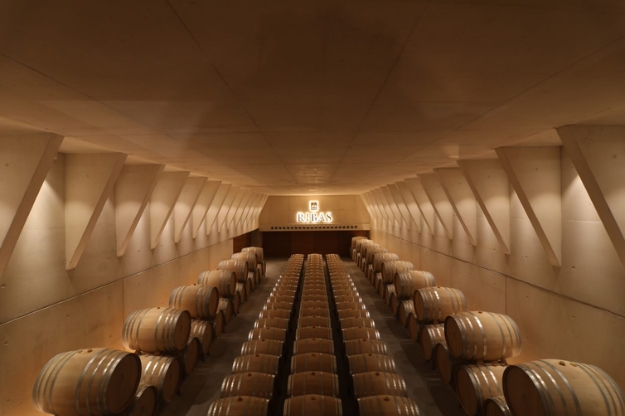
As we pointed out, innovation is also a key point in this winery in Consell, especially since the incorporation of the ninth and tenth generation of the family. Solar panels have been installed, experimentation projects are being carried out and, in 2019, a new building was built to modernize the facilities and increase production. This one, designed by Rafael Moneo's architecture studio, is perfectly integrated into the environment and leaves us speechless when we access its interior. White concrete, wood and Binissalem stone make up, on three floors -two of them underground-, the perfect architecture to produce and store Ribas whites and rosés.
Beyond the beauty of its facilities, Ribas' raison d'être is always the grape. In their case, they bet, in its great majority, for the native varieties mantonegro, prensal blanc and gorgollassa, a patrimony of the island that they defend and that, they trust, will adapt to the climatic change. This is a problem that comes up for discussion on several occasions during our visit because, they tell us, "the life of the vineyards is starting to be shorter". To combat it, observation, the study of new forms and the continuous evaluation of cultivation techniques adapted to the challenges of the present and the future are indispensable.
"Maybe we are a bit classic, but we believe in our style."
All of Ribas' proposals have in common the selection of the grapes by hand, berry by berry. Afterwards, each specialty follows its meticulously planned course. Ribas Blanc and Ribas Rosat, for example, ferment in stainless steel - barrels are avoided in these cases to achieve a fresher wine - for 30 to 40 days at low temperatures. Ribas Negre, on the other hand, ferments at a higher temperature in barrels; for Ribas de Cabrera, ripe clusters are selected from the oldest vines and, for Soma, part of the wine ferments in stainless steel tanks and a smaller proportion in French barrels.
Everything seems to be perfectly studied in this winery that feeds on the know-how inherited generation after generation. A winery open to innovation, but which has not lost sight of the land, its roots. In fact, as they themselves assure us, the changes here are quite subtle, they take place little by little. And they add: "maybe we are a bit classic, but we believe in our style". Now that we know their way of working and understand their company philosophy, while tasting their wonderful wines in this idyllic patio, we can affirm that we also believe in this style. A style that reminds us of the importance of doing things with sense, without haste and with a lot of respect.