Terragust is the demonstration that projects made with sense and purpose reach and excite people. The family that for decades has been behind Terracor, a company linked to the Mallorcan countryside that grows fruit, vegetables and aromatic herbs on more than 305 hectares, knows this well.
With the recent incorporation of the third generation of the family to the company in Terracor, the idea of promoting a new project linked to the land arose. This idea was capable not only of bringing people back to the countryside, but also of spreading the love and respect for the local product that they profess.
That is when Terragust was born. As Marina Adrover, who studied biomedicine and worked for a few years at the university, tells us, "I was at a time when I had to make decisions and I felt I couldn't miss this opportunity. A novel project was in the making that, at the same time, was familiar. So, not really knowing how it would turn out, I decided to be part of it anyway."
Although Terracor and Terragust are two different concepts, they drink from each other because in both there we can find two common denominators: family and passion for the countryside. At Terracor they grow and harvest the produce, and at Terragust they offer agricultural and gastronomic experiences linked to Terracor's fields and products.
"We have been moving away from the countryside and it seems that more and more people want to reconnect with it."
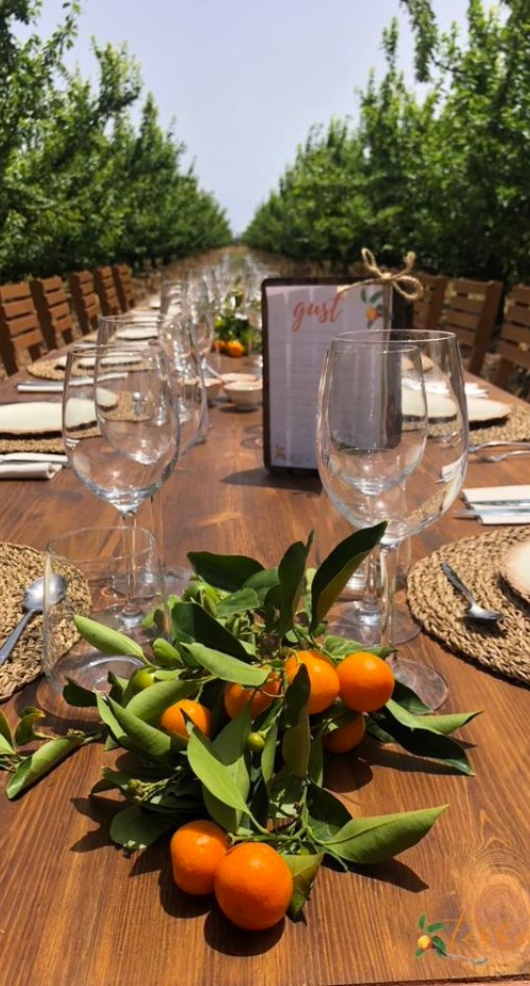
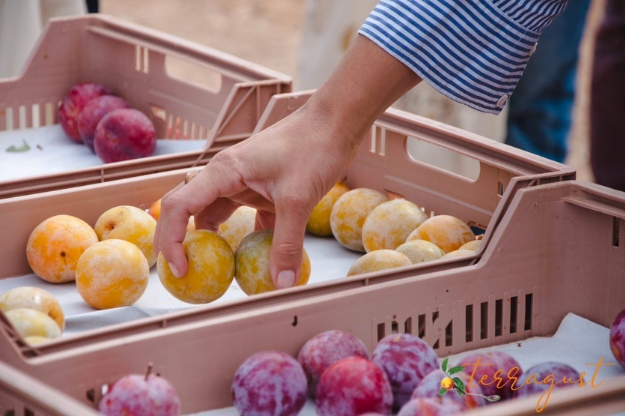
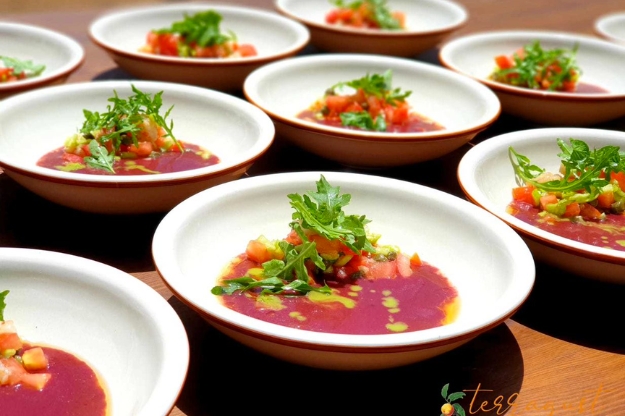
Terragust experiences are lived with all five senses. A farmer takes the participants on a tour of the countryside and shares with them curiosities about his work and the varieties of fruit and vegetables. The participants, for their part, take on an active role: not only do they learn first-hand where a food comes from and how it is grown, but they also participate in the harvest and, afterwards, enjoy a tasting menu prepared with their own products and those of other producers on the island. The experience is also served with a certain aura of mystery, as nature sets the tempos: depending on the season, one farm or another is chosen, so the location is secret and is communicated to the participants just two days before.
Terragust experiences involve residents and tourists, some curious to learn more about Mallorcan agriculture and others wanting to have a good time in nature. As Marina explains, "at first we thought that only tourists would come, but in reality many people from Mallorca come too. Sometimes we are surprised by their curiosity, and the fact is that we have been moving away from the countryside and it seems that more and more people want to get back to it".
"Agriculture is undervalued, but the truth is that without it there is no Mallorcan landscape".
However, these experiences are much more than a way to escape from routine in an incomparable setting. In the roots of the project lies a clear desire to transmit love and respect for the countryside, to recover the traditional flavors, to value the work of farmers. And, as Adrover points out, "agriculture is undervalued and the truth is that without it there is no Mallorcan landscape".
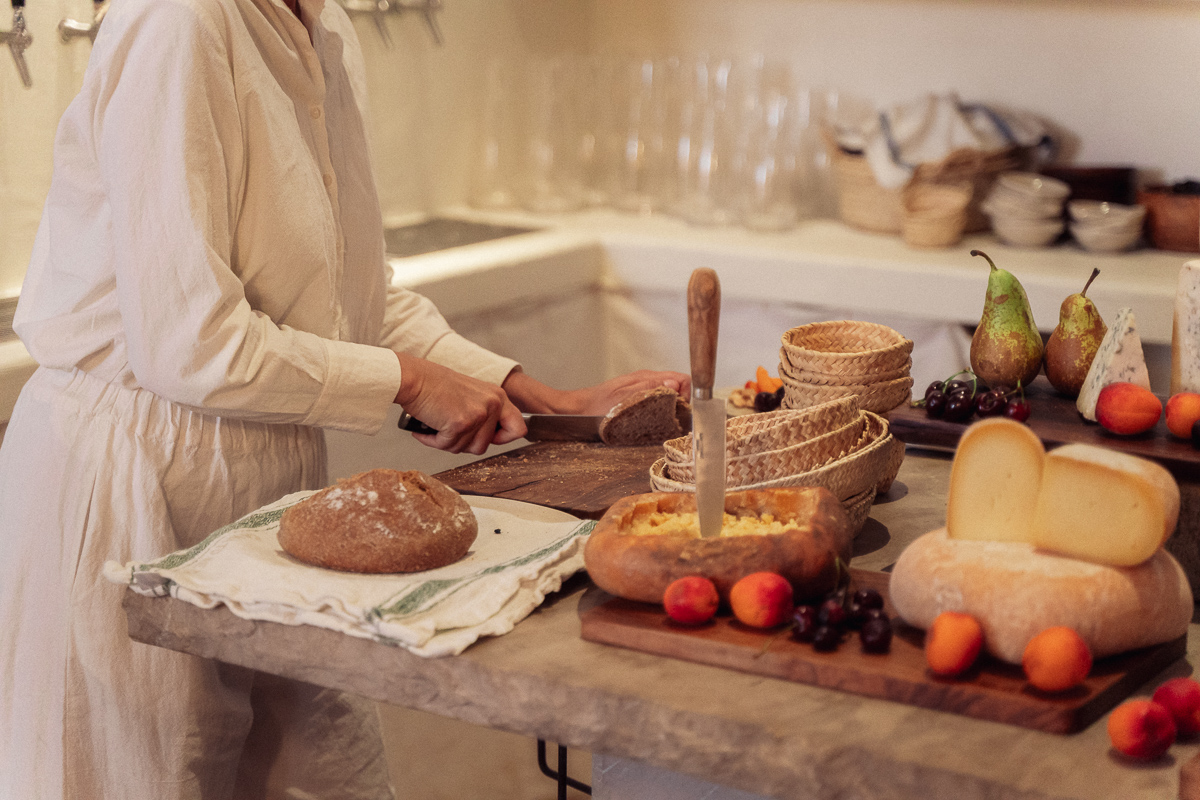
Since it was born, Terragust continues to evolve and at this time ten people already work in it. In fact, on May 9, 2022 the first store was inaugurated, where you can buy Terracor's own products as well as cheese, wines or sobrasadas from artisan producers of the island. In addition, those who come to the Manacor store to do their shopping have the opportunity to pick their own strawberries and tomatoes (of the latter, they have twenty-two varieties grown).
Both in the farms and in the store, as well as in the experiences, the concept of sustainability is very present. "We value all options to reduce plastic, choose fertilizers that respect the soil and the product, and generate less and less waste. We understand sustainability as a process in which you have to be attentive and question every decision to improve day by day". In fact, the Terracor products tasted at Terragust are grown using the integrated production system. This method, halfway between conventional agriculture and organic farming, allows to make the most of natural resources while exercising an environmentally friendly production.
Walking around, chatting and learning about the history of Terragust, one quickly understands the vocation that both the family and all the workers share for the countryside, and their firm purpose to "change the mentality of the people so that we all get involved to take better care of the products that are from here". In an island that lived splendorous decades in the shoe and leather industry, and where the tourism sector now dominates the economy, it seems that agriculture has been relegated to a more than discreet plane.
So we asked how we can help to promote local produce and those who make it possible. Adrover gives us some clues: buy products grown and processed on the island and, on a larger scale, "demand that large supermarkets and hotels buy, sell and use products made here".
At the end of the day, if we want to continue enjoying the landscape, the good produce and this wonderful environment, we must care for and value what is made here and care for and value those who work these lands that provide us all with so much.