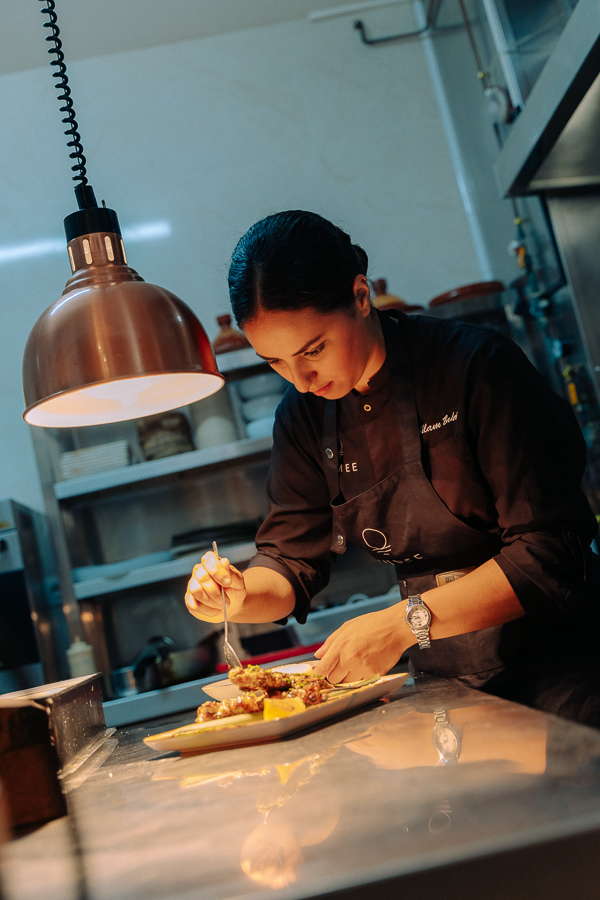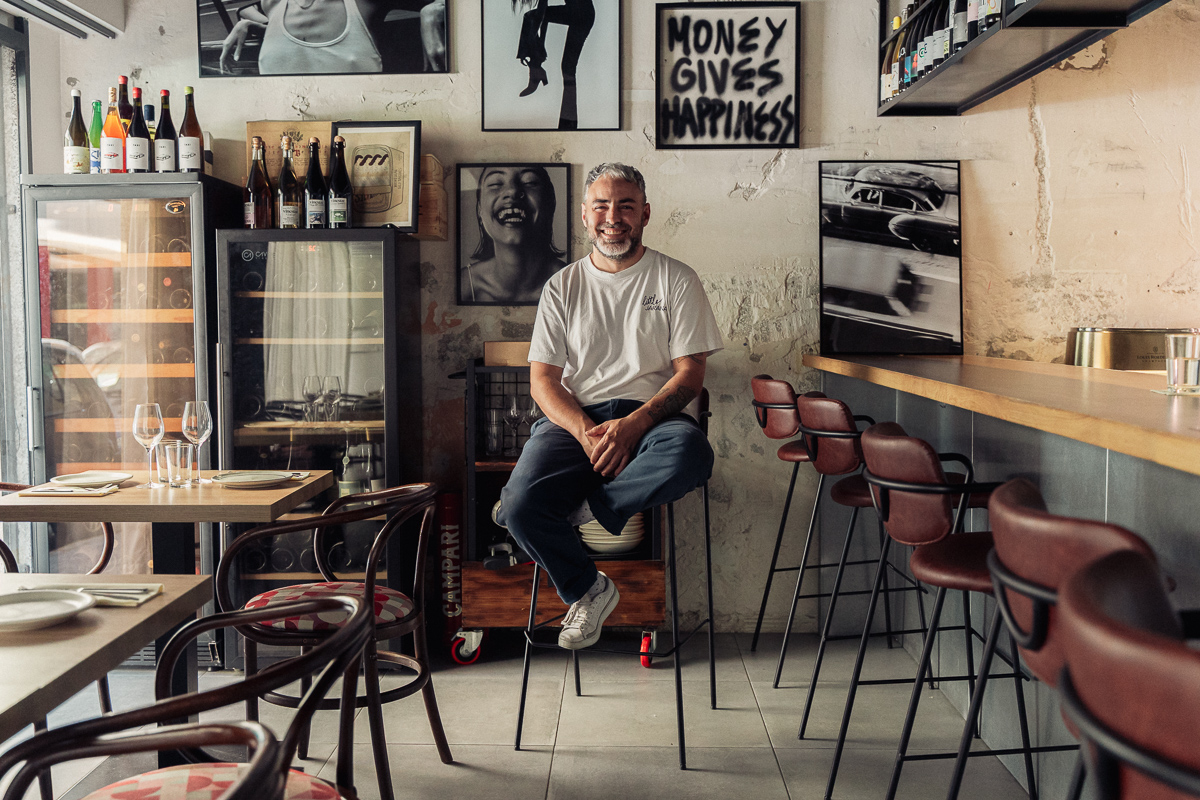
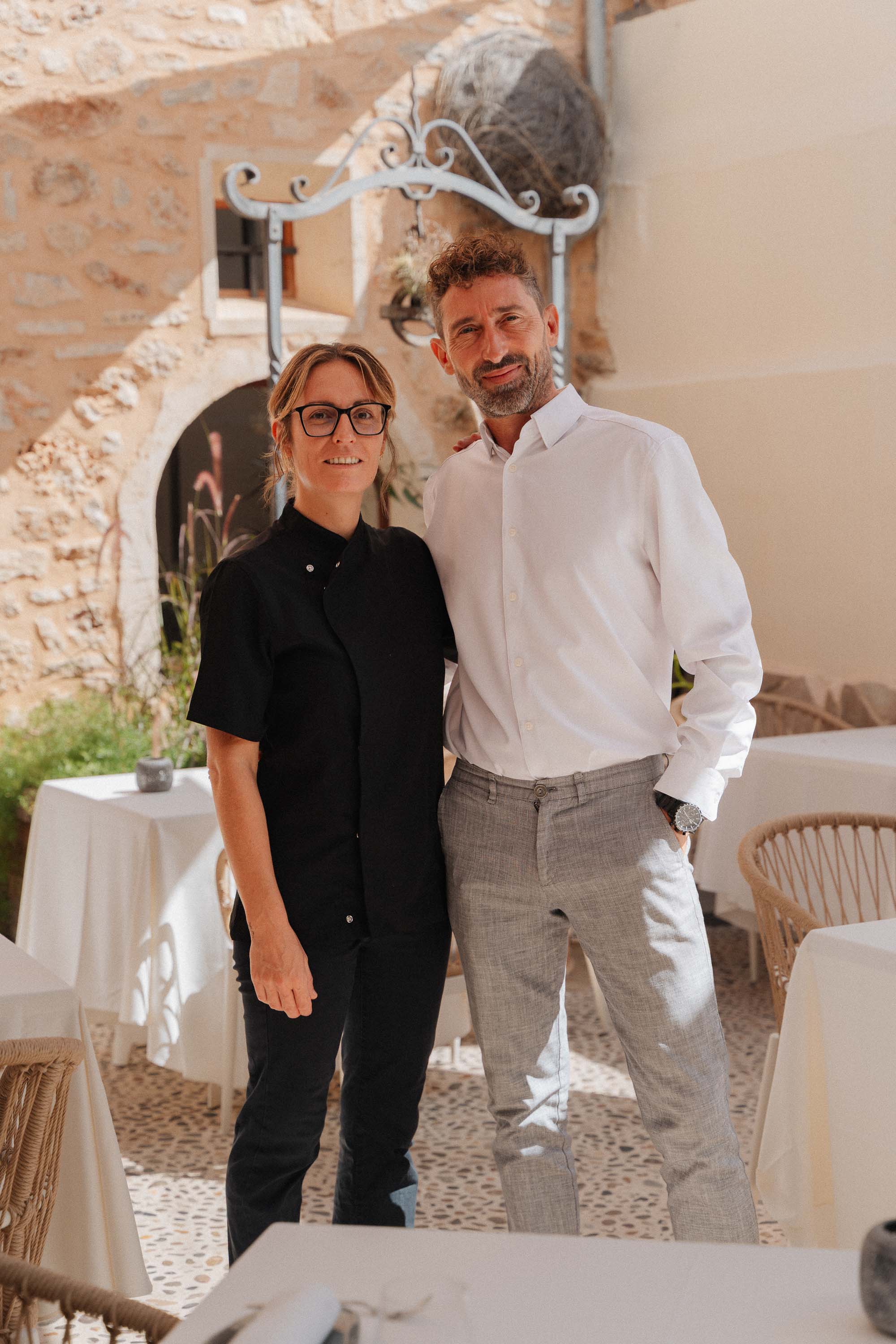
Cati Pieras and David Ribas look at each other out of the corner of their eyes and smile with a complicity simmered for years between the stoves and tablecloths of
their professional and life project: DaiCa. They seem intimidated by the camera, but soon relax as they reflect on the road traveled, always discreet and away from the
media spotlight. His is the result of tenacity, effort and overwhelming conviction. After training at the Escola d'Hosteleria de Palma and in restaurants such as Cavall
Bernat, at the Hotel Cala Sant Vicenç; Sant Pau, by Carme Ruscalleda and El Racó d'en Freixa, Cati Pieras stopped at Can Jubany, in Calldetenes; David Ribas, the son of
cabinetmakers, did the same at the University School of Hospitality and Tourism in Sant Pol de Mar and in kitchens and restaurant rooms in Girona, Germany and the Basque
Country. In one of those they met and decided to move to Mallorca to undertake their dream: to create a restaurant in which to explore their own vision of gastronomy, a
creative symphony that enlivens the senses from respect for the product and a treatment as impeccable as it is welcoming.
After a long journey in renowned kitchens, how did you end up in Llubí and decide to open the doors of Daica in 2012?
Cati: Since we met, this was a project we had in mind. We just had to find the time and place that would convey what we wanted.
David: The idea was maturing until it fell from the tree, just like being parents, which was at the same time. It was very emotional because it meant putting two dreams into
action at the same time and that was 13 years ago.
Daica's motto is 'cuina de prop'. Is this a way of understanding cooking?
Cati: It is. When we say 'prop' we are not only talking about proximity, we mean that we take care of the product, the food and the people who come to see us. 'De prop' is giving
everything you can and making people feel welcome. The business is not about serving food and making money, it goes beyond that. We say that we are romantics because our
way of cooking is very much thought out in relation to people's health, the quality of the product, making people feel good, adapting any dish to all types of allergies and
vegans... And we do it so that people feel happy, content, loved.
David: We offer a close and loving service so that everyone can get to know each other, feel at home and want to repeat.
The so-called signature cuisine has revolutionized, in recent decades, gastronomy, but it seems that the term has been diluted. What is Cati Pieras' personal proposal?
Cati: What is signature cuisine? I've never liked being told that I do signature cuisine because I don't know what I should identify with, I don't know what the definition is. I
think we do what we feel in the season we are in, with the product and the temperature we have. This is the cuisine we do: the one that the earth gives us.
So, despite the deconstruction, reconstruction, and foaming, is traditional cuisine still the basis of any recipe?
Cati: Yes, without a doubt. Without traditional cuisine there is no cuisine. We use the basics of ancient cuisine, although today you don't need to eat as you did a hundred
years ago and needs have changed. We need lighter, more balanced meals for the life we lead, and this is evolution, always starting from the old.
At DaiCa you prioritise local and seasonal products, do they dictate the menu?
David: Yes, the product, the season, and the weather. Now we should focus on autumn, but you can't serve 'escaldums' in this heat, you have to offer light, refreshing dishes,
with fewer calories...
Cati: The seasons are changing. What arrived in October will now arrive in November. The point is to observe and talk to the suppliers, the farmer, the fishmonger, the flower
seller. You can't say 'since summer ends on September 21, we’re serving the autumn menu'. The point is to be attentive when the produce arrives.
'I think we do what we feel in the season we are in, with the product and the temperature we have. This is the cuisine we do: the one that the earth gives us', Cati Pieras
And when the produce arrives, the menu changes. What inspires you when creating a new dish?
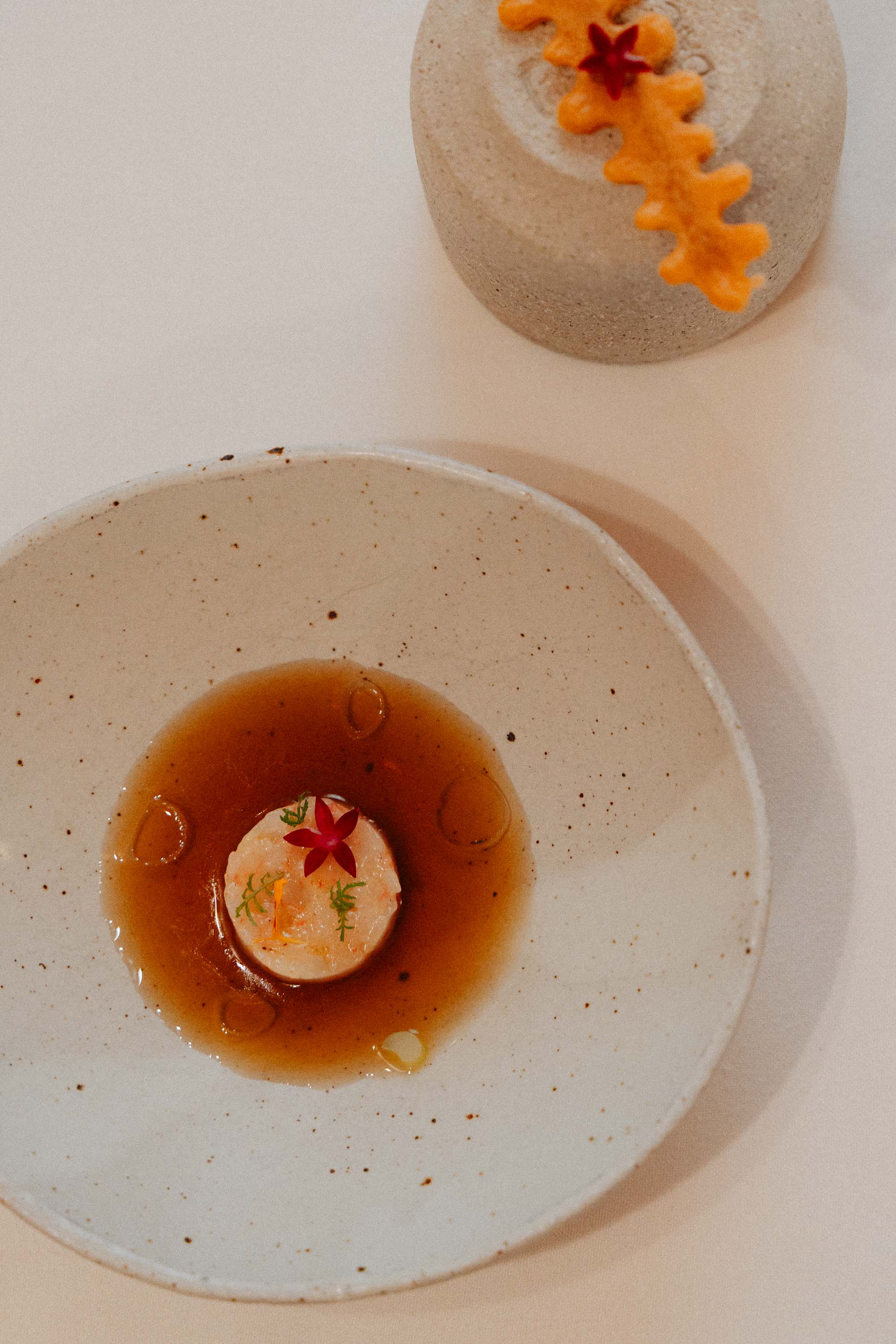
Cati: The technique is always in the background. I am inspired by the produce and its
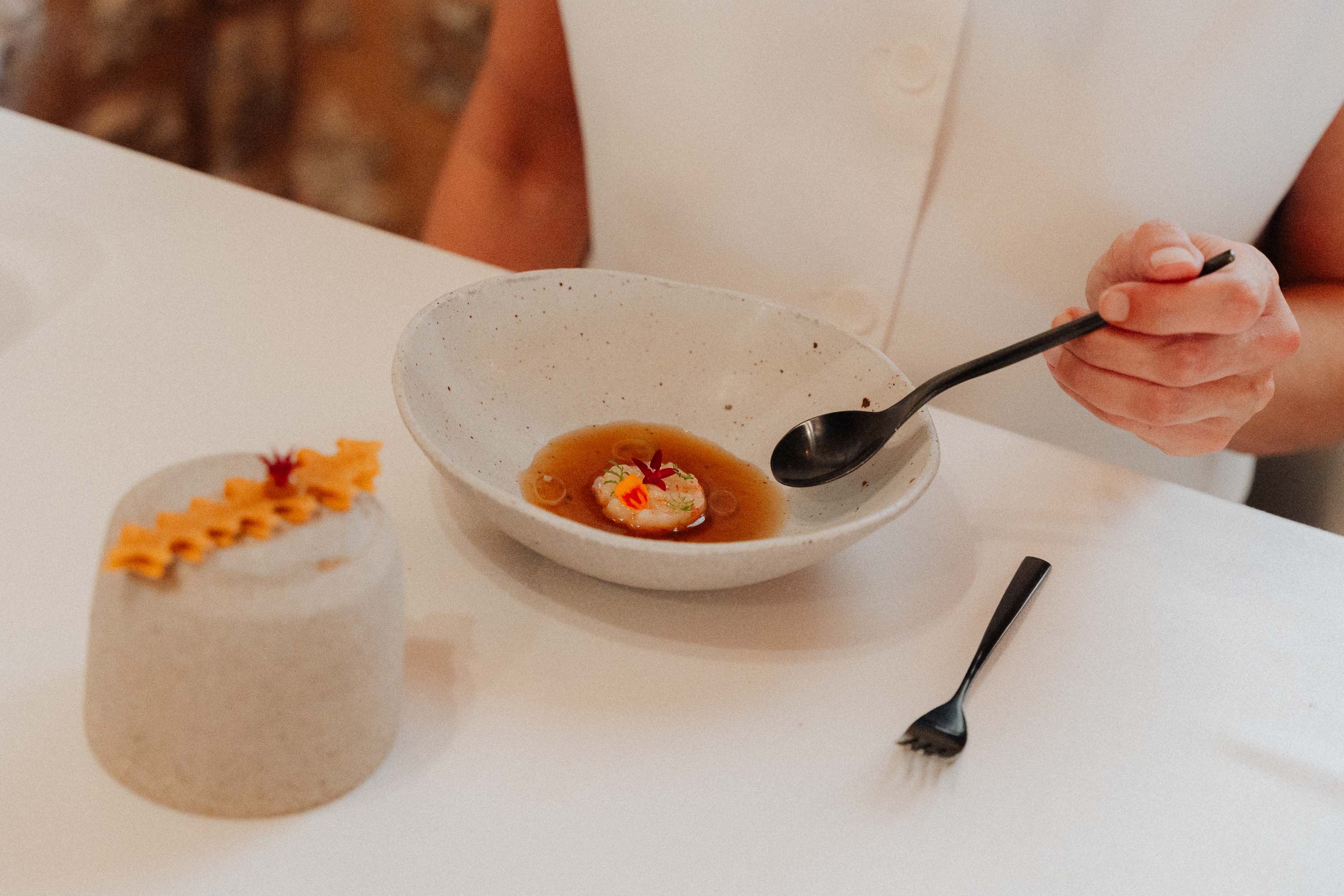
whole. Colors, which provoke many sensations and enrich the subconscious; the flavor, the old recipe book, the smells, the landscape, and the herbs and flowers that round off a dish. From there, depending on the touch we want to give, we look for contrast so that everyone freely feels something different. In the end, what makes the dish is the whole.
It takes a lot of work, but I enjoy it a lot. Oh well, and our kids inspire us too. We talk to them a lot, they give us ideas and they try the recipes...
David: The most critical customer is the children because they are always sincere.
Cati: When you have it, you think about the technique. I wonder what the diner will feel when they taste it: a crunchy, creamy, liquid, unctuous, dense... And I adapt the
technique while always respecting the flavour and aroma of the product.
Proximity and seasonal produce are concepts in vogue. Is it a fad or is society changing and beginning to value its own?
David: It's a change that is here to stay and will go further. Using products from here is a matter of respect.
Cati: It should be the present and the future for economic and social reasons, and what should guide how we buy, although it is true that sometimes the concept may be
misused and detracted from.
Is it a challenge, for your day-to-day life, to have local suppliers and use seasonal products?
Cati: It was ten years ago. Now it has improved a lot because there are more products and people who have very good produce.
It seems redundant to ask you what role does Mallorca play in all of this...
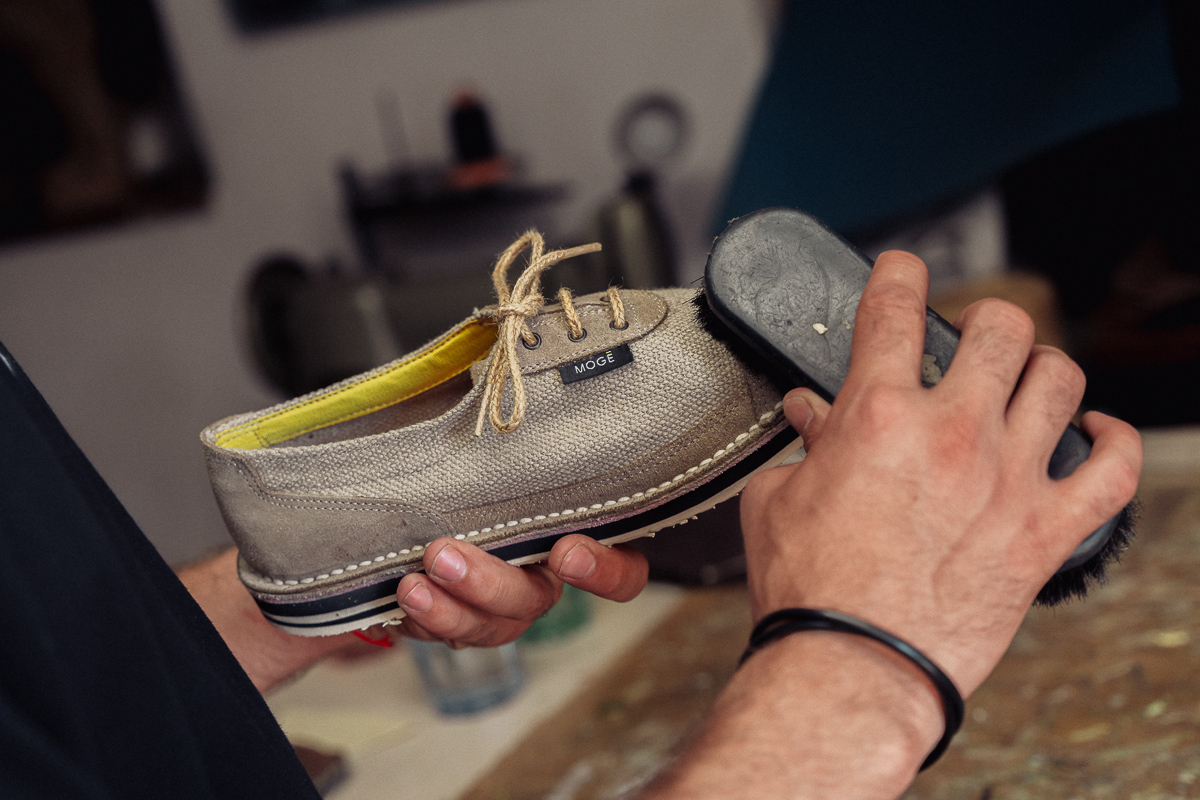
David: Everything from when you start to when you finish, even a lot of the tableware is made here, as well as the sodas and water that we serve.
This building, in the heart of Llubí, was a sausage shop that you transformed into a small three-room hotel and a restaurant. Is inland tourism, small and respectful, also
our future?
David: Yes. When we launched it, in 2012, we were dragging the crisis of 2008 and many people were surprised by the location, but what at first was a handicap, because people
have to come here expressly, has now turned in our favour. People want this: to get out of the city and go to a quiet place where they are taken care of and pampered. The
tourist, the same. We have worked a lot with word of mouth and the tourist brings his friends and tells them: 'look what a place I have discovered'.
Cati: I hope that more and more tourists will arrive looking for this concept because the island does not have capacity for more. Of course we want tourists, but of quality.
Anyone who loves this island wants a quality tourist.
Right now there are nine of you in the squad and your format is very familiar. Is it part of your DNA or are you open to expanding the business?
Cati: No. This is a small place and if we could, it would be even more so. People ask us why we don't move to Palma or set up another restaurant, and I think it's a matter of principles, of what one wants in life. We don't have that craving. What makes us happy is working in what we like, having a lovely family, having friends... and that's it. Well, and
traveling.
David: We're that romantic. We don't have airs of grandeur. Plus, when you value the work that goes into pampering a business and running it your way, you don't want to
embark on anything else.
What would you say to a young couple or friends who love cooking and want to make it their life and professional project as you did?
David: Think twice (laughs).
Cati: Yes, it's very hard, work-life balance is very difficult in this line of work...
David: It's like a little child, you can dedicate as many hours as you want to it. There has to be perseverance, dedication, resilience... And they have to be well matched because you take your work home and your home to work 365 days a year. Maintaining the illusion is difficult, but very rewarding. In addition, the hospitality industry has changed a lot. Before, if you left at 3 in the morning and there was no bus, you had to make a living and we, when we started, we opened from dawn to dusk...
Cati: The first thing is to be very clear about what you like. Anyway, I would try it. If you make a mistake you can say that you tried and you were wrong. If you don't try, you'll
never know. Although we are very happy, eh?
David: Of course we're happy. Otherwise, we would not be here.
'Using products from here is a matter of respect', David Ribas