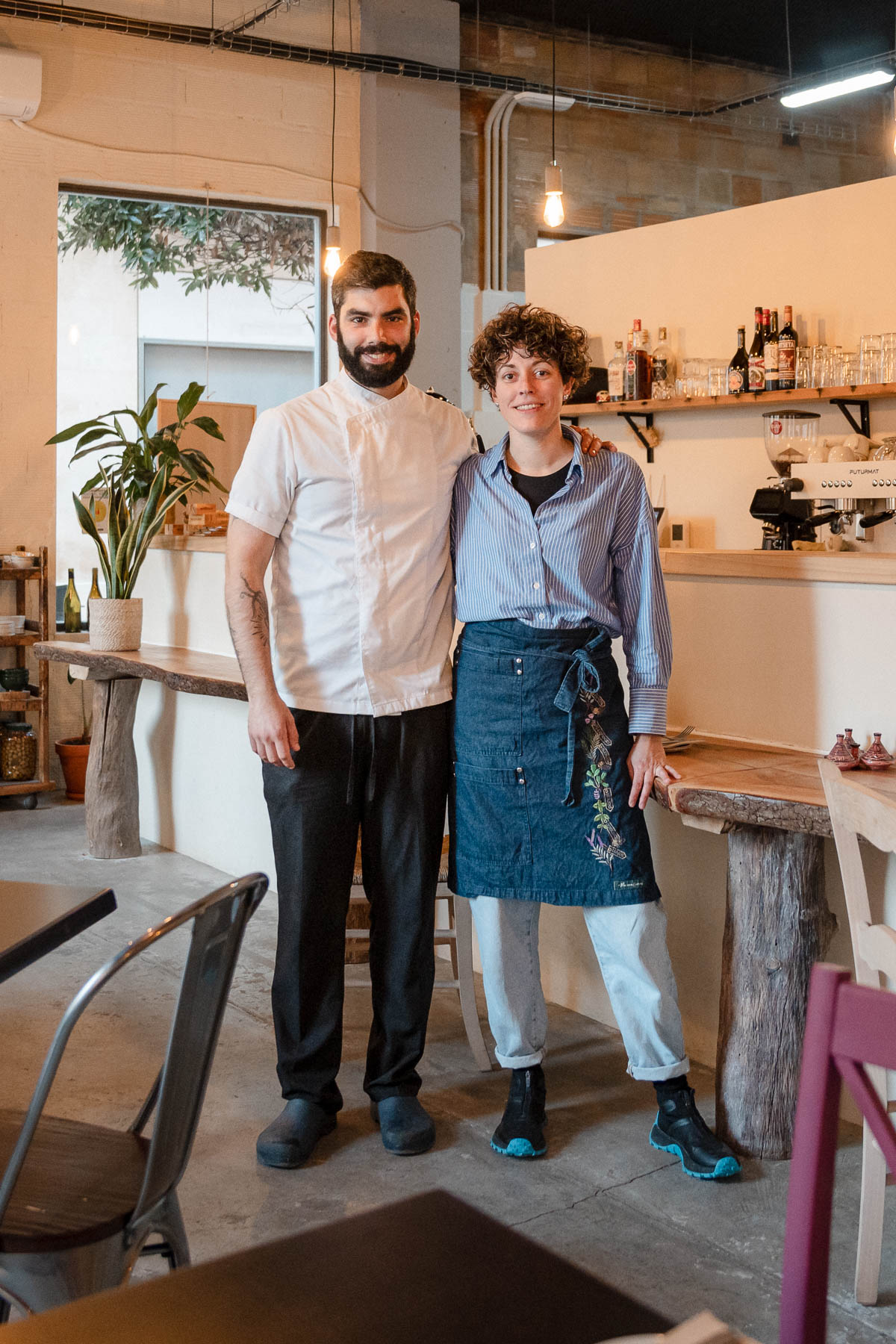
A daily lunch menu and a menu composed of eight dishes that invite sharing at the table make up the gastronomic offer of Cuina Vivant. They don't need or want more because the seasonal and local products dictate the rhythm of the stoves of this project led by Pilar Palou and Tomás Ketlun. The idea has been this since, confined in London, they began to imagine what their own restaurant would be like.
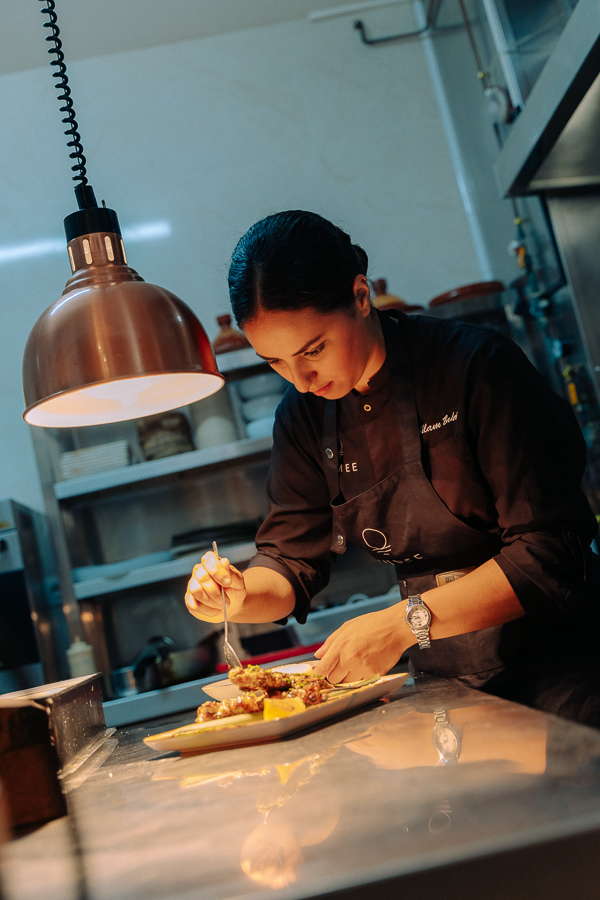
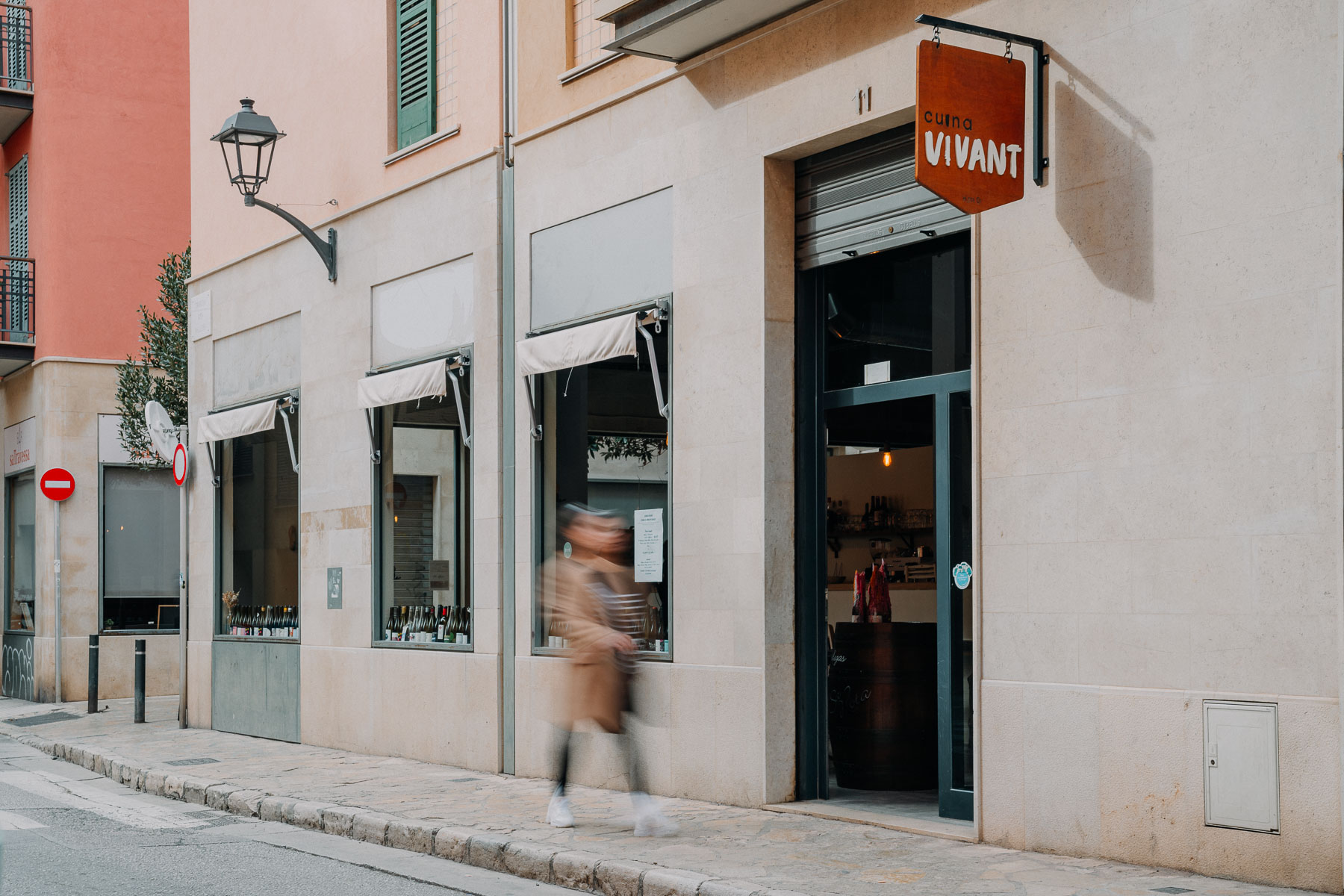
Today, that illusion is a reality that is located at number 11 of the Travessia d'en Ballester, in the district of Sa Gerreria of Palma. Pilar and Tomás are a couple and they work as a real team: he is the chef; she is in charge of the dining room and is also the wine specialist. Together they transmit, through their proposal, their vision of the restaurant business: one that practices trash cooking and moves, in its daily decisions, towards zero waste.
Cuina Vivant was born during the pandemic. "We were living in London and we were already in the hospitality industry. We were environmentally conscious and started to think more about the impact of the industry. We researched what we could do to reduce our footprint and then we thought, what if we took advantage of this time to define what our own restaurant would be like," says Pilar, sitting at a table in the restaurant itself.
Tomás had always liked cooking and, when he finished high school, he embarked on this path. Acquiring experience in Argentina, London and Mallorca, he learned what he wanted and what he didn't want for his own restaurant. Pilar, on the other hand, studied Communication and Advertising, but in London she developed an interest for the restaurant business, "attention to detail and the creation of experiences".
"Trash cooking is really a return to the roots, to the practices that were done before, when people did not have everything they wanted right at their fingertips."
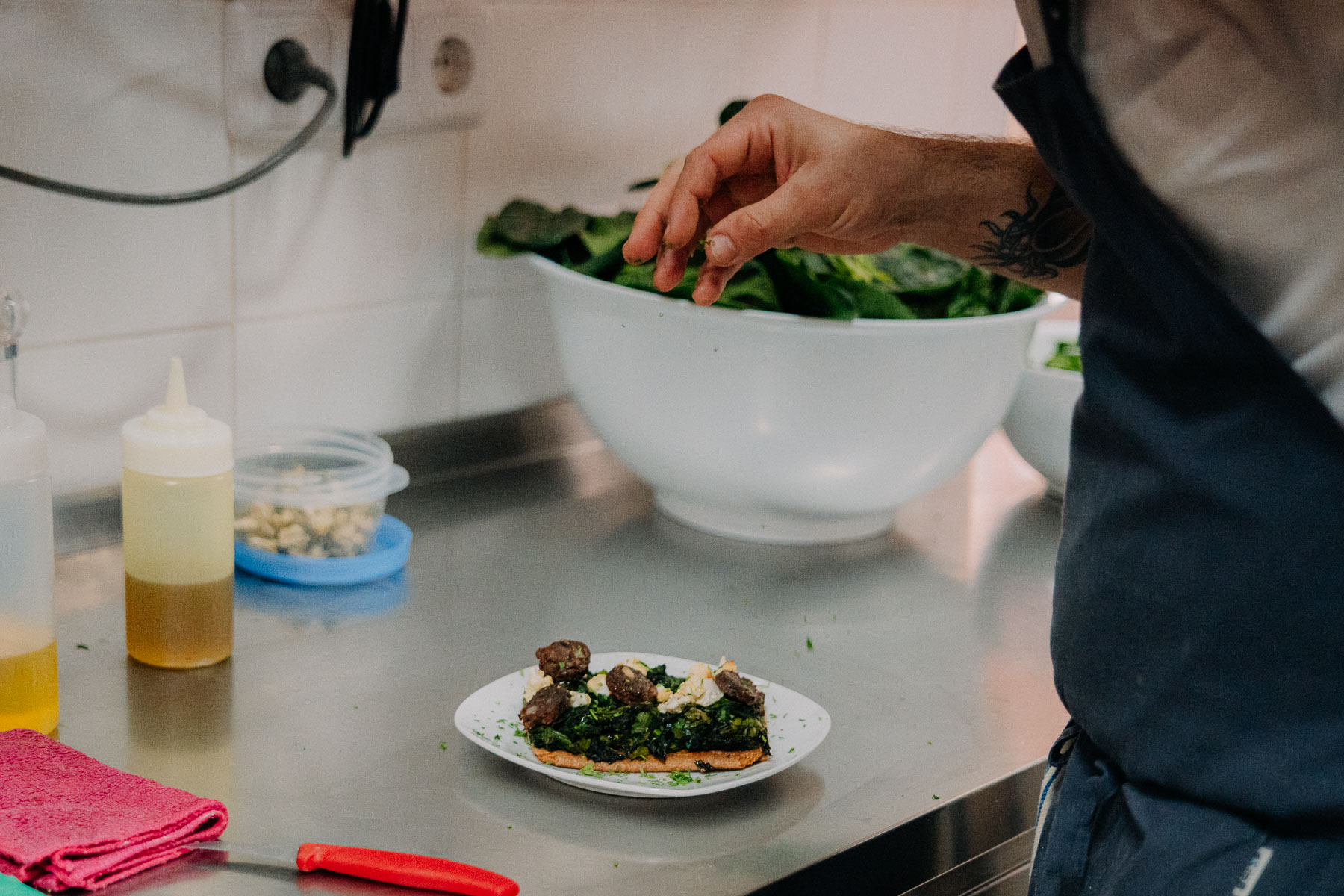
Fish from a family owned business in the Pere Garau market, meat and sausages from Cas Sereno, in Inca, vegetables from S'Hortolà... are the main ingredients, which define with facts the so-called "trash cooking" which, after all, is nothing more than, as Tomás explains, "going back to the roots, to the practices that were done before, when people did not have everything they wanted right at their fingertips. Neither sauce from Japan nor kiwi from New Zealand".
When the purpose is to utilise everything, extending the life of the product is vital and, in reality, this philosophy is nothing new, since the history of gastronomy has developed techniques, unjustly forgotten, that allow us to preserve a certain food for longer than it would in our refrigerator, such as pickling, curing or fermentation. Processes that Tomás practices on a daily basis in his kitchen.
Cuina Vivant is an invitation to live cooking, where the real essence is found. "Everything in our kitchen must always be alive", says Pilar. In fact, the mantra goes beyond the stove in this particular restaurant: its furniture, a tribute to the Mallorcan forest, is made from wood - olive, holm oak and walnut - from fallen trees during storms. A way of "bringing the mountain closer to the city" and "revaluing what we have, giving it a space again, instead of buying something new".
"Precisely, what we want is to raise awareness on the idea that less is more. To bet on quality, environmental balance and local products, and to make people understand that each product has a process behind it".
With high ceilings and large windows, Cuina Vivant opened its doors just a year ago, in the spring of 2023, and both Pilar and Tomás were already aware that they were not a regular restaurant. That's precisely why, at the beginning, they felt like weirdos. "I think people didn't quite understand why we didn't have chicken breast or a Caesar salad. What we want to do is raise awareness on the idea that less is more. We are committed to quality, environmental balance and local produce, and we want people to understand that each product has a process behind it".
A process that leaves a footprint on our planet that Cuina Vivant tries to combat with a coherent and serene speech, from the kitchen, but also through its wine list, which brings together the fruit of projects focused on sustainability. Wines from recovered vineyards, from manual harvests and elaborations with little intervention make up a very Mediterranean selection, with wine proposals from Sicily, Catalonia, the south of France and the Balearic Islands, of course.
With the passage of time, and looking back, Pilar and Tomás believe that the scenario has changed and proudly say that they have managed to gain the loyalty of a local clientele that "is already part of the vivant family". The biggest achievement, surely, for an initiative rara avis in the island to which a year of walking has been enough to collect its first prize: the Premi Remenja'mmm, in the fourth edition of the Premis Rezero Balears, as recognition for its work against food waste.
Knowing that they are in the initial phase and that there is still a long way to go, between the walls of Cuina Vivant, in addition to making raoles and fish burgers with potato coca bread -their delicious star dishes-, many ideas and plans for the future are being cooked. "The goal is to produce zero waste, and on an island that's very difficult because you can't even get paper napkins that don't come in plastic," says Tomás.
While they reach the goal, there is much to contribute and every action counts, inside and outside Cuina Vivant. In a neighborhood where there are already urban gardens, the couple plans to get involved with their own compost and, in not a long time, to buy a glass crusher to turn the glass from bottles into sand to make ceramics. "The neighborhood is full of workshops and we could create community," smiles Pilar.
The world is prettier and more hopeful thanks to projects like this, which, without making much noise, support local producers, encourage the consumption of local products and reduce any kind of waste and residue. There is still a long way to go, yes, but there are already those who are slowly cooking a better future.