 Gastronomy
Gastronomy
Read moreYumee. Where Cuisines Meet
Mark as favorite
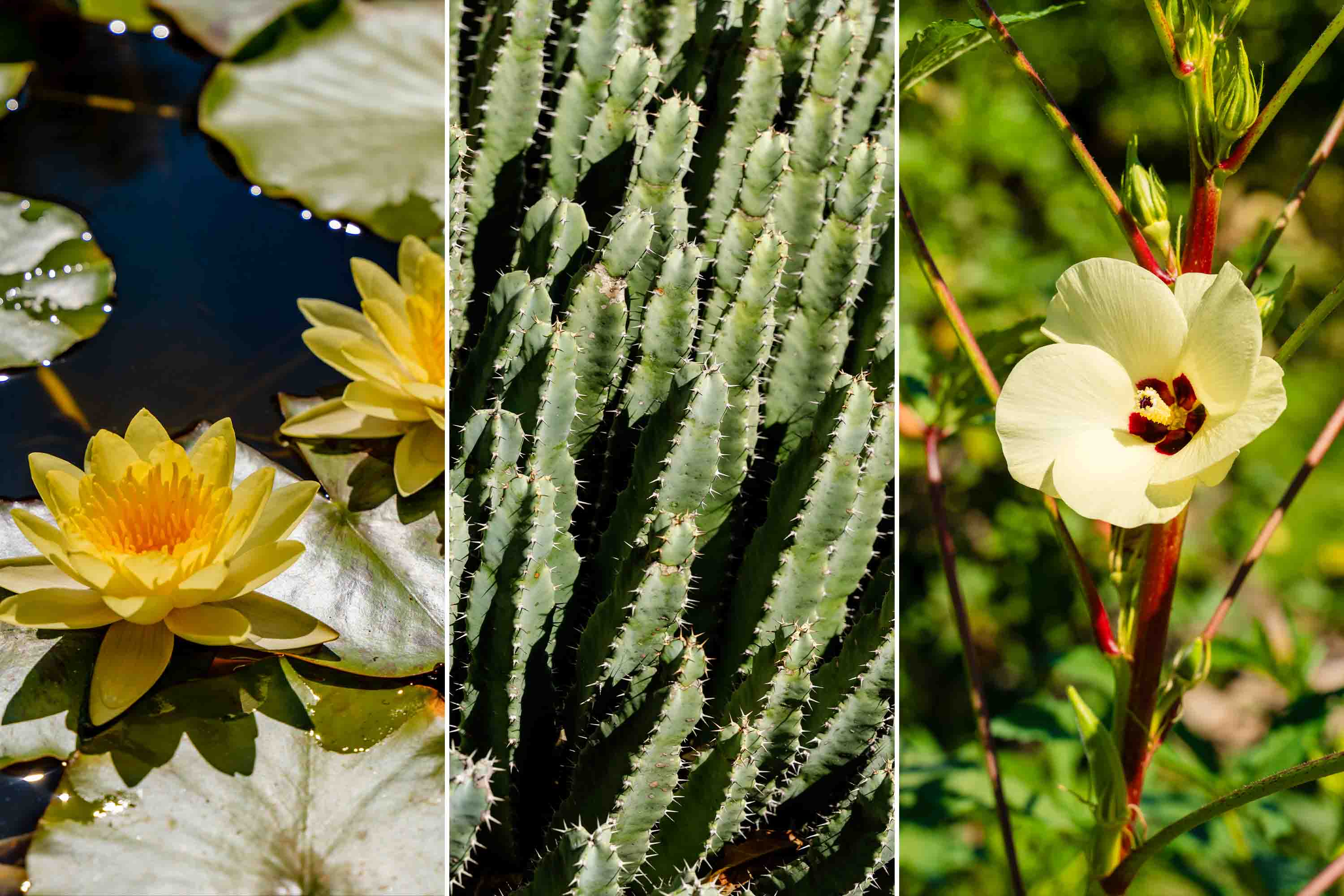
We sit and watch, engrossed, how the bees hover around the water lilies and absorb the nectar of their flower.


Author: Aina Coll
Photographer: Jaume Oliver
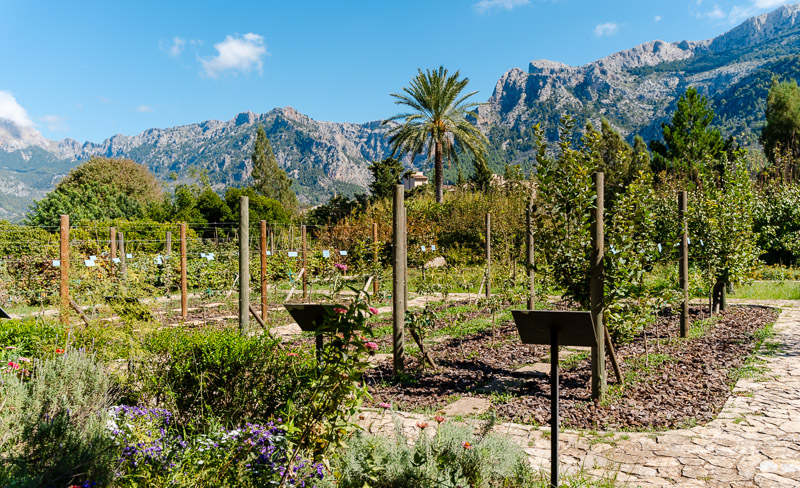
Following our desire to get to know the most beautiful gardens of Mallorca, one morning in September we went to Sóller to discover the local the Jardí Botànic. As soon as we arrive, at the entrance booth, the friendly staff gives us valuable information to help us find our way around: founded in 1985, this garden opened its doors to the public in 1992 and has a museum where exhibitions are organized also serving as a center for research, outreach and education. In addition, we are told, three years ago, the garden's foundation allied with the Museu Balear de Ciències Naturals (Balearic Museum of Natural Sciences).
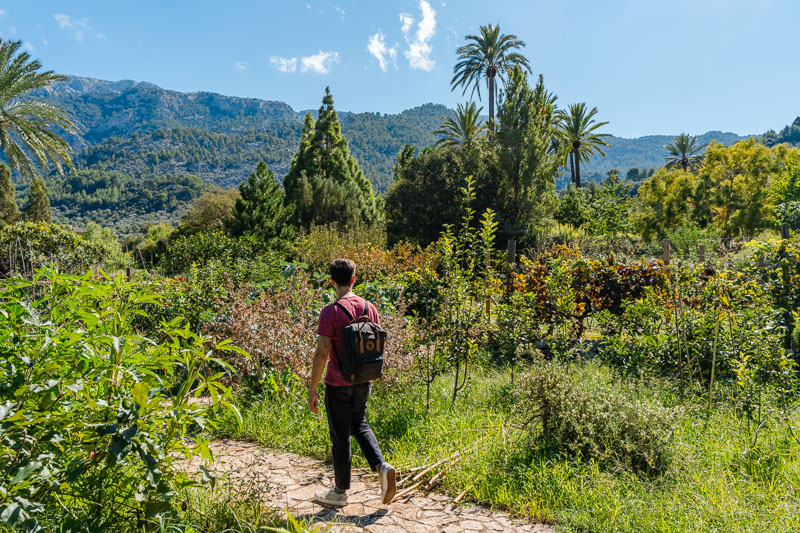
With all this information, a good pair of sneakers, a map provided at the booth and all the time in the world, we start our walk that, we guess from now on, will be marked by a feast of smells that will seduce us throughout the tour.
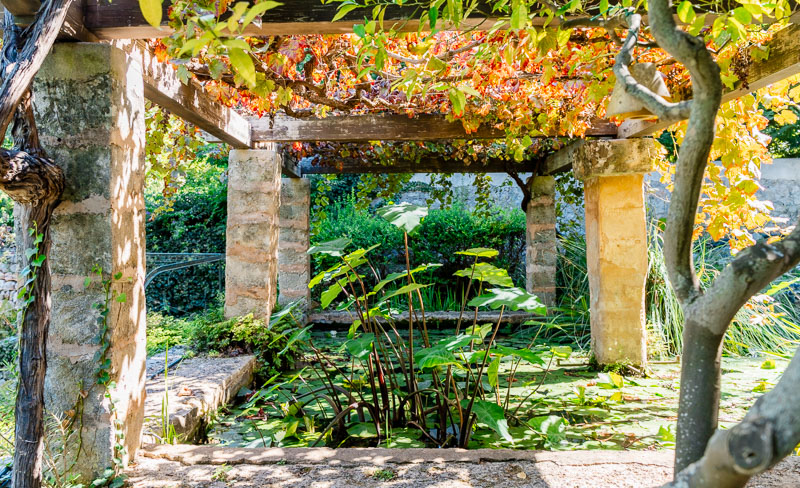
The Botanical Garden is divided by marjades that separate the type of plants that live, in extreme order but in harmony, in it. We take the path that will guide our quiet route - since it seems that we have chosen a day of little affluence - and the M4 marsh welcomes us with oaks, cypresses and violets, a first contact with the Mediterranean flora that coexists with a beautiful pond guarded by four columns, full of water lilies and beautiful dragonflies that fly over it.
Right next to it, on a lower level, we find the M6 -each marjada is marked with an M, a number and an explanatory sign that makes the visit even more enriching. Under the name Aigua dolça, this marjada has another pond with bamboo canes, mint shoots and ferns, three types of plants that live in warm and humid places, so here they look splendid green.
A ditch with a trickle of water running through it guides us to an even lower level, the M7, where we find Canary and Macaronesian flora, which, as we read, was inaugurated in 1994. Without leaving the path, and captivated by the majestic palm trees that fill the sky and give a tropical flare to the whole garden, we reach our next stop, M8-9, which brings together the native vegetation of neighboring islands in the Mediterranean. With a more desert-like character, we observe numerous specimens of the cactus family and, once again, a stone pond. A bench in the shade invites us to take a break and we settle down to contemplate, engrossed, how the bees hover around the water lilies and absorb the nectar of its flower.
We continue our walk and we get, we confess, to the marjada that we like the most in this garden: the M12-13 portrays a solleric aspect, clear, with orange and lemon trees in an explosion of color and aromas that we know indeed very well. Suddenly, we notice a cat waking up among a bed of tomatoes, eggplants and some apple trees. A real image of the Mallorcan agricultural landscape.
Immersed in an aroma that we recognize as being home, we head towards the part of the garden where the aromatic herbs and medicinal plants are located. Here, of course, the amalgam of smells is once again intense and delicious thanks to the scent of lavender and lemon verbena, intermingled with the fig trees growing among them. Observing this area, we notice the neatness that reigns all around us, something that is not surprising because in every corner we find gardeners who take care of the plants and trees with great care and attention.
Sensing that our tour is coming to an end, we cross a passageway covered by vegetation that climbs its structure and shelters us in the shade. Then, we reach the area that awaits the ornamental flora: a corner of extreme beauty in which nature shaped by the hand of man is, of course, the main attraction.
Now we reach the end of our walk through the Jardí Botànic de Sóller and we can think of no better way to do it than approaching the M5, a last stop where tall pines predominate. Here, we enjoy the moment and breathe with our eyes closed. The aroma, easily recognizable as autochthonous, reminds us of a day at the beach, sun and calm in any pine forest on the island. Feeling relaxed by this sensation, we say goodbye to Botànic being sure that we will remember this morning for what we have seen, what we have smelled and, of course, for what we have learned, because approaching this garden is a pleasant lesson in Mediterranean flora. And we love the Mediterranean.
Suggested options